It’s yet another in a problematic line of recent decisions that allow government entities to endorse and promote religion.
By Rob Boston
A federal appeals court handed down a disturbing ruling that elevates the rights of theistic believers over those of non-theists. The 3rd U.S. Circuit Court of Appeals’ decision in Fields v. Speaker of the Pennsylvania House of Representatives is part of a troubling trend in the courts that not only dilutes separation of church and state but grant special privileges to people because they believe in a god.
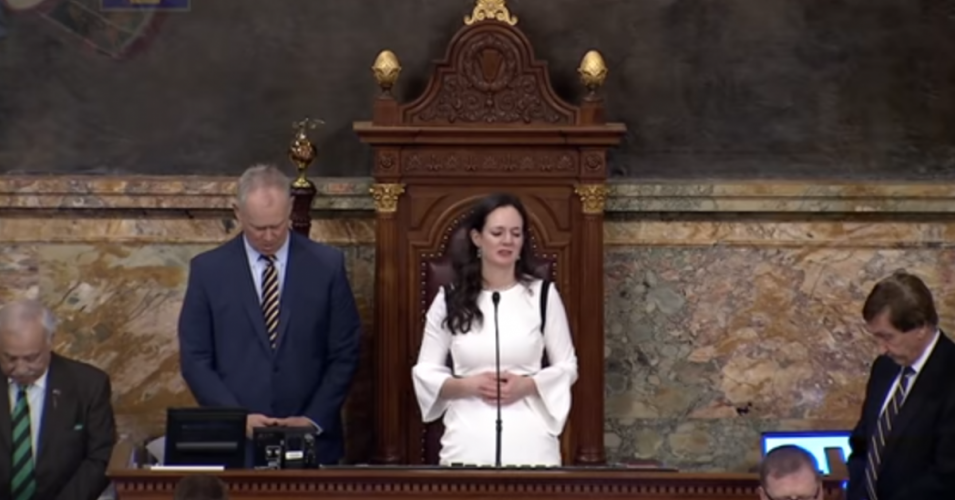
Americans United and American Atheists brought the case on behalf of a group of non-theists in the state who wanted to do something theistic believers do frequently: give guest invocations before the Pennsylvania House of Representatives. Officials at the House refused, and AU filed suit.
It’s important to remember that Americans United and its allies were not trying to stop the prayers before the House entirely. All we sought was equal treatment between believers and non-theists.
Nevertheless, the court ruled 2-1 that the House could constitutionally turn away the non-theists. Its logic is troubling. According to the court, non-theistic people are not capable of meeting the goals of legislative prayer – only believers in the divine can do that.
“[O]nly theistic prayer can satisfy all the traditional purposes of legislative prayer,” wrote the court. “Second, the Supreme Court has long taken as given that prayer presumes invoking a higher power.”
The court went on to say, “[A]s a matter of traditional practice, a petition to human wisdom and the power of science does not capture the full sense of ‘prayer,’ historically understood. At bottom, legislative prayers seek ‘divine guidance’ in lawmaking.”
The court buttressed its argument by pointing to “historical practices.” This is blind to the reality of modern-day America where increasing numbers of people are declaring themselves “nones” – individuals who seek spirituality outside the confines of a house or worship or discard religion entirely.
As Judge L. Felipe Restrepo noted in his dissent, limiting prayer to theists only requires the government to wade into a theological thicket. Buddhism, he noted, doesn’t have a concept of a personal god but is still considered a major world religion. Yet under the rules of the Pennsylvania House, Buddhists could be excluded from offering guest prayers. (The court’s majority opinion, however, insisted that it would be unconstitutional to exclude Buddhists.)
Restrepo further observed, “By mandating that all guest chaplains profess a belief in a ‘higher power’ or God, the Pennsylvania House fails to stay ‘neutral in matters of religious theory’; in effect, the Pennsylvania House ‘promote[s] one . . . religious theory’ – belief in God or some sort of supreme deity – ‘against another’ – the denial of the existence of such a deity.
While the ruling is limited to the issue of legislative prayer, it’s still troubling. It’s yet another in a problematic line of recent decisions that allow government entities to endorse and promote religion (just about always Christianity) as long as it’s being done for “historic” purposes. (The U.S. Supreme Court’s ruling in the Bladensburg Cross case is another example of this.)
While treating non-theists like second-class citizens may have been part of our nation’s history, it’s a shameful practice, hardly something we ought to uphold today. Yet rulings like the one in the Fields case do just that: They preference believers in god while sending a message of exclusion and even scorn to non-theists. That type of unequal treatment is exactly what the separation of church and state is intended to prevent.
Published by Common Dreams, 08.28.2019, under the terms of a Creative Commons Attribution-Share Alike 3.0 license.