

By Michael Winship
As we passed the one-year mark of the pandemic lockdown, the media was flooded with assorted lookbacks, memorials for the dead and even quizzes designed to remind people of what the country and the world were like before the coronavirus descended.
One suggested that you look at the photos stored in your mobile phone and find the last picture taken before everything went to hell. For me, it was a shot of some anemone blossoms near the Georgia shore, that last trip before travel became untenable. (And the first photo after the lockdown began also was floral—the Callery pear trees that blossom every spring in my neighborhood, regardless of plague or politics.)
Looking through my 2020 photos, I noticed something else. Seventh Avenue, the street that runs below my downtown Manhattan apartment, is a frequent thoroughfare for demonstrations (and during the pandemic, platoons of motorcycles, ATV’s and the other day, a gaggle of black-outfitted ninja wannabes on electric skateboards. I am not making this up.).
On May 30, five days after George Floyd died, a small group of masked, socially distanced protesters marched by. I photographed them from my window. As the days went by, my pictures show their numbers growing and growing, as the frustration and outrage grew at what had happened to Floyd in Minneapolis and to others in cities around the nation. Law enforcement violence against Black, indigenous and people of color was exposed to the public as never before. We’re seeing it again now with the police shooting of Andrew Brown, Jr., in North Carolina.
Despite the lockdowns, protest continues to flourish in the United States and at a record rate. Back in the pre-COVID days of 2018, The Washington Post’s Mary Jordan and Scott Clement reported that “tens of millions of Americans” had joined protests and rallies; there was “a new activism,” largely thanks to former guy Donald Trump:
One in five Americans have protested in the streets or participated in political rallies since the beginning of 2016. Of those, 19 percent said they had never before joined a march or a political gathering.
Similarly, activist LA Kauffman wrote in The Guardian, “never before have as many Americans taken to the streets for political causes as are marching and rallying now…
What’s even more significant than the scare of these contemporary protests is their ubiquity. A few individual demonstrations under Trump have been very large, rivaling the biggest protests in American history. But the overall numbers are so high because protests have been happening everywhere: in all fifty states, and in many places where marches and rallies have rarely been seen before.
During the Trump presidency, the groups Count Love and the Crowd Counting Consortium (CCC) counted “nearly 60,000 protests and marches, with 21 million to 31 million participants…
In 2020, Black Lives Matter protests spread across thousands of urban, suburban, and rural areas… In addition, these protesters were overwhelmingly nonviolent. In 97.7 percent of events, no injuries were reported among participants or police. When there were injuries, protesters were injured more often than police, suggesting the police response may have been disproportionate.
If you don’t think these protests can make a difference, consider the words of Minnesota Attorney General Keith Ellison, who oversaw the successful prosecution for the murder of Floyd by Minneapolis cop Derek Chauvin. In a recent report Ellison told NPR’s Leila Fadel, “The governor probably would not have felt the need to appoint me to prosecute the case against Derek Chauvin unless people were protesting in the street. I’m hoping people don’t break windows and burn stuff, but protesting, being out there strong, we absolutely needed, and in fact, I don’t think you get anything done without it.”
Which is why scared Republicans in state legislatures across the country are doing their damnedest to use legislation as a blunt tool, attempting to quash dissent and punish protesters. A week ago, Reid J. Epstein and Patricia Mazzei at The New York Times reported that, “while Democrats seized on Mr. Floyd’s death last May to highlight racism in policing and other forms of social injustice, Republicans responded to a summer of protests by proposing a raft of punitive new measures governing the right to lawfully assemble.
G.O.P. lawmakers in 34 states have introduced 81 anti-protest bills during the 2021 legislative session—more than twice as many proposals as in any other year, according to Elly Page, a senior legal adviser at the International Center for Not-for-Profit Law, which tracks legislation limiting the right to protest.
Some, like [Florida Governor Ron] DeSantis, are labeling them “anti-riot” bills, conflating the right to peaceful protest with the rioting and looting that sometimes resulted from such protests.
In Florida, DeSantis just signed a law that turns many protest-related misdemeanors into felonies, delays bail for those arrested, seeks to prevent communities from defunding police and makes pulling down monuments punishable by up to fifteen years in prison. But at the same time the law makes it easier for motorists to escape civil liability if they plow their car into a group of protesters.
So-called “aggravated rioting” and “mob intimidation” are now criminal acts in Florida—as few as three people can be defined by police as a riot.
“Make no mistake about it,” attorney James Shaw, Jr., said, “the legislation was proposed in direct reaction to the Black Lives Matter movement, and to throw a bone to a certain voting bloc that was distressed by this movement and wanted to use violence against it.”
A provision that would indemnify drivers who mow down protesters is also under consideration in Oklahoma, as is a rule that turns the blocking of a public street by demonstrators into a felony offense. In Kentucky, legislation is on hold that would make it a misdemeanor offense to taunt or make a gesture at police “that would have a direct tendency to provoke a violent response from the perspective of a reasonable and prudent person.” Clearly unconstitutional, as seem almost all of these anti-protest provisions. And in Minnesota, a bill has been introduced that would withhold student financial help, food stamps and unemployment benefits to anyone convicted of a protest-related crime.
ACLU attorney Vera Edelman told the Times that these and other similar proposals are “consistent with the general trend of legislators’ responding to powerful and persuasive protests by seeking to silence them rather than engaging with the message of the protests. If anything, the lesson from the last year, and decades, is not that we need to give more tools to police and prosecutors, it’s that they abuse the tools they already have.”
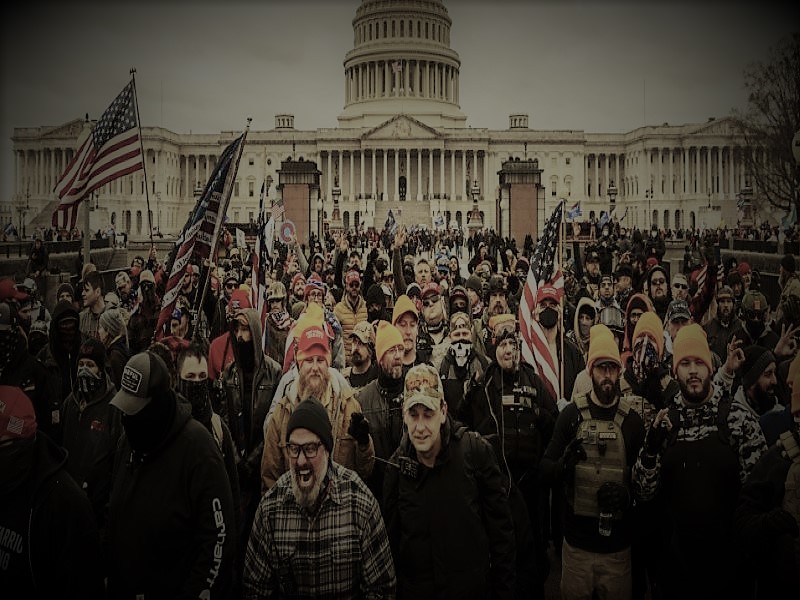
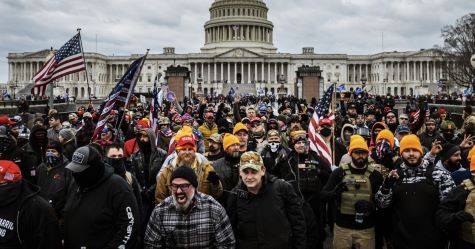
Hypocritically, many are pointing to the deadly, January 6 Trumpist insurrection at the Capitol as a newfound rationale for such actions, even though GOP lawmakers have been striving to criminalize protest from the left for a number of years now—starting with attempts to keep environmental activists from interfering with pipeline construction—and actively seek to clamp down on participatory democracy and free speech. Even as they resist a full-scale investigation of the extremists involved and the events leading up to January 6, Republicans are using that right-wing riot as a Trojan horse to go after Black Lives Matter and other protesting activists from the left.
Make no mistake—in many ways these proposals are as poisonous to the freedoms of speech and assembly as similar vile attempts across the nation to suppress and deny the right to vote. To say this is not a pretty picture would be an understatement. It’s an ugly portrait of a political party steadily losing national support and willing to cheat, steal and put a knee to the throat of all things vital to a democracy—just to seize back power and persecute everyone they deem different or a threat to their nascent despotism.
Published by Common Dreams, 04.28.2021, under the terms of a Creative Commons Attribution-Share Alike 3.0 license.