All evidence indicates he committed felony violations and that the DOJ investigation into these crimes is mounting.
By Paul Seamus Ryan, J.D.
By now there is no doubt that campaign finance crimes were committed by Michael Cohen and American Media Inc. (AMI) via “hush payments” to Stormy Daniels and Karen McDougal in the run-up to the 2016 presidential general election. Indeed, that’s just what my non-partisan organization, Common Cause, alleged in complaints filed with the Department of Justice in January, February and March of this year. Michael Cohen pleaded guilty to two campaign finance crimes and was sentenced on Wednesday to three years in prison. Also Wednesday the Department of Justice (DOJ) made public its non-prosecution agreement with AMI, in which AMI acknowledged its campaign finance crime, making an illegal $150,000 corporate contribution to the Trump campaign.
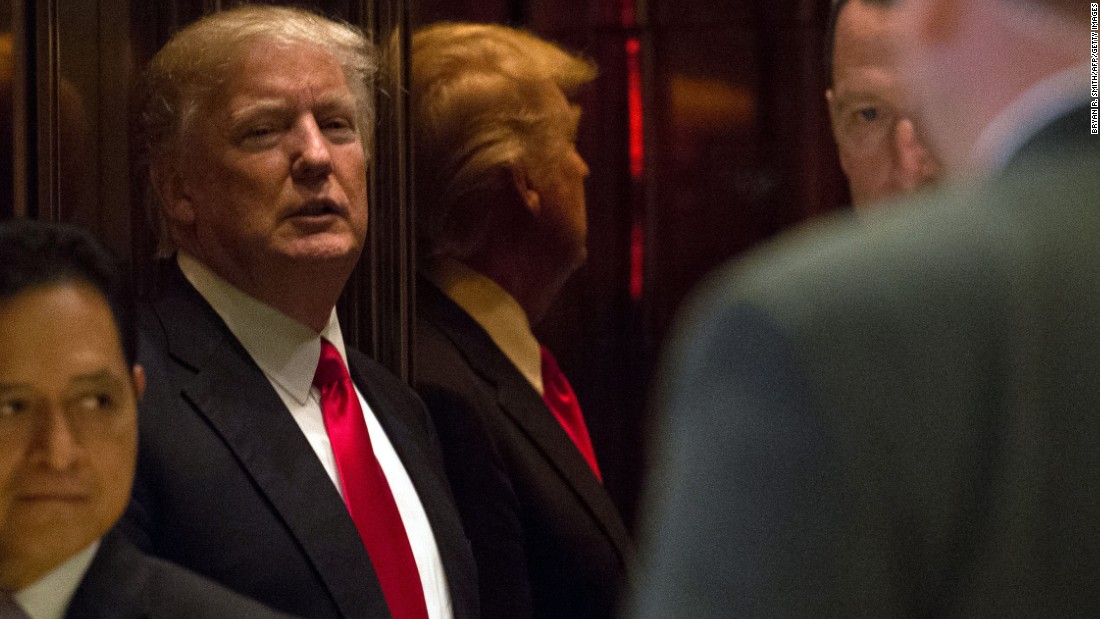
So with no doubt on those fronts, the remaining question is whether President Donald Trump also committed campaign finance crimes on the road to the White House. All evidence indicates he did and that the DOJ investigation into these crimes is mounting.
The full backstory on how those who made “hush payments” to Daniels and McDougal violated multiple federal campaign finance laws and criminal statutes can be found in earlier pieces I’ve written for Just Security, including an article detailing how the criminal case against team Trump is much stronger than was the DOJ’s case against John Edwards, and an articlespecifically about AMI’s crimes.
Documents made public by the DOJ over the last week confirm that DOJ now possesses strong evidence of campaign finance crimes committed by President Trump and that its investigation into this matter is not yet over.
President Trump has been Tweeting recently, including this morning, that the campaign finance crimes to which Cohen pleaded guilty are not in fact crimes and that the violations, if they did occur, were only civil violations. Clearly President Trump is not presenting a true understanding of how campaign finance law works. As explained in the DOJ manual, Federal Prosecution of Election Offenses, campaign finance law violations “become potential crimes when they are committed knowingly and willfully, that is, by an offender who knew what the law forbade and violated it notwithstanding that knowledge.”
So, whether or not President Trump committed campaign finance crimes seemingly boils down to whether he knew that the law forbade what he and Cohen and AMI and executives at the Trump Organization conspired to do—use Cohen’s and AMI’s and eventually the Trump Organization’s money to keep Daniels and McDougal’s stories from reaching voters right before the 2016 general election.
On Friday the DOJ filed a memo with the court in advance of Cohen’s sentencing this week, in which the DOJ indicated its understanding that Cohen committed his crimes—facilitating payments to both Daniels and McDougal—“in coordination with and at the direction of Individual-1” (Donald J. Trump). Cohen had made a statement to this effect in court in August, but Friday’s memo was the DOJ’s first public acknowledgement of its own conclusion that Trump coordinated with and directed Cohen’s campaign finance crimes.
And the fact that Cohen pleaded guilty to these two campaign finance crimes indicate that Cohen acted knowingly and willfully. Cohen knew what the law forbade and violated it notwithstanding that knowledge.
As noted in the DOJ sentencing memo, this isn’t Cohen’s and Trump’s first brush with campaign finance laws. They were subjects of a Federal Election Commission (FEC) enforcement action for illegal in-kind funding of Trump’s 2012 presidential exploratory activities. FEC lawyers found reason to believe they broke the law, but the Commission didn’t pursue the matter because Trump eventually decided not to run. This 2012 enforcement action is further evidence of Cohen’s and Trump’s knowledge of campaign finance law requirements.
Yesterday the DOJ made public its non-prosecution agreement with AMI, which reaffirms that all parties involved in these “hush payments” knew they were violating federal campaign finance laws. In paragraph 2 of the agreement’s “Statement of Admitted Facts,” AMI acknowledges that it made the $150,000 payment to McDougal in “cooperation, consultation and concert with” President Trump’s campaign to influence the 2016 election. And in paragraph 8, AMI acknowledges that at “all relevant times, AMI knew” that its payment to influence the election violated federal campaign finance law.
The New York Rules of Professional Conduct for attorneys make clear that Cohen had a legal duty to advise his client, then-candidate Trump, the “hush payments” Trump was directing Cohen to make would violate federal campaign finance law. Rule 1.2(d) states that a “lawyer shall not counsel a client to engage, or assist a client, in conduct that the lawyer knows is illegal or fraudulent, except that the lawyer may discuss the legal consequences of any proposed course of conduct with a client.
The fact that we have in these documents— (1) AMI coordinated with Trump, (2) AMI knew that its payment to McDougal violated the federal laws; (3) Cohen was directed by Trump to facilitate the “hush payments” and did so in coordination with Trump; (4) Cohen knew that the “hush payments” were illegal; and (5) Cohen had a legal duty to advise Trump that the “hush payments” were illegal—all strongly suggest that Trump knew what the law forbade and violated it notwithstanding this knowledge. In other words, the DOJ possesses strong evidence that Donald Trump committed campaign finance crimes.
Add to the equation the Wall Street Journal’s reporting that “that Mr. Trump was involved in or briefed on nearly every step of the agreements” and that Cohen “described to prosecutors his discussions with Mr. Trump and a Trump Organization executive about how to pay Ms. Clifford without leaving the candidate’s fingerprints on the deal.” As I’ve written before, that attempt to cover up the payment suggests knowing and intentional violation of the campaign finance disclosure laws—also a standalone crime.
Finally, in announcing its non-prosecution agreement with AMI yesterday, the DOJ issued a statement making clear that its investigation into these campaign finance crimes is not over. The statement reads: “Assuming AMI’s continued compliance with the agreement, the Office has agreed not to prosecute AMI for its role in that payment.”
President Trump can Tweet all he wants about the non-crimes of Michael Cohen and AMI. But the DOJ apparently, and correctly, sees things differently, and so did the court. “Continued” cooperation by AMI suggests this isn’t the last we’ve heard from DOJ on this matter.
Originally published by the Just Security, 12.14.2018, New York University School of Law, under the terms of a Creative Commons Attribution-No Derivs-NonCommercial license.