
Here come Justices Thomas and Gorsuch to drag us back a century.

By Andrew Cohen, J.D.
Fellow
Brennan Center for Justice
When the U.S. Supreme Court first recognized a constitutional “right to counsel” in state cases 56 years ago, the justices, as they often do, came up with a compromise. They would announce the vaunted right but at the same time they would not force states to provide a remedy for the right in any particular way. In other words, all the justices did in Gideon v. Wainwright was to issue the constitutional command broadening the “right to counsel” and then leave the details to lower court judges and other lawmakers to figure out on their own as a matter of political policy. It was, you might say, an “unfunded mandate.”
And it often hasn’t been funded. The result is the chaos in public defense work we see today. Sure, you have a right to an attorney. If you are wealthy enough, you have a right to a really good attorney. If you are poor, you have the right to have a chance to have a good attorney depending on where you live, what crime you’ve committed, what your local politicians think about due process rights, and what their budgets happen to be. It’s fair to say that Gideon has brought justice to millions of Americans who have benefited from it since 1963. It’s also fair to say that millions of Americans haven’t benefited from it at all.
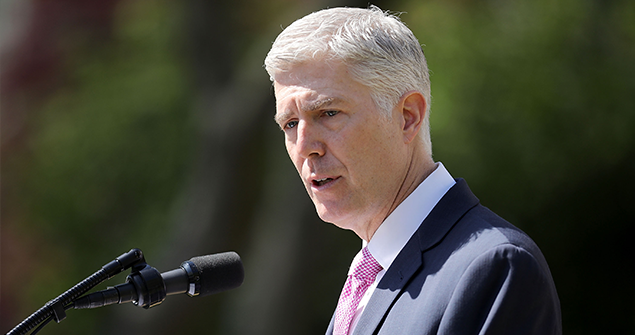
Which brings us to U.S. Supreme Court Justice Clarence Thomas and his eager new sidekick, Neil Gorsuch. Last week, in a case that got little attention because it was handed down while we all were watching Michael Cohen testify against Donald Trump, Thomas and Gorsuch declared that the problem with the right to counsel in America isn’t that Gideon didn’t go far enough in requiring states to provide adequate public defense services. The problem as they see it is that Gideon went too far and now should be scaled back or outright overruled; that too many defendants are benefiting from too many court-appointed lawyers.
In Garza v. Idaho, the court’s majority ruled 6-3 in favor of a defendant whose attorney had failed to protect his appeal rights. The question in the case was a limited one: whether the fact that the client had signed an “appeal waiver” as part of a plea deal precluded him from quickly telling his lawyer that he had changed his mind and wanted to appeal his case after all. For Justice Sotomayor and five of her colleagues, including Chief Justice John Roberts and the newest justice, Brett Kavanaugh, the answer was “no.” The client had a right to expect his lawyer to do what he had asked the lawyer to do.
Not exactly the stuff likely to make it into your constitutional law exam. Until Thomas and Gorsuch decided to use Garza as a vehicle to take a stand on a line of Supreme Court precedent that goes back nearly 100 years strengthening the right to counsel. The Sixth Amendment only really promised some people a right to counsel, these conservative jurists contend, it never was intended to promise anyone a right to effective counsel. And Gideon? It recognized “expansive rights,” Thomas and Gorsuch wrote, that the framers of the Constitution never intended indigent defendants or anyone else to have.
Rather than protecting the accuracy of criminal trials by ensuring that defense attorneys competently represent their clients, Thomas and Gorsuch argue that “the structural protections provided in the Sixth Amendment certainly seek to promote reliable criminal proceedings, but there is no substantive right to a particular level of reliability. In assuming otherwise, our ever-growing right-to-counsel precedents directly conflict with the government’s legitimate interest in the finality of criminal judgments.” In other words, it’s more important to get it done than to get it done right.
Which is wrong for so many reasons. Two decades after Gideon, the Supreme Court’s decision in Strickland v. Washington led to a new standard for determining when a lawyer’s work for a client was “ineffective” and justified a new trial or other relief. Strickland was designed by the court’s conservatives to restrict the scope of Gideon — and it has done so by excusing all sorts of terrible lawyering ever since. Even those indigent defendants who are fortunate enough to get a public defender thanks to Gideon don’t necessarily have a right to a competent attorney under Strickland. An incompetent attorney is worth two dead flies and yet even this sorry standard is too much for Thomas and Gorsuch.
For now, only two of the most conservative justices hew to this woebegotten theory. It is telling that Justice Samuel Alito, no shrinking violet when it comes undermining the rights of criminal defendants, chose not to join Thomas and Gorsuch in this part of their Garza dissent. Maybe he decided that it was simply too far afield. But it still would be foolish to see the dissent here as some sort of one-off rant. Remember that decades ago, Thomas and then-Justice Antonin Scalia pulled off their momentous heist of the text of the Second Amendment one crazy dissent at a time until, at last, in 2008, they had the votes. This is a movement, and as long as Thomas and Gorsuch remain on the court, it will be a dangerous one.
They don’t yet have the votes yet to deprive the nation’s poor people of whatever help they do receive under Gideon. They don’t yet have even a majority of the court’s epically conservative justices. But the dissenters are telling us clearly where they want this court to go. Back to a time in the nation’s legal history that no longer exists. Back to a system that generated even more wrongful convictions than are generated now by the many failings of our current justice systems. Back to a time when indigent defendants had no hope of being fairly represented. Back to a time when the federal courts were not swamped as they are now with criminal cases and prosecutors didn’t press for plea bargains in assembly-line fashion.
The Garza ruling comes at a time when many states and counties are struggling to provide capable public lawyers to indigent defendants who need them. This in an era of relatively healthy state and local budgets. I talked this weekend to David Carroll, the executive director of the Sixth Amendment Center, who spends his days tracking the ebbs and flows of public defense work all across the nation. If you live in Colorado or Massachusetts, Carroll told me, then Gideon really has worked out well for you. Those states fund their indigent defense 100 percent and so defendants there are much more likely to get competent counsel at key stages of their case. Everyone wins in that scenario.
But if you live in California or Mississippi or Missouri or Pennsylvania, Carroll says, you are largely out of luck. The lawmakers in those states do particularly poor jobs of ensuring that indigent defendants get the “rights” Gideon guaranteed to them. That means that folks who cannot afford their own attorneys are more likely to receive “ineffective assistance” of counsel if they receive any “assistance of counsel” at all. It has always been this way. And the fact that this is so speaks not to the “expansive” strength of Gideon in re-ordering constitutional power but to its weaknesses. The scope of Gideon needs to be expanded, not restricted, and until it is the right to counsel will be a right without a remedy for too many Americans no matter what Thomas and Gorsuch claim.
Originally published by the Brennan Center for Justice, 03.04.2019, under the terms of a Creative Commons Attribution-No Derivs-NonCommercial license.