

By Dr. Angélica Durán-Martínez
Associate Professor of Political Science
University of Massachusetts Lowell
Recent deadly attacks by criminal organizations have instilled fear across Mexico.
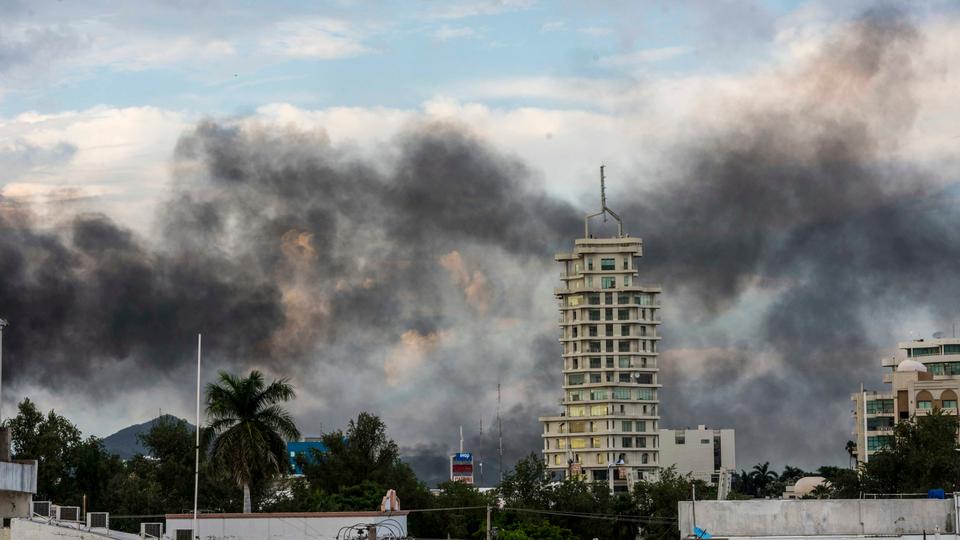
In mid-October, shootouts between cartels and police in the states of Guerrero and Michoacán killed over 30 people. And a 12-hour criminal assault on Culiacán, Sinaloa, after Mexican security forces captured the son of drug kingpin Joaquín “El Chapo” Guzmán left 13 people dead, including at least three civilians.
On Nov. 4 the massacre of nine Mexican-American Mormon women and children in northern Mexico shocked both sides of the border.
The attacks, some carefully planned and executed, have made the Mexican government appear weak on organized crime. By early November, the hashtag #MexicoNoTienePresidente – Mexico has no president – was trending on Twitter.
Mexico’s violent cycles
Security was a focus of Andrés Manuel López Obrador’s winning campaign for the presidency last year.
He proposed novel strategies to “pacify” Mexico, including giving amnesty to low-level drug traffickers who leave the business, and legalizing marijuana to turn a lucrative criminal market into a regulated, commercial one.
López Obrador also promised to punish police and soldiers for human rights violations committed when battling cartels.
But 18 months into his six-year term, López Obrador’s only concrete security policy was the creation in June 2019 of a controversial new military-style police force, the National Guard. So far, however, Mexico’s 70,000 National Guardsmen have mostly been tasked with stopping Central American migration.
One initiative that looked promising – an independent commission of forensic experts and prosecutors established to investigate the unsolved 2014 disappearance of 43 students in Ayotzinapa, Guerrero state – has had setbacks. In September, 24 police officers implicated in the students’ disappearances were freed from jail for insufficient evidence, compelling López Obrador’s government to file a judicial appeal.
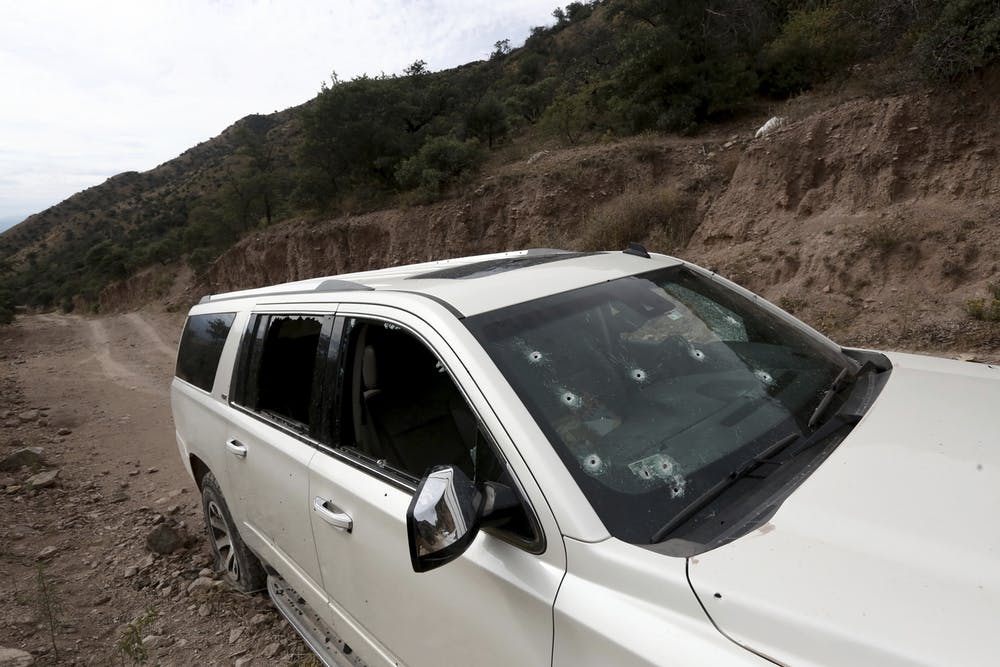
Meanwhile, with 25,890 murders reported through September, 2019 looks to be another record-shatteringly violent year for Mexico.
No new drug war
My research on Mexico’s chronic criminal violence finds that sudden upticks in violence usually signal increased conflict between criminal cartels, like the current clashes between the Cartel Jalisco Nueva Generación and the Sinaloa Cartel.
I also find that showy, coordinated attacks like those seen recently typically occur during political transitions or because of intense electoral competition – times when the government cannot effectively coordinate law enforcement or maintain corrupt criminal arrangements.
Some in Mexico argue that the recent cartel offensives demand an extreme military response. President Donald Trump has even offered a U.S. intervention.
But President López Obrador insists that he will not restart the Mexican government’s all-out war on cartels. Sending soldiers to fight crime, as consecutive governments have done since 2006, actually drove up violence in Mexico by creating more competition between organized crime groups and thus more retaliation. Thousands of civilians have also been killed in the cross-fire between cartels and soldiers.
The president’s aversion to militarized security didn’t stop him from creating the Mexican National Guard. But it was on display in Culiacán last month when Mexican soldiers were outpowered by cartel members. Rather than fight to keep El Chapo’s son in custody, they released him.
“The capture of a criminal is not worth more than people’s lives,” López Obrador said.
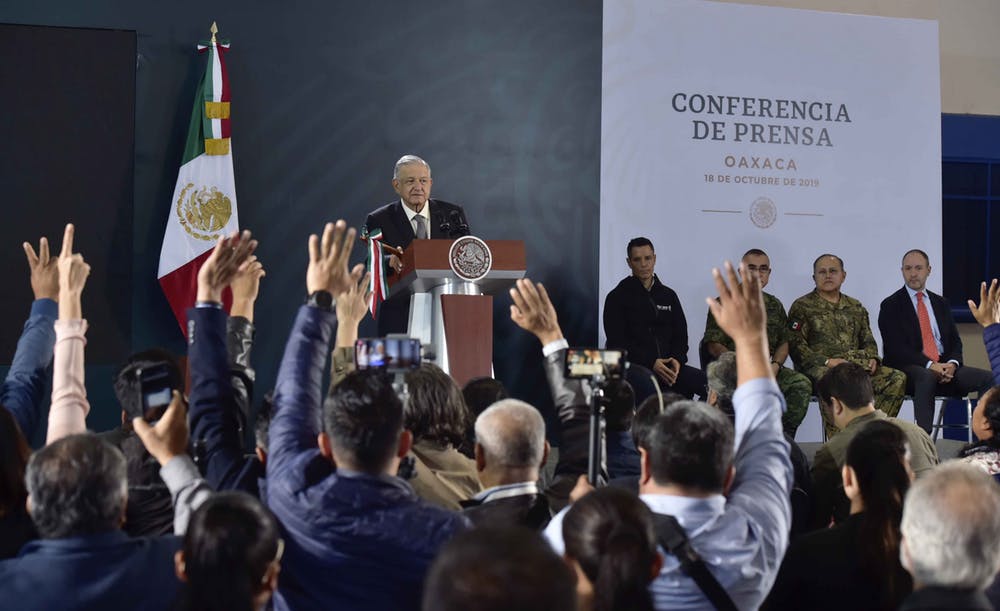
The incident was widely seen as an embarrassment for the Mexican government. López Obrador’s approval rating, while still high, has declined since the recent violence.
But in times of war, deescalation is sometimes the only way to prevent more bloodshed. There is no easy fix for entrenched criminal violence. Every decision, every policy, has trade-offs.
Indigenous resistance
That doesn’t mean the cartels should be left alone.
The researchers Sandra Ley, Guillermo Trejo and Shannan Mattiace have studied how some indigenous communities in the dangerous southern state of Guerrero have managed to prevent criminal infiltration of the police and local judiciary. One strategy, they found, was quickly identifying and shaming officers and judges who collude with cartels.
Having trustworthy institutions has, in turn, enabled these communities to resist cartel pressures from within and react powerfully when cartels attack.
Because it draws on Mexican indigenous communities’ unique, long tradition of social mobilization, this strategy is not easily replicable.
But that, too, is a lesson: All violence is local. The many illegal markets that fuel the criminal business in Mexico – from drugs and oil theft to extortion and avocado distribution – may be national and international, but the cartels’ specific crime dynamics are not.
The way crime groups establish territorial control, gain power and carry out attacks varies from place to place. So do the criminals’ political relationships and the ways different communities respond to violence.
A temporary turnaround
Take Ciudad Juárez, for example – just across the border from El Paso, Texas.
In 2010, Juárez was the most violent city in the world. By 2012, violence had dropped by 60%.
Some analysts and politicians credited Todos Somos Juárez – “We Are All Juarez” – a federal program that funded 160 short-term social improvement projects like new housing, sports programs and improved public security infrastructure.
But violence also decreased in Juárez, my research shows, because the federal security forces occupying the city, who were responsible for many abuses of power, largely withdrew in 2011. Plus, the Sinaloa Cartel eventually prevailed in its turf war with the Juárez Cartel.
Ciudad Juárez’s turnaround was temporary. As a result of increased competition between cartels, new armed factions and local gangs, homicides in the city increased 700% last year.
U.S. immigration policy is hurting Ciudad Juárez, too. The thousands of migrants forced to await their U.S. asylum hearings in Mexico – many of them homeless – have become easy prey for organized crime, according to the U.S. Immigration Policy Center at the University of San Diego. Kidnapping and robbery are way up along the U.S.-Mexico border.
All crime is local
The Juárez and Guerrero examples suggest that Mexico may have to tackle crime not only federally, with its new National Guard, but also city by city.
That may mean federal financing and training of elite, reliable local civilian police forces, learning from indigenous towns in Guerrero. It could mean funding social programs like Juárez’s, to get at the root causes of violence.
It will certainly require partnering with local political and civilian allies who understand how criminal gangs exert their power.
City-specific security strategies won’t show immediate results. But they can help restore the Mexican government’s legitimacy and control in a country besieged by cartels.
Originally published by The Conversation, 11.22.2019, under the terms of a Creative Commons Attribution/No derivatives license.