
What is important is whether Iran, as a fundamentalist Islamic state or something else, is doomed to eternal enmity with the United States.

By Dr. Shireen T. Hunter
Research Professor
Edmund A. Walsh School of Foreign Service
Georgetown University
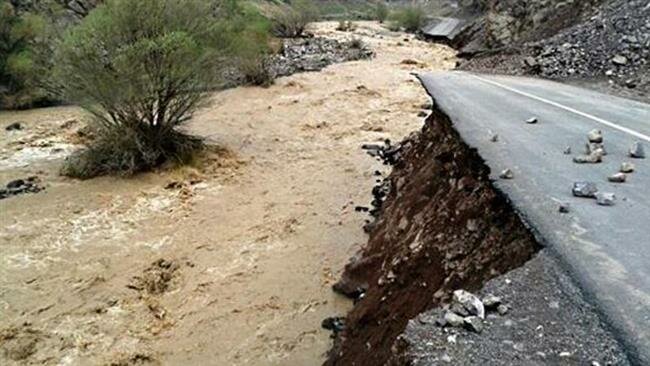
Commenting on the devastating and widespread floods that have engulfed 26 of Iran’s 31 provinces, Secretary of State Mike Pompeo essentially blamed this huge natural disaster on the Iranian government’s mismanagement. He has a valid point. By undoing all earlier reforms, Iran’s revolutionary government allowed predatory forces to take over national and private lands and to build whatever they wanted, wherever they wanted, including in dry river beds. In a hurry to get rich, the new clerical and revolutionary elites and their offspring ignored all environmental safety measures.
Thus, throughout the last four decades there was no adequate maintenance of riverbeds, including regular cleaning and proper management of water resources. Then came a dam-building mania without sufficient study of environmental consequences. Refusal to use foreign experts on the pretext of self-sufficiency contributed to serious engineering shortcomings. The IRGC construction arm built most of these dams, which was a highly lucrative endeavor. The best example is the Gatwand dam in Khuzestan Province, which is now devastated by floods. Other mistakes have included building railroads in flood plains and paving over dry riverbeds.
Meanwhile, foreign military adventures took funds away from needed domestic water-management projects. The leadership’s foreign policy mistakes—especially fighting against so-called imperialism, or as the Supreme Leader recently said, battling evil—dried up international commerce and investment and stopped the flow of technology, even before the harshest of American sanctions were imposed.
Iran’s mistakes, however, do not excuse the heartlessness of the Trump administration’s policy of doing all it can to prevent aid to Iran’s flood victims. The American sanctions policy regarding Iran is like a medieval siege aimed at starving the enemy by exhausting its food resources until it surrenders.
Iran’s Islamic government began the process of mutual alienation that has produced the lack of U.S. compassion. Those who staged the 1979-81 hostage crisis bear a great responsibility in generating current American hostility. They are also responsible for the revolution’s radical turn that has caused tremendous damage to Iran and the Iranian people. Also, without the hostage crisis, Iraq’s Saddam Hussein could not have gotten away with invading Iran. Another factor was Ayatollah Khomeini’s decision to make the fight against America the cornerstone of the revolutionary regime in revenge for what he saw as American support for the shah.
Since the late 1980s, however, it has largely been the United States that has refused the path of reconciliation unless Iran completely surrenders. In the process, it has undermined moderate forces in Iran. Its withdrawal from the Iran nuclear deal, which undercut those Iranians who argued that a different relationship with the United States could be possible, is only the latest example of this approach.
After the collapse of the USSR in 1991, America and some of its regional allies have found in Iran a convenient enemy figure and scapegoat for their own policy mistakes. Thus, using the Iran scarecrow, they sold billions of dollars’ worth of arms to Arabs. They’ve tried to bring about Arab-Israeli reconciliation, not as a genuine effort to resolve the Palestinian problem but rather to reinforce common enmity toward Iran. Lately, the apocalyptic outlook of some key U.S. political figures has further consolidated Iran’s enemy image.
As part of this strategy, there has been a systematic efforts in the United States for the past 30 years to demonize not only the Islamic regime but Iran and its people. Even Iran’s pre-Islamic history has not been immune to this demonization. Some years ago, a well-known Iran analyst said that Iran was responsible for the very creation of evil, not just its recognition or identification. Hollywood movies have mined the history of Greco-Persian relations, portraying Iranians as savages, conveniently forgetting how Alexander burned Persepolis and killed or exiled its inhabitants.
For centuries, much of the West has defined itself against Iran, beginning with ancient Greece. Yet Greek thought and aesthetics were influenced by Iran; Persepolis was the inspiration for the Pantheon. Iran was one of the few places in the known ancient world that Rome did not conquer. Thus, Iran has always represented an intellectual rival and not merely a military challenge to the West. Europe’s post-Christian secular identity, built on this Greco-Roman heritage, consolidated this old view of Iran in modern European minds and thus also in America’s.
Over the centuries, Iran and its indigenous culture have been much diminished. But there is still a spark underneath the ashes of a once glorious civilization, which periodically seeks a renaissance. But often it has succumbed to its own and its leaders’ weaknesses as well as the policies of other powers. In the last 250 years, this has meant colonial or neo-imperialist powers.
Given this history, current U.S. attitudes toward victims of the recent flooding is no surprise. What is important is whether Iran, as a fundamentalist Islamic state or something else, is doomed to eternal enmity with the United States or whether the two countries can find common ground. As long as the current team is in Washington and hardliners continue to sacrifice Iran’s national interest in pursuit of some unattainable Islamist utopia, there is no room for optimism.
Originally published by LobeLog, 04.09.2019, based at the Institute for Policy Studies, a program of Open Society Foundations, under the terms of a Creative Commons Attribution-NonCommercial-NoDerivs 3.0 Unported license.