
By Michael Grabell
Reporter
ProPublica
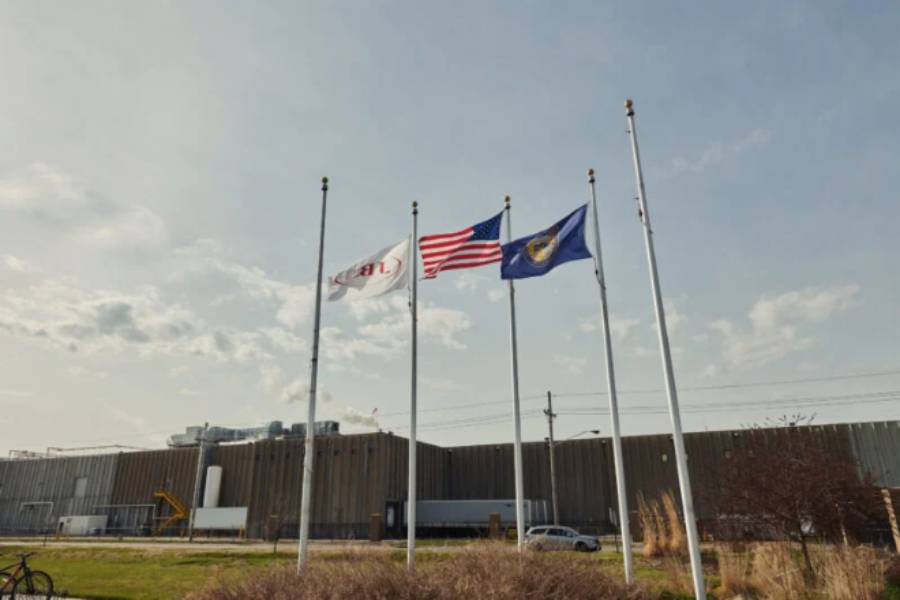
On Tuesday, March 31, an emergency room doctor at the main hospital in Grand Island, Nebraska, sent an urgent email to the regional health department: “Numerous patients” from the JBS beef packing plant had tested positive for COVID-19. The plant, he feared, was becoming a coronavirus “hot spot.”
The town’s medical clinics were also reporting a rapid increase in cases among JBS workers. The next day, Dr. Rebecca Steinke, a family medicine doctor at one of the clinics, wrote to the department’s director: “Our message is really that JBS should shut down for 2 weeks and have a solid screening plan before re-opening.”
Teresa Anderson, the regional health director, immediately drafted a letter to the governor.
But during a conference call that Sunday, Gov. Pete Ricketts made it clear that the plant, which produces nearly 1 billion pounds of beef a year and is the town’s largest employer, would not be shut down.
Since then, Nebraska has become one of the fastest-growing hot spots for the novel coronavirus in the United States, and Grand Island has led the way. Cases in the city of 50,000 people have skyrocketed from a few dozen when local health officials first reported their concerns to more than 1,200 this week as the virus spread to workers, their families and the community.
The dismissed warnings in Grand Island, documented in emails that ProPublica obtained under the state’s public records law, show how quickly the virus can spread when politicians overrule local health officials. But on a broader scale, the events unfolding in Nebraska provide an alarming case study of what may come now that President Donald Trump has used the Defense Production Act to try to ensure meat processing plants remain open, severely weakening public health officials’ leverage to stop the spread of the virus in their communities.
Ricketts spokesman Taylor Gage said the governor explained on the call with local officials that the plant would stay open because it was declared an essential industry by the federal government. Two and a half weeks later, as cases were rising among the state’s meatpacking workers, Ricketts, a Republican businessman whose father founded the brokerage TD Ameritrade, held a news conference and said he couldn’t foresee a scenario where he would tell the meatpacking plants to close because of their importance to the nation’s food supply.
“Can you imagine what would happen if people could not go to the store and get food?” he asked. “Think about how mad people were when they couldn’t get paper products.”
“Trust me,” he added, “this would cause civil unrest.”
In the last two weeks, small meatpacking towns across Nebraska have experienced outbreaks, including at a Tyson Foods beef plant in Dakota City, a Costco chicken plant in Fremont and a Smithfield Foods pork plant in Crete. With the governor vowing to keep plants open, the companies have only in recent days decided to close for deep cleanings as cases have grown to staggering levels.
In Grand Island, two hours west of Omaha, the consequences of the governor’s decision came quickly. The CHI Health St. Francis hospital, which has 16 intensive care beds, was soon overwhelmed. At one point in April, it had so many critical patients that it had to call in three different helicopter companies to airlift patients to larger hospitals in Lincoln and Omaha, said Beth Bartlett, the hospital’s vice president for patient care.
JBS workers felt the strain, too. Under pressure to keep the food supply chain flowing, some of the plant’s 3,500 workers, many hailing from Latin America, Somalia and Sudan, said they were told to report for work regardless. In a letter to the governor last week, Nebraska Appleseed, a nonprofit advocacy group, said a JBS worker had been told by his supervisor that if he tested positive, he should come to work anyway and “keep it on the DL” or he’d be fired. Some workers who’d been told to quarantine after being exposed told ProPublica this week that they were called back to work before the 14-day window recommended by the Centers for Disease Control and Prevention — even if they felt sick. One worker in the offal, or entrails, section recently fainted in the plant, they said, but was told he couldn’t go home.
Cameron Bruett, head of corporate affairs for JBS, said the company has worked in partnership with local officials to prevent the spread of the coronavirus and did not influence the governor’s decision to keep the plant open. He pointed to comments made recently by University of Nebraska Medical Center officials who toured the plant, who said JBS has put in place some “best practices,” including installing barriers on the meat cutting line, communicating new precautions in multiple languages and ensuring the proper use of masks.
Bruett said no one is forced to come to work or punished for calling in sick. “Such actions, if true, would be grotesque and a clear violation of our culture,” he said.
The emails obtained by ProPublica show that local health officials have traced 260 cases to the JBS plant. But that was nearly two weeks ago and almost certainly underestimates the total. Anderson, who directs the Central District Health Department, said she hasn’t had enough tests to do targeted testing of JBS employees and is only testing people when they’re symptomatic. In Grand Island and its surrounding county, 32 people have died from the virus. According to workers, at least one of those was a JBS employee.
Across the country, more than 10,000 COVID-19 cases have been linked to meatpacking plants, and at least three dozen workers are known to have died, a ProPublica review of news reports and government health data shows.
While cases in the worst hit urban areas like New York appear to have plateaued, the nation’s meatpacking towns have continued to see spikes. A few large outbreaks have dominated public attention, but COVID-19 cases have popped up in well over 100 plants in mostly rural communities. There the virus’s impact is magnified by the workers’ sometimes cramped living conditions, with multiple generations of immigrant and refugee families often residing together in apartments, houses and trailers.
Before Trump’s order, more than 30 plants had shut down at least briefly to increase cleaning and control the spread among their workforces. The various closures have cut beef and pork production by more than a third compared with last year, causing supply chain disruptions for some supermarkets and fast-food chains.
Some of those closures show the role public health officials have had in the actions of large meatpacking companies like JBS, which has beef, pork and poultry plants in 27 states.
In Colorado, Dr. Mark Wallace of the Weld County Department of Public Health and Environment and state health director Jill Hunsaker Ryan grew worried that that if the coronavirus spread at JBS’ Greeley plant, it would have a “devastating” effect on the community that “would quickly overwhelm the medical resources available in the hospitals.”
Unlike Nebraska, Colorado’s health officials eventually ordered the JBS plant to close. But documents obtained by ProPublica show the protracted debate that came before that decision, with JBS invoking the governor to question the formal closure order. By the time the order was issued, some public officials felt the virus had been given too big a head start.
Like Grand Island, Greeley officials were already hearing by the end of March that hospital emergency rooms were seeing a “high number of JBS employees,” according to an email Wallace sent April 1 to the plant’s occupational health director.
“Their concern, and mine, is far too many employees must be working when sick and spreading infection to others,” Wallace wrote, urging the plant to take additional safety measures.
Three days later, Wallace wrote a more detailed letter to JBS’ human resources director, Chris Gaddis, documenting the virus’s spread and threatening to shut the plant down if it didn’t screen employees and ensure they could work 6 feet apart.
But as days passed, the situation in Greeley didn’t improve.
“Want you to know my colleagues are not reassured by what I’m sharing about measures being implemented,” Wallace wrote to Gaddis. “‘The cat’s out of the bag’ is what all health care providers are saying — too many sick people already, too much spread already, etc.”
After nine days of back-and-forth, JBS agreed to close the plant and Hunsaker Ryan and Wallace issued a formal shutdown order. But negotiations seemed to stretch until the last minute, emails show.
After Hunsaker Ryan sent JBS the order on the afternoon of April 10, Gaddis appeared confused. “It is our understanding from the telephone conversation that the governor did not want this letter sent,” Gaddis wrote. “Please confirm it was properly sent.”
Bruett said the company’s impression was that the governor didn’t feel a formal order “was necessary given our voluntary decision to shut down.” But Conor Cahill, a spokesman for Gov. Jared Polis, said: “Of course the governor wanted the health order sent. The governor has been clear that JBS needs to be more transparent with their staff and the public about the situation at their plant.”
Notified of the shutdown by his staff, Greeley Mayor John Gates wrote in an email, “In my opinion, that should have happened a week ago for the health and safety of their employees.”
On Wednesday, the state announced the latest numbers on the JBS outbreak: 280 employees had tested positive for COVID-19, and seven of them had died.
The Grand Island beef plant opened in 1965 in a sugar beet farming area. In recent decades, the plant has drawn immigrants from Mexico and Central America, and more recently refugees from Somalia and Sudan. In a sign of the area’s shifting workforce, Somali residents have opened a mosque in the old El Diamante nightclub and a community center in the former Lucky 7 Saloon next to a Salvadoran restaurant named El Tazumal.
Members of those communities became among the first to hit the area’s medical clinics as the virus began to spread. By the last week in March, the Family Practice of Grand Island, where Steinke works, had opened a special respiratory clinic to handle COVID-19 patients. That week, six of the patients had come from JBS. But over three days from March 30 to April 1, the clinic saw 25 patients that carried JBS insurance, indicating they were either employees or their dependents.
Danny Lemos’ father was one of the first JBS workers to get sick from the virus in late March. The 62-year-old, who’d worked at the plant for a year, had developed a fever and a cough.
“One day, he was laying in the living room on a chair, wrapped up in a blanket, shivering,” Lemos said. “My mom takes his temperature, and he had a temperature of 105 and he was really having trouble breathing.”
His father was rushed to the hospital and put on a ventilator.
Within days, Lemos said he also started having trouble breathing and joined his father in the ICU. Lemos, 39, was put in a medically induced coma and given a 20% chance of living, he said.
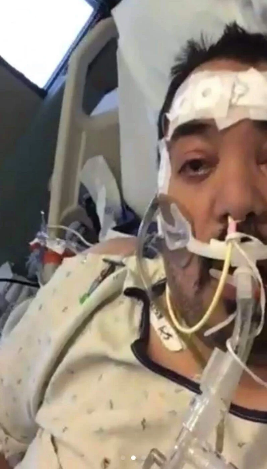
Surprisingly, he said, he eventually recovered and was released from the hospital in late April. His father, Danny Lemos Sr., has been in the hospital for more than a month, most of the time on a ventilator, and is only now starting to recover.
Lemos said JBS should have taken better precautions.
“Shutting down right away, I think, probably would have helped a ton,” he said. “Do I think it would have kept everybody from getting sick? No, because those same people are still going to be out and about in the community. But just being so many people in one building, it was like a ticking time bomb.”
In an interview this week, Steinke said that it was hard to get the message across to JBS that more needed to be done.
“Even if they did not stop or shut down, if they would have put in better protections right from the start,” she said, “we would not have seen such a rapid rise in cases.”
At one point before the governor’s decision, the emails ProPublica obtained show, officials found language on the U.S. Department of Agriculture’s website that said local authorities could close a plant and the USDA would follow those decisions, potentially giving the health district some leverage.
“I guess I will send it to … HR there and maybe he will take us more seriously,” Anderson, the local health director, wrote in an email to the city administrator.
Under Trump’s executive order, that guidance has been reversed: The USDA could try to overrule local decisions if federal officials disagree.
That could pose a risk to the USDA’s own workforce of federal food inspectors, who work inside the plants to ensure the meat is safe to eat. According to the emails, some inspectors at the JBS plant also tested positive. Because inspectors sometimes monitor multiple sites, one inspector noted that she had recently worked in two other plants that have also had outbreaks, potentially spreading the virus within other plants.
“From my perspective,” temporarily closing the JBS plant “would have reduced the transmission,” Anderson said in an interview this week. “But if you shut down a plant and your 3,700 employees have nowhere to go, where are they going to go and how far is the spread going to be outside the plant vs. inside the plant? And if you end up going a month, what happens to their ability to feed their families?”
Anderson said that the “general feeling” she got from the call with the governor was that they needed to do more testing. So after the governor blocked the effort to close the plant, she continued to try to work collaboratively with JBS to encourage more testing of their employees.
In the emails, JBS officials said they were open to testing but repeatedly expressed concern about public disclosure of the results. “We want to make sure that testing is conducted in a way that does not foment fear or panic among our employees or the community,” JBS chief ethics and compliance officer Nicholas White wrote in an email to Anderson on April 15.
A week later, after the number of JBS cases was released by Anderson, Tim Schellpeper, president of the company’s U.S. beef processing operations, emailed her that he was worried about the amount of national attention it was attracting. “Have you given more thought to adding clarity/correction around this in your comments today?” he asked.
As JBS officials fretted about the optics of testing their employees, tensions within the families of the workers mounted. As the number of sick workers grew, the daughter of one worker, Miriam, said she was panicking about what would happen to her mother, who worked on the plant’s kill floor. At the end of every shift, she said, she called her mother to make sure she was okay.
“It was dreadful,” said Miriam, who asked that her last name not be used to protect her mother from retaliation. “It was just kind of living in fear waiting for the day she would have a fever. We knew it was going to happen because she’s a JBS employee. We didn’t think it was preventable anymore.”
Then, one day, she got a call from her mother, telling her that she had developed a fever and was being sent home.
“As she was changing in the locker room, she calls me and you can just hear the fear in her voice,” Miriam said.
Shortly after, her father tested positive for the virus too. Thankfully, she said, both her parents had only mild symptoms and have since recovered. But JBS and the governor should have done more, Miriam said.
“It just seemed like they were kind of careless,” she said. “I think it would have been a smart idea if not to close down the plant, to take more action to help the employees. They’re essential, but they need protection. They need to be kept safe.”
In the meantime, Ricketts has said that his approach of keeping the state “open for business” worked. And at a news conference Friday, he underscored the importance of the meatpacking industry to the state’s economy, proclaiming May as “Beef Month” in Nebraska.
Originally published by ProPublica, 05.07.2020, under a Creative Commons Attribution-NonCommercial-NoDerivs 3.0 United States license.