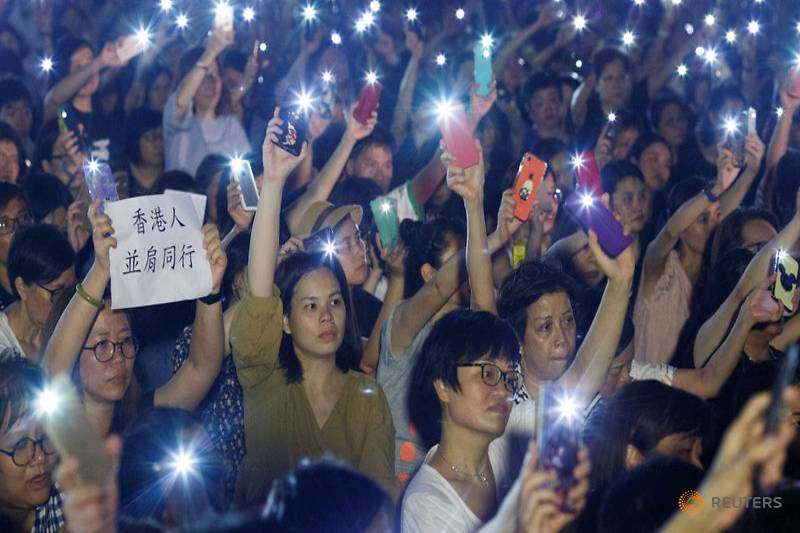

Protests in Hong Kong over a proposed extradition law are the largest in the territory’s history. But not all of the people out in the street share the same tactics or goals.

By Dr. Kelly Chernin
Research Assistant Professor
Appalachian State University
It’s a tradition for people in Hong Kong to protest on July 1, the anniversary of the day in 1997 when the Chinese took over control of the territory from the British.
This year, the protests were likely the largest in Hong Kong history, and smaller protests continued days later.
On July 1, several dozen protesters out of a crowd of maybe a million turned violent, rushing the legislative council building, breaking glass and vandalizing the interior.
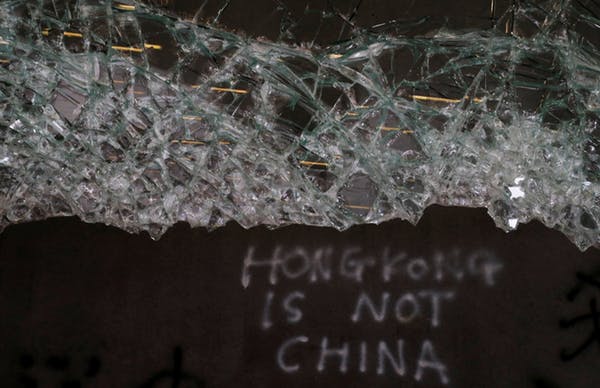
The violence came despite the fact that protesters achieved a major victory in their fight to protect their legal system from Chinese interference.
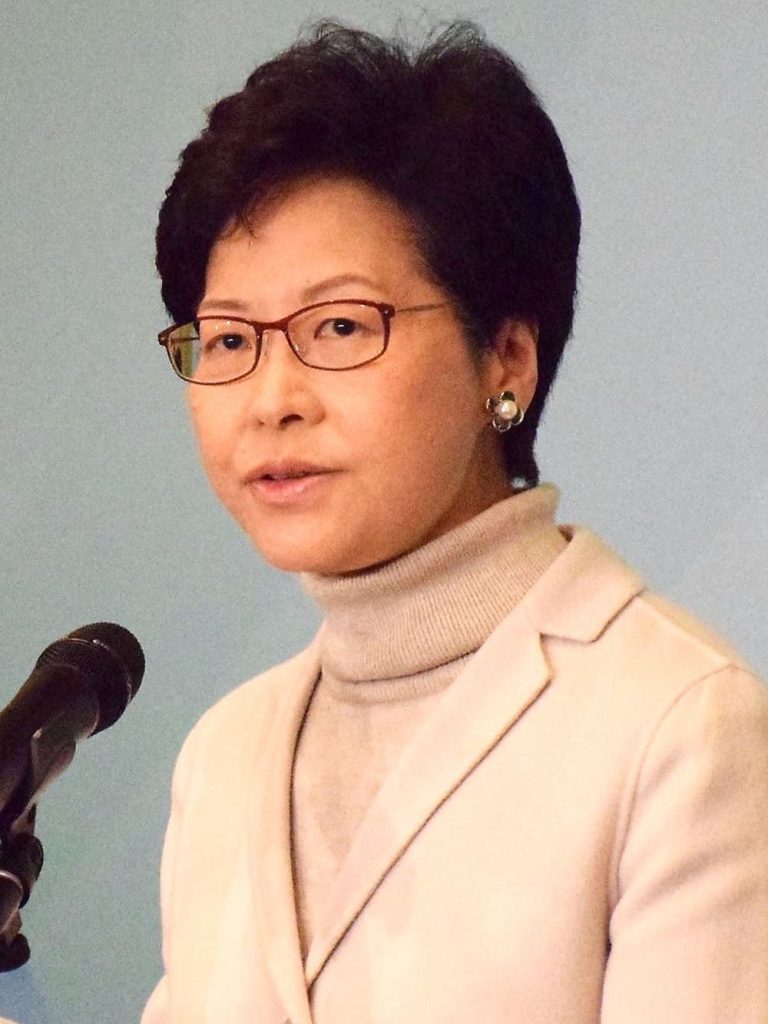
That victory was won on June 15 when Hong Kong Chief Executive Carrie Lam acknowledged popular resistance and announced she would suspend a vote on a proposed new law that would allow China to extradite suspects accused of certain crimes and prosecute them in Chinese courts.
Even after suspension of the vote, protesters continued to demonstrate – demanding that Lam step-down and the bill be permanently withdrawn.
Beijing and Hong Kong authorities are referring to the small faction of violent protesters as “extreme radicals.” Politicians like Martin Lee have also condemned the violent acts while also claiming to understand the frustration that led to such action.
The future of Hong Kong’s protest movement is now in question.
‘One country, two systems’
Chinese rule over Hong Kong, an island territory off the coast of Shenzhen, has long been disputed.
The British colonized Hong Kong in the 1800s following the Opium Wars. But China never accepted this territorial claim, and insisted that Hong Kong belonged to China.
In 1997, after a decade of negotiations between the United Kingdom and China, Hong Kong returned to China – with some strings attached. Knowing that Hong Kong had developed under a Western system of government, then-Chinese leader Deng Xiaoping made Hong Kong a “Special Autonomous Region” and agreed to give the island a 50-year transition period to come fully under Chinese rule.
Under this system, Hong Kong would retain its judicial system and legislative council, affording the island relative independence in its day-to-day operations. But Hong Kong would belong to China. The arrangement became known as “one country, two systems.”
Controversially, full suffrage and free elections were not part of the 1997 deal.
For two decades, though, the “one country, two systems” arrangement seemed to give Hong Kong relative autonomy from Chinese interference.
Then, in 2014, China announced that people would be allowed to vote in Hong Kong’s 2017 chief executive election only from a short list of preapproved candidates.
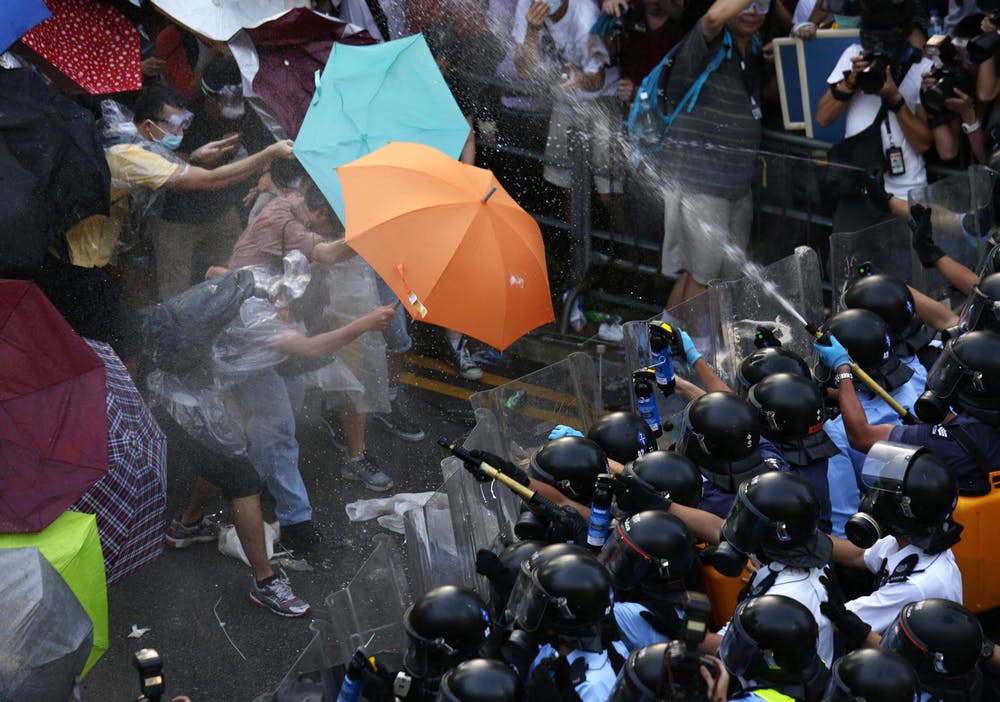
Thousands took to the streets to demand universal suffrage. To protect themselves from police spraying tear gas at the front lines, they used umbrellas, giving rise to the name the “Umbrella Movement.”
In the years since the uprising, I have interviewed numerous democracy activists in Hong Kong as part of my academic research into the evolution of social movements.
Many participants told me that they believed the 2014 Umbrella Movement ended peacefully because China didn’t want another Tiananmen Square on its hands. In 1989, Chinese soldiers opened fire on student protesters in the Beijing square, killing hundreds and raising global uproar.
Emboldened by international support for the Umbrella Movement, Hong Kong’s young activists continued their efforts to protect their independence from China. Nine Umbrella Movement leaders ran for local office in Hong Kong in the territory’s 2015 elections.
In 2016 elections, two pro-independence politicians even won seats in the legislative council. However, they were quickly expelled for “failing” to properly recite their loyalty oaths at a swearing-in ceremony.
In 2017 Carrie Lam, a candidate loyal to Beijing and the driving force behind the extradition law, was elected chief executive – Hong Kong’s highest public official.
Creeping Chinese influence
Under Lam’s leadership, traditionally pro-democracy politicians were removed from office. Some were even arrested and jailed as dissidents.
Today, only 24 pro-democracy politicians remain in Hong Kong’s 70-seat legislative council.
Increasing Chinese influence on the island territory also threatens Hong Kong’s clout as a major economic hub.
For decades, Hong Kong’s relative autonomy has made the island territory an appealing place to do business in Asia. But under stronger Chinese rule, financial markets and regulatory systems in Hong Kong may become less reliable as they begin to reflect the national interests of China – not those of the free market.
The American Chamber of Commerce and several prominent Hong Kong business leaders have publicly spoken out against the extradition law.
“Spiriting people away over the border would undermine business confidence,” one hedge fund manager told the nonprofit human rights organization Hong Kong Watch.
Previously businesses seemed to support the movement; however, with some of the protesters turning to violence that support may waver. Without the support of Hong Kong’s financial hub, China may be more inclined to intervene.
“Chinese society is all too aware that a zero-tolerance policy is the only remedy for such destructive behavior. Otherwise, and without this policy, it would be similar to opening a Pandora’s Box,” wrote the Global Times, a Beijing mouthpiece.
While Hong Kong’s stock market was up following the most recent protests, scholars like Eswar Prasad claim China no longer needs Hong Kong’s economy. With China’s own economic growth, Hong Kong does not need to remain an open society for the sake of China’s financial progress.
Human rights at stake
Hong Kong’s legal system is now the only surviving pillar of “one country, two systems,” which was created to give Hong Kong autonomy over its legal, economic and financial affairs.
If the postponed extradition law or similar legislation passes, there will be no meaningful remaining barriers between democratic-leaning Hong Kong and authoritarian China.
For many in Hong Kong, that’s an intolerable future.
An assessment by the World Justice Project, a nonprofit organization that works to advance the rule of law worldwide, ranks Hong Kong 16th and China 82nd worldwide based on their constraints on government powers, absence of corruption, open government, fundamental rights, order and security, regulatory enforcement, civil justice and criminal justice.
China is a known violator of human rights. It systematically surveils and represses ethnic minorities like the Uyghurs, a Muslim population in China’s northwest region, and restricts internet access. The government has jailed hundreds of human rights lawyers since 2015.
Political dissidence is not tolerated in China. The late Nobel Peace Prize winner Liu Xiaobo, was sentenced in 2009 to 11 years in Chinese prison for “inciting subversion of state power.” He died in prison in 2017 after being denied travel abroad for cancer treatment.
Hong Kong, on the other hand, has a rich history of mass demonstrations.
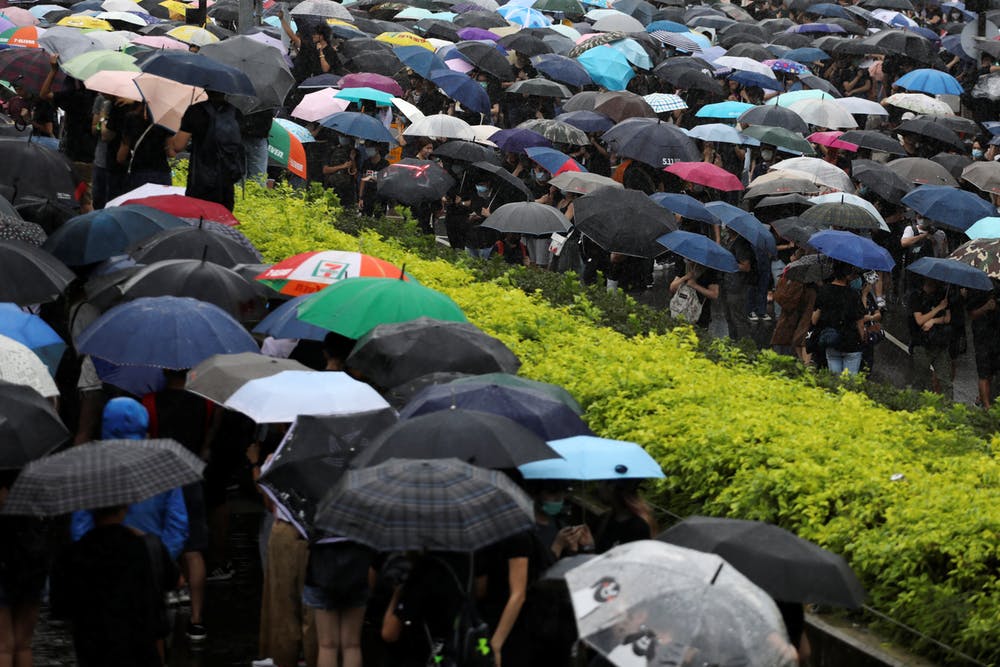
In Hong Kong’s 1966 Star Ferry riots, people protested the British colonial government’s decision to increase transit fares. And every July 1 since 2003, people have taken to the streets pleading for universal suffrage.
“One country, two systems” has allowed Hong Kong residents to openly disagree with policymakers in a way mainland Chinese cannot. As required by Hong Kong’s legal system, democracy protesters arrested for their political activism are given legal representation, trials and serve time in Hong Kong’s well-regulated prisons.
The extradition law’s threat of trial and punishment in China would have a chilling effect on future democracy demonstrations, further eroding “one country, two systems.”
Originally published by The Conversation, 06.08.2019, under the terms of a Creative Commons Attribution/No derivatives license.