

By Dr. Rebecca Gordon
Adjunct Professor of Philosophy
University of San Francisco
These days, teaching graduating college seniors has me, as the Brits would say in the London Underground, “minding the gap.” In my case, however, it’s not the gap between the platform and the train I’m thinking of, but a couple of others: those between U.S. citizens and our government, as well as between different generations of Americans. The Covid-19 crisis has made some of those gaps far more visible than usual, just as my students leave school with many of their personal expectations in tatters.
The chasms illuminated by the coronavirus are many: the gender pay gap; the wealth gap between African Americans and Latinos on one side and white Americans on the other, not to speak of the gap in their healthcare access and health outcomes; the gap in the amount of domestic work and childcare done by women and men; and that’s just to start down a longer list. Covid-19 has exacerbated all of these gaps in very concrete ways. To take just one example, the children of families with the fewest resources will be the ones most affected by missing almost half a school year or more.
The generous resiliency of my racially diverse students continues to surprise me. They know it’s a bitter world out there, but many of them seem determined, gaps or not, to change it.
Unbelievable
Born in 1952, I was too young for the “missile gap,” which animated John F. Kennedy’s 1960 run for president. On the Senate floor, as early as 1958, he began claiming that the U.S. was falling behind the Soviet Union in the production and deployment of nuclear missiles. In reality, that gap was all in the other direction, but it did help get him elected and spurred a major escalation of U.S. nuclear development and testing.
Eventually, a series of agreements would reduce Cold War nuclear tensions, although it now looks as if the Trump administration is going to withdraw from the last of those pacts early next year. It’s already pouring staggering amounts of money into further nuclear arms development, while contemplating the first U.S. nuclear test since 1992. So prepare for a new “missile gap.”
The first national abyss I personally became aware of was the “credibility gap.” That phrase signified the distance between what the U.S. government claimed was happening in Vietnam and the country’s doomed war effort there. As that conflict lumbered on, the gap only grew. Reporters in South Vietnam were, for instance, regularly treated to what came to be known as “the Five O’Clock Follies.” These were, as Susan Glasser recently wrote in the New Yorker, “nightly briefings at which American military leaders claimed, citing a variety of bogus statistics, half-truths, and misleading reports from the front, to be winning a war that they were, in fact, losing.” The Follies featured daily “body counts” of the dead presented like so many football scores, except that winner was the team with the fewest “points.”
Somehow the visitors always won and yet, after apparently taking every game, we lost the war. In 1975, the United States finally turned out the lights on the war effort, having lost more than 58,000 soldiers, while killing millions of Vietnamese, Laotians, and Cambodians — another less noted gap. (In recent months, headlines like this one from Reuters became commonplace: “U.S. coronavirus deaths surpass Vietnam War toll” — quite true if you don’t count the dead from the countries where that war was fought.)
As others have pointed out, President Trump’s coronavirus press briefings were contemporary Five O’Clock Follies, complete with bogus victory statistics on how this country leads the world in Covid-19 testing. It’s worth remembering, however, that modern presidential dissembling hardly began with Donald Trump.
Sadly enough, the credibility gap is associated with Lyndon Johnson who, from 1963 to 1968, actually presided over the country’s greatest efforts to end poverty since Franklin Delano Roosevelt’s Great Depression-era New Deal. He also oversaw the first organized federal-level challenges to racial injustice since Reconstruction. If it weren’t for the Vietnam War, Johnson might be remembered today for another “war” entirely, his War on Poverty, which gave us Head Start, an academic and nutritional enrichment program for poor children, and Medicare, guaranteeing healthcare for people 65 and older. And it was Johnson who finagled—through a Congress that still contained a host of white supremacists—passage of the 1964 Civil Rights Act, the 1965 Voting Rights Act, and the 1968 Fair Housing Act. None of those laws dismantled institutional racism, but each provided legal leverage for those seeking to ameliorate its worst effects.
A Harvest of Doubt
Still, Johnson’s tragedy (and our own) was that, in those years, his Vietnam-inspired credibility gap created fertile ground in which to plant the greatest gap of all: a robust distrust of government in general, a belief that collective action at the national level represented a dangerous and intractable obstacle to the common good. Partially thanks to that very credibility gap, he would be succeeded by Richard Nixon, who would continue the Vietnam War in an increasingly mendacious fashion, including the secret bombing of Cambodia. Nixon’s CIA would also give secret moral and logistical support to General Augusto Pinochet’s 1973 coup against Chile’s democratically elected socialist president Salvador Allende, plunging that country into decades of torture, murder, and dictatorship.
Nixon’s own presidency collapsed under the weight of the duplicity and corruption that came to be known as “Watergate.” So redolent of scandal did the name of that Washington office complex (where Nixon’s minions burgled Democratic National Committee headquarters) become, that decades of scandals-to-come would regularly be labeled “gates” of various sorts. The latest is, of course, “Obamagate,” Donald Trump’s attempt to conjure up a scandal out of thin air about our last president. When the Washington Post’s Philip Rucker tried to winkle an actual definition of the supposed crime involved out of the president, he replied, “You know what the crime is. The crime is very obvious to everybody. All you have to do is read the newspapers, except yours.”
Ronald Reagan would go on to manipulate Johnson’s and Nixon’s inheritance of distrust over his eight years in office. In his January 1981 inaugural address, he proclaimed that “government is not the solution to our problem, government is the problem.” He then set out to dismantle Johnson’s War on Poverty programs, attacking the unions that underpinned white working-class prosperity, and generally starving the beast of government. We’re still living with the legacies of that credo.
The Reagan revolution, as it was called, actually continued in the years of Bill Clinton’s presidency. Republican Newt Gingrich, then the speaker of the House of Representatives, supposedly helped write what would be called the Contract with America. Originally conceived in the bowels of the conservative Heritage Foundation, that document contained language taken directly from Reagan’s 1985 State of the Union address. It enshrined his version of the credibility gap in 10 pieces of proposed legislation. Among them were mandatory sentencing laws that helped make the U.S. the world’s leader in mass incarceration. Keeping so many people in jail is a curious outcome for an initiative supposedly rooted in a commitment to getting government out of people’s lives.
Nor should we forget those lies about Saddam Hussein’s reputed weapons of mass destruction and his links to al-Qaeda. This doctored intelligence allowed President George W. Bush to launch his much-desired, and disastrous, invasion and occupation of Iraq—another credibility gap-based folly of the first order.
Now, after three and a half years of Donald Trump, many Americans and much of the world simply accept that the U.S. has a credibility chasm of a previously unimaginable sort. Somehow, it’s become so much the norm that, even as the Washington Post has tallied up 18,000 of Trump’s “false and misleading statements,” few Americans expect to have a president who actually tells the truth anymore. The credibility gap of the 1960s and 1970s, the distrust it engendered in the 1980s and 1990s, not to mention the credibility follies of George W. Bush, all paved the way for a president who would lie multiple times a day while continuing to dismantle government policies that protect ordinary Americans and the environment that sustains their lives.
Indeed, on May 19th, President Trump issued an executive order to “combat the economic consequences of Covid-19” by insisting all agencies “address this economic emergency by rescinding, modifying, waiving, or providing exemptions from regulations and other requirements that may inhibit economic recovery…” Add this to the damage his administration has already done to regulations protecting our air, water, wetlands, and national monuments and you’re way beyond gaps.
OK, Boomer
The credibility gap and the war that generated it gave rise to another kind of division: “the generation gap.” Largely (though not entirely) a white middle-class phenomenon, the phrase stood for a deepening cultural rift between the generation that had constructed the post-World War II United States and the one conscripted to fight its then-latest war. In the space of a few years, that gap, too, would quickly widen into a chasm. On one side would stand the parents who had faced down fascism in Europe and Asia, while filling the factories with Rosie the Riveters and enduring shortages and rationing at home; on the other stood their own children who, at least if they had white-collar or unionized parents, had been born into a life that promised unprecedented economic abundance.
Imagine the pain of those parents when their children, heading out onto the streets to protest Washington’s latest war, rejected that life of security and plenty for which they had sacrificed much and the values that went with it. Imagine the pain of those privileged but anxious children, growing up in the shadow of the mushroom cloud, for whom a promised world of security, plenty, and freedom came to seem ever more like a cheat and a mirage. Imagine their sense of betrayal when a growing Civil Rights Movement revealed that plenty and freedom had always been grotesquely ill distributed in the Land of the Free. Imagine their shock when they realized that the price of plenty was another kind of unfreedom—felt in uniform in distant Southeast Asia where American soldiers were committing murderous acts to support a standard of living dependent on the extraction of cheap raw materials from impoverished developing nations.
Imagine how they felt when they discovered that their parents were prepared to send thousands of them to die in an immoral and pointless war. The Canadian poet Leonard Cohen captured this horror in his song of that moment, “The Story of Isaac and Abraham,” a mournful rendering of the biblical tale of a father willing to obey a god even if it meant slaughtering his own child. As Cohen’s Isaac said to the parents of the Vietnam War era:
“You who build these altars now
To sacrifice these children,
You must not do it anymore…”
Fifty years ago this spring, such sacrifices seemed plentiful enough. The National Guard, called onto the campus of Kent State University in Ohio to suppress students protesting the invasion of Cambodia, shot and killed four of them. Just weeks later, local police killed two protesting African-American students and wounded 12 more at Jackson State University in Mississippi. No wonder that when we looked at the hands of our parents’ generation, they seemed to cradle what Cohen called “their hatchets blunt and bloody.” No wonder our unofficial slogan then was: “Never trust anyone over thirty.”
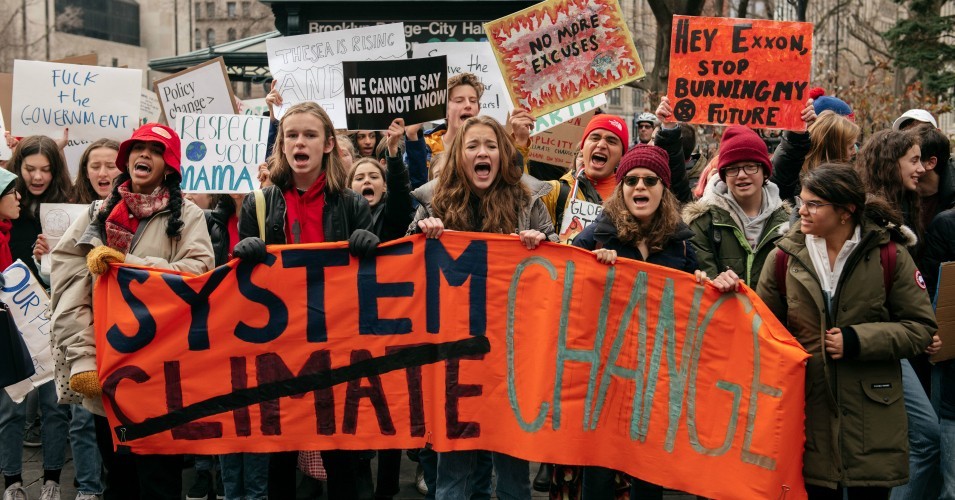
Today, however, boomers like me stand on the other side of a new generation gap. We’re the ones younger people increasingly feel they shouldn’t trust. And who can blame them? If we ever consent to get off stage along with Donald Trump, Joe Biden, and the rest of them, we’ll be leaving behind a shattered planet, including the most profound economic inequality in a century, mass extinctions of every sort, and a climate crisis that threatens all of humanity, starting with the poorest of us.
Mending the Gaps
And then came the coronavirus. Although Covid-19 kills people of all ages, it’s been deadliest among the old—especially old people living in “congregate settings,” also known as nursing homes. (It seems, in fact, to rampage through just about anyplace—like prisons or meatpacking plants—where people are squashed together.) If I were in my twenties or thirties today, maybe I’d be tempted to accept a mass culling of boomers as the price of “reopening”—or (as the Trump campaign’s new slogan has it) a new “Transition to Greatness.” In fact, however, it only seems to be members of my own generation, like Texas Lieutenant Governor Dan Patrick, who are echoing Republican talking points by calling on “lots of grandparents” to risk their lives to get the economy going again.
Americans are suffering under lockdown. Almost 40 million of us have filed for unemployment and a third of us show signs of clinical anxiety and/or depression. At the same time, boomers who are paying attention already know that the millennial generation—those born between 1981 and 1996—will not experience the economic bonanza that made life so relatively comfortable for our era’s white working and middle classes. Those days are not coming back. The coronavirus is the thirdmajor recession that has savaged their jobs and earnings.
The coronavirus has changed my university, too. Halfway through the term, we moved online and the students I knew in person turned into little faces in boxes on my computer screen. Even through that strange medium, however, I could feel how frightening the world looks to graduating seniors today. It was bad enough a decade ago, when graduates were leaving school in the midst of the Great Recession of 2008. They knew that it might take decades to catch up economically with friends who’d finished just a couple of years earlier.
Now, this cohort is facing something far worse. But the funny thing is, frightened as they are, they seem to be determined that the world on the other side of this pandemic must be different than the one they stood to inherit a few short months ago. They don’t want things to get “back to normal.” Over and over this spring, they described the pandemic as an opportunity for a radical break with the way things were BC (Before Covid-19). That determination is pretty inspiring to this weary old boomer.
Published by Common Dreams, 06.02.2020, under the terms of a Creative Commons Attribution-Share Alike 3.0 license.