

When one examines history, random circumstances often affect the future. Sometimes the failure of one intended outcome greatly shapes the course of history. Here are 6 examples.

By Dr. Ronald L. Feinman
Adjunct Professor of History
Florida Atlantic University
Roger Taney
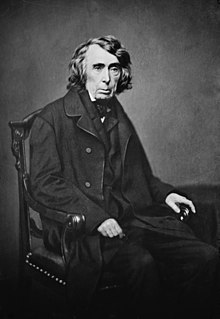
President Andrew Jackson’s close adviser, Roger Taney, was the first cabinet officer rejected by the US Senate in American history. Taney servedonly as a recess appointment as Secretary of the Treasury from1833-1834. But Jackson then made Taney his appointment to succeed Chief Justice John Marshall. Taney proceeded to have the second longest term as Chief Justice, only behind Marshall in duration (28 years to Marshall’s 34 years). Most infamously, Taney presided over the Dred Scott Supreme Court case that determined enslaved people were not citizens and could not sue in court. His controversial decision helped to bring on the Civil War.
Earl Warren
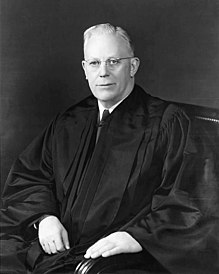
In 1953, Chief Justice Fred Vinson died suddenly, and President Dwight D. Eisenhower chose California Governor Earl Warren as his successor. Eisenhower had no idea how liberal Warren would be on the Court, and the impact that Warren would have in promoting the legal end of segregation in the case of Brown V. Board of Education (1954). Warren convinced a number of Justices who were leaning against the unanimous decision in that case, which clearly would not have occurred under Vinson, who was personally not in favor of the Court’s intervention in the case.
Harry Blackmun
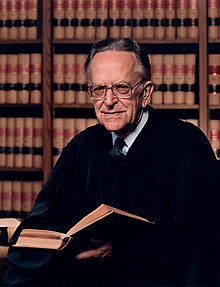
In 1970, President Ricard Nixon selected Harry Blackmun as his third choice for Associate Justice of the Supreme Court, after the failure of Clement Haynesworth and G. Harold Carswell. Who could have known that Blackmun, thought to be a conservative, would become more liberal as the years went by, and would be the prime author of the most controversial Supreme Court decision of modern times, Roe V. Wade, the abortion rights case, in 1973?
Anthony Kennedy

In what became known as the “Saturday Night Massacre” in 1973, Attorney General Eliot Richardson and Deputy Attorney General William Ruckelshaus refused to follow the President’s orders part to fire Special Prosecutor Archibald Cox. Instead, they resigned immediately. Solicitor General Robert Bork, the third ranking in the Justice Department, followed the orders of President Richard Nixon and fired Cox. Bork’s cooperation with Nixon would come back to bite him:when President Ronald Reagan nominated Bork to the Supreme Court in 1987, the Democratic majority in the Senate successfully opposed his nomination.After Bork’s defeat, Douglas Ginsburg, the next appointee, withdrew after the Senate learned he used marijuana with students in his law school classes. Finally, Reagan made his third choice of Anthony Kennedy, who became the “swing vote” on the Court for much of his 30 year service until his retirement in 2018, affecting abortion rights and gay marriage.
Dick Cheney
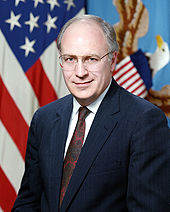
In 1989, President George H. W. Bush chose former Texas Senator John Tower to be his Secretary of Defense. However, when evidence of Tower’s heavy drinking and womanizing was revealed, his nomination went down indefeat. Bush now turned to Republican House Whip Dick Cheney of Wyoming to head the Pentagon and GeorgiaCongressman Newt Gingrich replaced him. Who could possibly have forecast that Cheney would gain favor for his leadership in the Gulf War of 1991, and a decade later, that Bush’s son, George W. Bush, would pick Cheney to be his Vice President? And who could have imagined that Gingrich, with his strategy and tactics of “guerrilla warfare” and extreme partisanship outside the norm of traditional Republican leadership, would end up leading the Republican “Revolution” of 1994 and the open conflict between the Republican majority and Democratic President Bill Clinton, including the decision to seek impeachment in 1998-1999?
John Roberts

A final example is that of Chief Justice John Roberts, who is becoming more significant and influential in his now 14thyear on the Supreme Court. When President George W. Bush nominated Roberts for the Court, he was slated to replace retiring Associate Justice Sandra Day O’Connor, but the hearings on his nomination had not yet begun. Suddenly, Chief Justice William Rehnquist died, the first person since 1953 to have passed away while in service. Bush decided overnight to switch Roberts to that post, and then chose Samuel Alito to replace Sandra Day O’Connor. With Roberts being seen as a moderate conservative, and thesupposed “swing” vote on the Court, it is clear that had Alito become Chief Justice instead of Roberts, with Alito’s more conservative bent, the Supreme Court would be different in its character now and into the future.
Roberts himself suffered a seizure on a dock in New Hampshire in 2007 while alone, two years after his confirmation to the Court. Fortunately, he did not fall into the water, which likely would have led to his death so early in his tenure on the Court.
So fate, chance, random circumstances, have had vast impact in American history, and certainly makes one humble about its role in human events.
Originally published by History News Network, 02.03.2019, reprinted with permission for educational, non-commercial purposes.