The source of that very real distortion on social media? Donald Trump.
By Joshua Geltzer, J.D.
Visiting Professor of Law
Georgetown University
Even by President Donald Trump’s standards, Thursday will be a wacky day at the White House. As CNN has reported, “the White House has requested the presence of far-right internet personalities and trolls, some of whom have pushed conspiracy theories, lies and misinformation.” The occasion? It’s Trump’s “Social Media Summit,” and invitations to the White House’s East Room came from the president himself.
Despite the event’s name, the Washington Post reports that Trump hasn’t actually invited any major social media companies. This isn’t a summit ofsocial media but instead a summit about social media—and, in particular, an invitation for those on the extreme right to rail against what they claim is the political bias of companies like Facebook, Google and Twitter.
It would be astonishing enough for Trump to host, at the White House no less, a gathering replete with racists and conspiracy peddlers. In doing so, he is clearly giving the disinformation and hate that they spread online the imprimatur of the president of the United States. Second, actual research—such as a recent study by the not-for-profit Media Matters—shows that claims of anti-conservative bias on social media are simply unfounded.
But, here’s what makes this gathering particularly astounding: Just two days before its occurrence, a federal appeals court ruled that there is a distortion of dialogue occurring on social media. Moreover, the court found the distortion to be political in nature. Further still, the court held the distortion rises to the level of a constitutional violation.
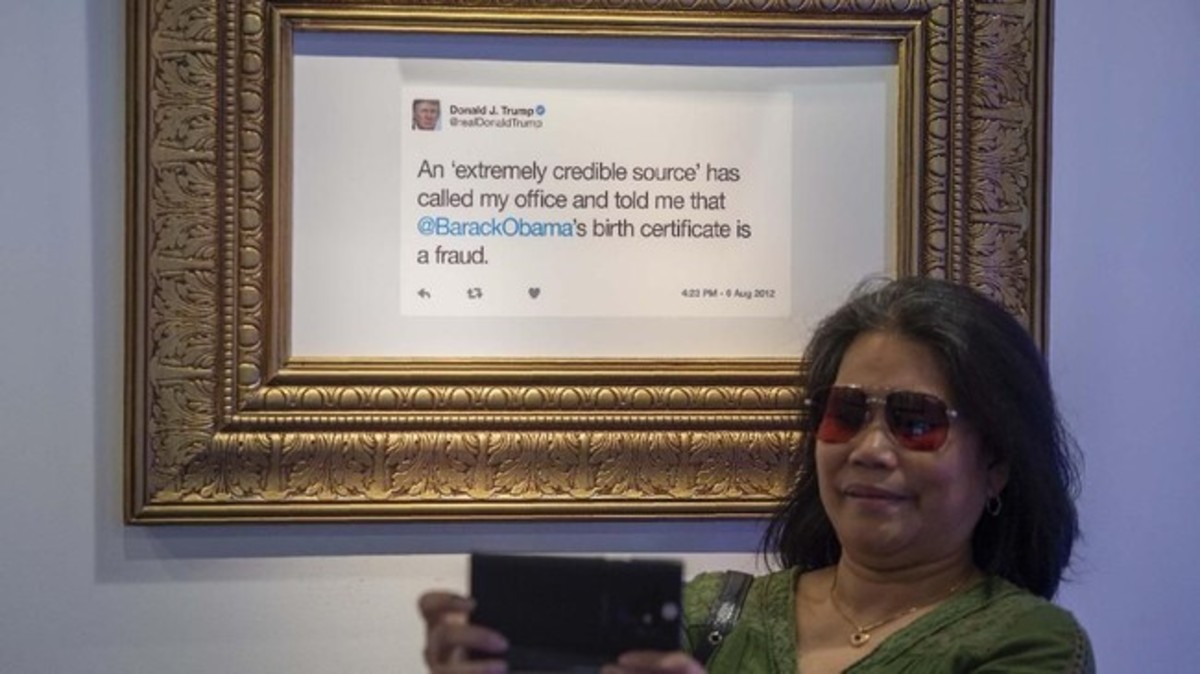
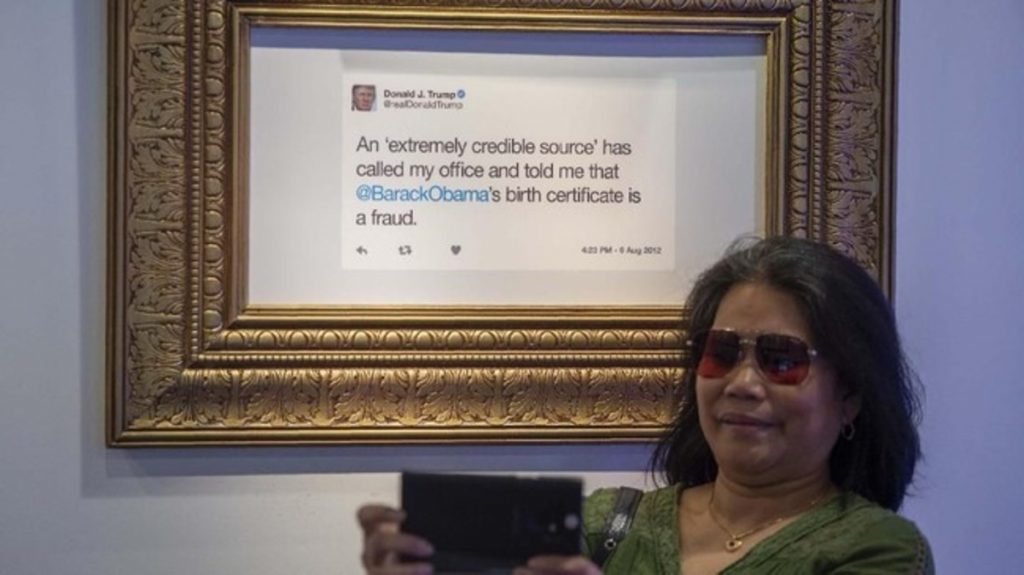
The source of that very real distortion on social media? Donald Trump.
In a landmark opinion, the Court of Appeals for the Second Circuit held on Tuesday that Trump’s blocking of unwanted voices on the @realDonaldTrump Twitter account violated the Constitution. More specifically, the court found that Trump’s use of his Twitter page created a public forum in which the First Amendment prohibits him from selectively blocking critics of him and his policies—as he acknowledged doing early in the litigation. (Full disclosure: My colleagues at the Institute for Constitutional Advocacy and Protection and I filed an amicus brief on behalf of leading First Amendment scholars urging this result.)
In other words, a federal appeals court just held that, by allowing the voices he likes but silencing unwanted ones, Trump has been distorting dialogue on social media, in contravention of the constitutional guarantee of free speech. No sooner had the court issued its ruling than Trump’s Justice Department said that it was “exploring possible next steps,” an indication that Trump might continue to fight the case rather than simply accept the ruling.
If Trump really cared about addressing the distortion of dialogue on social media, his next step would be obvious: He’d accept the Second Circuit’s unanimous decision, unblock the many people he’s blocked on Twitter who aren’t named plaintiffs in the case, and commit to something that is the responsibility of every president in the first place—abiding by the First Amendment. Instead, he’s using the White House to host a gripe session among right-wing extremists who insist—contrary to the evidence—that tech companies are treating them unfairly, without even inviting the tech companies themselves.
This is all part of a challenge bigger than the particular case decided by the Second Circuit and bigger than whatever complaints of alleged bias will be discussed at the White House summit. It’s the challenge created by a president who is, himself, intent on using the Internet to distort dialogue and disseminate disinformation. Indeed, Trump’s willingness to do exactly that was underscored on the very day of the Second Circuit’s ruling, as Yahoo Newspublished an extensive investigation detailing how the conspiracy theory about the death of Seth Rich, a Democratic National Committee staffer who was killed in Washington, D.C., during a botched robbery in the summer of 2016, began with Russian intelligence agents planting a story that he’d been assassinated. As the report explains, this completely unfounded story “was later promoted from inside President Trump’s White House.” That finding is reminiscent of the extensive documentation in Volume I of the Mueller Report of aggressive amplification of Russian-promoted disinformation by Trump’s closest advisers during the 2016 campaign.
By pushing Russian-planted disinformation and indulging America’s own conspiracy theorists, Trump is doing the opposite of what he claims to be attempting with the Social Media Summit: He’s actively distorting political dialogue online and ultimately elsewhere, as well. And dealing with a president who’s not only failing to fight disinformation online, but actually spreading it, is an unprecedented challenge for the American people and American democracy.
For now, Trump’s choice should be simple: Rather than rail against what the tech companies are supposedly doing, he should bring his own online activities in line with the requirements of the First Amendment. When it comes to the real source of distortion on social media, he’d be wise to heed Shakespeare’s Julius Caesar, in which Cassius—concerned about an overbearing head of state—warned Brutus: “The fault, dear Brutus, is not in our stars but in ourselves.”
Originally published by the Just Security, 07.11.2019, New York University School of Law, under the terms of a Creative Commons Attribution-No Derivs-NonCommercial license.