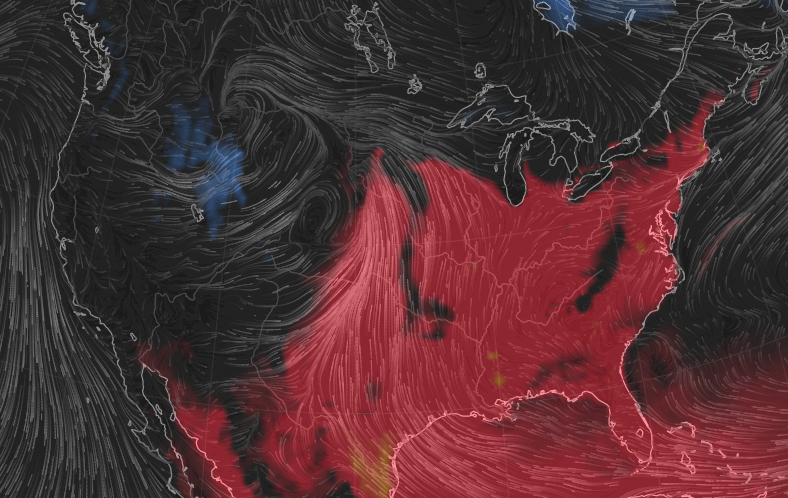

The “Misery Index” for June 13, 2017. The index is a measure of perceived temperature based on heat, humidity, and wind chill. CREDIT: Cameron Beccario

By Jeremy Deaton / 06.14.2017

An early summer heat wave delivered record temperatures from Nebraska to Maine this week. On Tuesday, some parts of the Midwest and Northeast saw temperatures 20 degrees above the historical average. And this is just the beginning of what is expected to be a very hot summer.
In case you were wondering — yes, this is what climate change looks like.
A dip in the jet stream in the Pacific Northwest drew cool Arctic air to the Sierra Nevadas, while a high-pressure ridge over the Eastern United States drew warm air from the Gulf of Mexico to the Midwest and Northeast. This all happened against the backdrop of climate change, which pushed the mercury from hot to scorching.
Globally, carbon pollution is trapping heat, shifting the entire distribution of temperatures. Cold days turn chilly. Cool days turn warm. And balmy days turn sweltering. The collective output of tailpipes and smokestacks is cranking up the global thermostat, producing milder winters and more sizzling summers.
Temperatures at the far end of the distribution, the ones that break records, are almost invariably explained by carbon pollution. A recent study found that, globally, 85 percent of record-hot days are the product of climate change.
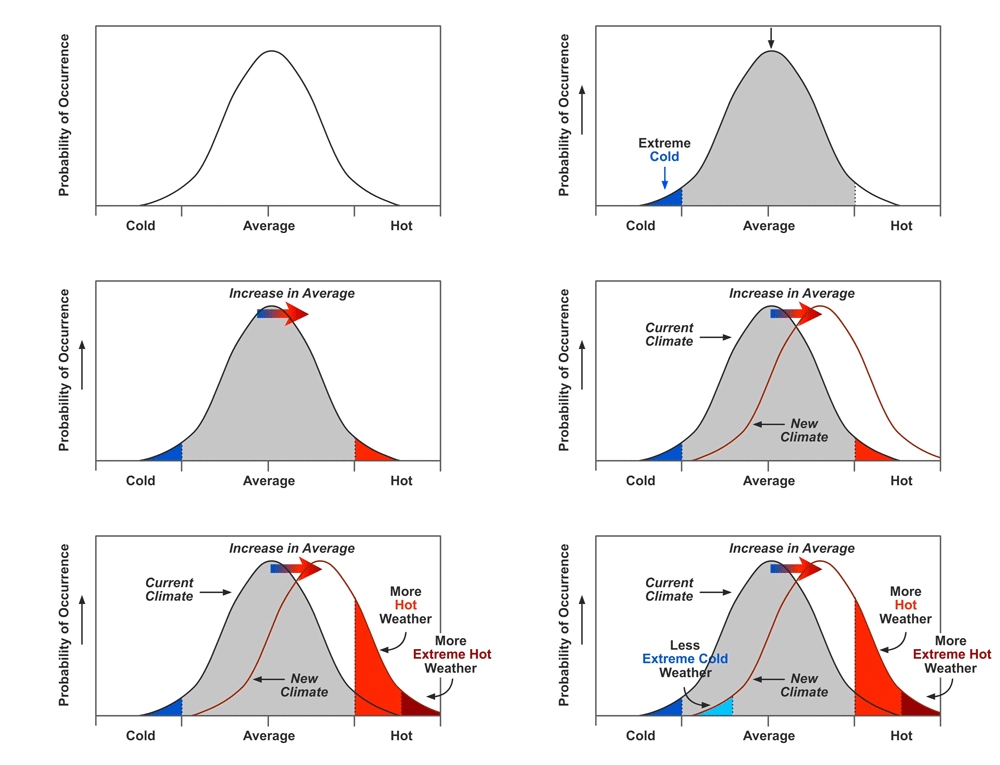
Climate change is shifting the distribution of temperatures. CREDIT: Environmental Protection Agency
The shift in temperatures means less extreme cold and more extreme heat. Correspondingly, record highs are now drastically outnumbering record lows in the United States.
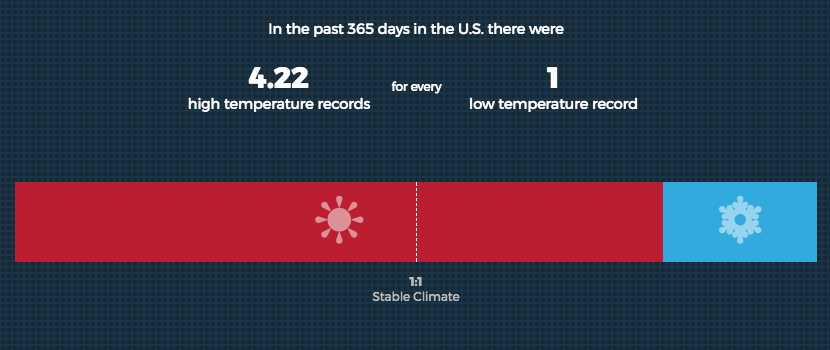
The ratio of record highs to record lows over the last 365 days, as of June 13, 2017. CREDIT: Climate Signals
Extreme heat poses a serious threat to human health, particularly among the elderly, who are less able to regulate their body temperature, and among those who cannot afford air conditioning. Hot spells can prove deadly. As temperatures rise, heat-related deaths are projected to grow exponentially.
Hot weather also makes pollution worse. Heat and sunlight catalyze ozone, contributing to hazy conditions, and worsening symptoms of asthma. Air quality alerts were issued in Boston, New York, Chicago, and elsewhere amidst this week’s soaring temperatures. Officials advised people with respiratory conditions to avoid going outdoors.
Temperatures will cool later this week, but don’t expect it to last. The rest of the summer is projected to deliver unusually warm weather to the coasts and the South.