
By McKay Coppins
Staff Writer
The Atlantic
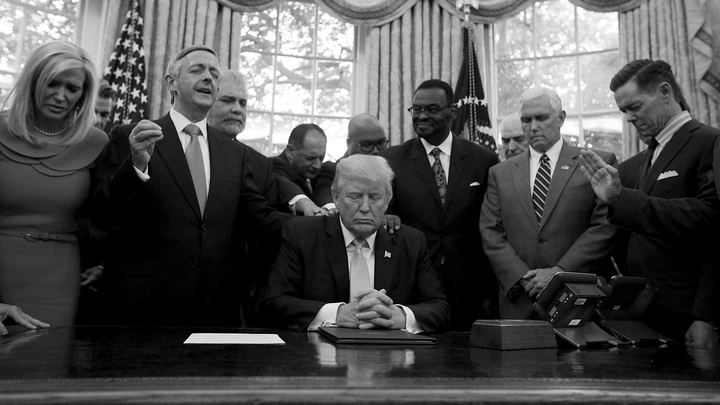
One day in 2015, Donald Trump beckoned Michael Cohen, his longtime confidant and personal attorney, into his office. Trump was brandishing a printout of an article about an Atlanta-based megachurch pastor trying to raise $60 million from his flock to buy a private jet. Trump knew the preacher personally—Creflo Dollar had been among a group of evangelical figures who visited him in 2011 while he was first exploring a presidential bid. During the meeting, Trump had reverently bowed his head in prayer while the pastors laid hands on him. Now he was gleefully reciting the impious details of Dollar’s quest for a Gulfstream G650.
Trump seemed delighted by the “scam,” Cohen recalled to me, and eager to highlight that the pastor was “full of shit.”
“They’re all hustlers,” Trump said.
The president’s alliance with religious conservatives has long been premised on the contention that he takes them seriously, while Democrats hold them in disdain. In speeches and interviews, Trump routinely lavishes praise on conservative Christians, casting himself as their champion. “My administration will never stop fighting for Americans of faith,” he declared at a rally for evangelicals earlier this year. It’s a message his campaign will seek to amplify in the coming weeks as Republicans work to confirm Amy Coney Barrett—a devout, conservative Catholic—to the Supreme Court.