Sports unify neighbors in three surprising ways by lowering social barriers through unstructured pick-up games, building geographic trust in community recreation leagues, and forging shared purpose during local charity tournaments.
These everyday athletic activities transform isolated residents into connected communities without needing formal invitations or expensive facilities. By simply providing a shared activity, neighborhood sports quietly turn strangers into familiar faces and establish the foundational social bonds that make local living thrive.
1. Neighborhood Pick-Up Games Open Doors Without an Invitation
Picture a trash-can basketball hoop at the end of a cul-de-sac, two mismatched teams, and absolutely zero rules about who is allowed to play.
A retired veteran calls out a college student’s crossover dribble, and thirty seconds later, they are laughing. No scoreboard and no referees exist here because there is just shared ground and the universal language of a game that encourages spontaneous connection.
Pick-up games serve as the most democratic form of sports on earth.
They require no registration, no fees, and no formal skill evaluation. They offer a natural way to build a sense of community, especially when participants wear matching items such as Sports Gear Swag’s custom basketball jerseys. What these games ultimately require is a willingness to show up, which is a resource most neighborhoods possess in abundance.
Researchers at the Aspen Institute’s Project Play initiative have long emphasized the social value of unstructured play. They note that informal sports environments consistently lower the social barriers that formal settings leave intact.
When there is no coach dictating lineups and no high-stakes competition, players tend to talk more, collaborate more, and extend more grace to strangers. That openness is the exact material neighborhood connection that is made of.
What makes pick-up games particularly powerful is their regularity. Sociologists call spaces like this “third places,” environments that are neither home nor work but serve as anchors for informal social life. A Sunday morning basketball game played consistently on the same corner becomes one of those vital anchors.
As these casual games take on a life of their own, the group often starts to feel like a unified entity. The regular schedule fosters a deep sense of belonging among the participants. This consistent presence signals a shared connection to that specific neighborhood court, allowing a loose collective of neighbors to feel like an established local team.
2. Community Recreation Leagues Turn Streets Into Teammates
Community recreation leagues do something that pick-up games cannot quite replicate by creating structured, repeated contact. Research on social trust consistently finds that familiarity is one of its primary drivers. Seeing the same faces every Thursday evening builds a low-level familiarity that quietly becomes genuine trust.
The National Federation of State High School Associations regularly documents the growth of community sports participation, particularly among adults seeking structured social connection outside of work.
In fact, studies show that community sports programs play a pivotal role in fostering social cohesion by providing opportunities for diverse individuals to engage in physical activity and social interaction. Adult recreational leagues have seen consistent enrollment increases, driven by a broader recognition that community connection has to be intentionally built.
One underappreciated benefit of rec leagues is geographic mixing. Players from different streets and different sections of a neighborhood end up on the same team, introducing micro-communities to each other in ways that daily routines rarely facilitate.
Furthermore, a higher prevalence of community-level sports group participation has a statistically significant relationship with a lower likelihood of depressive symptoms.
Consider the ripple effect of a group of parents who meet on the sideline of a youth league and go on to organize a neighborhood cleanup the following spring. The league is not explicitly designed to produce civic engagement, but the relationships built on the field make collective action feel natural and achievable.
When local teams adopt a cohesive visual identity through matching gear, it further solidifies this bond and signals that the community connection extends beyond a casual gathering.
3. Charity Tournaments and Local Sports Events Rally the Whole Block
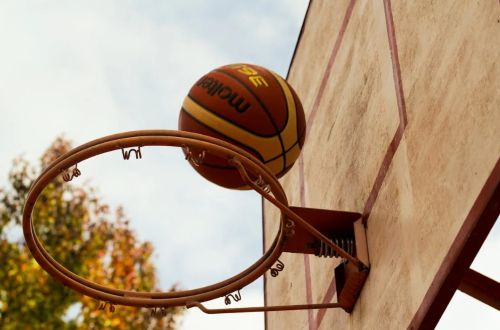
A neighborhood holding an annual basketball tournament to raise money for a community garden rarely sets out to create a social tradition. However, something happens in the organizing, competing, and cheering that money cannot fully explain. People show up, they remember the event, and the following year, they eagerly anticipate its return.
One-off community sports events like charity tournaments or school fun runs create a shared purpose. Research points to collective events as pivotal moments in neighborhood identity formation. Additionally, a 10-percentage-point increase in community-level group sports participation rate is associated with an 11% decrease in the risks of all-cause and cancer-related mortality.
These events are uniquely inclusive because spectators, volunteers, sponsors, and players all participate at different levels. A neighbor who cannot run a full court can work the registration table, and a family that does not play can still show up to cheer. Everyone has a role, and that breadth of participation is what turns a sports event into a genuine community milestone.
A flag football tournament might start as a one-time neighborhood idea with a few teams and a borrowed folding table. By its third year, it often evolves to feature a formal bracket, custom participant headbands, and a waiting list. Thoughtful details elevate a casual gathering into an intentional, memorable tradition.
| Pro Tip: Don’t stress about perfection in your first community event. Start small with a basic setup, and let traditions, like custom team gear and formal brackets, evolve naturally as neighborhood enthusiasm grows. |
The Bottom Line
Community is rarely built in a single grand moment. It is assembled slowly, one game at a time. It happens in a driveway pick-up game that runs thirty minutes longer than planned, in a rec league season that quietly turns strangers into familiar faces, and in a charity tournament that becomes an annual local tradition.
The barriers to community sports remain remarkably low. Starting a local sports tradition does not require a formal facility, a massive budget, or a professional roster. It simply requires a shared space, a willingness to play, and a few neighbors ready to step onto the court.
The game is already happening locally. It just takes someone to make the first pass and invite others to join.
| Author Profile: Sports Gear Swag is the leading online retailer of custom sports apparel and gear for teams, schools, and organizations of all sizes. Specializing in team jerseys, uniforms, and athletic apparel with a wide range of customization options. |
About the Author