
By Dr. Anna Dezeuze
Lecturer in Art History
Ecole Supérieure d’Art et de Design Marseille-Méditerranée (ESADMM)
Introduction
Whilst in the expanding global slum survival at subsistance level is increasingly the only option, in the West the celebration of the creativity and ingenuity of the slum dweller is becoming fashionable. In a conflation of relational aesthetics with the ‘creative’ survival strategies of the globalised slum, many artists have become associated with what could be called ‘slum chic’. Anna Dezeuze surveys a number of artists who draw upon the experience of everyday life in the slums to make their work, and tries to separate out the aestheticisation of poverty from the poverty of aesthetics
Walking around the immaculate spaces of the New York Guggenheim, I once came across a roughly built brick shelter, with two pillars and a roof, and a small shack with a large satellite dish. In an adjoining metal structure stood a single functioning toilet. In the reassuring bubble of an archetypical museum, the images of shanty town architecture and emergency refuges conjured by the basic components of this pared-down construction seemed very remote. The structure in front of me, I was informed by a wall-text, corresponded to an existing type of core unit being built at the time in a far-away location: Kagiso, a suburb of Johannesburg. The artist, the Slovenian Marjetica Potrc, had just been awarded the 2000 Hugo Boss Prize. Two years later, the Belgian, Mexico-based artist Francis Alÿs was short-listed for the Hugo Boss prize. His Ambulantes (Pushing and Pulling), a slide series executed 1992-2002, documents the astonishing range of street vendors, refuse collectors, delivery men, and salespeople walking around the streets of Mexico City, pushing and pulling loaded carts or wheeled stalls, and occasionally carrying loads on their heads.
Works such as Potrc’s and Alÿs’ point to a widespread interest, among artists and curators, in the precarious existence of shanty town dwellers and of the millions of people across Third World cities whose mode of livelihood Mike Davis has described as ‘informal survivalism.’[1] In order to address the apparent contradictions suggested by these works and by their appeal to official sponsors and institutions, I would like to sketch out some characteristic features of this trend and some of the problems it raises. Rather than providing a systematic overview, I will look in particular at the ways in which artists and curators have theorised this growing interest, and explore a few of the perils and promises that precariousness holds for contemporary art today.
On Adversity We Thrive!

Potrc was one of the artists included in the exhibition The Structure of Survival at the 50th Venice Biennale in 2003. The curator, the Argentinean Carlos Basualdo, chose to focus on the favela or shanty town as the guiding theme of the exhibition, which featured over 25 international artists. Basualdo’s definition of the shanty towns as spaces of resistance, ‘places in which original forms of socialisation, alternative economies, and various forms of aesthetic agency are produced’ has been echoed in other fields.[2] The philosopher Slavoj Zizek, for example, believes that ‘[t]he new forms of social awareness that emerge from slum collectives will be the germs of the future and the best hope for a properly “free world.”’[3] Basualdo’s ideas on this question developed more specifically from his engagement with the work of Brazilian artist Hélio Oiticica, who coined the motto ‘on adversity we thrive’ (‘da adversidade vivemos’) in 1967.[4] Adversity, for Oiticica, was a condition of Third World countries, and should be the starting point for any Brazilian artist. Oiticica himself found inspiration for his work in the Brazilian popular culture of samba dancing and the shanty town architecture of the Rio favela of Mangueira.[5] In 2001, Basualdo appropriated Oiticica’s motto as the title for an exhibition at the Musée d’Art Moderne de la Ville de Paris. Featured artists, among whom were included Francis Alÿs, as well as artists who would subsequently figure in the Venice Biennale show, were discussed in terms of their experience of a Latin American reality characterised by ‘constant precariousness’ and ‘adversity in tragically unstable socio-economic contexts.’[6]
If the critic Guy Brett described precariousness as a characteristic of Latin American art as early as 1989,[7] Basualdo’s shows have contributed to the growing celebration of contemporary practices relating to issues of adversity and crisis. In our current globalised world, as Basualdo has pointed out, crises operate beyond national boundaries, and beyond distinctions between developing and developed countries.[8] Yet rather than analyse the ways in which the First World societies may be in a state of crisis, Basualdo, like many artists, has focused on the ongoing inventiveness of those who experience adversity at first hand. The attraction of the precariousness of the Developing World for artists and curators seems to lie not in the situation of crisis itself as much as in the responses that it encourages. Potrc often speaks of the ‘beauty’ of slum architecture,[9] while Francis Alÿs marvels at the ways in which people in Mexico ‘keep inventing themselves’, like a man in his neighbourhood who spends his day cleaning the gaps between the pavement flagstones with a bent wire.[10] The Turkish artist collective Oda Projesi, who were included in The Structure of Survival, seem to summarise a widespread, if often implicit, belief, when they explain that inhabitants of the prefabricated houses erected after the 1999 Adapazari earthquake ‘construct these annexes by choosing the materials in accordance with their own conditions and needs, just like an artist or an architect.’[11] Similarly, both Alÿs and Potrc have celebrated the ways people occupy space in an unplanned fashion and erect shelters spontaneously. In 2003, Potrc exhibited a ‘growing house’ from a Caracas shanty town at the Palais de Tokyo in Paris. The ‘iron wires sprouting from its rooftop,’ according to her, ‘proclaim the vitality of the place.’[12] In 1994, Alÿs pieced together electoral posters declaring ‘housing for all’ (‘viviendas por todos’) in order to create a shelter-like structure fastened over a subway air duct in Mexico City. ‘It was a direct comment on the state of local politics and at the same time an attempt to recreate these cells of squatters that I encountered everywhere in the city’, he has explained.[13] Perhaps unsurprisingly, both Alÿs and Potrc come from an architectural background. Urban planning is their frame of reference, and their concerns with precariousness mirror the emerging attraction among architects to the hitherto unmapped slums of Third World cities.
The abandonment and neglect experienced by, to use Mike Davis’ term, the ‘informal proletariat’ seems to be conceived by artists such as Alÿs and Potrc as a kind of freedom. In a 1990 essay, Guy Brett explained that in Latin America ‘many grass-roots movements have appeared because of a complete loss of faith in the willingness or ability of governments to do anything about major problems.’[14] Many activists and non-governmental organisations in the West would recognise themselves in this description, and Latin American grass-roots movements have been models for similar groupings elsewhere. For Potrc, there is a direct parallel between NGOs and shanty towns: both have been ‘[g]rowing without any control or planning’, and both, according to the artist, embody our aspirations, dreams and ideals.[15] In the catalogue for The Structure of Survival, Basualdo invited a group of Argentinean activists, Colectivo Situaciones, to write about responses to the devastating economic crisis in their country. Like many such groups, Colectivo Situaciones explain that their type of revolution differs from traditional ‘modern emancipatory politics’ in that they do not seek to gain state power. Instead, they are concerned with finding concrete means of self-sufficiently managing resources and of affirming common values of solidarity and sociability.[16] Similarly, Potrc believes that ‘[t]he world we live in today is all about self-reliance, individual initiative, and small-scale projects.’[17] This corresponds to a widespread belief that the utopias of the past, the grand narratives of ‘emancipatory politics’, remain forever unattainable. Potrc focuses on ‘small gestures, not big ones’,[18] while Alÿs, according to a critic, ‘moves as an artist who has come to understand that the only thing left to do is to take small steps’.[19] Potrc does not wish to change anything, she claims she is interested in analysing, without judging, the ‘facts of contemporary urban life’.[20] Alÿs, for his part, explains that Mexican society ‘is a society that is governed by compromise’ and that he has adopted compromise as the very modus operandi of his work.[21]
Neither Potrc nor Alÿs, however, perceive this resignation and compromise pessimistically. Like Colectivo Situaciones, they reject ‘the idea that the omnipotence of market flows (with the wars that accompany them) leave no space for any struggles for liberation’ and believe that it is ‘possible that power and its opposition can coexist long term without eliminating one another.’[22] In this sense, their outlook brings to mind Michel de Certeau’s analysis of everyday life as containing in itself the potential means through which to subvert the dominant order from within. ‘Making do’ – ‘faire avec’ is, in fact, the title of a chapter in de Certeau’s 1980 book entitled The Practice of Everyday Life. Alÿs’ Ambulantes seem to embody Certeau’s idea that practitioners of everyday life constantly tinker ‘within the dominant cultural economy in order to adapt it to their own interests and their own rules.’[23] On the one hand, Alÿs’ photographs literally demonstrate practical tricks – such as how one can fit fourteen cardboard boxes onto one small hand-pulled cart. On the other hand, they point to the range of petty jobs that inhabitants of Third World countries have to keep inventing to survive and to find a useful function in a chaotic economy. As job precariousness has also become a concern for activist groups in First World countries – since ‘jobs for life’ are becoming a thing of the past – Alÿs’ slide show immediately chimes with global struggles in the age of micropolitics.
Making Do
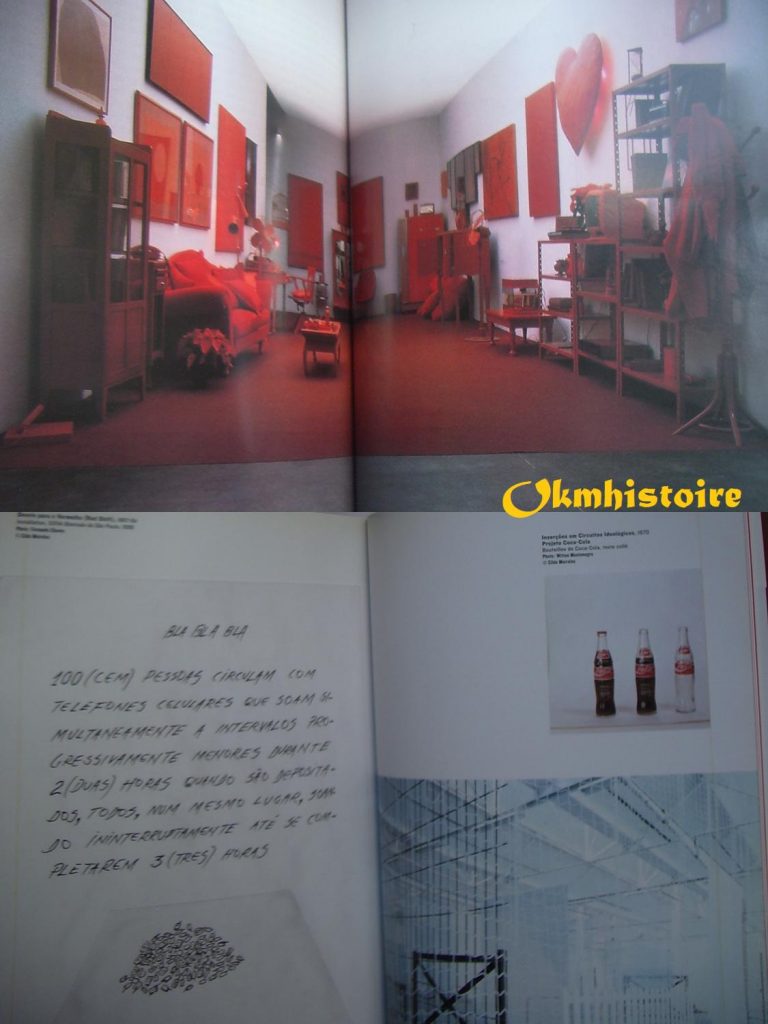
One of the problems with the discourse of precarity is the conflation of a wide variety of situations, ranging from the illegal immigrant working as a cleaner, or the employee in a call centre, to the freelance web designer or the projectionist at the Cannes film festival.[24] It is precisely this kind of confusion that can occur when precariousness is used as a privileged theme in contemporary art. Within this conflation, the emphasis on precariousness runs the risk of erasing crucial differences at the same time as it tries to bring together a disparate group in order to promote a specific argument. Basualdo’s Da Adversidade Vivemos and The Structure of Survival certainly included a wide range of practices under the umbrella of crisis and adversity. Fernanda Gomes’ installations, which were included in both exhibitions, display a vocabulary of simple, sometimes fragile, everyday objects, casually placed on the floor, hung or propped within an empty space. While these discrete and ephemeral arrangements evoke precariousness and instability, they seem far removed from the realities of everyday life in Latin American slums. Condemning Gomes’ works for not having the same urgency as the works of some of her compatriots would be falling into the trap of asking them to conform to some kind of Latin American stereotype. Claiming that these works are about survival, or that they propose a model for a new type of ethical art would suggest, however, that precariousness in itself is subversive.
This problematic slippage can be better understood when reading statements by artists such as Potrc or Alÿs who speak of their work in terms of the ‘human condition’. Potrc justifies her placement of shanty town architecture as ‘case-studies’ in galleries by explaining that galleries are ‘places where we think the human condition’,[25] whereas Alÿs claims he is ‘trying to suggest this absolute acceptance of the “human condition”’ by the people he sees struggling every day in his neighbourhood.[26] While the implications of Potrc’s and Alÿs’ works can indeed be extended from their locally specific origin to encompass wider reflections on human finitude and inventiveness in the face of death, the logic that inflects Basualdo’s readings of Gomes’s work operates in reverse: installations that suggest a general sense of instability, transience or fragility, he seems to suggest, must de facto be related to the particularly precarious social and economic conditions of living in Latin America. I believe that this logic is erroneous, and that these distinctions remain crucial. There are substantial variations among artists working in different countries, and even within the same country distinctions should be highlighted among social and ethnic groups as well as successive generations of Latin American artists. Unlike Basualdo, I would like to emphasise the gap that separates Oiticica’s 1960s oeuvre from some of the younger Brazilian artists, whose work betray the influence of the growing internationalisation of the art market. An instance of this shift can be seen in Alexandre da Cunha’s work, which was included in The Structure of Survival. By displaying cheap objects (such as sleeping bags, raincoats and plastic brooms) to create shelter-like arrangements, da Cunha seems to me to be using conventional, trivial signifiers of precariousness in a way that aestheticises, rather than embodies or analyses the nature of this condition. The creation of a ‘slum chic’ style will no doubt find echoes in contemporary fashion and design trends. It is hard to find here even the slightest echoes of the existential precariousness hinted at by Gomes’ ontological evocation of human finitude.
Where da Cunha seems to aestheticise the signifiers of precariousness, the Angolan artist Antonio Ole, also included in The Structure of Survival, seems to be aestheticising precariousness itself. By arranging found fragments of an impoverished architecture along the walls of the gallery in his Township Wall, Ole makes poverty look cheerful and picturesque. This points to a second major pitfall in the exploration of practices of ‘making do’ and thriving on adversity. This is a problem that Alÿs himself encountered when he was planning a film which sought to illustrate the virtue of ‘valemadrismo’, the Mexicans’ ‘capacity to accommodate oneself to mala fortuna, to bad luck, and even more, to actually turn one’s misfortune into an advantage.’[27] This film was to tell the story of a dog called Negrito who lost a leg but went on to develop a very successful juggling trick using the bone of its broken leg. Although Alÿs has not given the reasons why he abandoned this film, he admits that it was a ‘somewhat romanticised account’, and my guess is that he became wary of this. For celebrating valemadrismo can lead to an occlusion of the suffering itself, and perhaps even to a lapse back into a primitivising stereotype of the carefree, cheerful pauper who accepts his condition without protest. Calls such as David Aradeon’s, reproduced in the catalogue for The Structure of Survival, to remember that inhabitants of Brazilian shanty towns are ‘poor but vibrant, sensitive and creative’, can easily slip into a confirmation of such romanticising stereotypes.[28]
Such problems, I would like to argue, take us back to the crux of precariousness, and its existence at the junction of crises and reactions, of adversity and coping strategies. At the heart of this articulation lie two much broader issues. The first concerns the politics of the slums themselves. I mentioned earlier how Zizek has suggested that slum-dwellers constitute the new proletariat, the agents of the next revolutionary challenge to capital. However, not everyone shares his optimism. Davis, for example, argues that up until now the dominant political force in the slums has been organised religion; survival rather than protest has remained – perhaps unsurprisingly – the main agenda of this ‘informal proletariat’.[29] Thus the activity of ‘making do’ in itself could turn out to be more conservative than revolutionary, as millions of people struggle to make it through another day, with little possibility of making organised and effective demands. In this sense, Alÿs’ interest in the Mexican’s ‘absolute acceptance’ of their condition could be read as a call for passivity, rather than action. In order to contradict this narrative, and glimpse some potential change, it would be useful to further explore the grass-roots model of micropolitics, and the potential for change once the traditional revolutionary seizure of state power has been set aside in favour of ‘self-reliance, individual initiative, and small-scale projects’, to use Potrc’s terms. Colectivo Situaciones, after all, still believe in a ‘struggle for liberation’. The question remains whether, and how, the model of effective reaction, which they have substituted for the Marxist call for action, can ultimately lead to such liberation.
The second issue raised by the politics of ‘making do’ is the question of agency. George Yúdice has criticised Michel de Certeau’s notion of subversive tactics because they ‘are wielded not only by workers but by the very same managers (and other elites) who reinforce the established order.’[30] In order to reveal the subversive potential of everyday life, it is necessary to ‘distinguish among the practitioners of such tactics in terms of how the tactics enable them to survive and [to] challenge their oppressibility.’[31]
Towards a ‘Coalition’?
In order to navigate these distinctions, I would like to finally turn to Zizek’s definition of the slum-dwellers of the world as the ‘counter-class to the other newly emerging class, the so-called “symbolic class” (managers, journalists and PR people, academics, artists etc.) which is also uprooted and perceives itself as universal.’[32] This definition, which effectively updates Marx’s social analysis, seems to me to avoid the conflation of different kinds of precarious work in discourses about job security, while acknowledging a relationship that can be fruitful. Crucially, Zizek asks: ‘Is this the new axis of class struggle, or is the “symbolic class” inherently split, so that one can make a wager on the coalition between the slum-dwellers and the “progressive” part of the symbolic class?’[33] My contention here is that some artists can indeed occupy the ‘progressive’ place of a symbolic class trying to forge a coalition in the arena of art and discourse. If the celebration of ‘making do’ tactics can be recuperated by a conservative discourse of passivity and conformism, it can also nevertheless contain the seeds of a globalised discourse of protest, as long as the agents of this coalition, and their respective needs for empowerment, are clearly distinguished. Once the utopias of the Left have been set aside, the objective for many artists today is to find ways of bringing this coalition to light by eschewing the risks of voyeurism or romanticism. Potrc’s rejection of 1980s social activism as reinforcing the marginalisation of the homeless and the poor is premised on a belief that artists need to move away from traditional models of critique in order to explore a model of the coalition based on empathy.[34] Alÿs’ adoption of compromise as a guiding force for the redefinition of artistic practice offers a similarly empathetic model through which to relate to the subjects with whom he co-exists in Mexico City. Other modes of coalition are being explored by contemporary artists, whether in traditional forms of documentary or activist reportage, or for example in the provocative alienation set up by Santiago Sierra’s performances, which provocatively dramatise the radical differences between the informal proletariat and bourgeois art viewers.
Ultimately, the deep ambivalence that I experienced when I encountered Potrc’s shelters in the white cube of the gallery points to the final, inevitable question for artists investigating precariousness: can the rarified conditions of display and reception in the contemporary art world really provide a platform for the exploration of political alternatives? Can art be a credible space in which to foreground this potentially revolutionary ‘coalition between slum-dwellers and the “progressive” part of the symbolic class’? How artists manage to articulate this coalition within the framework of the current artworld, and to what effect, constitutes one of the most interesting questions of contemporary art. It also happens to be one of the more urgent questions for society at large – especially if we agree with Potrc that when ‘[y]ou lose sight of your dreams, you die.’[35]
Notes
- Mike Davis, ‘Planet of Slums: Urban Involution and the Informal Proletariat’, New Left Review, 26, March-April 2004, p. 24.
- Carlos Basualdo, ‘On the Expression of the Crisis’, in Francesco Bonami (ed.), Dreams and Conflicts: The Dictatorship of the Viewer, exh. cat., Venice: Biennale, 2003, p. 243.
- Slavoj Zizek,‘Knee-Deep’, London Review of Books, vol. 26, no. 17, 2 September 2004, http://wwwlrb.co.uk/v26/n17/print/zize01_.html, accessed 17/05/2006, p. 5.
- Oiticica used this motto in one of his works, a Parangolé cape, and included it in a manifesto-like text written on the occasion of the exhibition Nova Objetividade Brasileira, at the Museum of Modern Art in Rio de Janeiro.
- I have written about Oiticica’s relation to Brazilian popular culture in ‘Tactile Dematerialisation, Sensory Politics: Hélio Oiticica’s Parangolés’, Art Journal, vol. 63, no. 2, Summer 2004, pp. 58-71.
- Carlos Basualdo, ‘A propos de l’adversité’, in Da Adversidade Vivemos, exh. cat., Paris: Musée d’Art Moderne de la Ville de Paris, 2001, p. 13.
- Guy Brett, ‘A Radical Leap’, in Art in Latin America, The Modern Era, 1820-1980, exh. cat., London: Hayward Gallery, 1989, p. 255.
- ‘On the Expression of the Crisis’, pp. 243-244.
- Marjetica Potric, ‘Urban, 2001’, in Marjetica Potric: Next Stop, Kiosk, Moderna Galerija Llubjana Museum of Art, 2003, p. 31.
- ‘La Cour des Miracles: Francis Alÿs in conversation with Corinne Diserens’, in Francis Alÿs: Walking Distance from the Studio, exh.cat., Wolfsburg: Kunstmuseum Wolfsburg, 2004, pp. 100-101.
- Oda Projesi, ‘Annex’, on www.odaprojesi.com, accessed 20/03/2006.
- Marjetica Potric, ‘In and out of Caracas’, in Marjetica Potric, p. 83.
- ‘La Cour des Miracles’, op. cit., p. 109.
- Guy Brett, ‘Border Crossings’, in Transcontinental: Nine Latin American Artists, exh. cat., Birmingham: Ikon, 1990, p. 16.
- Potric, ‘Urban, 2001’, op. cit., p. 31.
- Colectivo Situaciones, ‘Through the Crisis and Beyond: Argentina’, in Bonami (ed.), Dreams and Conflicts, p. 245.
- Potric, ‘Back to Basics: Objects and Buildings’, in Marjetica Potric, p. 54.
- Marjetica Potric, ‘Take me to Shantytown’, Flash Art, March-April 2001, p. 98.
- Annelie Lütgens, ‘Francis Alÿs and the Art of Walking’, in Francis Alÿs: Walking Distance from the Studio, p. 56.
- ‘Tracking the Urban Animal’, Circa, 97, Autumn 2001, p. 29.
- ‘La Cour des Miracles’, op. cit., p. 112.
- Colectivo Situaciones, ‘Through the Crisis and Beyond: Argentina’, p. 245.
- Michel de Certeau, The Practice of Everyday Life, transl. Steven F. Rendall, Berkeley and London: University of California Press, 1984, p. xiv.
- For an overview of debates regarding job precarity, see ‘Precarious Reader’ Mute Vol II #0, London: 2005.
- ‘Take me to Shantytown’, p. 98.
- ‘La Cour des Miracles’, op. cit., p. 83.
- Ibid., p. 85.
- David Aradeon, ‘Are We Reading Our Shanty Towns Correctly?’ in Bonami (ed.), Dreams and Conflicts, p.264.
- ‘Planet of Slums’, pp. 28-34.
- George Yúdice, ‘Marginality and the Ethics of Survival’, Social Text, no. 21, 1989, p. 216.
- Ibid., p. 217.
- Žižek, op. cit., p. 5.
- Ibid.
- See ‘Tracking the Urban Animal’, op. cit., 29.
- Potric, ‘Urban, 2001’, op.cit., p.31.
Originally published by Arcade: Literature, the Humanities, and the World, 2006, under a Creative Commons Attribution-NonCommercial-ShareAlike 3.0 United States license.
About the Author