The voters will decide the election, “flat out.”

By Justin Levitt, J.D.
Professor of Law
Loyola Law School Los Angeles
You’ve probably seen them: alarming columns or stories with alarming headlines about how somebody is going to exploit an obscure provision in election law to undo the 2024 presidential election and toss it to the House of Representatives. Your vote won’t count, and democracy will go to hell.
Election law scholar Justin Levitt throws cold water on those scenarios, and in an interview with Naomi Schalit, The Conversation’s senior editor for politics and democracy, he says the voters will decide the election, “flat out.”
What’s “electoral process porn?”
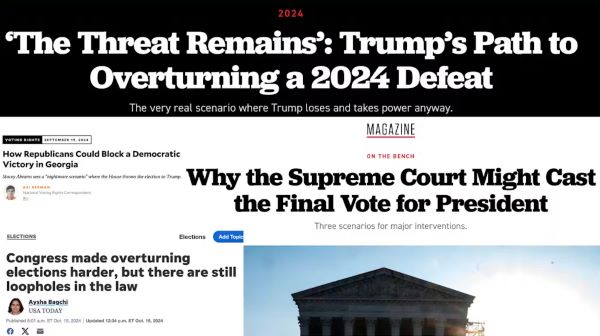
It’s a writing genre identifying a tactic or loophole that’s supposedly going to fundamentally change the election process – what I called “The Key to the Whole Thing This Time” in a Slate piece earlier this year – usually, by taking away everyone’s voting rights and magically delivering the election to one candidate. It’s a lurid, titillating take that depends on the fact that election law and process can sometimes seem impenetrable.
What distinguishes this type of think piece from other reporting on the election process is tone and emphasis, rather than information. Just like not every sex scene in the movies needs an NC-17 label, not every piece about how elections work is going to be electoral process porn.
Perhaps the worst part about electoral process porn is that it leaves readers with an unjustified feeling of helplessness, even the thought that voting might be pointless, if it’s all subject to this supposed hidden gimmick. It is dystopian fiction masquerading as analysis, feeding on people’s anxieties that a basic process of self-government might be taken out of their own hands.
Can you give me a few examples? I want the person who reads this to understand concretely what you’re talking about.
Sure. One example fits the mold of the artful con: the heist movie or spy thriller that depends on knowing the particular procedural lever to deliver results, the MacGuffin nobody else can anticipate, making the person who’s the center of the thriller the smartest person in the room. It’s the story about an Electoral College feature in which an obscure part of the law, say subparagraph (ii)(B) of paragraph (1)(c) about delivering a particular piece of paper, secretly holds the spell to make millions of votes disappear. It depends on a wildly implausible sequence of events and a whiff of magical legalism, with a basic misunderstanding of what legal rules are for.
Another example is the armchair detective mystery, with the promise that if you squint just right, you can find the clues that finally solve the big crime. This type of piece often centers on alleged voter fraud, making a legitimate loss feel more palatable by suggesting it’s theft instead. The thing is, these are usually murder mysteries with no dead bodies. People motivated to play detective will often find suspicious patterns in conduct that’s entirely lawful.
A third version is a horror story, with jump scares at scale: tales of voter suppression predicting that evildoers will steal the election by preventing millions of legitimate voters from casting ballots that count.
But there are practices and rules that can be obstacles to voting.
There sure are. I’m a civil rights lawyer, so it’s worth noting that some election rules do make the process harder than it needs to be. Sometimes intentionally. Rules disenfranchising people with convictions offer a particularly stark version of that very real problem. We’ve got an obligation to keep making the election process better.
But these electoral process porn articles often portray the system as an endless nightmare of procedural hurdles. That’s not reality for most of the electorate.
Democrats and others have criticized Trump and his followers in the GOP for destroying confidence in our elections. Yet much of this kind of what you label “porn” comes from Democrats and progressives. Doesn’t this also diminish people’s confidence in the election’s integrity?
Yes. And it diminishes people’s confidence in the power of their vote. I think it would be somewhat less harmful if it were paired with a message of empowerment, like, “Here is what people are trying to do to take power. But it’s not going to work. And you can ensure your voice counts by registering and casting your ballot.”
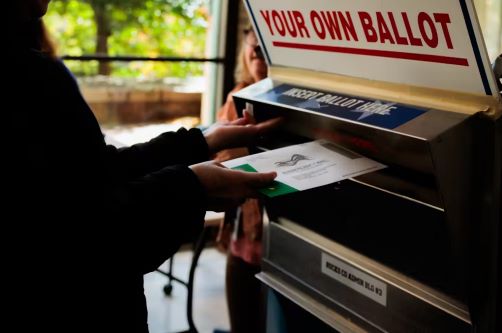
I don’t mean to shake my finger at writers who are trying to present information in a way that draws readers in. But the tone of these columns, and the degree to which they empower or discourage, matters. These process-porn pieces are at their worst when the voters are peripheral, when the articles say, “This is being done to you, and there’s really nothing you can do about it other than get angry and give us money.”
We’re getting pretty close to Election Day, which is the culmination of the vote. Are there legitimate problems that voters should be aware of?
There will be some bumps, sure. Until humans figure out how not to make mistakes, there will be issues that crop up. It’s a good thing that for most Americans, voting is a period of time, rather than a single day. That gives opportunities to catch and address the problems.
The U.S. election process is remarkably robust. Everyone saw that in 2020, the most scrutinized election in the nation’s history, during the middle of a pandemic. The system was stress-tested in ways beyond anyone’s wildest imagination, and it responded remarkably well.
There’s always work to improve the voting system – the Constitution reminds Americans to work toward a “more perfect union.” But the fact that we can and should do better should not shake people’s confidence in the integrity of the election results overall.
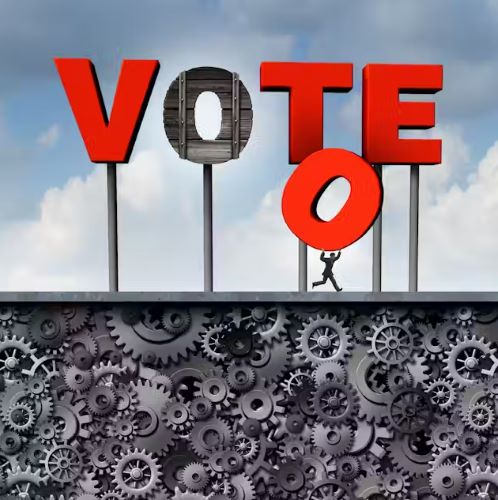
The Electoral College means that a few thousand voters in a few swing states are going to decide the winner. It’s going to be up to those voters, flat out – who decides to cast a ballot and who they decide to vote for – not a deus ex machina. The election process is designed to tell us who we chose, not to determine the answer without us.
Of course, it has happened that a presidential election came down to 537 votes in a single state – remember Florida in 2000. When it’s that close, everything matters. A butterfly ballot flaps its wings in one part of the country and the answer changes nationwide.
But 537 votes is an anomaly. The elections of 2016 and 2020 were very close in the states that determined the Electoral College results – but still nowhere near Florida-in-2000 close.
And because of all the fail-safes built into the system, even very close is something the election process can handle. I’m very confident that the voters are going to decide this election, not the lawyers or the courts.
Electoral process porn is adult fiction. In the real world, it turns out “The Key To The Whole Thing This Time” isn’t a process quirk. It’s us.
Originally published by The Conversation, 10.22.2024, under the terms of a Creative Commons Attribution/No derivatives license.
About the Author