Ink fingerprinting has been traced back to ancient origins, where it was used to sign documents and identify authorship. While it is still used for similar means today, modern methods have digitized the process, making it more efficient than ever.
Now that technology is taking over, traditional ink and roll methods for fingerprinting are starting to fade away. Read on to learn why this ancient practice is now getting a modern makeover.
History of Fingerprinting
While original fingerprinting in ancient times was used in China and Babylon back in 300 BC and in India by Sir William Herschel in the 1850s, it wasn’t until 1880 that Dr. Henry Faulds started using it as a means to identify criminals. After that, Sir Francis Galton provided the proof that fingerprints were unique to each individual and could serve as a valid way to discover who committed a crime.
By 1901, Scotland Yard was using a filing system created by Sir Edward Henry, which soon set the global standard. The first successful use of fingerprint evidence in a murder trial happened in 1892, paving the way for the FBI to establish its own identification division in 1924.
Fingerprints were obtained on paper cards and stored in a central repository where a person’s 10 prints would be logged. As times changed, methods did too, and by the 1990s, this system got a much-needed upgrade to digital, which reduced the time needed to check fingerprints, not to mention the errors associated with checking paper cards.
Automated Fingerprint Identification Systems (AFIS) took over along with live scan technology, allowing for faster, more accurate background check results.
Does Anyone Still Use Ink Fingerprinting Methods?
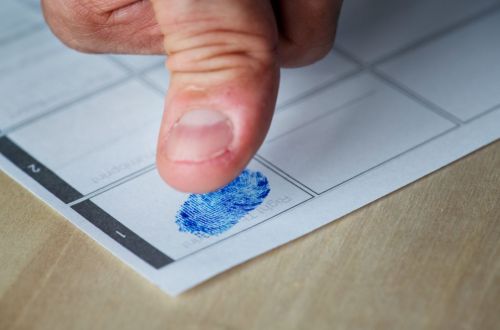
Ink fingerprinting methods are still around, but they are being replaced with live scan methods. Some places, particularly in rural areas, can’t afford to invest in this technology. Power outages may also impede live scanning, which is why traditional ink fingerprinting still lingers.
Since ink is more prone to smudging, results may not be conclusive, forcing applicants to take the tests again. Similarly, not applying proper pressure with inked fingers and thumbs means that the identifying ridges of the fingerprints won’t stand out. With ink and roll methods, the paper cards need to be sent in, which also takes a significantly longer time.
Benefits of Digital Fingerprinting
Digital fingerprinting is now becoming much more common, and while you can still get traditional ink fingerprinting done, more agencies are recommending using modern techniques. For employers in certain industries, job candidates, or those obtaining special licenses for their industries, fingerprinting is a crucial step before joining the team. Digital fingerprinting benefits both businesses and individuals in key areas.
Benefits for Businesses
Companies and organizations that need to vet job candidates enjoy many advantages over traditional ink methods when they use digital fingerprinting. One of the features of going digital is that the quality of the fingerprint scan is significantly improved, which results in fewer rejected applications.
A smudged ink fingerprint could make it impossible to get results, requiring a new submission, which adds time to the process. Digital printing saves time and money during the hiring process. Since results can be determined within 24 to 72 hours in most cases thanks to the electronic transmission of digital prints, it speeds up the background check, allowing for faster hiring.
Digital data is also more secure than the physical cards that ink fingerprints are applied on. These digital scans can also be integrated into HR systems and be monitored continuously. In other words, businesses can learn right away if any employee has been arrested or convicted after the initial hiring process.
Benefits for Individuals
Companies and organizations aren’t the only ones who stand to benefit from choosing digital fingerprinting for background checks. If you’re a job applicant, it’s better for you too.
Traditional ink and roll fingerprinting methods are notoriously messy. Some people forget they have ink on their fingers and touch their face or their clothing, which can add to the annoyance. With digital scanning, there is no mess, and the results are processed more quickly. Instead of waiting and wondering if your fingerprint card arrived in one piece and is being checked by state or federal agencies, you will get results in hours or days.
Since feedback is in real-time, technicians can immediately see if the fingerprints are clear, which reduces the need to retake the prints or have them rejected due to smudges.
Who Needs to Get Fingerprinting Background Checks in Nevada?
If you work in an industry where you have direct contact with vulnerable sets of the population, hold a role of public trust, or are in a regulated industry, you will need a fingerprint background check. Educators and those in childcare roles must submit fingerprints, with childcare workers required to resubmit their fingerprints every five years.
The gaming industry is another one that requires fingerprinting for many prime positions, such as dealers, cage cashiers, and security. Healthcare personnel, insurance adjusters, and real estate agents are just a few of many others that must get fingerprint scans. You will also need to have your fingerprints taken if you plan to get a concealed carry weapon (CCW) permit, volunteer in certain positions, or plan to adopt or foster a child.
Where Can You Go for Digital Fingerprinting?
Digital fingerprinting is far more prevalent now than ever, and in the coming years, you may struggle to find a place that does traditional ink fingerprinting anymore. While it may be reserved as a backup method for when there are power outages or in rural locations that can’t afford to invest in the technology, live scans are taking over.
The Southwest Las Vegas Fingerprinting Center – Fingerprinting Express – is one of many different locations in Nevada that offers these digital live scan services. If you are required to get a background check with fingerprinting for your professional license or after receiving a new job offer, you can schedule an appointment or simply walk in to check this off your pre-employment to-do list.
About the Author