African countries are framing their own sovereign assertions and regional influence.

By Mark Basta
World Section Writer
Berkeley Political Review
Introduction
The extensive literature on post-independence African development highlights the challenges and opportunities for African agency in international politics. In essence, agency is the ability to influence or exert power on other parties or coalitions. Between the 1950s and 1990s, African states glimmered in global news as victims of corruption, civil wars, frequent regime changes, brutal dictatorships, and even genocide. However, contemporary African agency has further developed to directly challenge major powers on the international scale in pursuit of their regional and global agendas.
African countries have moved from reacting to their post-independence challenges to a more proactive stance where they frame their own sovereign assertions and regional influence. Some African countries have recently challenged legacies left by foreign interference, such as colonial borders, inter-colonial treaties, and foreign policy stances. Nonetheless, others have successfully confronted the international system and stronger states for goals like domestic sovereignty, climate action, and international justice. In both cases, the shift in African agency on internal and external issues illustrates a more decisive role for many of the continent’s countries in the next few decades.
Contemporary African Agency: A Theory
Overview
Over the last three decades, African countries’ transnational power has evolved to become more proactive in external affairs. Western and some local literature identify governance failures as an underlying weak point for African development and influence. Nevertheless, newer political theories identify “power” and “agency” from a more holistic perspective, transforming the view of the continent’s true potential. Michael Beckley, a political science professor at Tufts University, describes this theory in his article “The Power of Nations: Measuring What Matters.” Beckley criticizes the reliance on gross domestic product (GDP), military spending, or national capacity as indicators of power. Instead, he argues for a “net indicator” approach that compares states’ assets, liabilities, and net resources to determine true agency.
Hence, the current political atmosphere in the continent differentiates contemporary agency, which aims to maximize assets and minimize liabilities, from post-independence agency. Internally, some African states have proposed solutions for post-colonial challenges like borders and pre-independence regional treaties. For example, as detailed later, countries, especially in East Africa, have contested these issues more unilaterally for individual strategic advantages. On the external level, other countries in North Africa, along with South Africa, have penetrated the international stage in a renewed attempt to distinguish their goals from foreign influence and renew their global leadership roles. As the analysis below shows, the net indicator approach may view African agency through a partially more positive lens than older post-independence research.
Agency in Internal Affairs
First, some states have proposed border alterations, including the East African Federation (EAF) and the Alliance of Sahel States (AES), to maximize net agency capacity hindered by pre-independence boundaries. Rooting back to 1963, the EAF originated as a proposed integration of ex-British colonies Kenya, Tanzania, and Uganda into one federation, but more recently, Burundi, Rwanda, South Sudan, and the Democratic Republic of the Congo (DRC) have joined the project. From the Atlantic to the Indian Ocean, the EAF unites more than 350 million people under one currency, accessible transportation, and trade agreements. Nevertheless, the proposed state has not gone into effect, with some experts blaming this on overexpansion and others on public awareness. For example, in the late 2020s, Somalia and DRC joined the EAF, raising concerns over integration feasibility due to economic and security elements. Somalia, for instance, is the only Muslim country in the federation with the most homogenous population out of all other members. Additionally, Somalia and DRC face disproportionate internal conflicts and economic hardships that limit their material contribution to the alliance.
Thus, despite the challenges that currently obstruct the proposal’s implementation, the prospective federation’s governments have contested their pre-independence boundary settings to maximize their net agency by connecting their countries and the global trade system from the Atlantic to the Indian Ocean. In 2023, the EAF’s head of state pushed to write the federation’s constitution in Kenya, keeping this proposal as a viable option for the future.
Some states, including the Nile River Basin countries, have also shown more assertive individual foreign policy in contemporary times, especially on the issue of the Grand Ethiopian Renaissance Dam (GERD). Constructed between 2011 and 2023, GERD is the largest hydroelectric dam in Africa, partially solving Ethiopia’s chronic energy shortage problem. However, Egypt and Sudan have protested this infringement on their “acquired rights” in the Nile water allocation. Both challengers have cited the Nile Water Agreements of 1929 and 1959 between Ethiopia, Britain, Egypt, and Sudan, of which the latter two were Britain’s colonies in 1929. These British-planned treaties allocated most of the Nile water share to Egypt and gave Cairo extensive power over Nile water consumption and activity. Other Nile upstream states, including Ethiopia, Kenya, Tanzania, and Uganda, rejected these agreements, noting their exclusion from the negotiations. Nonetheless, some Western powers, including the US, have supported Egypt’s stance, pressuring Ethiopia to halt the project upgrades through financial aid suspension. Even then, Ethiopia has completed GERD’s construction despite American pressure and Egyptian threats of retaliation.
Despite criticism of this project, the Ethiopian government’s insistence on carrying the project through despite foreign pressure reflects on its more independent agency capacity contemporarily. Evidence supports Egypt’s concerns over GERD’s construction, which can threaten Egypt’s main water source. For instance, remote sensing data indicates that, among domestic climate changes, GERD reduces Egypt’s water allocation by about 35%, threatening the country with a staggering 33% potential agricultural land loss. Still, the net indicator of Ethiopia’s agency in tackling this issue depicts the government’s ability to act assertively and maximize its assets despite its military spending and GDP inferiority to Egypt.
Agency in External Affairs
On an external level, African agency has taken proactive stances to assert their sovereignty in diplomatic, innovative, and legal fields on the international stage. This pattern is prevalent in the diplomatic and inventive actions by North African countries, namely Maghreb countries and Egypt, as well as South African legal initiatives.
First, after 2015, relations between Maghreb states, such as Morocco and Algeria, have exerted new forces on their European neighbors to leverage their net agency. For instance, Spain maintains strategic borders and economic ties with Morocco. However, according to the Spanish Foreign Ministry, Spain hosted Brahim Ghali, President of partially recognized Western Sahara, for treatment for COVID-19. In retaliation, as Morocco claims sovereignty over this West Saharan territory, the Kingdom granted Spanish-Catalonian secessionist Carles Puigdemont asylum on April 30. Additionally, Moroccan border authorities loosened oversight over 10,000 illegal migrants to the Spanish enclave of Ceuta. Eventually, the Spanish Prime Minister Pedro Sanchez visited Morocco to express support for the Rabat-backed 2007 autonomy plan. In turn, Algeria has suspended its cooperation treaty with Spain, jeopardizing 25% of Madrid’s natural gas sources. In both cases, despite the motivation and consequences of each state’s position, the Maghreb’s transformed role to utilize its assets and liabilities in its favor to achieve its regional agenda has sharply increased.
Many African countries have taken unilateral and collaborative initiatives to mitigate the climate change consequences and attract new opportunities for soft power. For example, Morocco constructed the largest concentrated solar facility in the world in 2018, declaring that the government will achieve the 2030 target of half renewable energy mix. Other countries, like South Africa and Nigeria, have proposed and implemented climate-friendly policies and cultivated clean energy industries for future financial investments.
On a more diplomatic level, Egypt has invested in a new soft power field: international climate action. In 2022, Egypt hosted the United Nations Conference of Parties (COP27) in Sharm El-Sheikh, where its local delegation proposed the Sharm El-Sheikh Adaptation Agenda. In that sense, Egypt integrates climate action as a part of its soft power to influence other states in its favor. Under the global spotlight, Egypt had bridged a Global North-South discussion for the most climate-vulnerable continent. In return, Egypt strategically demonstrates its case as a vulnerable state to water deprivation and agricultural loss, and national leadership indirectly attracts the discussed agreements and solutions to funnel investments into its energy sources.
Even on the international justice scene, African nations like South Africa have recently rejuvenated their foreign policy by challenging Israel’s inhumane retaliation over Gaza despite Western pressure. On December 29, 2023, Pretoria applied for a case against Israel in the International Court of Justice (ICJ) for violating the Genocide Convention after Israel’s war on Gazans this year. This move opposes major powers’ stance, like the US, the UK, and Germany, and their focused support for Tel Aviv. To further challenge South Africa’s resilience, the Israeli foreign ministry, reportedly, started a lobbying campaign asking American lawmakers to threaten Pretoria with severance of US-South African trade relations.
Still, South Africa has stuck to its foreign policy despite domestic political changes, issuing the newest Memorial containing evidence of genocide in Gaza on October 28th. South African journalist Peter Fabricius argues, however, that the state’s Pro-Palestinian position does not only stem from political competition. Rather, relying on the local public’s association of the Israeli actions with apartheid, the African National Congress and President Cyril Ramaphos targeted their stance on this issue to garner support during a heated national election in early 2024. Yet, South Africa reserves the same position even after the coalition government’s ascension, solidifying a new status of African agency.
Where Is African Agency Headed?
There have still been prevailing challenges to the continent’s agency since the post-independence era. In April 2024, the military juntas of Mali, Niger, and Burkina Faso announced the integration of their states into the Alliance of Sahel States (AES) with a new capital, currency, and anti-West administration. This isolationist alliance has denounced the Economic Community of West African States as a colonial body and the West African CFA franc as France’s method to pursue a neo-imperialist agenda. Despite these new leaders’ promises, the AES’s existing reliance on and collaboration with Russian institutions compromises their net power regardless.
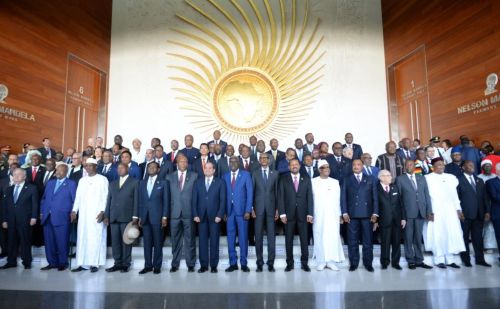
Yet, after a holistic examination of contemporary African state actions on internal and external affairs, many of the continent’s powers are accumulating new powers that increase African agency. African countries have worked collaboratively, complementary to their domestic agendas, to emphasize their new assertive and proactive stance in international politics. In 2024, the African Union joined the Group of 20 summit as its 21st member, giving the continent the chance to maximize its use of its assets and liabilities to seize more agency internationally.
On an individual level, states from different regions utilized these power maximization tools to attain incremental agency on the international stage and to resolve regional challenges. In conclusion, this analysis can explain how conventionally “weaker” countries, like Morocco, Uganda, and South Africa, can confidently confront major and dominant international actors.
Originally published by Berkeley Political Review, 02.04.2025, under the terms of a Creative Commons Attribution 4.0 International license.
About the Author