Arizona’s methodology has dashed their dreams of building a thriving homeland.

By Umar Farooq
Ancil Payne Fellow
ProPublica
Introduction
In September 2020, the Hopi Tribe’s four-decade effort to secure its right to water culminated in a court proceeding. The outcome would determine how much water the arid reservation would receive over the next century and whether that amount would be enough for the tribe to pursue its economic ambitions. Under rules unique to Arizona, the tribe would have to justify how it would use every drop it wanted.
The monthslong ordeal in Arizona’s Superior Court unfolded in video calls over shaky internet connections.
Chairman Timothy Nuvangyaoma called it “the fight of our lives.”
The U.S. Supreme Court ruled in 1908 that reservations have an inherent right to water. In the rest of the country, courts grant tribes water based on the amount of arable land on their reservations, relying on a 1963 U.S. Supreme Court precedent. But in 2001, Arizona developed its own method that was ostensibly more flexible to individual tribes’ visions for how they wanted to use their water by examining their culture, history, economy and projected population.
This new standard offered tribes an opportunity to shape their plans for economic development and growth beyond farming. But the Hopi case, the first adjudicated under this process, showed it also came at a high cost with uncertain outcomes.
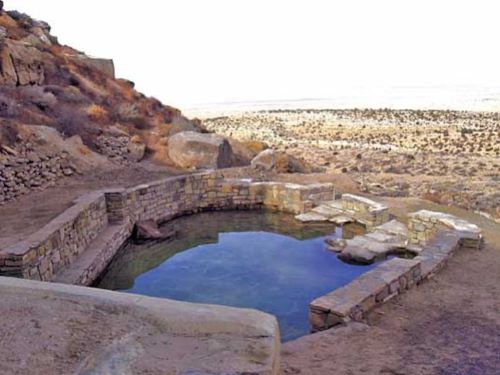
Court records show that at the trial, experts brought in by the tribe, state and corporate water users argued over how many Hopi had lived in the area going back centuries and how much water they had used for crops and livestock. They debated the correct fertility rate of Hopi women and the viability of the tribe’s economic projects. And the court examined lists of sacred springs — sites the Hopi traditionally kept secret to preserve them — to decide how much water could be drawn from them for future religious ceremonies.
The legal battle, one of the tribe’s largest expenses in recent years, resulted in May 2022 with the court awarding less than a third of the water sought by the Hopi Tribe. That was the amount needed, the court said, “to provide a permanent homeland.”
“I would define it as modern-day genocide,” Nuvangyaoma said. “Withholding water, which is life for the Hopis, until an undetermined time is really a position to kill off a tribe that’s been here since time immemorial.”
The trial and decision carry profound implications for other Colorado River Basin tribes seeking water, especially in Arizona, where 10 out of 22 federally recognized tribes have outstanding claims. Water awarded to these tribes often comes out of the allocation states can use, leading to inherent conflict between tribes and states over the scarce resource. If the Hopi decree survives the tribe’s planned appeal, other tribes will be subjected to the same scrutiny of their way of life, said Rhett Larson, a professor of water law at Arizona State University.
“It’s a big deal for the history of water law in the United States of America and what it means to be a Native American tribe,” Larson said.
“To Provide for Our Existence”
The Hopi Tribe has inhabited villages in northeastern Arizona for more than 1,100 years. In the time since white settlers arrived, the Hopi Tribe’s water supply has been decimated by drought and coal companies’ unchecked groundwater pumping.
The reservation, established by the U.S. government in 1882, is entirely surrounded by the Navajo Nation. Both tribes use the same aquifer, with wells reaching thousands of feet into the ground. Three-fourths of the Hopi citizens living on the reservation rely on well water tainted with high levels of arsenic, according to tribal leaders and studies conducted with the Environmental Protection Agency. A heavy metal that leads to increased risk of developing cancer, cognitive developmental disorders and diabetes, arsenic is naturally present throughout Arizona, but pumping can increase its concentration in groundwater.
According to Dale Sinquah, a member of the Hopi Tribal Council, concerns about the aquifer make it hard not only to find drinking water, but they also limit the construction of new homes and businesses allowing the community to grow.
The only other available water on the reservation is inconsistent, running in four major streambeds that are dry most of the year. Those four washes, which empty into the Little Colorado River, have likely been impacted by drought, with two showing a “significant decreasing trend” in recent years, according to the U.S. Geological Survey.
“We need another source of water off-reservation to provide for our existence in the future,” Sinquah said.
The case involving Hopi water rights began in 1978, when the Phelps Dodge mining company filed suit against the state and all other water users to protect its claims in the Little Colorado River watershed. Under Arizona law, the only way to quantify a single water claim was to litigate all regional claims at once. Soon, the Hopi Tribe and thousands of others with claims became parties to the case in the Superior Court of Arizona.
The tribe put the court case on hold twice as it attempted to get water through out-of-court settlements. Those talks though would have required compromising with other users making claims to that water, including the Peabody Western Coal Co., which until 2019 pumped groundwater from the aquifer for its mining operations. Between 1965 and 2005, Peabody accounted for 63% of the water pumped out of the aquifer, and 31% between 2006 and 2019, according to the United States Geological Survey. Peabody did not respond to requests for comment.
In 2012, the Hopi Tribe appeared on the brink of a settlement with the state that would have provided the tribal nation with $113 million for pipelines and other infrastructure to bring groundwater to communities on the reservation. But that effort fell through when Hopi leaders refused to sign off on a guarantee in the settlement allowing Peabody continued access to the aquifer until 2044.
“We Don’t Think That’s Feasible for You”
Unable to reach a settlement, the Hopi Tribe’s pursuit of water for its homeland continued in court through Arizona’s untested legal process.
Due to the large number of parties and the underfunding of both the state courts and Arizona’s Department of Water Resources, the case moved at a snail’s pace. The department filed a key technical report on water availability in 2008. It took until 2015 for the department to finalize it for the court.
By then, the case had been overseen by four judges. They appointed three separate special water masters, who are key to producing a proposed decree for the court. Susan Ward Harris, the water master who delivered the 2022 decree, was appointed in 2015. Harris did not respond to requests for comment.
When its day in court finally came, the Hopi Tribe explained it wanted water for an economically vibrant future with farms, cattle operations, coal mines and power plants.
More than 90 witnesses testified. They included a long line of experts — for the tribe; the federal government; the state; the northern Arizona city of Flagstaff; and the Little Colorado River Coalition, which represented small cities, utilities, ranchers and commercial interests. They discussed the tribe’s projected population, argued over the accuracy of the census count of the Hopi and offered predictions of what the numbers would be in the future.
In the end, the court went with the lowest population projections put forward by Flagstaff and the state, and it decided to only include people living on the reservation full time.
The reservation’s population, currently about 7,000, would peak at 18,255 by 2110, Harris decided.
She also decreed the tribe would get water to only irrigate 38% of farmland it planned to. It was denied water for a cattle operation, saying it “would not be feasible, practical, or provide economic benefits,” based on the court’s assessment of the current market. Harris also declared the coal operations were not “economically feasible.” Some $10 billion in economic development projects, presented in detail to the court, were deemed unrealistic.
Water for ceremonial and subsistence gardens was also denied. The court publicly listed nearly 100 sacred springs with limits on how much water the tribe was entitled to use for religious ceremonies.
In total, the tribe had requested at least 96,074 acre-feet a year of water, and the Arizona water master recommended awarding just 28,988 acre-feet, all of it from the same depleted, contaminated aquifer and seasonal streams the Hopi already use. After four decades, they ended up in the same precarious position they’d started.
Nuvangyaoma said the decree suggested the state and non-Native parties believed the tribe was incapable of carrying out its ambitious economic plans. It closed the door on future growth and, overall, was “insulting.”
By refusing to count members who live part time on the reservation as part of the population, the court ignored the connection many Native Americans have with their land, even when they don’t live there permanently, he said. Many leave so they or their children can pursue an education; for work; or to live in homes with reliable electricity and water. In short, Nuvangyaoma said, they seek the very things Hopi leaders hoped that the settlement would help bring to the reservation, and that the tribe needed water to do. But the court said that because the reservation was not growing at the speed the tribe claimed it could, it couldn’t have the water — a circular logic that hobbles the Hopi.
“It’s very frustrating that you’re told that your population will peak at a certain amount when we don’t see it that way,” Nuvangyaoma said.
Even with Harris’ decree on the books, the Hopi Tribe still faces a long road to access its allotted 28,988 acre-feet of water. Funding for dams, pipes and other infrastructure will likely require congressional action and involve more negotiation with other water users, including the Navajo Nation, which draws from the same groundwater. “I suspect I will not be alive when it comes to fruition,” Sinquah, the tribal council member, said.+
Nuvangyaoma said the tribe will still pursue its plans for economic development, but with the understanding it cannot look to the state or federal governments for support.
Cities across the Southwest have, with government support, pursued economic development and growth in the ways they want, he said, whether it’s coal mining, raising cattle or farming the desert using water brought from far away.
“So why are we putting limitations on Hopi and making a decision for us saying, ‘Oh, well, we don’t think that’s feasible for you all?’” Nuvangyaoma asked. “Who has that right to tell us what is and what is not feasible for us?”
Originally published by ProPublica, 07.07.2023, under a Creative Commons Attribution-NonCommercial-NoDerivs 3.0 United States license.
About the Author