Obscure jargon like “woke” may not be having the effect many Republicans had hoped.

By Jonathan Weisman
Political Correspondent
The New York Times
When it comes to the Republican primaries, attacks on “wokeness” may be losing their punch.
For Republican candidates, no word has hijacked political discourse quite like “woke,” a term few can define but many have used to capture what they see as left-wing views on race, gender and sexuality that have strayed far beyond the norms of American society.
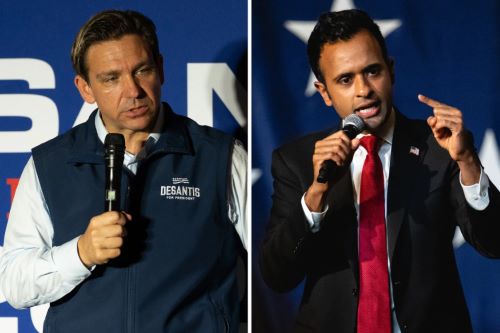
Gov. Ron DeSantis last year used the word five times in 19 seconds, substituting “woke” for Nazis as he cribbed from Winston Churchill’s famous vow to battle a threatened German invasion in 1940. Nikki Haley, the former South Carolina governor, speaks of a “woke self-loathing” that has swept the nation. Senator Tim Scott of South Carolina found himself backpedaling furiously after declaring that “‘woke supremacy’ is as bad as white supremacy.”
The term has become a quick way for candidates to flash their conservative credentials, but battling “woke” may have less political potency than they think. Though conservative voters might be irked at modern liberalism, successive New York Times/Siena College polls of Republican voters nationally and then in Iowa found that candidates were unlikely to win votes by narrowly focusing on rooting out left-wing ideology in schools, media, culture and business.
Instead, Republican voters are showing a “hands off” libertarian streak in economics, and a clear preference for messages about “law and order” in the nation’s cities and at its borders.
READ ENTIRE ARTICLE AT THE NEW YORK TIMES
About the Author