We must cut greenhouse gas emissions quickly to avert a catastrophic future.

By Jim Walsh
Policy Director
Food & Water Watch
Introduction
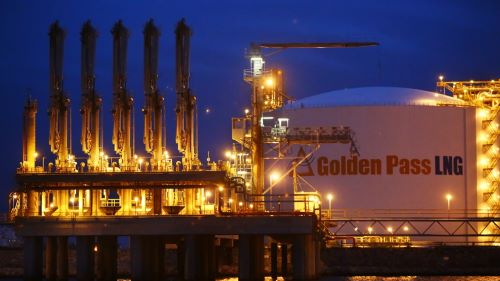
In January 2024, the Biden-Harris administration advanced a huge win for the climate movement. After pressure from scientists and advocates including Food & Water Watch, Biden paused permits for liquefied natural gas export terminals. He also started a process to reevaluate how the United States determines whether exporting fracked gas is in the public interest. However, some lawmakers are rushing to the LNG industry’s aid and attacking science to do so.
This August, the Chair of the House Committee on Science, Space, and Technology, with various subcommittee members, penned a letter to the Department of Energy (DOE) Secretary Jennifer Granholm. In it, they attack critical research from Food & Water Watch board member Dr. Robert Howarth of Cornell, who authored a groundbreaking study documenting that LNG’s climate impact is worse for the climate than coal.
The issue at hand is the assumptions underlying how the U.S. government models climate impact. This wonky and obscure math will have a huge influence on policies at this critical juncture in the climate crisis. If dirty energy companies have their way, DOE climate models will churn out bogus results showing that LNG is a benefit for the climate.
All this comes at a time when the climate science is clear and well-established: Time is of the essence. We must cut greenhouse gas emissions quickly to avert a catastrophic future. The federal government must use modeling that reflects this scientific reality, not fossil fuel industry deception.
Dirty Industries Are Pushing for Models That Benefit Them
Right now, the DOE is developing models to predict LNG’s climate impact in order to judge whether it’s in the “public interest” to allow more LNG exports. Science and common sense tell us we can’t expand fossil fuels and address the climate crisis. Nevertheless, fossil fuel industry has long argued, falsely, that gas is a clean fuel and an essential “bridge” in our transition to renewables. This fight over LNG exports is no different.
At the same time, the Treasury Department is developing models to determine the climate impacts of various types of hydrogen production. This will ultimately determine what—if any—tax credits hydrogen producers receive. Dirty energy companies are advocating for modeling assumptions that would allow hydrogen made with fracked gas, coal mine methane (gas extracted from coal beds), carbon capture, and even factory farm gas to qualify for lucrative subsidies that were meant for hydrogen produced exclusively with renewables.
These choices for modeling assumptions will determine if the federal government joins fossil fuel industry greenwashing or takes real climate action to restrict further development of fossil fuels for exports and hydrogen production. The major crux of the industry’s plan is to skew how we measure methane’s climate impact and analyze alternatives to methane. The federal government siding with industry would have disastrous impacts on our climate while showing climate benefits on paper.
Methane Is an Immediate Threat and Should Be Treated Like One
Methane, the main ingredient in so-called “natural” gas, is a potent climate pollutant that has 86 times the impact of carbon dioxide over 20 years. Its emissions are an immediate threat to our climate. They risk pushing us past thresholds that our climate can’t recover from. But a report from the Breakthrough Institute—cited by lawmakers in their letter to Secretary Granholm—ignores this reality.
Breakthrough’s criticism of Dr. Howarth’s LNG study emphasizes the time frame used to measure methane’s impact. While Dr. Howarth uses a 20-year timeframe, Breakthrough advocates for 100 years.
Incorporating a long view of methane into climate models shows a smaller impact since methane stays in the atmosphere for a shorter amount of time. (Its impact over a 100-year time frame is less than half of that over 20 years.) However, this treats methane and climate change as distant problems for a future generation—not incredibly urgent ones that must be addressed now.
Dirty industries support a long view because it gives the impression that methane is not as harmful. This would allow them to justify continuing to destroy our climate.
What’s also at play is how the U.S. government considers methane leakages. The industry is notoriously leaky throughout the supply chain, and the U.S. government routinely underestimates this leakage. Direct observations show these leaks are around three times as high as estimates from the Environmental Protection Agency.
The industry is also responsible for many super-emitters that bleed methane into the atmosphere at astonishing rates. Many of these have only recently been uncovered through new satellite imagery techniques. Federal climate models must incorporate this leakage at rates that truly account for their impact on the planet.
But dirty industries have tilted the debate by funding and consulting on research purporting to investigate methane leakage. For example, Breakthrough cites a paper on LNG’s climate footprint with an author who has extensive links to the fossil fuel industry and previously produced research funded by Cheniere (an LNG exporter).
Breakthrough also proposes that the answer to the leakage problem is just to plug the leaks—never mind that the industry has been promising to do so for years with little progress. And when it comes to climate benefits, merely plugging leaks pales in comparison to transitioning to renewables. Which brings us to the second issue:
Methane Fails to Compare to the Best Alternative—Renewables
Gas-based hydrogen and LNG companies are vying for favorable climate models based on the idea that they are better than alternatives. But they don’t dare compare themselves to the clear winner: renewables. While LNG and hydrogen argue they create less emissions or offset emissions, renewables create zero emissions when generating energy.
We don’t need an abundance of experimental technology or dirty infrastructure to transition to renewables, either. We know how to make them, and we know they are the best option for our climate.
Nevertheless, LNG and hydrogen companies are pushing for federal support based on bogus comparisons. For example, organizations like Breakthrough are still going to the mat for gas because they say “It’s better than coal!” (Reminder: This framing was and is still used by the oil and gas industry. The result has been continued gas production, which has caused more emissions and stalled our renewable energy transition.) The same rationale could be used to justify replacing old coal plants with new coal plants.
Moreover, any comparison must consider the lifetimes of new infrastructure, and new fracked gas infrastructure will last for decades. It could lock in at most minor emissions reductions well into the 2060s and further slow down our energy transition.
At the same time, some companies argue that by creating hydrogen by blending fracked gas with factory farm gas and methane leaked from the coal and gas industries, they are mitigating fracking’s harms to our climate. They say this makes their hydrogen a greener alternative to plain old gas, and so should qualify for “clean” hydrogen tax credits
But models should not be based on comparing energy sources to the worst and dirtiest option. That fails to account for the benefits of better alternatives like renewables. The true test for whether an industry is “climate-friendly” or “in the public interest” should be its strength compared to all the options, not just the ones Big Oil and Gas wants us to consider.
Additionally, these modeling assumptions falsely assume methane leakage is a foregone conclusion. They ignore that there are better ways of plugging leaks than letting polluters pretend they somehow offset fossil-based hydrogen’s harms to our climate.
In reality, subsidizing these gasses through faulty climate assumptions will increase the profitability of (and thus incentivize) fracking, coal mining, and factory farming. This will create new sources of methane that will invariably leak into the atmosphere.
LNG and Hydrogen Pose Harms Beyond Climate
Beyond climate, there are many reasons why supporting LNG and fossil fuel-based hydrogen are terrible ideas. The U.S. should consider all of these in its policy decisions. For one, methane emissions are hazardous to the climate and our health. Methane is a key ingredient in ground-level ozone, which poses potentially fatal risks to our lungs and hearts. Human-generated methane emissions cause over 500,000 deaths around the world every year.
LNG in particular would spur a dirty infrastructure boom in communities already suffering at the hands of the oil and gas industry. In the Gulf Coast, for example, majority-Black communities are facing sinking land due to climate change and devastating pollution. A buildout of more LNG terminals would compound these harms with more pollution and the risk of catastrophic explosions.
A growing LNG industry would also require more fracking and all its attendant harms to nearby communities. Those include mysterious illnesses, increased cancer rates, and poisoned water. The entire natural gas life cycle poses serious risks to the U.S.’s water resources. Extraction, pipelines, and related carbon capture and storage can impact water scarcity by growing demand for water in other sectors and in areas where supply is projected to decline.
Gas-based hydrogen would similarly prop up the fracking industry, and projects that use gas made from factory farm waste would prop up the harmful factory farm model. Hydrogen is also an incredibly thirsty power source, and many of the projects planned in the U.S. are proposed for areas that can’t afford to waste a drop. (Compared to hydrogen, renewables—especially wind—are also the clear winner when it comes to minimizing water use.)
We Need Accurate, Science-Based Modeling for Good Climate Policy
It is a scientific fact that climate change’s dangers become more urgent every day; that averting climate catastrophe requires ending fossil fuels; that renewables present the most effective strategy for reducing emissions. But dirty industries, their allies in Congress, and their mouthpieces are rejecting science to sell the lie of “clean” gas and hydrogen. They are pushing for the U.S. government to use models that lead to the best outcomes for them—not the planet.
By attacking this science and going after scientists like Dr. Howarth, the industry is doing what it’s always done. It’s casting doubt on established science to further its own ends; muddying the waters to sow confusion on what we already know. In order to pass policy that will actually prevent climate catastrophe, we need leaders who will see through their smoke and mirrors.
Published by Common Dreams, 08.28.2024, under the terms of a Attribution-NonCommercial-NoDerivs 3.0 Unported license.
About the Author