Most are devoted civil servants who are committed to civic duty without regard to partisan politics.

By Dr. Jaime Kucinskas
Associate Professor of Sociology
Hamilton College

By Dr. James L. Perry
Professor of Public and Environmental Affairs Emeritus
Indiana University
Introduction
It’s common for political candidates to disparage “the government” even as they run for an office in which they would be part of, yes, running the government.
Often, what they’re referring to is what we, as scholars of the inner workings of democracy, call “the administrative state.” At times, these critics use a label of collective distrust and disapproval for government workers that sounds more sinister: “the deep state.”
Most people, however, don’t know what government workers do, why they do it or how the government selects them in the first place.
Our years of research about the people who work in the federal government finds that they care deeply about their work, aiding the public and pursuing the stability and integrity of government.
Most of them are devoted civil servants. Across hundreds of interviews and surveys of people who have made their careers in government, what stands out most to us is their commitment to civic duty without regard to partisan politics.
From Spoils to Merit
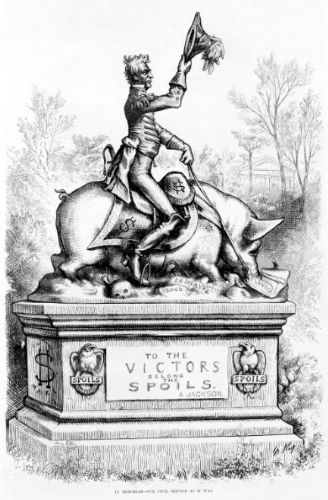
From the country’s founding through 1883, the U.S. federal government relied on what was called a “spoils system” to hire staff. The system got its name from the expression “to the victor goes the spoils.” A newly elected president would distribute government jobs to people who helped him win election.
This system had two primary defects: First, vast numbers of federal jobholders could be displaced every four or eight years; second, many of the new arrivals had no qualifications or experience for the jobs to which they were appointed.
Problems resulting from these defects were smaller than modern Americans might expect, because at that time the federal government was much smaller than it is today and had less to do with Americans’ everyday lives. This method had its defenders, including President Andrew Jackson, who believed that government tasks were relatively simple and anyone could do them.
But even so, the spoils system meant government was not as effective as it could have been – and as the people justifiably expected it to be.
In 1881, President James Garfield was assassinated by a man who believed he deserved a government job because of his support for Garfield but didn’t get one. The assassination led to bipartisan passage in Congress of the Pendleton Act of 1883.
The law brought sweeping change. It introduced for the first time principles of merit in government hiring: Appointment and advancement were tied to workers’ competence, not their political loyalties or connections. To protect civil servants from political interference, they were given job security: Grounds for firing now revolve around poor performance or misconduct, rather than being a supporter of whichever political party lost the last election.
Nearly 3 million career civil servants continue to have these protections today. New presidents still get to hire roughly 4,000 political appointees with fewer protections.
As a result of these changes and related reforms in the Civil Service Reform Act of 1978, the U.S. government is far more effective today than it was prior to the Pendleton Act.
In fact, U.S. civil service institutions, built on merit-based appointments, merit-based advancement and security of employment, have become the standard for democratic governments around the globe. U.S. federal workers are generally high-performing, impartial and minimally corrupt compared with other countries’ civil servants.
Increasing Government Responsibilities
Since 1776, the U.S. population has increased from about 2.5 million people to over 330 million today. With its growing size and with technological advances, the federal government now provides a great many services, including protecting its citizens from complex environmental, health and international threats.
Environmental Protection Agency employees help maintain clean air and water and clean up toxic waste dumps to protect human health. Department of Energy scientists and managers oversee the treatment and disposal of radioactive nuclear waste from our weapons program and power plants. National Park Service staff manage over 85 million acres of public land across all 50 states. The National Oceanic and Atmospheric Administration’s forecasters’ advance detection of potential weather emergencies enable early warnings and evacuations from high-risk areas, which has saved countless lives.
Federal Emergency Management Agency employees aid survivors of natural disasters. That agency also subsidizes flood insurance, making home insurance available in flood-prone areas. The U.S. government additionally provides billions of dollars in subsidies per year to support farmers and maintain food security.

These programs are all administered by government employees: environmental scientists, lawyers, analysts, diplomats, security officers, postal workers, engineers, foresters, doctors and many other specialized career civil servants. Andrew Jackson’s idea of government work no longer applies: You do not want just anyone managing hazardous waste, sending a space shuttle into orbit or managing public lands constituting one-third of the country’s territory.
A Dedicated Workforce
Research, including our own, shows that these workers are not self-serving elites but rather dedicated and committed public servants.
That’s generally true even of Internal Revenue Service staffers, postal service clerks and other bureaucratic functionaries who may not earn much public respect. Federal employees mirror demographics in the United States and are hired, trained and legally obligated to uphold the Constitution and serve the public interest.
One of us, Jaime Kucinskas, with sociologist and law professor Yvonne Zylan, tracked the experiences of dozens of federal employees across the EPA, Department of Health and Human Services, State Department, Department of Interior, Department of Defense, Department of Homeland Security and various other agencies during the Trump administration. That research found these workers were dedicated to serving the public and the Constitution, upholding the missions of their agencies and democracy, and working to support leadership and the elected president.
Even though 80% of the centrist and Democratic Party-leaning government workers they spoke with did not believe in the ideas behind the Trump presidency, they were careful to follow legal official orders from the administration.
They noted the importance of speaking up while leaders deliberated what to do. After political appointees and supervisors made their decisions, however, even the civil servants who most valued speaking truth to power acknowledged, “Then it’s time to execute,” as one State Department employee told Kucinskas. “As career professionals we have an obligation to carry out lawful instructions, even if we don’t fully agree with it.”
Another international affairs expert told Kucinskas, “People have voted and this is where we’re at. And we’re not going to change things. We don’t do that here.” He said if political appointees “want to do what you consider bad decisions … we do our best to give more information. … And if they still decide to do (it), then we say okay, that’s what we’re going to do.”
He was firm in this loyal and deferential position to the elected president and his administration in 2018 and again in a 2020 follow-up interview. “If you want to be an advocate, you can leave and work in a different sector,” he concluded.
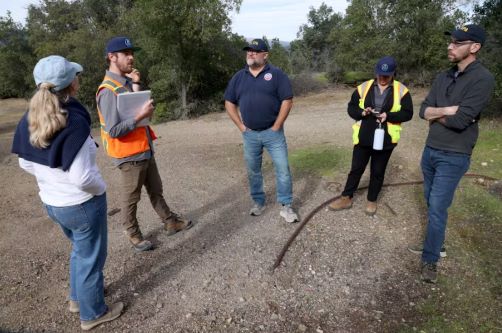
Some decided to do just that: More than a quarter of the upper-level government workers Kucinskas spoke with left their positions during the Trump administration. Although exits typically rise during presidential transitions, they typically remain under 10%, making this degree of high-level exits unusually high.
Even as many Americans express frustration with the president, Congress and the federal government as a whole, however, we believe it is important not to take for granted what federal government workers are doing well. U.S. citizens benefit from effective federal services, thanks in part because the government hires and rewards civil servants because of their merit rather than loyalty.
Originally published by The Conversation, 03.26.2024, under the terms of a Creative Commons Attribution/No derivatives license.
About the Author