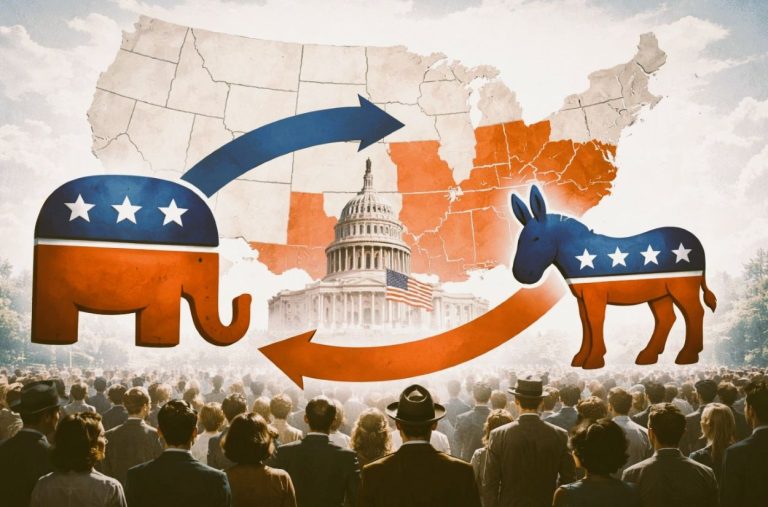
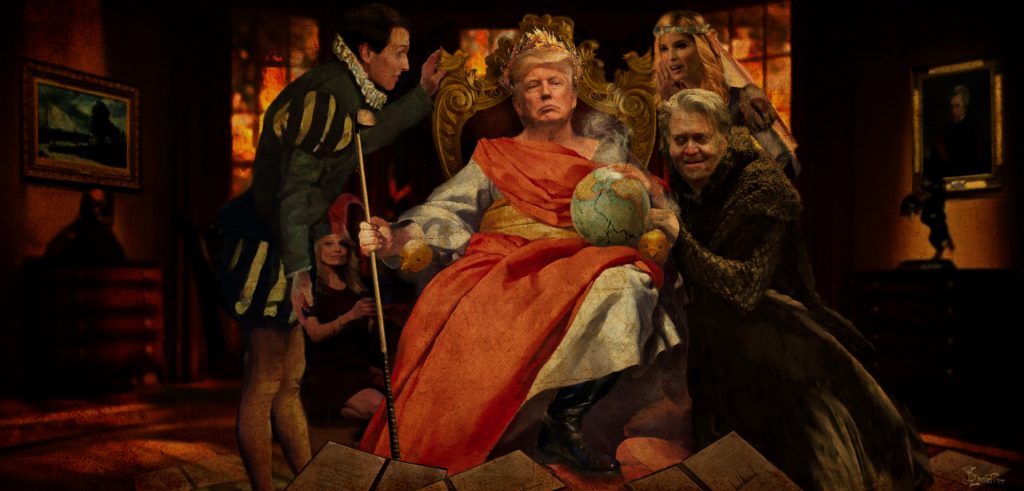
Donald Trump is the beneficiary if not the product of a certain culture of American conservatism, broadly conceived.

By Dr. Andrew Majeske, J.D.
Professor of English
John Jay College of Criminal Justice
City University of New York
Abstract
Many months have passed since I presented this essay at Göttingen in February of 2017, shortly after President Donald Trump’s inauguration. In light of intervening events there is one additional matter I would take note of, one which is arguably a positive development; this is that President Trump’s conduct in office, and that of his associates during the campaign, has highlighted an essential feature of the American political system that often remains obscured. This is that America does not have three coequal branches of government; rather, it has three separate and largely independent branches of government, of which Congress is preeminent. This is appropriate since Congress, the lower House in particular, is directly responsive (by virtue of their short terms of office) to the supreme power of the ‘People.’
Prelude
“Frederick Nietzsche observed that genuinely independent thinkers are never the ‘children of their times.’ Rather, ‘they are (at most) the subversive and rebellious, the despised or decried, the troublesome and trouble-making ‘stepchildren’ of their times.” (Pangle 1)
As many have pointed out in recent months, Congress is the only constitutional check to the Executive Power; should the power of the purse not be sufficient to rein in the Executive, the threat or reality of impeachment remains the ultimate weapon in its arsenal. What follows will not deal directly with the division of power in the government but divisions within the citizenship or the American ‘People.’ I will address these divisions in terms of the threat they pose to the concept of natural rights because this concept, postulating a basic equality between people, is one basis of the division of power in the United States Constitution.
A “House Divided” & American Caesarism
What we witnessed in the 2016 presidential campaign and in the wake of the election of Donald Trump is that the United States is a house divided against itself. It is not difficult to see that Germany, much of the rest of the EU, as well as the UK and other Western nations are, to various extents, in similar situations, as the left and right of the political spectrum overwhelm the middle. What is to be done—what actions can we take at this late date to preserve the good things produced by the post-World War II order? In this article, I turn to Leo Strauss, especially to his Natural Right and History, and suggest that this book might constitute an indispensable starting point if we are to address directly and effectively the profound challenges associated with the rising tide of conservative populism.3Donald Trump is the beneficiary if not the product of a certain culture of American conservatism, broadly conceived. To be sure this ‘culture’ is not to be simplistically identified with political labels like democrat and republican. The “culture of conservatism” that Trump managed to speak to and energize is perhaps in relevant respects quite similar to the one President Nixon harnessed with his “silent majority” televised speech from November 1969, in which his direct appeal to “middle” America” (the “flyover” states of the updated vernacular) managed to generate enough support to bypass Congress, which was preventing his efforts to escalate the Vietnam War. Nixon’s intended goal to “achieve peace with honor” actually led to the fateful spread of the war into Cambodia and the subsequent bombing campaign in Laos.[1]
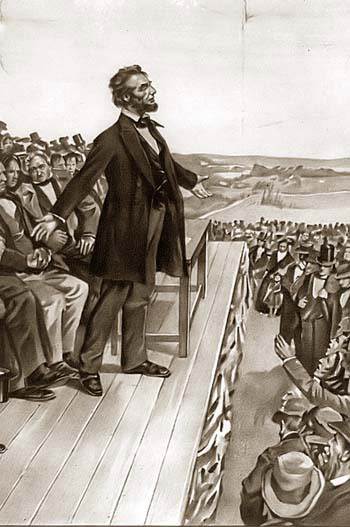
If the world wants to understand the United States and its democracy, the heights that it is capable of achieving, and the depths to which it can fall, it needs to recognize its profoundly split personality.[2] In the words of Abraham Lincoln, the ones aptly opening his remarkable “House Divided” speech: “If we could first know where we are, and whither we are tending, we could then better judge what to do, and how to do it” (“House Divided”).
In Lincoln’s analysis, one threat to a divided republic was the emergence of a potential Caesar. In his “Lyceum Address,” Lincoln predicts that a Caesar would possess a “towering genius” and “thirst and burn for distinction” (par. 17). Whether or not this applies to the current president or his administration is an open question. Rather than attempt to answer it, I will follow Lincoln’s cue and analyze what Caesarism means in a democracy. This will involve engaging Leo Strauss, his theory of natural rights, and his assessment of politics during the Cold War.
In On Tyranny, Strauss noted that Caesarism emerges only after the breakdown of republican government (178). Its rise presupposes the decline of an existing constitutional order. The Caesar who arises, assuming he or she is of the royal variety, can be conceived as the “avenger of the misdeeds of a corrupt people” (179). Strauss notes that it is of some consolation, though cold comfort, that the rule of such a Caesar could even be considered “just” in the same way and to the extent deserved punishment can be considered “just.” Unfortunately, it is difficult if not practically impossible to distinguish between a “royal” and a “tyrannous” Caesar. It is surely safer as a general rule initially to treat them all as potentially “tyrannous” (179).
This being the case, it would be prudent to guard against sentiments like that which Edmund Burke came so close to advocating. Leo Strauss characterizes the sentiments in this way: “to oppose a thoroughly evil current in human affairs is perverse[,] if that current is sufficiently powerful” (Natural Right 318). Rather than succumbing to such permissiveness, we must always remember the enduring exemplary value of “last-ditch” resistance (318).
Hopefully we are not yet facing such alarming eventualities. However, President Trump’s former advisor, and continuing supporter, Steve Bannon, is reported to have said: “I’m a Leninist.” “Lenin wanted to destroy the state, and that’s my goal, too. I want to bring everything crashing down, and destroy all of today’s establishment” (qtd. in Radosh).[3]
Bannon claims that he does not remember the conversation during which he made these statements to a reporter. He did not, however, take the requisite next step and repudiate these comments. Though we cannot assume that Bannon’s purported comments describe Trump’s aims, it is useful to recall that Lincoln’s assessment of potential Caesars concludes in this way: “Distinction will be his paramount object, and although he would as willingly, perhaps more so, acquire it by doing good as harm; yet, that opportunity being past, and nothing left to be done in the way of building up, he would set boldly to the task of pulling down” (“Lyceum Address”).[4]
According to Lincoln, the only defense against a potential Caesar in a democratic regime such as existed in the United States in his time, “require[s] the people to be united with each other, attached to the government and laws, and generally intelligent[; it would then be possible] to successfully frustrate [a potential Caesar’s] designs” (“Lyceum Address”).
Unfortunately, the “people” of the United States are more divided than ever, and if the United States is to endure it needs to take seriously Lincoln’s warning that in the long run a “house divided against itself cannot stand.” What the “people” at one time agreed to have in common are a set of fundamental rights deriving from certain “self-evident truths”; this essay holds open the possibility that this commonality has the potential to heal the current divide. But ultimately the power of these common bonds may depend upon whether the “people” today can answer in the affirmative a question posed by Strauss almost seventy years ago: “Does this nation in its maturity still cherish the faith in which it was conceived and raised? Does it still hold those “truths to be self-evident?” (Natural Right, 1–2)
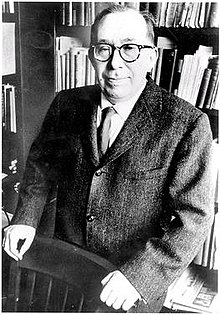
Legacy of Leo Strauss
I
What follows may surprise readers who have only a passing familiarity with Strauss’s work, or know of him only by reputation, or what is worse, only as reflected through the reputation of some of his students. The true ‘legacy of Leo Strauss,’ I will attempt to establish, is conservative in the broadest sense and distinct from the conservatism associated with the recent rise of populism and nationalism in the United States, as well as in Europe and elsewhere; indeed, Strauss’s legacy, as described in this essay, may contain a useful perspective from which to analyze and critique these recent developments
Leo Strauss was a German-American political philosopher and classicist who specialized in political philosophy. He was born in Germany to Jewish parents and emigrated to the United States in 1937. He spent most of his career as a professor of political science at the University of Chicago. Perhaps the most common critique of Leo Strauss is that his thought promotes elitist, illiberal, and anti-democratic tendencies. His critics also complained about his ‘rediscovery’ of the tradition of ‘esoteric’ writing. Perhaps rediscovery is too strong a word—certainly he and his students can be credited with proving beyond doubt the widespread existence of the esoteric writing tradition before AD 1800, and they succeeded in breathing some degree of life back into it (see Strauss, Persecution; Melzer).[5]
Strauss’s legacy to date has certainly been colored by the political activities and social critiques engaged in by some of his students and their students: figures such as Allan Bloom, whose book Closing of the American Mind was something of a sensation in the late 1980’s, and the prominent neo-conservative Paul Wolfowitz, an architect of the first Gulf War during the administration of George H. W. Bush. But before we condemn the teacher for the actions of his students, it is important to consider that Strauss was highly regarded by some of his formidable contemporaries, including Hans-Georg Gadamer, who indeed claimed he “largely agreed” with Strauss’s interpretations of political philosophy texts (Strauss and Gadamer 5–6); we should also keep in mind his close friendship and extensive correspondence with Alexandre Kojève, the tremendously influential French Hegelian.[6]
In beginning to consider Strauss’s legacy, let me paint with the broadest brush strokes what seems to be the prime objective of the liberal post-World War II order in the West. After World War II, a cosmopolitan vision of a universally prosperous and peaceful world possessed the imagination of the West as a “solution” to the possibility of a recurrence of anything like the Nazi “final solution” (see Strauss, City and Man 3–5).[7]A key piece of the new order was the transnational conception of human rights. In 1948 the United Nations Commission on Human Rights completed the work assigned to it two years earlier, in the direct aftermath of World War II. The Declaration the Commission drafted was adopted in December 1948 by the UN General Assembly. Implicit in these efforts was the hope of eventually securing these rights universally for all humankind. Full achievement of this goal would, of course, require the establishment of a universally prosperous and peaceful society of free and equal people, and the establishment of the United Nations, and later the European Union, appeared to many to be significant steps in this direction.[8]
II
It has become a matter of some urgency to situate the legacy of Leo Strauss, or rather, of what that legacy should be, in light of the theoretical basis upon which the United Nations’ transnational conception of human rights was constructed; this positioning is warranted in part because of Leo Strauss’s deep excavation of the underpinnings of modern natural rights. Natural rights, according to Strauss, provided the only reliable support for human rights, at least from the perspective of political philosophy.[9] This basis or foundation is described in Jacques Maritain’s introduction to the UNESCO report entitled “Human Rights: Comments and Interpretation,” published in July of 1948, in anticipation of the UN’s adoption of the Universal Declaration later that year. In this report, Maritain writes, most disconcertingly, that:
It is related that at one of the meetings of a Unesco National Commission where Human Rights were being discussed, someone expressed astonishment that certain champions of opposed ideologies had agreed on a list of those rights. “Yes,” they said, “we agree about the rights but on condition that no one asks us why. (i)
As one might reasonably guess in 1948, this disagreement over “why” was divided largely into two predictably “antagonistic” camps: “[T]hose who to a greater or lesser extent explicitly accept, and those who to greater or lesser extent explicitly reject “Natural Law” as the basis of those rights” (v).17According to Maritain, the “acceptors” of “Natural Law” consider that people are endowed with “certain fundamental and inalienable rights antecedent in nature, and superior[] to society, and are the source [from which] social life itself, with the duties and rights that implies, originates and develops” (v).[10]
III
The acceptors of Natural Law, as Maritain chooses to characterize it, of course rely upon some conception of what is called natural right. The Natural Rights doctrine which lies behind the 1948 Universal Declaration of Human Rights, far more than the distinct but not unrelated Natural Law doctrine, can be traced more or less directly to the two great earlier Declarations positing fundamental human rights—the Declaration of Independence, which first established the United States in 1776, and the French Declaration of the Rights of Man and of the Citizen from 1789.19Perhaps the fundamental problem today with connecting the United Nation’s Universal Declaration to these earlier Declarations is that these earlier embodiments of natural rights represent the culmination of what Strauss asserts is the long discredited tradition of Enlightenment rationalism. It is scarcely credible that Maritain, as late as 1948, could advocate a “Natural Law.”[11] By 1948, even Natural Right theory was widely discredited.[12]
The first of the great earlier Declarations famously expounded the core “self-evident” natural rights, the relatively modest list of “life, liberty and the pursuit of happiness.” Building upon this foundation, the French Declaration significantly expanded upon these three core natural rights to the extent of its seventeen articles. The United Nations’ Declaration again expands this list to thirty articles. While this growth is striking, we must ask ourselves upon what is it based? Where do the Natural Rights identified in these Declarations originate—what is their intellectual pedigree? Leo Strauss pursued this question with a degree of intensity that is difficult to exaggerate.
Initially, these rights can be traced to John Locke’s fundamental natural right of “comfortable self-preservation” (Strauss, What Is Political Philosophy 50). Strauss concluded that Locke’s formulation was derivative and simply the culmination of Locke’s efforts to make more palatable Thomas Hobbes’s sole original modern natural right of self-preservation (50–51). Hobbes attributed his natural right to individuals living in his artificial and morbid state of nature. In terms of modern natural rights theory, everything begins with this ground-breaking move by Hobbes.
But Strauss wondered, what compelled Hobbes to posit the state of nature to begin with—what drove him to such a monumental undertaking? This eventually led Strauss back to Machiavelli (see Political Philosophy of Hobbes xv-xvi). Hobbes is compelled to create his state of nature in order to solve a problem he identifies with Machiavelli’s thought, with which he was largely in accord. While Hobbes agreed with Machiavelli’s pessimistic assessment of human nature, he nobly resisted Machiavelli’s conclusion that all justice to be found in any regime (the only place it could be found) must originally derive from unjust actions. Political foundations have always been problematic.
Hobbes, Strauss noted, was not content to derive justice from injustice as Machiavelli had. Hobbes’s ingenious solution was to posit the fiction of the state of nature, so that people originally leaving the state of nature could contractually agree to give up their sole natural right of self-preservation (or at least their right to exercise it freely) in favor of the regime; thus, Hobbes succeeded in creating a just, a contractual beginning to society, and as a necessary byproduct, he developed the theory of modern natural right. Strauss felt that it should not be comforting to realize that the more firm of the two ultimate foundations supporting modern natural rights theory—upon which the array of human rights which we would like to preserve has been built, consists of little more than a convenient fiction (see What Is Political Philosophy 47–49).[13]
Strauss saw more clearly, and more quickly, the profound nature of the problems facing modernity in the West coming out of World War II. His life’s work can be seen as diagnosing the nature and source of these problems, and seeking a cure—or at least a treatment for them. At the exact same time the drafters of the Universal Declaration of Human Rights were wrestling with the fact they could not agree upon the rationale underlying the rights they were declaring, Strauss was wrestling with the problems of natural right and history; he delivered his findings over the course of six Walgreen Foundation lectures in October of 1949, less than a year after the Universal Declaration was promulgated; the book which derived from these lectures, Natural Right and History, was published in 1950. This book, I suggest, is the necessary starting point for determining the available options for identifying more solid foundations upon which to support the modern array of human rights that we would like to preserve and secure as best we can.
Among the things Strauss noticed was that the natural rights tradition Maritain still advocated as authoritative, had been superseded. Well before 1948, when Maritain wrote his introduction, the prevailing train of thought in the liberal West dictated that it was impossible to “acquire any genuine knowledge of what is intrinsically good or right” (Pangle 17).
This incompetence to make normative judgments, which continues today, in turn compelled tolerance for every opinion about good or right, or to recognize all preferences or all “civilizations” as “equally respectable” (Strauss, Natural Right and History 5). A new natural right, or notion of natural right, was born out of this—“the right to reject all intolerant or all ‘absolutist’ positions” (5). This new right, of course, is in utter tension with the natural rights based on Enlightenment rationalism.
Strauss concluded from this that: “Liberal relativism has its roots in the natural right tradition of tolerance or in the notion that everyone has a natural right to the pursuit of happiness as [s/he] understands happiness; but in itself it [has become] a seminary of intolerance” (Natural Right and History 6).
In 1948, the world did not want to hear this conclusion, however compelling the logic of it, a fact which Strauss appreciated, as reflected in his quotation of Lord Acton in the introduction to Natural Right and History:
Few discoveries are more irritating than those which expose the pedigree of ideas. Sharp definitions and unsparing analysis would displace the veil beneath which society dissembles its divisions, would make political disputes too violent for compromise and political alliances too precarious for use, and would embitter politics with all the passions of social and religious strife. (7)
In 2016 and its aftermath we have witnessed this veil being ripped asunder, and it is high time to recognize, first the role that we on the left have played in giving rise to these unsettling developments; second, the perilous lack of foundation that exists for the human rights we so cherish; and third and most importantly, what our options are for reacting to the crises of our times.
In 1949, Strauss thought that modern natural science’s victory over the Enlightenment belief in rational natural right theory constituted “the fundamental dilemma,” and that “[a]n adequate solution to the problem of natural right cannot be found before this basic problem has been solved” (Natural Right and History 8). Today we have been thrown into a ‘post-factual,’ an ‘alternative’ fact world, one in which the authority of the natural sciences model has been severely challenged, if it has not indeed already been overturned, at least as a practical matter.
Hopefully there is a brief period of opportunity still remaining, while the “veil beneath which society dissembles its divisions” remains uncovered, to locate a more solid foundation upon which to transfer the human rights we so cherish (Natural Right and History 7). We can ask for no better guide in this endeavor than Leo Strauss—this is his true legacy. We need to return to the beginning of the establishment of the postwar order, and learn the hard lessons we were in no mood to hear at that time—we need to start this quest by reading, or rereading, Strauss’s Natural Right and History.
We certainly will not feel comfortable with all that Leo Strauss has to say, and we will certainly complain about the way in which he chooses to say it; but that should not deter us from seeking the advice of one of the few people who correctly diagnosed the disease we have allowed to take such deep root among us, even as the veil was falling, and who trail-blazed the path we need to follow in order to seek an effective treatment or cure for this disease.[14]
AppendixJ
Notes
- Congress’ failure promptly to block Nixon’s direct and populist appeal to this particular demographic, by exercising its supreme power in the United States’ representative system of democracy, speaks directly to the situation in which the United States currently finds itself.
- Numerous responsible news outlets have discussed and tried to make sense of this demographic shift since the 2016 election. My own analysis takes many of these as a starting point. For a small sampling consider the video news story “The ‘Silent Majority’ Isn’t Always Silent” (a print article keying off this video story was written by Phil Pruitt and Chance Seales); Jamelle Bouie’s “Why Obama Voters Defected”; Nate Cohen’s “The Obama-Trump Voters are Real.” For an earlier assessment and anticipation of the demographic shift that erupted in 2016, see E. J. Dionne’s, “The Politics of the New Middle America.”
- If one reads Michael Anton’s essay “The Flight 93 Election” carefully, it is clear that Anton, who was an ally of Bannon’s in the Trump administration, is also recommending taking the system down, and electing Donald Trump is the means for accomplishing this end (Anton wrote it under the pseudonym Publius Decius Mus).
- It should be noted (with some alarm) that Steve Bannon’s efforts have expanded to nations within the European Union as has been reported by Bravo et al. earlier this year.
- The most arresting critique of Strauss’s esotericism is perhaps that of Miles Burnyeat in his essay “Sphinx Without a Secret”; Burnyeat’s critique loses much of its power, however, in light of the extensive evidence mustered by Melzer in his book. Two of the more thoughtful and informed critiques of Strauss and Straussianism were written by Shadia Drury: Political Ideas of Leo Strauss (1988) (a revised edition was published in 2005) and Leo Strauss and the Political Right (1994).
- The surviving collected correspondence of Strauss and Kojève was included in the revised and expanded edition of Strauss’s On Tyranny.
- Strauss frames the liberal solution along these lines in City and Man (1964).
- The rise of right-wing conservatism, and the specter of Caesarism that is married with such a rise, endangers much of the post-World War II liberal order, including its foundation in the notion of universal human rights. The news media has begun to comment on right wing populism, and on Donald Trump, in terms of human rights; see the BBC’s “‘Populist Leaders’ Encourage Rights Abuses” and Imogen Foulkes’s “Are We Heading Towards a ‘Post Human Rights World.’” The dire implications for any concerted attack on human rights were identified relatively early on by Mark Mendell of the BBC in “Does Hitler’s Legacy Still Cast Shadow over the World?”
- The Declaration had only moral significance initially; only in 1976, when the International Covenant on Civil and Political Rights came into effect, did the Declaration finally achieve a degree of legal significance.
- I have elsewhere dealt with the precarious underpinnings of the “rejectors” of natural right, those who hold that people’s “rights are relative to the historical development of society.” Consequently the rights are “constantly variable and in a state of flux. These rights are a product of society itself as it advances with the forward march of history” (Maritain v).
- Jacques Maritain proudly wore his Catholicism on his sleeve, so to speak, and his advocacy of the natural law traditions seems firmly rooted in his beliefs. See, for instance, Dagum.
- See generally, Waldron. For present purposes his introduction to the essay is sufficient to establish the broad parameters of this decline (1–3). An open access version of this chapter is available online.
- Strauss suggests there that Hobbes’s motivation for creating his version of the state of nature, was noble: “To refute Machiavelli’s fundamental contention [that it is of the essence of civil society to be founded on crime] may be said to be the chief purpose of Hobbes’s famous doctrine about the state of nature” (What Is Political Philosophy 49).
- Strauss towards the end of his life turned back to ancient Greece and “the problem of Socrates,” and the tensions between the city and the philosopher evident in the works of Aristophanes in Socrates and Aristophanes (1966) and Argument and the Action of Plato’s Laws (1975, published posthumously). I interpret this move as suggesting that the solution to our present crisis might well lie in our beginnings—in the thought that constitutes the bedrock of what the West represents. Such a return is probably too much to ask for at present; our best hope might be to take very seriously the move Strauss makes at the outset of Natural Right and History, and accept on faith, even if only provisionally, the self-evident truths set forth in the Declaration of Independence. Accepting these could provide a provisional foundation capable of supporting at least some of the contemporary human rights agenda; such a move could buy us time to push further back to the origins of modernity in Hobbes, and ultimately Machiavelli—where the problems which culminated in the present crisis truly originate.
Works Cited
- Anton, Michael. “The Flight 93 Election.” Claremont Review of Books. 5 Sept. 2016. Web. 25 July 2018.
- Bloom, Allan. The Closing of The American Mind. New York: Simon, 1987. Print.
- Bouie, Jamelle. “Why Obama Voters Defected.” Slate. 20 June 2017. Web. 25 July 2018.
- Bravo, Richard, Gregory Viscusi, Nicos Chrysoloras and Joshua Green. “Inside Steve Bannon’s Plans for a New European Political Order.” Bloomberg. 18 Sept. 2018. Web. 21 Oct. 2018.
- Burnyeat, Miles. “Sphinx Without a Secret.” New York Rev. of Books. 30 May 1985. Web. 25 July 2018.
- Cohen, Nate. “The Obama-Trump Voters are Real. Here’s What They Think.” New York Times. 15 Aug. 2017. Web. 16 Apr. 2018.
- Dagum, Camilo. “Jacques Maritain and Human Rights.” Forum for Social Economics 12.1 (1982): 100–05. Print.
- Dionne, E. J. “The Politics of the New Middle America.” American Prospect. 7 Feb. 2011. Web. 16 Apr. 2018.
- Drury, Shadia. Leo Strauss and the Political Right. New York: Palgrave Macmillan, 1994. Print.
- —. The Political Ideas of Leo Strauss. New York: St. Martins, 1988. Print.
- Foulkes, Imogen. “Are We Heading Towards a ‘Post Human Rights World.’” BBC News. 30 Dec. 2016. Web. 16 Apr. 2018.
- Lincoln, Abraham. “House Divided Speech.” Springfield, Illinois. 16 June 1858. Web. 10 Apr. 2018.
- —. “Lyceum Address.” Young Men’s Lyceum of Springfield, Illinois. 27 Jan. 1838. Web.
- Maritain, Jacques. Introduction. “UNESCO Human Rights: Comments and Interpretations.” July 1948. Web. 16 Apr. 2018.
- Melzer, Arthur. Philosophy Between the Lines: The Lost History of Esoteric Writing. Chicago: U of Chicago P, 2014. Print.
- Mendell, Mark. “Does Hitler’s Legacy Still Cast Shadow over the World?” BBC News. 21 Oct. 2016. Web. 16 Apr. 2018.
- Nixon, Richard. “‘Silent Majority’ Address to American People.” YouTube. 3 Nov. 1969. Web. 30 July 2018.
- Pangle, Thomas. Leo Strauss: An Introduction to His Thought and Intellectual Legacy. Baltimore: Johns Hopkins U P, 2006. Print.
- “‘Populist Leaders’ Encourage Rights Abuses, Human Rights Watch Says.” BBC News. 12 Jan. 2017. Web. 16 Apr. 2018.
- Pruitt, Phil, and Chance Seales. “The ‘Silent Majority’ Isn’t Always Silent—Just Ask Nixon or Trump.” Newsy. 14 Mar. 2018. Web. 25 July 2018.
- Radosh, Ronald. “Steve Bannon, Trump’s Top Guy, Told Me He Was a Leninist.” Daily Beast. 22 Aug. 2016. Web. 13 Apr. 2018.
- Strauss, Leo. The Argument and the Action of Plato’s Laws. Chicago: U of Chicago P, 1975. Print.
- —. The City and Man. Chicago: U of Chicago P, 1964.
- —. Natural Right and History. Chicago: U of Chicago P, 1950. Print.
- —. On Tyranny. Rev. and expanded ed. Chicago: U of Chicago P, 2000. Print.
- —. Persecution and the Art of Writing. Chicago: U of Chicago P, 1952. Print.
- —. The Political Philosophy of Hobbes: Its Basis and Genesis. Chicago: U of Chicago P, 1963. Print.
- —. Socrates and Aristophanes. 1966. Chicago: U of Chicago P, 1996. Print.
- —. What Is Political Philosophy. Chicago: U of Chicago P, 1959. Print.
- Strauss, Leo, and Georg Gadamer. “Correspondence Concerning Wahrheit und Methode.” Independent Journal of Philosophy 2 (1978): 5–12. Print.
- Waldron, Jeremy. “The Decline of Natural Right.” The Cambridge History of Philosophy in the Nineteenth Century (1790–1870). Ed. Allen W. Wood and Songsuk Susan Hahn. Cambridge: Cambridge UP, 2012. 623–50. Print.
Originally published by the American Studies Journal 65 (2018), DOI 10.18422/65-07, under the terms of a Creative Commons Attribution-ShareAlike 3.0 Unported license.
About the Author