
Confirmation bias, cognitive dissonance, and fictional Constitutional rewrites.
By Luke Douglas
Executive Director
Humanist Society of Greater Phoenix (HSGP)
My upbringing was strict fundamentalist Christian, marked by a firm belief in a literal interpretation of the Bible, creationism and the kind of cocky confidence that comes from viewing yourself as a soldier eager to do battle with the forces of secular America.
I spent countless hours memorizing books of the King James Bible, and my early forays into preaching and teaching were framed by harrowing stories of the heroes of church history. “Here I stand, I can do no other” was a mantra not of some academic forefather, but a living example of my own readiness to face the inevitable battle with the forces of godlessness that pervaded our nation. I looked forward to the fight – and the victory for God I was certain was inevitable.
That was then. Now, more than a decade later, my life has taken a much different turn. I serve as executive director of the Humanist Society of Greater Phoenix, a group of people dedicated to the proposition that one can lead an ethical life without belief in God.
What happened? Blame it on the Protestant Reformation.
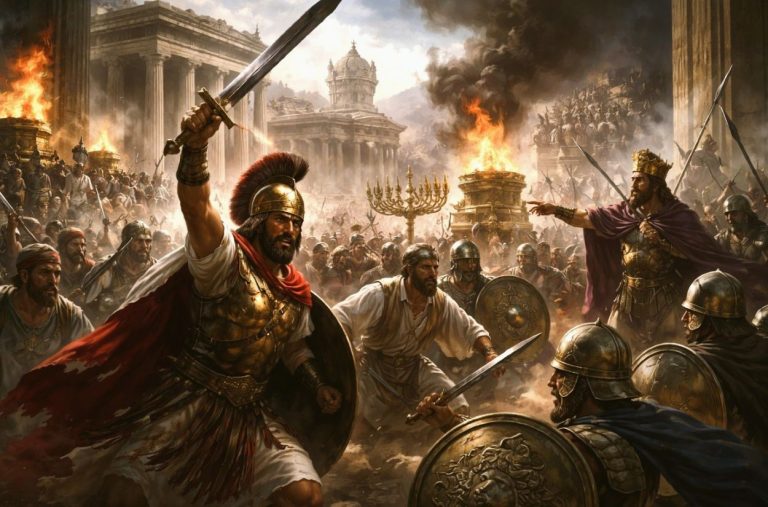
The stroke of Martin Luther’s hammer fell on the church door at Wittenberg 502 years ago with an echo that resonated in that church as loudly as it has in all churches since. The steely criticism he drove into that ancient facade became the wedge to divide not only Catholics from Protestants, but ultimately, far down the stream of history, to divide church from state. The five centuries since the Protestant Reformation began have seen countless wars of religion, inquisitions and the gradual realization that questions of faith and conscience are too personal for the state to enforce.
The shadow of the Reformation loomed over my upbringing and early education unlike anything but the Bible itself.
Growing up, I had a mix of theological influences that ranged from the hyper-Calvinism of the homeschooling movement to the dispensational doctrine of a home church that more than once hosted Earl Radmacher, then retired from Dallas Theological Seminary, to preach. I wrestled vigorously with doctrines such as eternal security and predestination, scouring the Bible for the subtleties that would clue me in to the one infallible theology as it was whispered into the ear of Paul.
My politics mirrored my religion: heavily conservative. I entered a conservative Christian law school and embraced legal thought that paralleled my religious beliefs. Fundamentalists approach the Bible much like an attorney approaches a constitutional document – as the authoritative foundation from which case law is derived. With that foundation, the original intent approach to constitutional interpretation was inevitable. It worked for me – for a while.
Although I worked for a Religious Right legal group for a time after law school, I was already facing doubts about the far right’s interpretation of the Constitution. A turning point came as I studied our founding documents and the context of their drafting. My entire image of the Constitution as the authoritative expression of founding had to face the reality that partisan politics is not a recent corruption of former perfection. What remained was a document forged by partisan politicians out of accumulated compromises during a time no more pure or virtuous than any before or since. So began, with the halos removed, my long journey toward legal and political progressivism.
It was only a matter of time before a healthy dose of skepticism crept into my theology as well. My doubts began in an unexpected place: the nebulous nuances of the Greek New Testament and my in-ability to conclude dogmatically which mentors were right about how to interpret them.
I took seminary classes during my two summers of law school, convinced that more time studying the Bible would reinforce my faith. With professors as adamant as ever about everything from young earth creationism to the Bible’s support of conservative politics, I slowly began to realize that I was changing in ways deeper than a passing phase of doubt.
Law school revolves around arguing for both sides of a case. If I had questions that my narrow framework of revelation could not answer, then I had to look elsewhere, even if it meant redirecting my Bible study time to philosophy. It wasn’t hard to pick up philosophy from there. Theology and philosophy have the same topics of interest and address the same questions. Philosophy is just theology without a pre-set starting point and with a wider variety of methods. I became aware that the great thinkers of the ages had asked the same questions I had been asking about God, faith and the role of reason in their search for knowledge. Some of them were theists, to be sure, but I found philosophical reasoning approached these issues more freely than I had ever dreamt.
In the end, I became an atheist. But I also learned quickly that my relationship with faith will never be simple. The poetic cadence of the King James translation and the beautiful hymns that channel our deepest emotional connection to the divine call up what in my heart of hearts has never ceased to inspire or to challenge. In Spinoza, Kierkegaard and Camus, I found the blend that straddles the divide between my former and current selves and weds theological inspiration to critical inquiry.
The hindsight of being on the other side of this evolution has instilled a new appreciation for the Protestant Reformation. From the chaos of the early modern world’s growing pains emerges a narrative that even an atheist can appreciate.
From the Reformation and the intellectual power vacuum it opened sprang Lutherans, Calvinists and Anabaptists. While the former two systematized their new theologies and built the institutions that still serve as the gatekeepers of Protestantism, the Anabaptists were different. Lacking a common leader or creed, being called an Anabaptist in the 17th and 18th centuries was something akin to being called an anarchist. Quakers, Mennonites and Unitarians sought through self-reflection the spark of spiritual guidance that many of their religious contemporaries institutionalized through the established church, the Book of Common Prayer and the ever-present fear that religious liberty would unravel the foundations of social order.
Yet the revolving door of one dominant faith after another oppressing its neighbors slowly turned enough times to warm the American colonies to toleration. It was through the polymath the Rev. Joseph Priestley, natural philosopher and bold critic of both the Bible and the trinity, that Unitarianism came to the new world and found the ear of such radicals as Benjamin Franklin and Thomas Jefferson.
As Unitarianism took root, it grew from its Anabaptist origins to include members of many faiths. By 1933, the denomination was ready to embrace its adherents who fell not just outside Christianity, but outside faith entirely. Inviting its nonbelieving adherents to their own seat at the table, it sponsored the convention that wrote the first Humanist Manifesto and helped found the movement that takes its name from renaissance humanism. Today, groups like the American Humanist Association join with Americans United to carry the same banner in the fight for secular government. If my journey teaches anything, it is the vitality of the freedom of inquiry that made my journey, and those of so many others, possible.
Looking back on the five centuries since Luther’s hammer, I appreciate all the more the reckless courage of his protest. When Luther defied the emperor at Worms, he demanded to be persuaded by both the Word of God and plain reason.
The first part was the foundation of my upbringing, but for the religious freedom and secular government that emerged downstream from Luther, it cannot be so simple. It has taken only half a millennium to discover that for many of us, the final, logical fulfillment of the Reformation is the realization that we may only need the second part.
Originally published by Americans United for Separation of Church and State, December 2019, republished under non-indexable fair use for educational, non-commercial purposes.
About the Author