Survivors have become reluctant students of forest management, disaster aid, and resiliency.

By Byard Duncan
Engagement Reporter
ProPublica

By Patrick Lohmann
Reporter
Source NM
Introduction
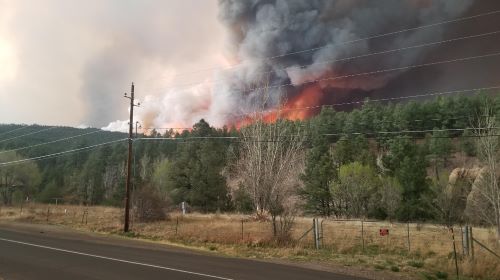
Survivors of the Hermits Peak-Calf Canyon Fire have lessons for the rest of the country.
These residents, whose property and livelihoods were destroyed by a wildfire accidentally triggered by the U.S. government in 2022, have become reluctant students of forest management and evacuation, disaster aid and bureaucracy, trauma and resiliency.
The potential audience for these lessons is growing. The number of Americans in the continental U.S. directly exposed to wildfires more than doubled between 2000 and 2019. Record-setting blazes have become common in the West, where risks have reached “crisis proportions,” according to the U.S. Forest Service.
One way the Forest Service limits wildfire damage is by burning off acres of brush and other vegetation that can fuel a megafire. It plans to thin or burn 50 million additional acres in the next decade or so — up to a fourfold increase from recent years in parts of the West.
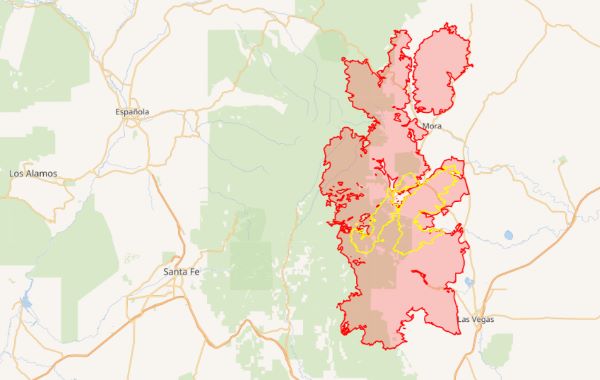
But these fires come with their own hazards. Roughly six of them escape and risk becoming wildfires each year, according to the Forest Service. Prescribed burns in New Mexico triggered two major blazes in 2022, including the Hermits Peak-Calf Canyon Fire, the largest in state history. That led Congress, for the second time in 23 years, to pass a law to compensate victims of a wildfire triggered by the federal government. Both occurred in New Mexico.
Over the past year, Source New Mexico and ProPublica have interviewed dozens of survivors of the Hermits Peak-Calf Canyon Fire. We found that the Federal Emergency Management Agency provided little temporary housing to victims and has so far paid a small fraction of a roughly $4 billion fund to make the community whole and restore the landscape. Some victims say that unless FEMA pays for intangible losses like the stress of being displaced from home and the lost enjoyment of their land, they won’t be able to recover. Many residents described an uneasy state of limbo: forced off their property, out of work, unable to rebuild.
“With climate collapse, this scenario is set to repeat itself over and over across the country,” Cyn Palmer, a retired wildlife manager whose home was damaged by the wildfire, said in an email. “FEMA and the government has an opportunity here to learn how to respond differently, and better than previously. I hope they do.”
FEMA has maintained that it is moving as fast as it can to do a job that’s substantially different from its typical duty of providing short-term disaster aid. The agency opened field offices, hired staff and generated policies within eight months. As of Feb. 14, it has paid $391 million to individuals, government bodies and nonprofits. Although that’s just 10% of the $3.95 billion allocated by Congress, it’s 69% of the $565 million in claims that have all documentation and are being reviewed or have been, according to FEMA spokesperson John Mills.
“FEMA is committed to speeding up the claims process and maximizing payments to people affected by the fire,” Mills wrote in a statement to Source and ProPublica. “We are committed to working with people one-on-one to help with their specific needs.” The agency, he wrote, regularly holds town hall meetings and has provided residents with a list of the types of documents they can use to show what they lost in the fire.
As survivors navigate the recovery process, we asked about 30 of them what they would want the rest of the country to know, and see, about their experiences.
This is what they told us.
First You’ll Lose Things. Then You’ll Need to Prove That You Lost Them.
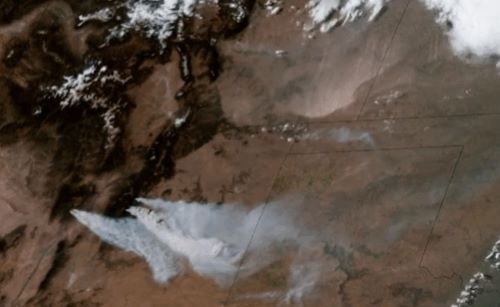
Some families who lost homes trace their roots in the area back hundreds of years. Many properties had been passed down without transferring deeds, making it difficult to prove ownership when seeking government aid and payment for losses.
“I absolutely honor the need to make sure that there’s not people trying to take advantage of the system. … But when you have the trauma of losing anything — and especially your home, and everything in it — having that additional trauma of being almost made to feel like you’re under the spotlight, everything is being examined, you need to prove everything? That’s trauma on top of trauma.”
Yolanda Cruz, who has spent months helping her elderly parents navigate FEMA’s claims process
“These people who have lived here for many generations on the same piece of land don’t always necessarily have the paperwork for it. And so I would recommend everybody in the country, make sure you’ve got your paperwork.”
Jeannie Allen, who said some people she knows struggled to provide documentation of what they lost in the fire
“They act like you’re lying.”
Juan Ortiz, who said he gave up on FEMA’s rental assistance program because he felt he was treated like a criminal for asking for aid
You May Get Government Help; You May Not. Either Way, It Will Take a Toll
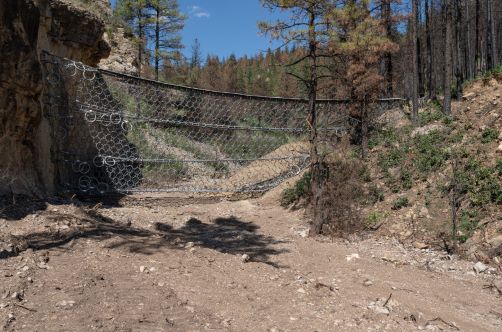
Residents who fought for disaster aid and are now waiting for checks to rebuild described the logistical hurdles and emotional cost.
“The people from FEMA, I mean, they came in and they were all very kind. The kindness was there. They were just inept at what they were doing. It’s a year and a half later, and people haven’t gotten anything.”
Jane Lumsden, who is withdrawing money from her retirement account to rebuild until her lawyer finishes the long process of calculating her losses
“Our clients are ready to give up. And we tell them, don’t give up. This is money you’re entitled to. The government should pay for this damage. These relief funds should come to you to assist. But I think if they don’t have that support system in place, it’s easy for them to walk away.”
Janna Lopez, a retired state employee who founded Neighbors Helping Neighbors, a grassroots fire recovery organization
“I’ve never been that stressed out as I am now just trying to get this shit taken care of. … The other day, I thought I was getting a heart attack from the stress, you know. I went and got an EKG.”
Art Vigil, who pulled out of FEMA’s temporary housing program after repeated problems and is now trying to decide whether to hire a lawyer to pursue his damage claims
You’ll Lean on Friends and Family. But Those Relationships Will Be Tested.
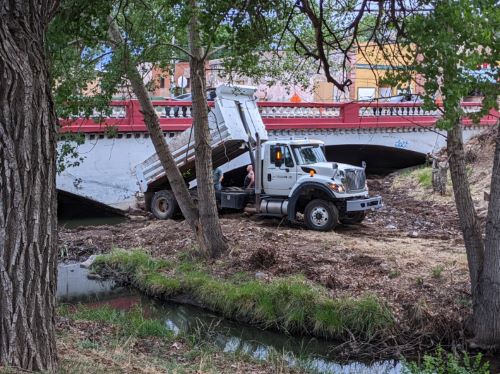
People sprang into action to help one another. Over time, though, the stress has eroded marriages and driven some into isolation.
“As much as the government might come in and try to take over in a disaster, it’s really neighbors helping neighbors. The better your relationships are with your community, the more resources you have. And then the more ability you have to give something. If you don’t have any connections, if you don’t know your neighbors, you’re just all on your own.”
Lea Knutson, whose environmental restoration nonprofit grew dramatically after the fire
“There is so much red tape. It just gets so complicated, so discouraging. It’s even getting between me and my wife. We made a deal between the two of us that if we argue over an issue, I says, at the end of the day, we will give ourselves our sorries if I said anything I shouldn’t have said. That’s already helped us be able to deal with it. We’ll apologize to each other or we go for a walk, but we try not to even talk about it right after.”
Donato Sena, a former local police chief who died in November while waiting for money to rebuild his home
“We’re not very nice people from day to day. I’ll put it that way. The stress and the strain has taken its toll. … I don’t like the person I am. I’m irritable, restless and discontent.”
Loma Hembree, who has been living with her husband in a cramped RV for more than a year after losing their home
Accountability Needs to Be Part of Fire Prevention
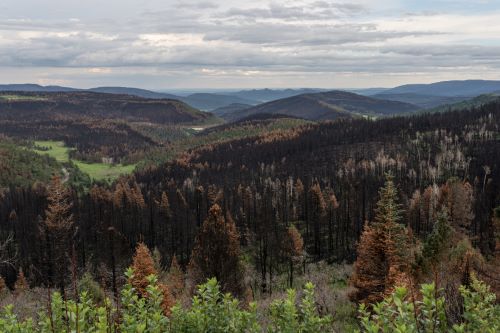
The officials responsible for one of the prescribed burns that triggered the wildfire underestimated the danger of dry, windy conditions and didn’t have enough backup staff on-site, according to a review by the Forest Service. Survivors aren’t satisfied with the answers they’ve gotten about how that happened. A spokesperson for the Forest Service said the wildfire prompted the agency to examine how to do its work safely and that no single person was responsible for the fire.
“Having gone through three wildfires that were basically caused by human error — even though there is a climate change influence on it all — these all could have been prevented if we had better infrastructure in place. … So the fact that there were no backup systems in place after the fire that took place in Los Alamos … I mean, I’m not a conspiracy theorist. But what happened with that?”
Heather Vuchinich, a consultant who lost property in the fire and fled two other wildfires while living in California
“I think there’s always got to be consequences. Of course, I don’t think they’re ever going to stop prescribed burns, but I think you’ve got to pay attention. And if you would have asked anybody, prior to this thing happening, no one would have recommended you start a prescribed burn in the spring — late winter, early spring. I just wonder, what happens to the person actually responsible at the end of the day? I think the community would like to know.”
Matt Martinez, whose radio station’s programs were a reliable source of information for residents without power or internet access after the fire
Recovery – to the Extent There Is One – Will Take a Lot Longer Than People Say
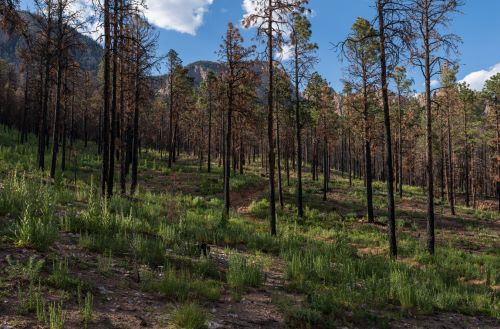
Hundreds of millions of dollars are finally flowing into these communities, but residents face years of rebuilding homes, flood-proofing properties and repairing roads. It will take decades for trees to cover the mountains again.
“Even though people may say it’s nice to get the money, it’s also a burden. Because if you want to do this work on your land, you have to organize it and find the people and make the plan and oversee it. It’s a long project, at least five years or more of concentrated effort. … The whole thing makes me tired. I mean, I am doing better than a lot of people, but it’s just burnt trees all the time. Everything’s burnt.”
Talissa Ralph, who lost most of the trees on her 228-acre ranch
“All of this is now a 500-square-mile flood zone. FEMA can never restore my view, nor will it ever restore the impact to my physical and mental health. That is true for thousands of people. There are still many people living in RVs and trailers. … We have years of flooding ahead. Many will never fully recover; certainly this area will never be the same.”
Cyn Palmer, who was displaced for eight months after her home was damaged by smoke and flooding
Originally published by ProPublica, 02.23.2024, under a Creative Commons Attribution-NonCommercial-NoDerivs 3.0 United States license.
About the Author