A membership roster for the Oath Keepers includes state lawmakers, congressional candidates, and local government and GOP officials.

By Isaac Arnsdorf
Reporter, National Politics
ProPublica
Introduction
North Carolina state representative Mike Clampitt swore an oath to uphold the Constitution after his election in 2016 and again in 2020. But there’s another pledge that Clampitt said he’s upholding: to the Oath Keepers, a right-wing militant organization.
Dozens of Oath Keepers have been arrested in connection to the Jan. 6 riot at the U.S. Capitol, some of them looking like a paramilitary group, wearing camo helmets and flak vests. But a list of more than 35,000 members of the Oath Keepers — obtained by an anonymous hacker and shared with ProPublica by the whistleblower group Distributed Denial of Secrets — underscores how the organization is evolving into a force within the Republican Party.
ProPublica identified Clampitt and 47 more state and local government officials on the list, all Republicans: 10 sitting state lawmakers; two former state representatives; one current state assembly candidate; a state legislative aide; a city council assistant; county commissioners in Indiana, Arizona and North Carolina; two town aldermen; sheriffs or constables in Montana, Texas and Kentucky; state investigators in Texas and Louisiana; and a New Jersey town’s public works director.
ProPublica’s analysis also found more than 400 people who signed up for membership or newsletters using government, military or political campaign email addresses, including candidates for Congress and sheriff, a retired assistant school superintendent in Alabama, and an award-winning elementary school teacher in California.
Three of the state lawmakers on the list had already been publicly identified with the Oath Keepers. Other outlets have also scoured the list, finding police officers and military veterans.
People with law enforcement and military backgrounds — like Clampitt, a retired fire captain in Charlotte, North Carolina — have been the focus of the Oath Keepers’ recruiting efforts since the group started in 2009. According to researchers who monitor the group’s activities, Oath Keepers pledge to resist if the federal government imposes martial law, invades a state or takes people’s guns, ideas that show up in a dark swirl of right-wing conspiracy theories. The group is loosely organized and its leaders do not centrally issue commands. The organization’s roster has ballooned in recent years, from less than 10,000 members at the start of 2011 to more than 35,000 by 2020, membership records show.
The hacked list marks participants as annual ($50) or lifetime ($1,000) members, so not everyone on the list is currently active, though some said they viewed it as a lifelong commitment even if they only paid for one year. Many members said they had little contact with the group after sending in their dues but still supported the cause. Others drifted away and disavowed the group, even before Jan. 6.
The list also includes at least three people who were arrested in connection with the Jan. 6 Capitol riot and who federal prosecutors did not identify as Oath Keepers in charging documents: Andrew Alan Hernandez of Riverside, California; Dawn Frankowski of Naperville, Illinois; and Sean David Watson of Alpine, Texas. They pleaded not guilty. These defendants, their attorneys and family members didn’t respond to requests for comment. The Justice Department also declined to comment.
According to experts who monitor violent extremism, the Oath Keepers’ broadening membership provides the group with two crucial resources: money and, particularly when government officials get involved, legitimacy.
Clampitt said he went to a few Oath Keepers meetings when he joined back in 2014, but the way he participates now is by being a state legislator. He has co-sponsored a bill to allow elected officials to carry concealed guns in courthouses, schools and government buildings, and he supported legislation stiffening penalties for violent demonstrations in response to last year’s protests in Raleigh over George Floyd’s murder. Clampitt said he opposes violence but stood by his Oath Keepers affiliation, despite the dozens of members charged in the Capitol riot.
“Five or six years ago, politicians wouldn’t be caught dead hanging out with Oath Keepers, you’d have to go pretty fringe,” said Jared Holt, who monitors the group for the Atlantic Council’s Digital Forensic Research Lab. “When groups like that become emboldened, it makes them significantly more dangerous.”
The State Lawmakers
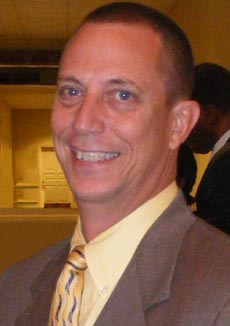
Then-state Delegate Don Dwyer from Maryland was the only elected official at the Oath Keepers’ first rally, back in April 2009. Dwyer was, by his own account, a pariah in Annapolis, but he was building a national profile as a conservative firebrand. He claimed to take direction from his own interpretation of the U.S. Constitution and a personal library of 230 books about U.S. history pre-1900.
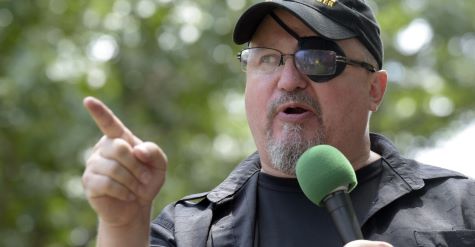
The Oath Keepers’ founder, a former Army paratrooper and Yale Law School graduate named Stewart Rhodes, invited Dwyer to speak at the group’s kickoff rally — they called it a “muster” — in Lexington, Massachusetts, the site of the “shot heard round the world” that started the Revolutionary War in 1775.
“I still support the cause,” Dwyer told ProPublica. “And I’m proud to say that I’m a member of that organization.” He left politics in 2015 and served six months in prison for violating his probation after a drunk boating accident.
Dwyer said he was not aware of the Oath Keeper’s presence at the Capitol on Jan. 6. “If they were there, they were there on a peaceful mission, I’m sure of it,” he said. Informed that members were photographed wearing tactical gear, Dwyer responded, “OK, that surprises me. That’s all I’ll say.”
Among the current officeholders on the list is Arizona state Rep. Mark Finchem, who was already publicly identified with the Oath Keepers. Finchem was outside the Capitol on Jan. 6 but has said he did not enter the building or engage in violence, and he has disputed the characterization of the Oath Keepers as an anti-government group. He is currently running to be Arizona’s top elections official, and he won former President Donald Trump’s endorsement in September.
Serving with Clampitt in the North Carolina assembly, deputy majority whip Keith Kidwell appeared on the Oath Keepers list as an annual member in 2012. Kidwell declined to comment, calling the membership list “stolen information.” A spokesperson for the state house speaker declined to comment on Kidwell’s and Clampitt’s Oath Keepers affiliation.
The membership list also names Alaska state Rep. David Eastman as a life member and Indiana state Sen. Scott Baldwin and Georgia state Rep. Steve Tarvin as annual members. Eastman confirmed his membership and declined to answer further questions. Baldwin’s spokesperson said he was unavailable to comment.
Tarvin recalled signing up at a booth in White County, Georgia, in 2009 when he was running for Congress. He lost that race but later became a state lawmaker. He didn’t view the Oath Keepers as a militia group back then.
Tarvin said he stands by the pledge he signed and said he isn’t aware of the Oath Keepers’ involvement in the Capitol breach on Jan 6. His congressional district is now represented by Andrew Clyde, who helped barricade a door to the House chamber on Jan. 6 but later compared the riot to a “normal tourist visit.”
Kaye Beach, who is listed as an annual member in 2010, is a legislative assistant to Oklahoma state Rep. Jon Echols, the majority floor leader. Beach sued the state in 2011, arguing that the Bible prohibited taking a driver’s license photo of her. She eventually lost at the state supreme court. Beach and Echols did not respond to requests for comment.
Two other lawmakers have long been public about their affiliation with the Oath Keepers.
Arizona state Sen. Wendy Rogers announced her membership a few years ago. She responded to Trump’s 2020 loss by encouraging people to buy ammo and recently demanded to “decertify” the election based on the GOP’s “audit” of Maricopa County ballots, even though the partisan review confirmed President Joe Biden’s win.
Idaho state Rep. Chad Christensen lists his Oath Keepers membership on his official legislative biography, in between the John Birch Society and the Idaho Farm Bureau.
Rogers and Christensen didn’t respond to requests for comment.
South Dakota state legislator Phil Jensen appeared on the list as an annual member in 2014, using his title (then state senator) and government email address. His affiliation was reported Tuesday by Rolling Stone. He did not respond to a request for comment.
South Dakota state Sen. Jim Stalzer, whose 2015 annual membership was first reported by BuzzFeed, said he never renewed his membership and stopped supporting the Oath Keepers because he disagreed with “their confrontational approach to what they view as federal overreach.” In an email, Stalzer said he supported peaceful demonstrators on Jan. 6 but “we do not have the right to damage property or harm others, whether it be at the Capitol or anywhere else.”
The Candidates
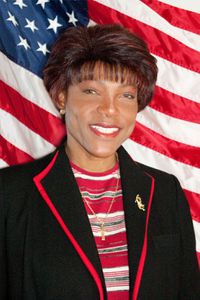
Virginia Fuller first encountered the Oath Keepers in 2009 at a meeting in San Francisco featuring Rhodes, the group’s founder. Fuller liked Rhodes’ message of upholding the Constitution, she told ProPublica. For a while she corresponded with one of the group’s leaders but they eventually lost touch, and she moved to Florida and ran unsuccessfully for Congress on the Republican ticket in 2018.
Rhodes and other leaders of the Oath Keepers embraced Trump’s lies about election fraud and promoted Jan. 6 as a last chance to make a stand for the republic. Asked about Jan. 6, Fuller said, “There was nothing wrong with that. The Capitol belongs to the people.”
The Oath Keepers rose to prominence when handfuls of heavily armed members showed up at racial justice protests in Ferguson, Missouri, in 2014, and their profile grew thanks to a series of standoffs between right-wing militants and federal agents in the Western U.S.
At the 2016 funeral for a rancher who officers shot while trying to arrest him, Stan Vaughan met several Oath Keepers and became an annual member. Vaughan, a one-time chess champion from Las Vegas, ran unsuccessfully as a Republican for the Nevada State Assembly in 2016, 2018 and 2020. Even though Vaughan ran in a predominantly Democratic district, he had the support of his party’s establishment, receiving a $500 campaign contribution from Robin Titus, the Assembly’s Republican floor leader. Titus did not respond to requests for comment. Vaughan said he’ll probably run again once he sees how new districts are drawn.
Vaughan said he wouldn’t join the Oath Keepers today. It’s not their ideology that bothers him or their involvement in the Jan. 6 riot. Rather, he said he has concerns about how the group’s leaders spend its money.
One Oath Keeper seen on Jan. 6 wearing an earpiece and talking with group leaders outside the Capitol was Edward Durfee, a local Republican committee member in Bergen County, New Jersey, who is running for state assembly in a predominantly Democratic district. Durfee has not been charged and said he did not enter the building.
“They were caught up in the melee, what else can I say? For whatever reason, I didn’t go in,” Durfee said. “They brand you as white supremacists, domestic terrorists. I don’t know how we got in this mix where there’s so much hatred and so much dislike and how it continues to get fomented. It’s just shameful actually.”
The Local Party Officials
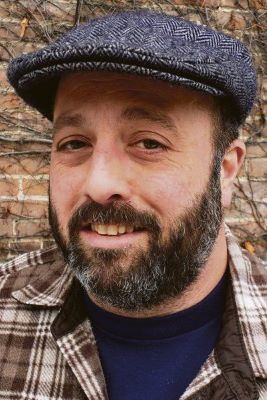
When Joe Marmorato, a retired New York City cop who moved upstate, signed up for an Oath Keepers annual membership in 2013, he described the skills he could offer the group: “Pistol Shooting, police street tactics, driving skills, County Republican committee member.” Marmorato later rose to vice chairman of the Otsego County GOP, but he recently resigned that post because he’s moving. Reached by phone, Marmorato stood by the Oath Keepers, even after Jan. 6. “I just thought they’re doing what they’re supposed to be doing. I know most of them are all retired police and firemen and have the best interests of the country in mind,” he said. “No matter what you do, you’re vilified by the left.”
Steven K. Booth, a twice-elected Republican county commissioner and state senate candidate in Minnesota in the 2000s, said he wants to run for office again if his wife agrees to it. He’s still active in the local GOP. Booth joined the Oath Keepers as an annual member in 2011 and said he hasn’t heard from them in years. He said he wasn’t aware of their role in Jan. 6 but he’s concerned that some Capitol breach defendants are being held in jail. “That seems kind of weird to me,” Booth said. “I also think it’s kind of weird that nobody is doing anything about all the fraud we were told about in the last election either.”
Asked about the possibility of Booth running for office again, local GOP chair Rich Siegert started talking through openings Booth could aim for. Booth’s Oath Keepers affiliation did not give Siegert pause. “When tyranny comes, that’s when you stop and say you’ve got to do something about it,” said Siegert, who heads the party in northern Minnesota’s Beltrami County. “To go out and get violent and kill people like they did in the early days, I’m not really in favor of that. How do you get the attention of liberals and get them to listen? Firing guns, I don’t know, it’s what they do in some countries. Define what ‘radical’ is.”
Not all party officials shared Siegert’s view. Richland County, South Carolina, GOP chair Tyson Grinstead distanced his committee from Patsy Stewart, who is listed as an Oath Keepers annual member in 2015. “Personally,” Grinstead said, “I don’t think there’s a place for that in our party.”
Stewart has been a delegate or alternate to the GOP state convention and is currently a party precinct officer in Columbia, South Carolina. She didn’t respond to requests for comment. In recent months, Trump supporters have flooded into precinct positions in South Carolina and other states as part of an organized movement inspired by the stolen election myth, ProPublica reported in September.
The Poll Worker
When Andy Maul signed up for the Oath Keepers as an annual member around 2010, he touted his role in the Pittsburgh GOP. Maul said he let his membership lapse because there wasn’t a local chapter, but he still likes the group’s concept.
Maul became the party chairman of his city council district starting around 2016. But other local party leaders chafed at Maul’s confrontational style and lack of follow-through.
“Andy was getting a little out there,” said Allegheny County chairman Sam DeMarco, who had to ask Maul to take down some of his inflammatory social media posts. “If you want to be associated with our committee, you have to represent mainstream traditional Republican values and not be affiliated with fringe groups.”
Maul left the local party committee in 2020, but he continued serving as a poll worker. According to the county elections department, Maul was the “judge of elections” in charge of his precinct in every election since 2017, including this year’s primary in May.
In Pennsylvania, the judge of elections in every precinct is an elected position. If no one runs, as often happens, the local elections office appoints someone to fill in, so a person can sometimes land the job “if you have a pulse and you call them,” said Bob Hillen, the Pittsburgh Republican chairman.
“If I opposed people based on their views for being a judge of elections or anything, that would eliminate a whole lot of people,” Hillen said. “I’m a city chairman, I don’t have time to think about all those things like that.”
Maul said he observed “aberrative” ballots at his precinct on Nov. 3 — just a handful, but he asserted that if the same number occurred at every precinct in the state, it would add up to more than Biden’s margin of victory. (There is no evidence of widespread fraud that could have affected the outcome in Pennsylvania or any other state.)
On Jan. 6, Maul said he marched toward the Capitol but couldn’t make it all the way and returned to his bus. He said he wasn’t familiar with the Oath Keepers’ activities that day. “As a supporter of the Constitution, I had strong differences and concerns about Trump,” Maul said in a text message. “Although my feeling on Trump were mixed, I went to the Jan. 6 rally mainly due to what I experienced at my polling location.”
The Democrat
Around 2005, Marine veteran Bob Haran joined the Minuteman Project, a group of armed people who took it upon themselves to patrol Arizona’s border with Mexico. Haran resented that critics called the group vigilantes and Mexican hunters. All they did, he said, was call the Border Patrol.
Haran held positions in the local GOP and had run for the state House as a Republican. During the tea party wave, Haran became frustrated with the new activists’ anti-government tilt and turned to the Constitution Party, a minor party that’s to the right of the GOP. Haran rose to be the state chairman and secretary. By the time he became an Oath Keepers annual member in 2016, Haran was looking for a new political home.
When Trump rode down a golden escalator to launch his presidential campaign by calling Mexican immigrants “rapists,” Haran took offense. He faulted the government for failing to secure the border, but he didn’t blame people for seeking better lives for themselves and their families. Haran grew up in Coney Island, near a middle-class apartment complex built by Trump’s father, and he remembered Trump as a braggadocious playboy, not as the successful self-made businessman he later played on TV. Haran said he was appalled as Republicans fell in line behind Trump.
Then, Haran did something unusual, even among never-Trump Republicans: He became a Democrat.
Haran doesn’t agree with the Democrats on everything, but he said he feels welcome in the party. He’s still passionate about guns and immigration, but he also supports environmental protections and universal health care. Above all, he wanted to help get rid of Trump. In 2020, he joined his local precinct committee and started regularly attending party meetings.
Haran was so excited to see Trump leave office that he tuned in to watch the Electoral College certification process on Jan. 6. He couldn’t believe how fast the Trump supporters reached the Senate floor, or how Oath Keepers were attacking the Constitution they swore to defend.
Haran thought back to when he ran for office as a Republican, in 2000, and lost. “I called my opponent and congratulated him: I would have won except he got more votes,” Haran said. “I conceded, which is bestowing legitimacy on my opponent, which is more important than anything.”
He finds it disturbing that Trump and other Republicans today won’t do that anymore. “They were anti-government,” Haran said of the GOP, “but now they’re being anti-democracy.”
Originally published by ProPublica, 10.20.2021, under a Creative Commons Attribution-NonCommercial-NoDerivs 3.0 United States license.
About the Author