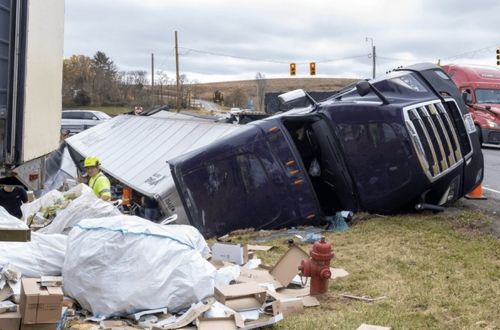
Truck accident lawyers use crash analysis to break down exactly how an accident happened, identify who is at fault, and support claims with clear, fact-based evidence. By combining physical evidence, data from the truck, and expert insights, they build strong cases that can stand up in court or during settlement negotiations.
This process helps turn complex accidents into understandable, provable events. Truck accidents are often more complicated than regular car crashes. They involve larger vehicles, more damage, and sometimes multiple parties.
That’s why working with a professional truck accident lawyer is important. These professionals know how to use crash analysis to uncover the truth and present it in a way that strengthens your claim.
As cases become more data-driven, crash analysis has become a key tool. Let’s explore how it works and why it matters for your case.
What Is Crash Analysis?
Crash analysis is the process of studying all available evidence from an accident to understand what really happened. It goes beyond basic reports and looks at details like speed, braking, impact points, and road conditions.
This process often involves accident reconstruction experts. They use science and engineering to recreate the crash step by step. The goal is simple: find facts that clearly show how and why the accident occurred.
Collecting Physical Evidence from the Scene
To begin with, lawyers gather physical evidence from the accident scene. This is one of the most important steps because it captures details that may disappear over time.
Key evidence includes:
- Skid marks on the road
- Vehicle damage patterns
- Debris and impact points
- Road and weather conditions
This evidence helps experts estimate speed, direction, and force of impact. It lays the foundation for the entire crash analysis process.
Using Truck Data and Electronic Logs
Next, truck accident lawyers rely on data from the truck itself. Commercial trucks often have electronic logging devices (ELDs) and event data recorders.
These tools provide valuable information, such as:
- Driving hours and rest breaks
- Speed at the time of the crash
- Brake usage and sudden stops
- Engine performance data
This data can reveal if the driver was fatigued, speeding, or violating safety rules. It adds a layer of accuracy that is hard to dispute.
Reconstructing the Accident Step by Step
Once the evidence is collected, experts recreate the accident. This is where crash analysis becomes especially powerful.
They use specialized software and techniques to:
- Simulate the movement of vehicles
- Calculate impact angles and force
- Show how the collision unfolded.
These reconstructions can be presented visually. This makes it easier for judges, juries, and insurance companies to understand what happened.
Identifying Liability Clearly
After reconstructing the crash, the next step is determining who is responsible. Truck accidents often involve multiple parties, including the driver, trucking company, or even vehicle manufacturers.
Crash analysis helps lawyers do the following:
- Pinpoint the exact cause of the accident
- Show if safety rules were violated
- Prove negligence with clear evidence
This clarity is critical when dealing with complex legal claims.
Supporting Expert Testimony
Crash analysis is often backed by expert witnesses. These professionals explain the findings in simple terms during legal proceedings.
Their role includes:
- Interpreting technical data
- Explaining how the accident occurred
- Supporting the lawyer’s argument with facts
Because their opinions are based on evidence, they carry significant weight in court.
Strengthening Negotiations with Insurance Companies
In many cases, truck accident claims are settled outside of court. Crash analysis gives lawyers a strong position during negotiations.
With clear evidence, they can:
- Challenge low settlement offers
- Prove the full extent of damages
- Push for fair compensation
Insurance companies are more likely to settle when faced with solid, data-backed arguments.
Connecting Injuries to the Crash
Another important part of crash analysis is linking the accident to the victim’s injuries. This step is crucial for compensation claims.
By analyzing the force and direction of impact, experts can:
- Explain how injuries occurred.
- Support medical reports
- Strengthen claims for damages
This ensures that victims receive compensation that truly reflects their losses.
Bringing It All Together
All these steps work together to build a strong case. Crash analysis turns scattered pieces of evidence into a clear and convincing story. It removes doubt and replaces it with facts.
As a result, lawyers can present cases that are not only detailed but also easy to understand. This increases the chances of a successful outcome.
Key Takeaways
- Crash analysis helps explain how a truck accident happened.
- Physical evidence and truck data play a key role.
- Accident reconstruction makes complex events easy to understand.
- It helps identify who is responsible for the crash.
- Strong evidence improves settlement negotiations.
- Expert testimony adds credibility to the case.
About the Author