
By Dr. John Hajek
Professor and Reader, Linguistics
University of Melbourne

By Dr. John Rice-Whetton
Professor, School of Languages and Linguistics
University of Melbourne
Kath & Kim’s Sharon Strezelecki, who tries hard to school US celebrity Kim Kardashian on the pronunciation of the word ‘nice’ in a TV advertising campaign, might be shocked to learn of its origins.
‘Nice’ – or, in Sharon’s particular brand of Strine, ‘noice’ – originates from the Latin verb ‘nescire’ (to be ignorant of), and it has only been over the past 700 or so years that it has come to mean what Sharon, aka Magda Szubanski, intends it to mean.

Welcome to the evolution of language. It’s cray, isn’t it?
By the way, that wasn’t a typo. Ask any millennial and they will tell you that ‘cray’ actually means ‘crazy’. If you get that, then ‘squad goals’. For the cognoscenti, that’s a seal of approval.
If you are struggling to understand how words with specific meanings don’t seem to be used properly any more, then you have arrived at the new age of language.
Consider an obvious example like ‘parents’. From the early 2000s, the collective noun has, in millennial-speak, been exchanged for ‘the rentals’ and, now, ‘the rents’.
Professor John Hajek, director of the Research Unit for Multilingualism and Cross-Cultural Communication at the University of Melbourne, suggests the evolution of English stretches way back – well before Shakespeare. Just look at the language of English medieval writer Geoffrey Chaucer.
Time, it seems, does funny things to words.
During the bard’s heyday, the word ‘girl’ meant a ‘young person’ or a child of either sex.
Language change is often driven by the desire of a generation not to just look different but also sound different to the previous one.

“It can be as simple as them not wanting to sound like their parents,” explains Professor Hajek.
There are other factors, too.
“Traditionally, we deferred to the British variety of the English language, but we have been very heavily Americanised over the past 50 years,” he says.
Trousers are now pants, a lorry is a truck, and rubbish is often garbage.
In the past, we might have exclaimed, ‘That pissed me off’. But that has now evolved into, ‘That really pissed me’ for more Americanised youth
Blame it on the ubiquity of American popular culture reflected in TV, film and music.
The evolution of language has also enthralled John Rice-Whetton who started out studying for a Bachelor of Science, with an interest in meteorology, but switched to a Bachelor of Arts, majoring in linguistics.
He followed that up with an honours’ degree and is now studying for his PhD. His focus is the word ‘get’.

“It’s a very common word in informal spoken English; in fact, as many as one word in every 100 used is ‘get’ or a related form like ‘got’, ‘getting’ and so on,” he explains.
“There are certainly many interesting uses of the word.”
There must be, because his PhD, which will look at grammatical uses of the word in Scottish, Irish and Tyneside English, will run to 100,000 words.
Like Professor Hajek, Rice-Whetton agrees that the evolution of the language is as natural as changes in fashion or style.
“New technologies have been introduced and there were no words to describe them,” he says.
“We needed to change the meanings of some words to cover these technologies. A good example is the word ‘mouse’, which we all know is an animal, but it is now also a tool we use to navigate around a computer screen.
“Society has changed dramatically over time and we now need to talk about different things, different developments or innovations. Accordingly, the meanings of many words have extended beyond their original sense.”
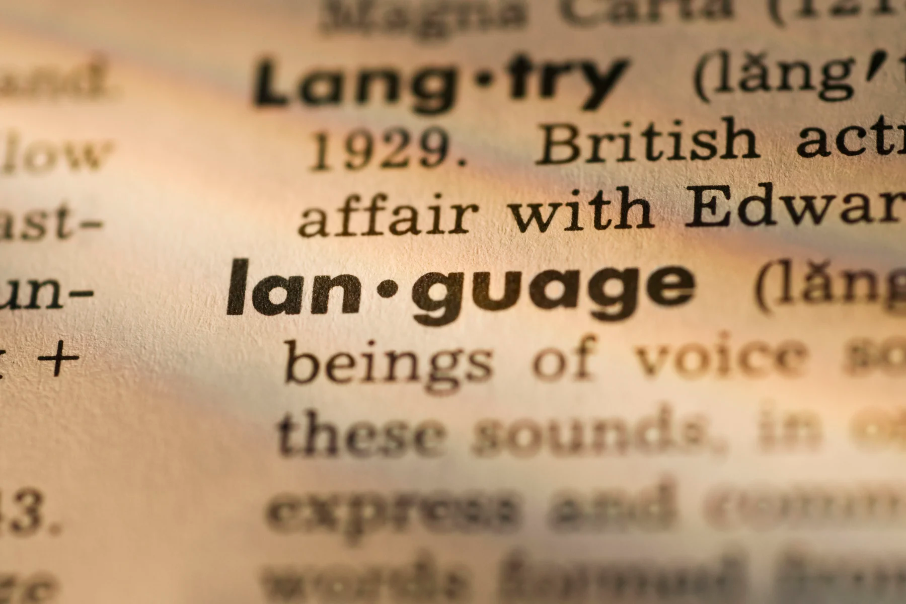
Consider the word ‘silly’. Originally, it meant ‘blessed’, then it morphed into ‘pitiable’ or ‘weak’. By the 16th Century, it came to mean ‘foolish’.
But these changes can also happen quite quickly. Take the word ‘nonplussed’ – it means “confused, stunned, bewildered”. But in the 21st century, it’s increasingly being used to mean the opposite – “calm and unperturbed”.
In fact, former US president Barack Obama used its evolving meaning to describe his daughters’ approach to media scrutiny, saying “I’ve been really happy by how nonplussed they’ve been by the whole thing.”
Similarly, language has been adapted to communicate across social media platforms through tweeting and texting.
Professor Hajek insists the English language is a living organism which is constantly changing, moving forward and moving backwards. Context and register can be critical.
“When we speak, we tend to take a more relaxed manner,” he explains. This has, for example, allowed for some verbs to change their use.
While, traditionally, the past tense of the verb ‘bring’ is ‘brought’, it is becoming increasingly common in spoken English to use ‘brang’ or ‘brung’ – based on the past tense form ‘rang’ and ‘rung’ for ‘ring’.

Sometimes even ‘bought’ is used as the past tense of ‘bring’ because ‘bought’ and ‘brought’ are very similar in sound, and ‘bring’ and buy are common everyday verbs.
As clunky as those examples might sound to some of us, this bastardisation (as some would characterise it) of the language doesn’t disturb Professor Hajek.
“I’m a linguist and I’m fascinated by these sorts of things. The basic principle is that linguistics change all the time; otherwise, everyone would be talking as we did hundreds of years ago when Chaucer and Shakespeare were alive.
“It is fashion, new technology, new influences, youth-speak, and people understanding things that leads to the evolution of the language.”
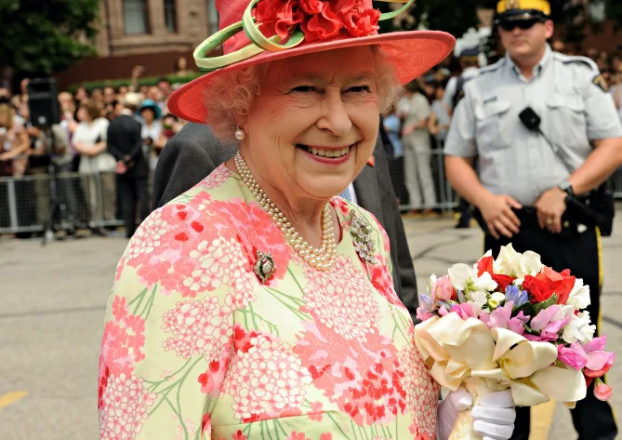
At its heart, language is designed to communicate and to be understood. Even the Queen of England has had to move with the times.
According to Professor Hajek, her accent has shifted over time to become more mainstream.
“She has to be able to connect with people – even at her age,” he adds. “It’s a fine balance between closeness and distance.”
He concedes, however, that changes to the language can be challenging for many people who might struggle to stay abreast of those changes. For example, the word ‘sick’ means to be ‘ill’, but now it can also mean ‘great’.
For traditionalists, that just might be a bit ‘extra’ (or over the top to the uninitiated).
Originally published by Pursuit, University of Melbourne, 01.03.2020, under the terms of a Creative Commons Attribution-NoDerivs 3.0 Australia license.
About the Author