The recent episode of CoinGeek Conversations hosted by Charles Miller explores how micropayments on blockchain can help fix the world’s supply chains. The seafood industry has already revolutionized its supply chain, while the jewelry industry is looking to minimize delays, cut down on huge transaction fees and track high-value raw materials and products to prevent fraudulent activities.
Founder and CEO of Oslo-based enterprise blockchain platform UNISOT Stephan Nilsson advises co-founder and CEO of London-based online jewelry platform MarketOrders Sukhi Jutla on which blockchain to build her supply chain application on based on his firsthand experience in successfully building a blockchain-based sustainable seafood supply chain.
“We see micropayments as a key function in this whole supply chain and tracking system… To incentivize all the actors in the supply chain, we now enable everybody to both buy and sell information. So that could mean that the company that is breeding the fish for a long time, they can now start selling information about that fish…. they can also sell small pieces of information to a producer that’s gonna make some product out of that or promote it to their customers…. Because the problem with supply chains today is that you only have information one tier up or one tier down. You only have information from your immediate supplier and you give to your immediate customer. You have no idea what happens before your supplier’s supplier and your customer’s customer. But by having this system, I can actually subscribe to information from my supplier’s supplier—if there’s a delay or if they’re changing something and stuff like that—so that I can get that information beforehand,” Nilsson said.
Aside from low-cost micropayments that immediately resolves decreasing expenditures and minimizing delays, a nano-chip RFID that alerts the blockchain of the product’s location and status takes care of the tracking problem. On top of these, highly valuable seller and customer information can be exchanged between parties that will improve saleability of products.
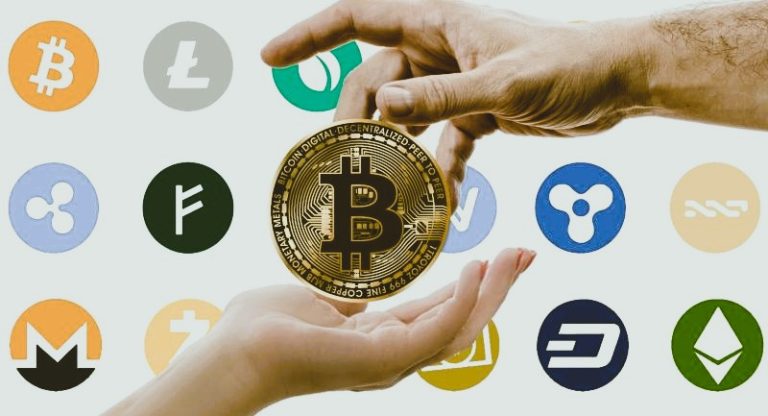
However much effective micropayments on blockchain is as a system for supply chains, Nilsson admits that the term “Bitcoin” attached to blockchain technology hinders him when speaking with clients as it has a bad reputation for being highly unstable.
“So, when we talk to businesses, we don’t even mention about Bitcoin or Ethereum or anything like that. We are just talking about blockchain technology. And we really, really have to be careful at what time we are mentioning Bitcoin and that we have first described everything—the possibilities and the good thing with blockchain—and then we can say, ‘But we are using the real original Bitcoin blockchain not BTC,’” Nilsson explained.
“The price volatility is a huge distraction and my focus is always on the application of the technology. But having said that, I think there are still a lot of people who don’t actually understand the difference between blockchain and cryptocurrencies. Sometimes they can confuse the two, and the reason I say that is because I was one of those people right at the start of my journey. I didn’t know what the difference was. But once you do understand the difference, you do understand that blockchain is actually a technology, it’s an application, it’s a different way of doing something. And in my opinion, it’s a far more trustworthy and efficient way to do a process that’s already existing,” Jutla added.
Bitcoin SV (BSV) is actually the only blockchain in operation that can accommodate a high volume of transactions at a very low cost due to its unbounded scalability. It also has a stable protocol and an economically incentivized system that gives it longevity, which is why Nilsson built his seafood supply chain on the Bitcoin SV blockchain.
Jutla promises to read more about Bitcoin SV and watch the Theory of Bitcoin episodes to make a more sound decision in choosing which blockchain to build her jewelry supply chain on.
About the Author