By Will Bunch
Columnist
The Philadelphia Inquirer
Remi Bald Eagle wants the rest of America to know one thing about his people, the Cheyenne River Sioux of South Dakota, as their tribal nation battles both the coronavirus and the hostility of an open-for-business GOP governor who wants to stampede both the tribe’s sovereignty and the measures that have largely kept COVID-19 off the reservation.
“People think that we’re backward savages and now we’re putting a fence around ourselves,” Bald Eagle, the son of a revered Lakota chief and Army veteran of Afghanistan who now heads intergovernmental affairs for the Cheyenne River Sioux, told me by phone from Butte River, S.D. “Nothing could be further from the truth.”
In the showdown over the right to operate highway coronavirus checkpoints pitting Bald Eagle’s people and other South Dakota tribes against Gov. Kristi Noem, each side has looked to a higher authority. Noem, a first-term Republican, has adopted the open-for-business mantra of her party’s leader, President Donald Trump—with whom she recently met with in the White House—by refusing to put her state on coronavirus lockdown even as one of the nation’s worst outbreaks festered at the Smithfield pork plant in Sioux Falls.
The Cheyenne River Sioux have instead chosen—since the first reports of COVID-19 in China began making headlines in January—to follow the path of science. Part of a broader strategy that included stockpiling food supplies early on and a stepped-up public health strategy, the roadside checkpoints allowed the Cheyenne River Sioux to identify the one instance, so far, of an infected individual returning to their reservation, treat that patient in quarantine, and prevent any new cases.
To echo Bald Eagle’s initial point, who exactly are the uncivilized peoples getting it all backward?
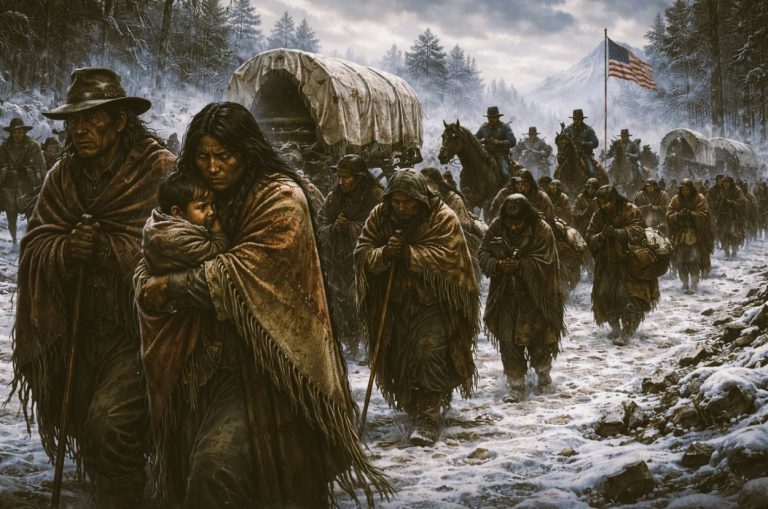
The fight over these checkpoints in South Dakota is much more than a local story. It carries the loud echo of this nation’s original and still ongoing sins — a four-century power play of brutality and forced relocation that has often brought death and disease to our continent’s indigenous people on a scale far worse than 2020′s coronavirus, amid a trail of tears and broken treaties.
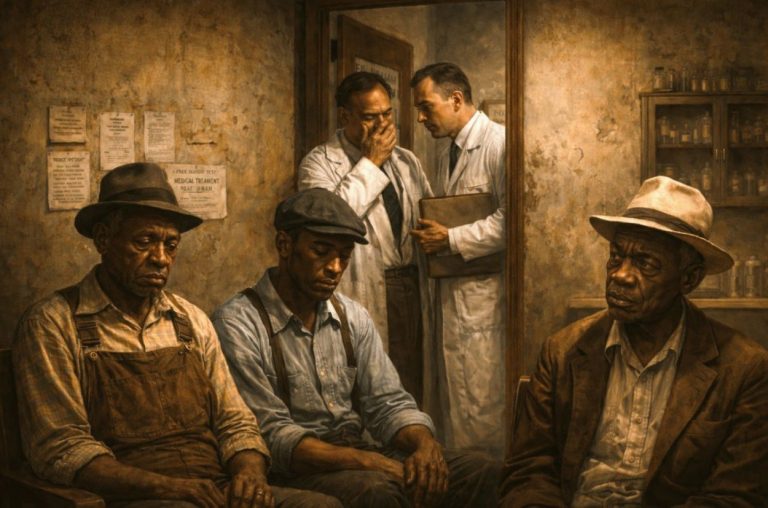
Today, the story of Native Americans battling both the coronavirus and America’s warped politics is both a new chapter in that sordid history and also part of a bigger problem — that the pandemic and our shaky response has exposed the structural inequity throughout the United States. That stretches from the inadequate health care and preexisting conditions, or comorbidity, that have made marginalized people so much more prone to death from COVID-19 to the risk we impose on the low-wage employees who’ve been dubbed “essential workers” even as they remain cannon fodder for capitalism.
One reason that the Sioux tribal leaders in South Dakota are fighting so hard to use their aggressive, science-based methods is that Native Americans in other parts of the Lower 48 are suffering on reservations hampered by a lack of health care and nearby hospitals, high rates of underlying medical conditions, and a lack of internet access that makes it hard to share critical information.
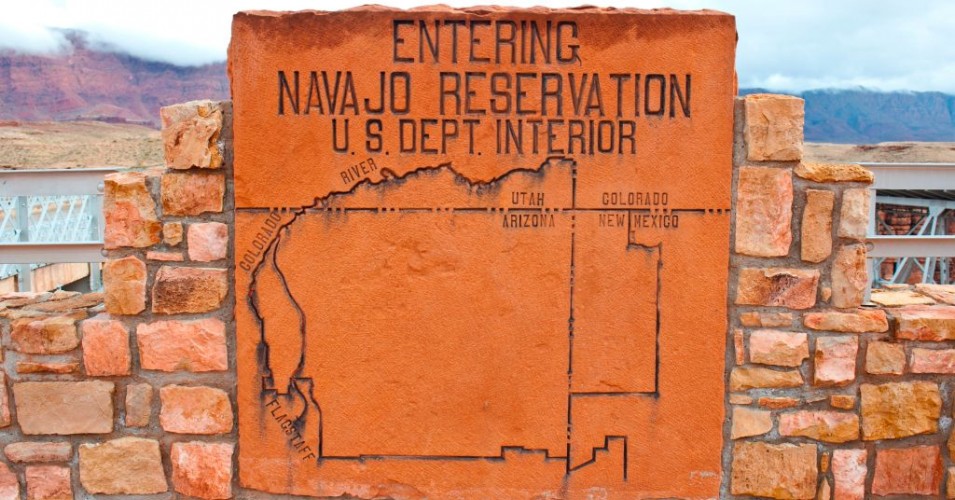
In the American Southwest, where the Navajo Nation and its 350,000 people sprawl across several states, the number of known COVID-19 cases—closing in on 4,000—and a death toll of 119 people has become one of the country’s worst hot spots, and the caseload is continuing to rise.
“This is happening right in the middle of the most powerful nation in the world?” Jonathan Nez, the president of the Navajo Nation, told a Washington Post reporter recently as they toured the reservation. “We’re helping other nations with billions in aid, and the Navajo are still waiting on aid.” Nez complained that both long-term assistance to build water infrastructure was needed, but so was faster coronavirus relief — held up in Washington for weeks by bureaucratic red tape when it could have purchased ventilators and other critical aid. Touring remote corners of the reservation in New Mexico, Nez and the Post reporter met isolated residents who said it’s been a struggle to convince elder tribal members to stay at home or avoid religious gatherings because of lack of information.
If the story of Native Americans fighting a brutal outbreak of disease sounds familiar, it should. Throughout U.S. history, illnesses such as smallpox played a critical role as the population of indigenous people shrunk from more than two million to about 250,000 in 1890 at the end of white settlers’ frontier expansion (before rebounding in the 20th century). In a provocative recent essay in the Atlantic, University of Oregon professor Jeffrey Ostler argues that much of this death wasn’t because natives had no immunity to settlers’ germs—a concept that takes away moral culpability from the white frontiersmen — but because of the cruelty of forced migration and related crimes against humanity.
“The bigger story of disease and Native Americans is what happened as the process of—in the short-hand—colonialism advanced in various places,” Ostler told me by phone. He notes in his piece that during the notorious Trail of Tears forced march westward of Cherokee people in 1830, about one-fourth of the 16,000 migrants died from dysentery, measles, whooping cough, or malaria. Today, tribal members like the Navajo aren’t plagued so much by a lack of biological immunity as by poverty, a condition that afflicts too many Americans, native and nonnative.
That’s the backstory that led Sioux leaders to consult with doctors and scientific experts back in January, when Trump and many other pols in Washington and elsewhere where downplaying the coronavirus, or even predicting it would magically disappear. Bald Eagle said the turn to expertise occurred because his people are used to dealing with what he also considers to be epidemics—high rates of diabetes or asthma that he links to adopting a nonnative lifestyle—that could make the impact of COVID-19 even worse. But their checkpoints—where motorists who cross onto tribal reservations are interviewed about whether they’ve visited virus hot spots—have put the Sioux in conflict with Noem’s South Dakota government.
As late as April, Noem was bashing what she called the “herd mentality” of stay-at-home orders, declaring that “South Dakota is not New York City” and even touting the benefits of hydroxychloroquine, an anti-malaria drug endorsed by Trump despite scientific evidence it’s not effective against this virus. The governor has stayed the course even as the disease outbreak at the Smithfield pork plant spiked to what one might call New York City proportions. Since then, Noem has aimed to shut down the tribal checkpoints—which she sees as a hindrance to free commerce, but also, like it or not, has proven much more effective in curbing the virus than her own freedom-fried approach.
Noem initially ordered the Cheyenne River Sioux and other tribes to remove all of the checkpoints, threatening to take the matter to federal court if tribal leaders refused to comply. So far, the Sioux have balked and Noem backed away slightly, calling for only the checkpoints on state highways to come down but not those on tribal roads.
Bald Eagle said there’s nothing to compromise over because Noem is blatantly ignoring the various treaties between the United States government and the Lakota nations granting sovereign powers over tribal lands, which they believe includes the power to establish their checkpoints. “Tribal nations are exactly that—we are nations with nation-to-nation agreements” with the United States. And yet, the trail of broken promises never ends.
Despite the great need that the coronavirus has caused on tribal lands, Trump—whose dim views on Native American affairs seem driven not by what’s right, but by his fights with tribal casinos in the 1990s — resisted relief money for their reservations. And when Congress inserted $8 billion into its package, his administration balked at writing those checks for weeks. Bald Eagle said the $20 million in relief dollars for the Cheyenne River Sioux just arrived—money that will not only help the tribe pay for its current health costs but to make plans for the next epidemic.
I asked Bald Eagle what he’d like other Americans to know about the Cheyenne River Sioux. “When we go to school on the reservation,” he said, “we have to learn English and about Christianity and other religions, and your forms of government and banking and your society. But our way is not taught to you, and we have to live among each other.”
When I look at the science-based approach to the coronavirus taken by Bald Eagle’s nation and compare it to the botched, politically toxic approach in the White House and the South Dakota governor’s mansion, I think we could learn a lot.
Published by Common Dreams, 05.15.2020, under the terms of a Creative Commons Attribution-Share Alike 3.0 license.
About the Author