Looking at the future of Russia without Putin.

By Dr. Robert Person
Associate Professor of International Relations
United States Military Academy West Point
Introduction
Two things are certain concerning Russian dictator Vladimir Putin.
First, he will be reelected as president in the rigged election scheduled to run from March 15 to 17, 2024, by a resounding – if fraudulent – margin.
Second, he is not immortal. He will die one day, and he is likely to die in office rather than retiring willingly. Though we don’t know when that day will come, the world might want to consider the power struggle that will commence the day after Putin departs.
Ever since he took over as president in 2000, Putin has been perfecting the machinery of electoral fraud to guarantee victory. Vote buying, ballot miscounting, distribution of pre-filled ballots, tampering with ballot boxes, voter monitoring and intimidation, and ballot stuffing are all methods that Putin’s agents employ to guarantee a favorable result.
He has also jailed political opponents, exiled others and denied yet others the ability to challenge him in fair elections. In the most extreme cases, he has had hands in the murders of opposition figures like Boris Nemtsov and, most recently, the prison death of Alexei Navalny. There will be no surprises in this election: Putin’s victory will reaffirm his iron grip on Russia’s politics.

As a scholar of Russian politics and foreign policy who has studied Putin’s regime for the past 25 years, I have watched him build a dictatorship in Russia that rivals the repressive Soviet Union in both its brutality and corruption.
But ironically, Putin is a prisoner of the political system he has built around himself for the past 24 years. Like many dictators, he cannot walk away from power and enjoy a quiet retirement even if he wanted to. He is too attached to, and dependent on, the mind-boggling wealth and power he has accumulated during his time as a public servant.
Protection against Threats
But even if Putin got to keep his palaces and yachts, there would be no guarantee of safety in retirement.
If Putin gave up power, his successor might come after him. Putin’s personal authority, charisma and influence would always be a threat to his successor as long as he was alive, a tempting target for the next ruler, and Putin knows it.
The other reason most dictators won’t even name their successor is that it might initiate a bitter power struggle even before the dictator retires or dies. Imagine if Putin picked a successor: That person would immediately become the target of the unsuccessful contenders not chosen for the job.
There are bitter rivalries even among Putin’s inner circle of cronies. Usually Putin manages to keep those struggles in check, but the 2023 revolt by Wagner warlord Yevgeny Prigozhin against the Ministry of Defense shows how deadly these competitions can turn. Prigozhin was killed in an August 2023 plane crash whose real cause may never be known, but Putin’s hand is widely suspected.
Behind each of the wealthy insiders who support Putin – his oligarchs – stands a deep network of corrupt cronies who would stand to lose their power, wealth and perhaps even freedom if a rival succeeded in taking over. Putin’s departure could set off a bloody power struggle whenever it happened, so why would he risk it ahead of time by naming his successor?
Power over Others
Putin is not likely to be removed by any palace coup. His control over Russia’s security services has allowed him to crush rivals and control the media, judiciary, regional leaders, parliament and community groups. He has also closely monitored threats from potential opposition figures inside and outside his regime, and made his regime “coup-proof,” as one scholar put it.
His cultivation of anti-Western Russian nationalism has won him the loyalty of the military and citizenry – at least for now.
Putin also uses his control over Russia’s natural resource wealth to keep his oligarchs in line. He decides which oligarchs are appointed to lead Russia’s major state-owned oil, gas, mineral and industrial producers. As long as they remain loyal to Putin and support his political and economic directives, these oligarchs are allowed to profit handsomely by plundering the income their companies earn.

The oligarchs’ wealth and freedom are conditional on staying in Putin’s good graces. Cross him and they could lose everything. Jailed tycoon Mikhail Khodorkovsky learned that in 2003 when, after criticizing Putin, he was imprisoned and saw his Yukos oil company seized by the state.
And just in case any of them did step out of line despite their dependence on his largesse, there’s another reason none of the oligarchs cross Putin: For decades he has amassed a trove of compromising materials or “kompromat” with which to blackmail even his closest advisers.
In short, the entire Russian elite have nothing to gain and everything to lose by defecting from Putin’s coalition.
After Death
If Putin can’t retire and probably won’t be deposed, what happens when he finally does die in office? According to the Russian constitution, the prime minister automatically becomes acting president with limited powers when the president can or will no longer serve. Remember, that was Putin’s first step toward becoming president in 2000 when Boris Yeltsin resigned.
This time around, the transition would look much different. Russia’s current prime minister is Mikhail Mishustin, a rather bland and uncharismatic former tax official who lacks a strong power base of his own. Should he succeed Putin as acting president, it’s unlikely that he would become the permanent replacement.
Under the constitution, new presidential elections must be held within three months of the president’s death or incapacitation. But the real scramble for power will take place behind the scenes and not at the ballot box.
It’s possible that the potentially violent power struggle could be resolved before the election, but three months is not much time for a successor to consolidate their grip and fill the void left by Putin. It’s also possible that a consensus candidate might be allowed to win the election while the real struggle between factions plays out in the ensuing months and years.
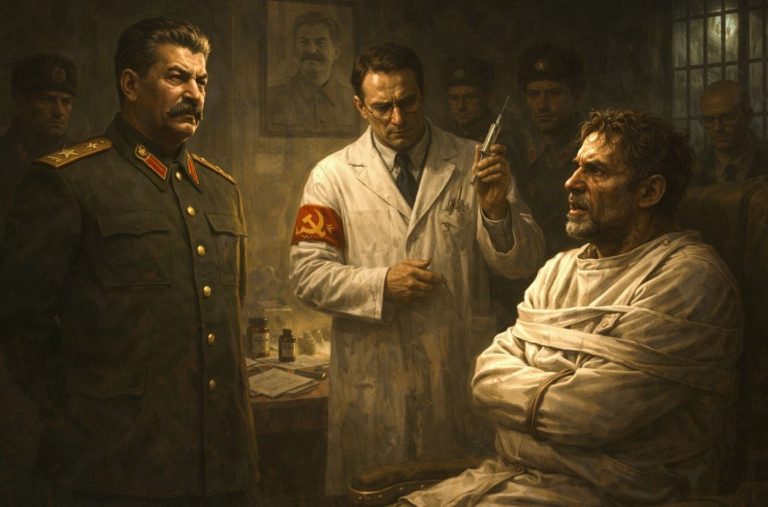
Or, an informal coalition of leaders attempts to rule collectively while holding the key positions of power like the presidency, premiership and security services. This sort of power-sharing arrangement has historical precedent in Russia: Coalitions proclaiming “collective leadership” briefly held power after the deaths of both Vladimir Lenin and Josef Stalin. But in each case, one member of the coalition was able to outmaneuver and eliminate their partners: first Stalin and later Nikita Khrushchev. These cases are reminders that autocratic succession is usually a messy affair.

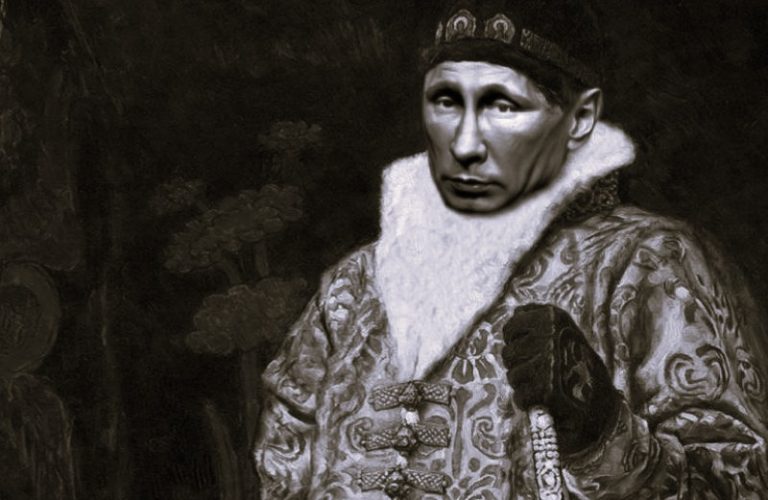
But the days, months and years after Putin’s departure may be even more turbulent than anyone expects. Never before has so much personal authority been concentrated in the hands of a single Russian leader with so few supporting institutions to help stabilize a leadership transition. There is no monarchical succession, as under the Romanovs, the last royal family to rule the country. Nor are there the strong institutions of a single-party state to constrain rivals as in Soviet times.
There is only Putin.
Originally published by The Conversation, 03.13.2024, under the terms of a Creative Commons Attribution/No derivatives license.
About the Author