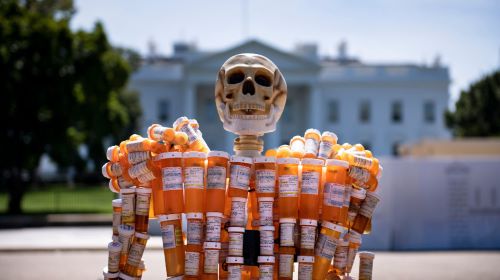
Popular culture and the news media continue to cling to an outmoded anti-drug narrative.

By Maia Szalavitz
Neuroscience Journalist
Early this year [2022], government researchers announced a grim milestone in America’s overdose crisis. Between June 2020 and June 2021, as the Covid-19 pandemic raged across the country, a record 101,263 people are believed to have died by drug overdose — nearly 21 percent more than in the previous 12 months. Sadly, overdose rates have been escalating for decades now. As recently as 1999, there were just under 17,000 annual deaths.
Throughout this disaster, the news media and policymakers have typically relied on a simple narrative: The crisis was caused by the widespread over-prescription of opioids, so therefore reducing the medical supply via law enforcement will solve it. And by the supply metric alone, they’ve succeeded: Since 2011, the total amount of opioids prescribed has fallen by more than half.
At the same time, however, far more Americans have died from overdose while prescription rates have been falling than were killed by drugs when they were rising. Around three-quarters of today’s overdose deaths are linked to illegally manufactured fentanyl and its derivatives — not prescription drugs. A 2019 study found that just 1.3 percent of those who died of overdose from 2013 to 2015 in Massachusetts had valid prescriptions for the drugs that killed them.
Meanwhile, after 50 years and hundreds of billions of dollars spent trying to stomp out the nonmedical, street-level drug trade via law enforcement, the end result has only been stronger, cheaper drugs, more deaths, and no less addiction.
These stark facts should prompt a complete re-assessment of drug policy. However, even as politicians across the spectrum (including the Biden administration) are beginning to question today’s conventional wisdom, much of the media remains mired in the past. Unless we understand — and finally relinquish — the inaccurate ideas that underpin the war on drugs, we are doomed to continue it.
That is one goal of harm reduction, a philosophy that focuses on trying to keep people from getting hurt, rather than attempting to stop them from getting high. Originally devised by people who use drugs and researchers in order to fight HIV, harm reduction emphasizes saving lives over trying futilely to extinguish the human desire to alter consciousness.
Harm reduction contends that success should be measured in terms of lives preserved or improved — not numbers of arrests, numbers of prescriptions, or amounts of drugs seized. As the author of a history of harm reduction, “Undoing Drugs: The Untold Story of Harm Reduction and the Future of Addiction,” co-author of a guidebook to recovery, and a beneficiary of the idea during my own heroin addiction, I have seen how the evidence behind the idea has solidified over three decades of research
Today, what was once a fringe idea opposed by both Democrats and Republicans is now endorsed by the Biden administration and supported by federal health policy as part of its overall drug strategy.
Yet even as harm reduction begins to generate more sensible approaches for managing drug-related hazards — like providing clean needles and the overdose antidote naloxone, as well as safe places to inject drugs — popular culture and the news media continue to reinforce many of the outdated ideas that got us to this point.
Let’s start with the notion that what we face now is a prescription opioid crisis, caused in large part by the greed of Purdue Pharma’s Sackler family. That’s the essential premise of Beth Macy’s 2018 book “Dopesick: Dealers, Doctors, and the Drug Company that Addicted America,” and the recent streaming series on Hulu that followed, as well as Patrick Radden Keefe’s “Empire of Pain,” Alex Gibney’s documentary “The Crime of the Century,” and numerous newspaper, magazine, online, and radio accounts, which are filled with compelling stories about how physicians — misled by devious pharma marketing — addicted millions of patients.
They frequently cite horrifying statistics and experts noting that the vast majority of those who now take illicit opioids like heroin or street fentanyl started with prescription pills. By implication, this suggests that these people — generally pictured as White and middle class — were innocent victims of doctors and Big Pharma, in contrast to the primarily Black people who were portrayed as using crack or heroin in prior drug epidemics.
But what readers and viewers rarely learn is that nearly 80 percent of those addicted to prescription opioids were not actually prescribed these drugs in the first place. Rather than receiving opioids for a sports injury or dental care, most people with addiction got their initial prescription medications from friends or family, usually for free. In other words, the drugs were obtained illegally and these addictions are no more accidental than those that began with crack.
Nonetheless, journalists and filmmakers focus relentlessly on the stories of the minority of people who were first exposed via pain treatment — and too often ignore the majority or downplay the fact that their use began outside of medicine. This narrative also plays up the risk of addiction for people in pain.
“Dopesick,” for example, implies that this hazard is enormous, repeatedly attacking Purdue for claiming that “less than 1 percent of patients” will become addicted due to opioid treatment. That statistic, based on a single letter to the editor published in the New England Journal of Medicine in 1980, also turns up in many other articles, films, and media accounts, where it is characterized as a lie promoted by the Sacklers and their pharma shills.
But almost no media attention is paid to better research that now replicates the original finding — and that wasn’t funded by Big Pharma. For example, a 2010 Cochrane review — conducted by a nonprofit organization and considered one of most stringent forms of medical evidence — found an addiction rate of 0.27 percent in studies of opioids prescribed for long-term chronic pain that sought to measure this risk.
Another study of nearly 38 million surgical patients’ medical records from 2008 to 2016 found that just 0.6 percent developed new opioid problems after receiving a prescription. A third study, this one of nearly 700,000 urological surgery patients, published in 2017, found that 0.09 percent were diagnosed with addiction or had an overdose.
Some studies do find higher rates of addiction, including those cited by the Centers for Disease Control and Prevention, but a review by the director of the National Institute on Drug Abuse published in 2016 noted that when patients are appropriately diagnosed, even among people who are taking opioids long-term for chronic pain (not just short-term after surgery or injury), addiction rates are less than 8 percent.
If this data is correct, why was increased prescribing associated with so much addiction and death? Because it wasn’t primarily pain patients who got hooked: This low level of risk doesn’t apply when talking about recreational users who take opioids illegally. This group tends to skew young (the vast majority of addictions start in the teens or early 20s, while chronic pain patients tend to be older) and to have other vulnerabilities.
Basically, in order to sell its drug, Purdue ignored the risks of recreational use, even when it became clear that OxyContin was widely diverted to the black market and misused. They then tried to stigmatize people with addiction as willful malefactors. That is a large part of what made the marketing so poisonous — and why this should in no way be read as a defense of the Sacklers.
But despite Purdue’s perfidy, the real risk factors for addiction matter. Critically, most of them are present long before those who become addicted set foot in a doctor’s office — and include childhood trauma, mental illness, and often, economic despair.
Another source of trouble in media and pop culture portrayals of addiction is an over-reliance on law enforcement sources. Unsurprisingly, this leads to an under-estimation — or complete denial — of the harms associated with policing and a highly stigmatizing view of addiction. This lack of skepticism also undermines harm reduction by reinforcing the idea that enforcement is the best approach.
Sam Quinones’s recent book “The Least of Us: True Tales of America and Hope in the Time of Fentanyl and Meth” exemplifies this problem.
Quinones is an excellent police reporter, and his storytelling is strong. However, he lionizes law enforcement sources and rarely questions their assumptions. Consequently, much of the book is spent detailing the players in the rise of the modern fentanyl and methamphetamine trade and the dedicated officers and agents who are trying to stop them.
Sadly, what’s left unexamined is the role that policing has played in worsening the problem. Quinones makes much of the rise of so-called P2P meth, arguing that it is more toxic than previous iterations of the drug.
He chronicles the law enforcement crackdowns that preceded the rise of P2P meth, but doesn’t really reckon with the fact that the drug trade repeatedly adapts in response to controls on chemicals needed for manufacturing — often, leading to more dangerous substances.
And so, meth makers have pinged back and forth between production methods as the U.S. and Mexico variously cracked down on chemicals needed to make it. Over time, this process drives drug potency up — a phenomenon known as the iron law of prohibition — because ever-smaller substitutes are easier to smuggle. More potency, however, also means greater overdose risk.
The counterproductive nature of squeezing supply without addressing demand can be seen even more heartbreakingly in the opioid story, which Quinones recaps without questioning how it, too, was exacerbated by policy decisions. As he beautifully documented in his previous book, “Dreamland,” reducing the medical opioid supply rapidly created new rural markets for heroin, which Mexican gangs were proactive in supplying.
But why did this happen? Because virtually nothing was done to help the hundreds of thousands of people who were medically abandoned when pill mills were raided and legitimate pain doctors stopped or cut back on prescribing opioids for fear of prosecution.
Neither pain nor addiction is effectively treated by reducing the drug supply — and a worsening death rate is predictable when governments drive people away from substances of a known dose and purity to a black market with few quality controls.
Regardless, even now pain patients are having their doses cut as doctors try to protect themselves from law enforcement — despite government warnings and new research showing that discontinuing chronic opioid prescriptions triples the risk of overdose death — and even just reducing doses doubles the risk of an emergency room visit or hospitalization for a mental health crisis, and at least triples suicide risk. Yet this aspect of the crisis still receives almost no coverage or attention in popular culture.
We are fighting the last war: undertreating pain in a fruitless attempt to solve an overdose crisis that these days has little to do with prescription drugs.
Instead of recognizing that law enforcement is an inappropriate way to treat health problems, however, Quinones doubles down. He claims that people with addiction are so selfish and anti-social — and today’s drugs are so strong — that they will not recover unless they are arrested and coerced into treatment in jail.
The experts disagree: The United Nations, the World Health Organization, and Nora Volkow, the director of the U.S. National Institute on Drug Abuse, all endorse decriminalization. Just as most people with alcohol or tobacco addictions manage to recover without being arrested, the same is true for those with other drug problems. Although people who have kicked both illegal drugs and cigarettes overwhelmingly say that quitting smoking is harder, again, people stop all the time without criminalization.
In fact, research shows that arrests and incarceration can reduce willingness to seek treatment, increase crime (or at minimum, do not decrease it) and are linked with higher rates of suicide, overdose, Hepatitis C, and HIV. There is also no association between drug possession arrest rates and levels of drug use: If drug arrests worked, states with more of them should have less drug use and states with fewer should have more — but this isn’t the case.
Media proponents of coercion, however, frequently misinterpret the effects of addiction on free will. Quinones, for example, labels the condition “brainwashed slavery,” suggesting that addicted people cannot make choices and will only quit if forced.
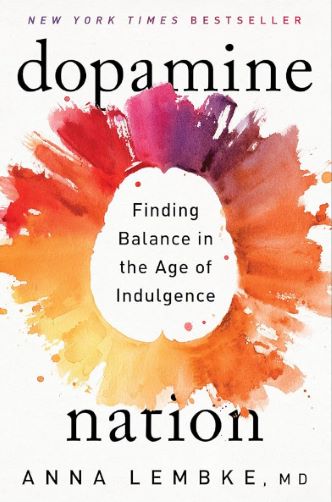
But decades of research finds that the most effective treatment is kind and supportive, not confrontational. Despite the lack of evidence supporting it, however, the American embrace of tough-love is long-standing and pervasive. It has recently been given a boost by Anna Lembke, a Stanford addiction medicine doctor, in her bestseller “Dopamine Nation: Finding Balance in the Age of Indulgence.”
Mere abstinence from problematic substances isn’t enough for Lembke: suffering is needed. In fact, she suggests that people with addiction try to give up all other pleasures, too, when they initially kick drugs — supposedly in order to reduce elevated levels of the neurotransmitter dopamine. (Though, mercifully, she does recognize that this is not a good idea for people with the most severe addictions.)
But even if what she calls a dopamine fast were actually possible (it’s not, because dopamine isn’t just a pleasure neurotransmitter), it would be harmful: Significantly reducing dopamine can result in symptoms of Parkinson’s disease, which hampers movement and motivation. Moreover: Trying to avoid all other comforts while enduring withdrawal is a recipe for relapse, not recovery.
Attempting asceticism sets patients up for a phenomenon known as the abstinence violation effect, where a minor lapse turns into a huge binge, because people believe they’ve already blown their recovery anyway.
Numerous studies document how seeing recovery exclusively as complete and uninterrupted abstinence from all forbidden substances worsens relapses and makes them more dangerous. (Bizarrely, Lembke characterizes the abstinence violation effect as the opposite of how psychologists actually define it, saying that it results from attempts at moderate use rather than from an abstinence-only ideology.)
Moreover, while failing to mention that long-term use of medications like methadone or buprenorphine is the only treatment proven to cut mortality from opioid use disorder by 50 percent or more, Lembke nonetheless questions whether it is a good idea. “Please don’t misunderstand me,” she writes, “These medications can be lifesaving and I’m glad to have them in my clinical practice. But there is a cost to medicating away every type of human suffering and as we shall see, there is an alternative path that might work better: embracing pain.”
Yet dozens of studies on thousands of patients with opioid addiction in numerous countries show otherwise: No other approach, including abstinence, has been found to reduce mortality so dramatically — or even at all.
Drug policy is hard. It’s almost always a matter of minimizing rather than being able to eliminate risky behavior that can rapidly shift direction when one drug or compulsive activity becomes unavailable.
We’ve tried prohibition of some dangerous drugs — but not others — for more than 100 years now. Our policy of treating certain addictions as a crime and a sin and chasing supplies of one drug after another has decisively failed. Continuing to rationalize this approach with familiar narratives won’t help — nor will ignoring the flawed thinking that underlies our misguided drug war.
It’s time to recognize that we truly can’t arrest or prosecute our way out of a psychological disorder that is fundamentally defined by the fact it continues despite negative consequences. It’s time to stop merely calling addiction a disease — and actually treat it with medicine, not cops and courts.
It’s time that all of drug policy aims first and foremost to reduce harm.
Originally published by Undark Magazine, 02.04.2022, republished with permission for educational, non-commercial purposes.
About the Author