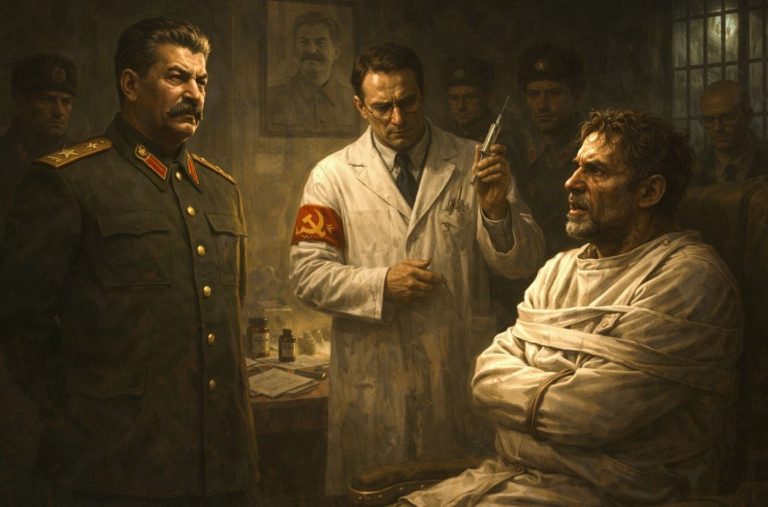
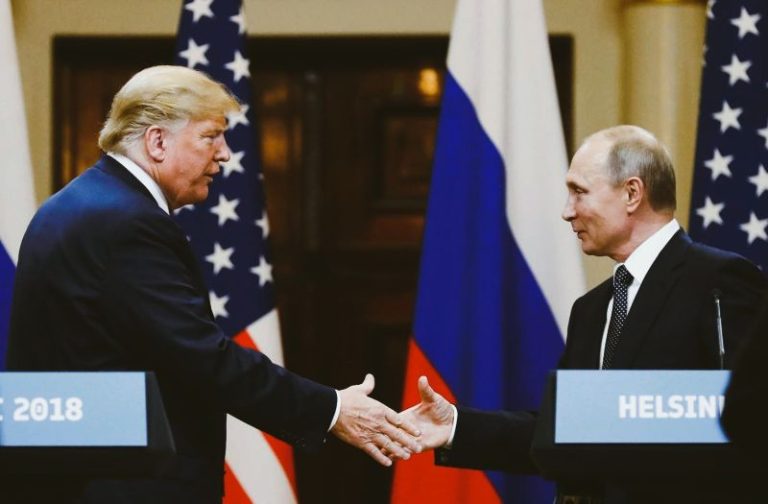
Far-right American Christians once viewed Soviet culture as a menace to their values. That has changed.

By Dr. Sarah Riccardi-Swartz
Assistant Professor of Religion and Anthropology
Northeastern University
Introduction
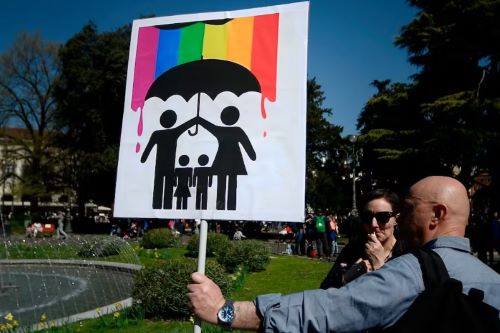
With LGBTQ+ rights continuing to expand across much of the world, Vladimir Putin’s Russia has doubled down on restricting them – and a new ruling has made the future even more uncertain for Russian LGBTQ+ groups and individuals.
The LGBTQ+ “movement” is “extremist,” and its activities will be banned beginning in 2024, according to a ruling a justice of the Russian Supreme Court handed down at the close of November 2023.
This newest decision builds on 10 years of legislation pushed forward by President Vladimir Putin’s government in the name of “family values,” largely focused on limiting LGBTQ+ activism and same-sex unions. With theological support from the Russian Orthodox Church, Putin and his supporters portray Russia as a bulwark of “traditional values.” This trend is poised to only increase in 2024, with Putin’s decree that it is the “year of the family.”
That vision appeals deeply to many conservative Christians outside Russia, as well. As an anthropologist, I have spent years studying Russia’s family values rhetoric and its appeal to allies abroad – particularly Russian Orthodox converts in Appalachia.
Traditional values have become a fixture in far-right movements around the world, some of which see Russia as a model of the future they desire. In Russia and beyond, many conservative Christians in these movements have focused on LGBTQ+ populations, whom they portray as threats to their vision for society – and are not deterred by antidemocratic politics, if its figures voice support for their social goals.
Church and State
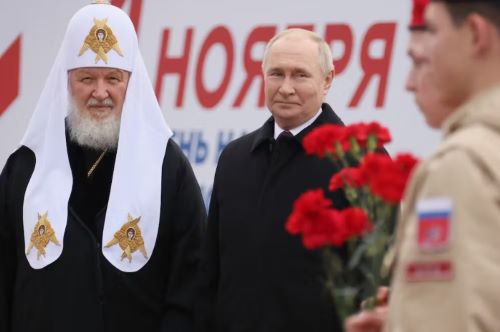
In Russia, traditional family values have historically been linked to patriotism, Russian ethnic identity and service to country. These ideas were supported from the 1970s onward by writings from a young priest-monk named Kirill Gundyaev, who became head of the Russian Orthodox Church, or ROC, in 2009.
Though three-quarters of Russians say they attend church services once a year or less, the ROC remains culturally influential. During Putin’s nearly 25 years in power, he has often tapped into the church’s rhetoric about traditional values to advance his social and political goals. In particular, Russian leaders often portray much of Europe and the U.S. as threats to the traditional family.
Attempting to justify the 2022 invasion of Ukraine, for example, Putin and Kirill have both appealed to conservative ideas about religion and gender, arguing that Russia’s offensive stems from a need to protect itself from liberal values.
The West has “been aggressively imposing on their countries, attitudes that are directly leading to degradation and degeneration, because they are contrary to human nature,” Putin said in a February 2022 speech about the war. Kirill, meanwhile, has portrayed the invasion as a spiritual battle.
Beyond Borders
Many of Putin’s ideas about tradition resonate with far-right American Christians, including the Appalachian Orthodox converts’ communities I worked with, who think they are being persecuted for their views about gender and sexuality.
While the language of family values resonated with right-wing voters during and since the Trump presidency, values rhetoric has a much longer history among the American Christian right. During the 20th century, anthropologist Sophie Bjork-James has noted, these arguments took off among white Protestants over fears about race, economic instability and feminism.
After World War II, as Americans grappled with the looming threat of nuclear war with the Soviet Union, family values became a key part of patriotic rhetoric that contrasted the “red threat” of the Soviet Union with a supposedly God-fearing, blessed America. Family values politics inspired the creation of conservative groups like the Moral Majority and the Family Research Council as reproductive rights and fledgling gay rights intensified their concerns.
Though focused on promoting American Christian values, the movement looked abroad for connections and support. Relationships forged between the Roman Catholic Church and the ROC, as well as the Billy Graham Evangelistic Association and the ROC in the early 2010s, helped spur on the types of traditional values movements seen around the world today. Increasingly, these groups have focused on LGBTQ+ populations, portraying them as alien to traditional values.
Russian political figures and the ROC have participated in local and global organizations that promote traditional family values, including the World Congress of Families and some home-schooling networks formed in the U.S. Some far-right figures involved in such groups promote “traditionalism”: an anti-modern philosophy that focuses on social, sexual and racial purity.
From Culture to Authoritarianism
Cold War-style language that U.S. politicians once used to criticize the Soviet Union has now been inverted: Many right-wing American Christians who believe their country has lost its traditional religious heritage and is headed toward Marxism see the West as the new “red scare.” For some who criticize the West as “woke,” contemporary Russia is a better social model and an arbiter of traditional morality.
Yet anti-LGBTQ+ policies, family values rhetoric and the notion that Russia is “traditional” are not simply part of the new global culture wars. Rather, they are part of what I call reactive world-building: radicalized groups working toward what they see as a Christian, pro-family future with authoritarian politics at the helm.
The language of the Christian right has consistently emphasized obedience to hierarchical authority. In my own work on far-right American converts to Orthodox Christianity, I have met people who support antidemocratic politics if they believe it can deliver the kind of culture they want to see – and even individuals who call themselves fascist. Some express interest in moving to Russia, with American Orthodox convert priest Rev. Joseph Gleason offering a public example.
Under Putin, family values are used as a way to advance post-Soviet Russian power and control globally. That might come as a shock for American allies – although given some far-right compatriots’ interest in moving there, perhaps not.
Originally published by The Conversation, 12.15.2023, under the terms of a Creative Commons Attribution/No derivatives license.
About the Author