Putin’s worldview echoes Russian phrase, ‘Who is not with us, is against us.’

By Dr. Julia Khrebtan-Hörhager
Associate Professor of Critical Cultural & International Studies
Colorado State University
Introduction
Controlling the narrative has long been crucial to Russian President Vladimir Putin in his war against Ukraine.
In the worldview he promulgates, the U.S. is an “empire of lies,” the West is bent on “tearing apart Russia,” and Ukraine is a “Nazi-run” country whose statehood is a historical fiction.
Through speeches and propaganda, Putin presents this narrative to his own country and the rest of the world. It is a worldview that is negative, historically and factually false and relies on provocative rhetorical framing. It is a framing that fits well the Russian phrase that translates in English as “who is not with us, is against us,” forms of which have been popularized through czarist and Soviet years and have returned with a vengeance under Putin.
It is also, as I explore in my new book, a popular form of what is known as “cultural othering,” which can be used to gain, maintain and exercise power.
Cultural Othering, Explained
Cultural othering is the process of defining a group of people – be it a racial, ethnic or national group – as different and then treating them as inferior. This “other” group is assigned negative traits to make them appear lower to the dominant group, and to marginalize them.
Othering has long been a tool employed to assert authority over marginalized groups, such as by European colonizers in Africa and Asia, or by settlers in Native American lands.
Putin and the Russian state are very skilled at practicing cultural othering and have deployed it against Ukrainian “enemies” as tanks rolled into Ukraine. In the worldview of Putin, their separatist vision was based on Russophobia, fascism and neo-Nazism.
Putin’s othering predates the 2022 invasion. It was seen in the 2014 illegal annexation of Crimea, the 2008 conflict in Georgia and the brutal Chechen wars from 1994 onward. All represented Russian attempts to reestablish its control over “others” – Ukrainians, Georgians, Chechens, the Crimean Tatars – that under the Soviet system had been reincorporated into an idea of a “Great Russia.” Their crime, as seen from Moscow, was that they were undermining Putin’s long-held vision for a return to that great Russian empire.
Soviet Brotherhood, Revisited
The curious thing about Putin’s othering is it focuses on national groups that he has simultaneously claimed to be of the same people as Russia.
From Putin’s perspective, these would-be breakaway neighbors are former “brotherly republics” cleaved from Mother Moscow only by the breakup of the Soviet Union in the early 1990s – an event Putin has described as the biggest geopolitical tragedy of the century. To push this narrative, Putin employs a warped view of history, invoking the “Kyivan Rus” – the medieval state that sought to unite the people of a vast land mass – and denouncing Soviet leader Vladimir Lenin as “the creator and architect of Ukraine” and encouraging nationalist ambitions.
Under Putinism, there are seemingly two options for countries that once formed the Russian, and later Soviet, empire.
The first involves total geopolitical and cultural submission, assimilation and acceptance of pan-Russian sameness, as is seen in Belarus under Putin ally Alexander Lukashenko. The second option is to seek national and cultural self-definition, but be subjected to the most extreme forms of cultural othering for doing so. In other words, it is the choice of being a brother or the other.
To Putin, nations that dared to break away from Russian hegemony and, like Ukraine, developed pro-Western ambitions, turned into an enemy.
Othering in Historical Context
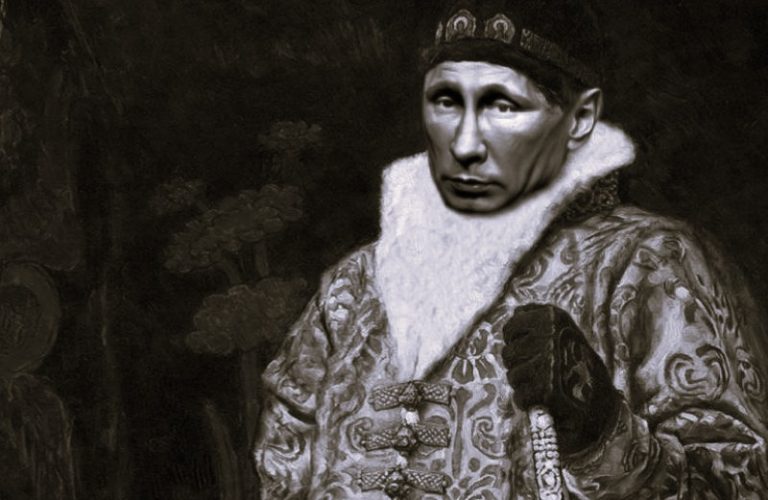
Putin’s cultural othering of Ukraine taps into a history of Russia that goes back centuries. It was evident in imperial Russia and reflected in the literature of the time. Russian poet Alexander Pushkin, in his epic “Poltava,” and novelist Leo Tolstoy, in “A Prisoner in the Caucasus,” both glorified Russian martyrdom and heroism while employing othering language and devices against different groups of people, including the French, Swedes, Turks, the Circassians, Crimean Tatars and Ukrainians. This othering serves to portray those seeking distance from Moscow as subhuman, or at least sub-Russian.
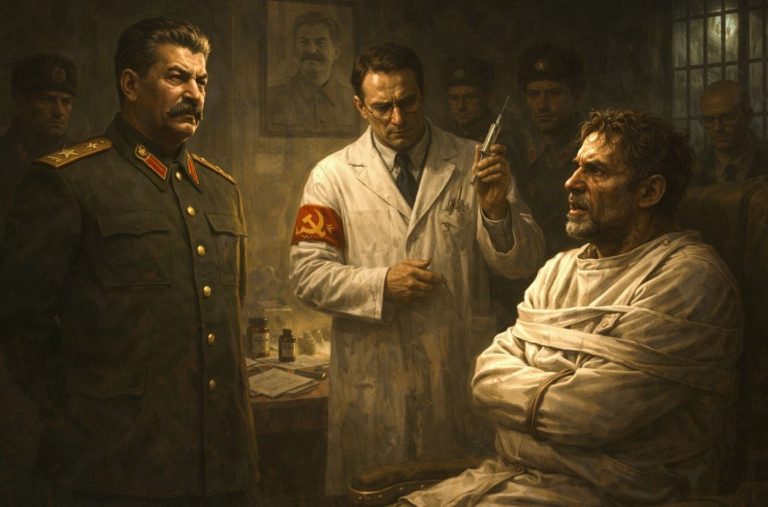
In the Soviet period, cultural othering took the form of demonizing anyone who balked at or actively fought attempts to force a homogeneous Soviet identity over ethnic and class diversity. The punishment for resistance and disobedience was severe, especially under Josef Stalin; the gulag served as the ultimate destination for those who did not assimilate.
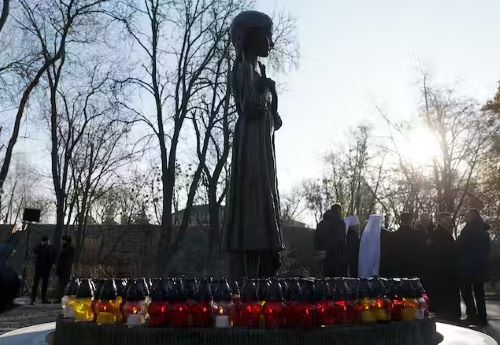
Meanwhile, Ukraine paid a terrible price for resistance to assimilation. Stalin’s human-made starvation of Ukrainian peasants from 1932 and 1933 – which many historians attribute in part to an attempt to suppress or punish Ukrainian aspirations of independence – killed millions of Ukrainians. And here lies an important aspect of cultural othering: Once a people are “othered,” their lives are degraded and dehumanized – making such atrocities more acceptable to the dominant group.
Eventually – to escape repressions and to survive – Ukrainians, Georgians, Crimean Tatars and other “others” reluctantly accepted Soviet brotherhood and political and linguistic submission and cultural assimilation with Russia.
In this way, Russian leaders from emperors to Soviet chiefs have manifested Russian geopolitical and ideological hegemony. Putin is following suit.
New Leader, Old Strategy
Since coming to power, Putin has tried to reconstruct Russia’s former territorial and ideological might, while simultaneously positioning the country in opposition to its habitual enemy – the “collective West.” When Ukraine chose a pro-European course, Putin saw it as the act of a treacherous enemy.
Putin’s rhetoric has been fusing Ukraine and the West together in one single enemy ever since. Putin often “others” the West – and, by association, Ukraine – by drawing comparisons between Russian traditional values and Western cultural “decadence” with its LGBTQ+ rights, gender-related debates and other identity issues. Since the beginning of the war, Putin has othered Ukraine by making it both “of the West” but also “Nazi.” That has allowed him to frame his war as “liberation,” “demilitarization,” and “de-nazification.” Meanwhile, religious leaders in Russia have framed the conflict as a holy war, with the aim of “de-Satanizing” Ukraine.“
This continued othering of Ukrainians by Putin means that the war is one that goes beyond territory and ideology. Rather, what has been set up is a conflict between two cultural selves that are mutually exclusive. It is, to Putin, the Russian “us” against the Western and Ukrainian “them.”
Originally published by The Conversation, 11.30.2023, under the terms of a Creative Commons Attribution/No derivatives license.
About the Author