LGBTQ+ elders share what survival looks like under a hostile political regime.

By Orion Rummler
LGBTQ+ Reporter
The 19th News
Karla Jay remembers joining the second night of street protests during the 1969 Stonewall uprising in New York City. For her, and for so many other LGBTQ+ people, something had shifted: People were angry. They didn’t want things to go back to normal — because normal meant police raids. Normal meant living underground. It meant hiding who they were at their jobs and from their families. They wanted a radical change.
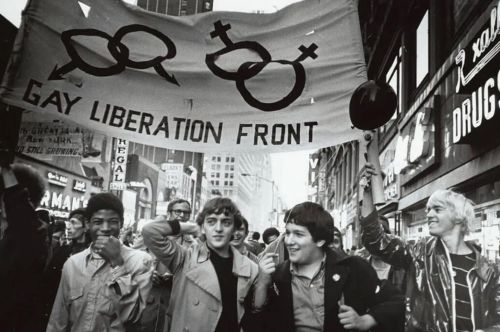
Radical change meant organizing. Jay joined a meeting with the Gay Liberation Front, which would become the incubator for the modern LGBTQ+ political movement and proliferate in chapters across the country. At those meetings, she remembers discussing what freedom could look like. Holding hands with a lover while walking down the street, without fear of getting beaten up, one person said. Another said they’d like to get married. At the time, those dreams seemed impossible.
Jay, now 78, is worried that history will repeat itself. She’s worried that LGBTQ+ people will be put in the dark again by the draconian policies of a second Trump administration.
“Are things worse than they were before Stonewall? Not yet,” she said. “It’s certainly possible that people will have to go back to underground lives, that trans people will have to flee to Canada, but it’s not worse yet.”
The 19th spoke with several LGBTQ+ elders, including Jay, about what survival looks like under a hostile political regime and what advice they would give to young LGBTQ+ people right now.
Many states protect LGBTQ+ people through nondiscrimination laws that ensure fair access to housing, public accommodations and employment. Supreme Court precedent does the same through Bostock v. Clayton County. Other states have passed shield laws to protect access to gender-affirming care for trans people. But to Jay, a cisgender lesbian, it all still feels precarious. The Trump administration is trying to make it harder for transgender Americans to live openly and safely, and lawmakers in more than a handful of states want to undermine marriage equality.
“We have forgotten that the laws are written to protect property and not to protect people. They’re written to protect White men and their property, and historically, women and children were their property,” she said. “To expect justice from people who write laws to protect themselves has been a fundamental error of the lesbian, gay, bisexual, trans community.”
To fight back, LGBTQ+ Americans need to organize, Jay said. That starts with thinking locally — supporting local artists, independent stores and small presses, as well as LGBTQ+ organizations taking demonstrable political action and protecting queer culture.
“See what you can do without going crazy. If you can focus on one thing and you can spend one hour a week, or you can spend one day a week, that’s much better than being depressed and doing nothing,” she said. “Because the person you’re going to help is yourself. This is the time for all of us to step up.”
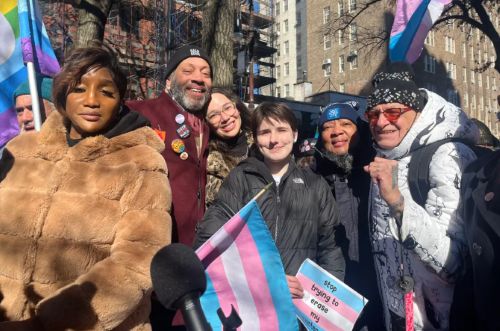
Renata Ramos feels obligated to share her experiences with young people. As a 63-year-old trans Latina, she wants young people to know that so many of their elders have already been through hard times — which means that they can make it, too, including during this moment.
“I’m not scared in the least. Because we have fought so many battles — the elders. We have fought so many battles, with medicine, with HIV, with marching on Washington, with watching our friends die,” she said. “It’s been one war after another in our community that we have always won. We have always been resilient. We have always stood strong. We have always fought for our truth, and we’re still here. They haven’t been able to erase us.”
As Ramos watches the Trump administration use the power of the federal government to target transgender Americans and erase LGBTQ+ history, she’s not afraid for herself. She’s afraid for young LGBTQ+ people, especially young trans people who now find themselves at the center of a growing political and cultural war. If someone transitioned six months ago, she said, they now have a target on their back — and little to no experience with what that feels like.
“They don’t know what it is like to be a soldier going into war, as far as social issues. So I fear for them,” she said. “Who wouldn’t be scared?”
Criss Christoff Smith has seen firsthand what that fear can look like. On January 28, at 3 a.m., he received a phone call from an LGBTQ+ person who was considering taking their own life. This was a stranger — someone who admired from afar Smith’s advocacy as a Black trans man and Jamaican immigrant. This was someone who had been considering a gender transition for years, Smith said, who was now feeling broken. He spoke with them for two hours.
“It’s been quite dark,” Smith said. The onslaught of policies targeting marginalized people and the turbocharged news cycle are working to keep Black and trans people in a constant state of fear and uncertainty, he said.
“I tell everyone in my community, you have to stop responding to those alerts and just try to go inward,” he said. “Find a space of peace and spirituality.”
To Smith, who is 64, looking inward can mean reflecting on what’s still here. Although the Trump administration is going to make daily life harder for LGBTQ+ people, he said, laws can’t be undone with the stroke of a pen on an executive order. LGBTQ+ Americans need to find whatever source of strength and peace they can find right now — and try to remove themselves from the daily fray as much as possible — while still finding ways to take action.
“This is the time when we really have to find community, where we really have to hone in on our spiritual feelings and try to talk to someone. Don’t keep it to yourself,” he said. Joining protests or lobbying days at state capitols are great ways to find community in-person, Smith said — to be around like-minded people and to not feel so alone.
“That’s the best space to be in, not home alone and in your feelings and in your mind, because we can get lost there thinking negatively. So we have to stay positive and stay with like-minded people, and have those people constantly around you to reassure you and just hold you tight in that space,” he said.
Protests against the administration’s hostile LGBTQ+ policies have been ongoing — including outside the Stonewall National Monument. In at least one way, history is already repeating itself.
The National Park Service deleted all references to transgender and queer people from its web page honoring the 1969 Stonewall uprising — the most well-known moment from LGBTQ+ history in the country — leaving references to only lesbian, gay and bisexual people. Hundreds gathered in New York City to protest. Among them was Renee Imperato, a 76-year-old trans woman and New York native.
“Protests like this are our survival,” she told The 19th over email. “The rhetoric of this administration is driving a violent onslaught against our community. The Stonewall Rebellion is not over. We are at war, and we are still fighting back. What other choice do we have?”
Jay, herself an old hand at joining protests and demonstrations, said that she’s been afraid before every one of them. She’s lost sleep the night before and feared for her safety — but she did it anyway.
“I’m afraid I’ll be beaten. I’m afraid I’ll be arrested. But if you don’t do something even though you’re afraid, they win,” she said.
Originally published by The 19th, 03.17.2025, under the terms of a Creative Commons Attribution-NonCommercial-NoDerivs 4.0 International license.
About the Author