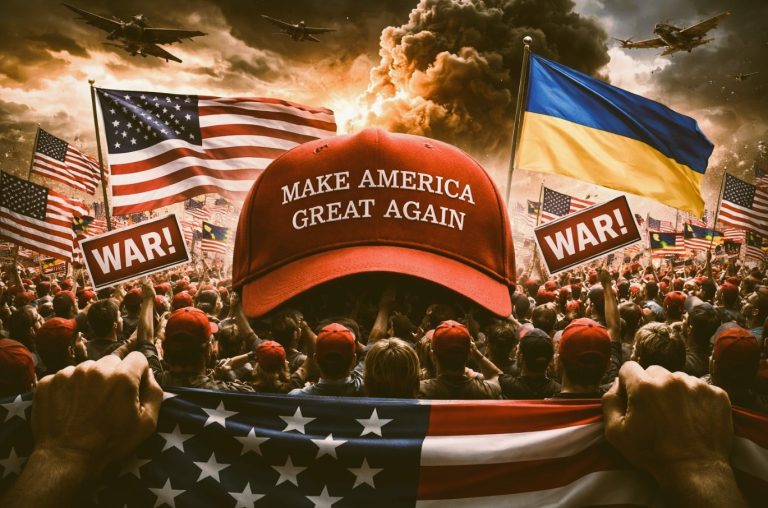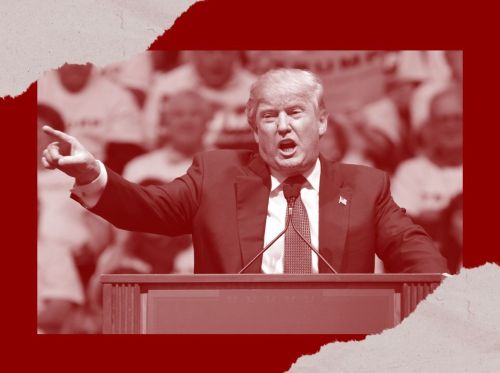
Trump has weakened pro-democracy movements and emboldened strongmen worldwide.

By Adriana Doyle
Undergraduate Research Apprentice
University of California, Berkeley
Introduction
Reflecting on the historical tides of American politics, resisting Russian influence was a bipartisan imperative, with conservatives leading the charge against Soviet expansionism during the Cold War. Today, however, that dynamic has shifted, with segments of the American right increasingly willing to align themselves with the Kremlin, a development that would have once been unthinkable. At the heart of this shift is a paradox: a nation that once championed democracy abroad is now retreating from its commitments, leaving behind a power vacuum that adversaries like Russia and China are all too eager to fill.
In the era of Trump’s second term, foreign policy has taken a dramatic turn, one that not only reshapes America’s role on the global stage but also paves the way for authoritarian leaders to consolidate power. With the suspension of foreign aid and an unprecedented expansion of executive control over independent agencies, the administration has set a precedent that autocratic regimes can exploit to justify their own undemocratic practices.
While past administrations, Republican and Democrat alike, used foreign aid as a strategic tool to promote stability and democratic values, Trump’s withdrawal of financial assistance has instead weakened pro-democracy movements and emboldened strongmen worldwide.
The Gutting of U.S. Foreign Aid
One of the most immediate consequences of this policy shift has been the suspension of U.S. foreign aid to crisis-affected people across the globe. On January 20, 2025, Trump signed an executive order initiating a 90-day suspension of foreign assistance, dismantling the United States Agency for International Development (USAID). The impact has been particularly severe in Latin America and Africa, where U.S. aid played a critical role in stabilizing fragile economies, supporting healthcare initiatives, and combating food insecurity.
In Latin America, the withdrawal has crippled programs aimed at curbing migration and fighting drug cartels. Countries like Honduras, Guatemala, and El Salvador, already struggling with political instability and poverty, now face an even greater risk of mass displacement. Without economic support and security assistance, organized crime has surged, fueling migration crises. Meanwhile, in Africa, the repercussions are equally dire. In countries like Sudan, Somalia, and Ethiopia, the cessation of U.S. funding for health initiatives has jeopardized life-saving programs, including HIV/AIDS treatment and malaria prevention efforts. The International Rescue Committee estimates that at least 2 million clients will lose access to such critical services. Over 40 stabilization centers that are currently under threat disproportionately affect mothers and malnourished children whom they serviced. The President’s Emergency Plan for AIDS Relief (PEPFAR), which once provided critical support to millions, has seen its resources dry up. In its place, foreign powers with thinly veiled authoritarian agendas under the facade of humanitarian efforts, such as China and Russia, will and are stepping in with financial incentives to expand their geopolitical influence.
The Rise of Authoritarianism, A Global Ripple Effect
Beyond the direct humanitarian fallout, the withdrawal of foreign aid has sent a dangerous message to authoritarian leaders: democratic accountability is optional. By scaling back international assistance and consolidating executive power at home, Trump has provided a blueprint for autocratic regimes to follow.
Leaders in Hungary, Turkey, and the Philippines have already seized on the moment to justify crackdowns on dissent, citing the U.S.’s own retreat from democratic norms as validation for their policies. Following in the footsteps of Trump’s fear-mongering rhetoric, other authoritarian populists are beginning to employ perceived existential threats as means to vindicate their repressive behaviors. In Hungary, Prime Minister Viktor Orbán has tightened control over independent media, while in Turkey, President Recep Tayyip Erdoğan has used the justification of “sovereignty” to purge judicial and civil institutions. Orbán, a robust ally of Trump and Putin, has also begun work to propose constitutional amendments targeting the LGBTQ+ community and dual citizens, referencing similar legislation proposed under the new Trump administration. These actions reflect a broader causation: when the United States abdicates its role as a democratic leader, it directly weakens the very global institutions designed to uphold human rights and the rule of law.
As Steven Levitsky and Lucan A.Way argue, the erosion of democratic norms in the United States could accelerate a shift toward competitive authoritarianism, where elections persist but the playing field is increasingly skewed in favor of incumbents. If these trends continue, future U.S. administrations may further dismantle institutional checks, undermining judicial independence and neutralizing political opposition through legal and extralegal means. This breakdown would not only embolden authoritarian-leaning leaders, like Orbán and Erdoğan, abroad but also diminish the credibility of American democracy as a global model, making it easier for autocrats to justify their own consolidation of power under the guise of national stability.
A Precedent That Endangers International Stability
By reshaping domestic governance structures and disengaging from international commitments, Trump’s policies risk long-term consequences that extend far beyond his presidency. America’s traditional allies in Europe and Asia have expressed concerns that the U.S. is no longer a reliable partner in defending democratic principles. Countries that once depended on U.S. backing to resist authoritarian influence are now left to navigate an increasingly unstable geopolitical landscape on their own.
A particularly striking illustration of this trend lies within the recent interactions between President Donald Trump and Ukrainian President Volodymyr Zelensky. Trump’s political ambushes and narcissistic dominance, marked by the withholding of military aid and the prioritization of personal political gains over international alliances, sent a signal to U.S. allies that their security was no longer guaranteed. Trump’s decision appealed to his isolationist base, signaling alignment with pro-Russian factions within the GOP, and undermining Biden’s foreign policy legacy. Rather than genuinely holding the EU accountable, especially given that European nations have already increased their military and financial support for Ukraine, his move contradicts bipartisan congressional efforts to sustain U.S. assistance. Therefore, this act not only undermines Ukraine’s sovereignty in its struggle against Russian aggression but also exposes the fragility of the U.S.-led international order, raising concerns among democratic nations about their future security in the face of rising authoritarianism.
The brutally anti-diplomatic interaction at the White House has had broad effects, forcing European leaders and NATO allies to reconsider their defense strategies and prospectively seek alternate alliances. In this new reality, the U.S.’s commitment to liberal democracy and collective security appears less certain, and the prospects of resisting authoritarian influence grow increasingly difficult.
Moreover, the erosion of checks and balances within the U.S. government itself serves as a warning to democratic institutions worldwide. Trump’s executive order, “Ensuring Accountability for All Agencies,” has significantly curtailed the independence of regulatory bodies like the Federal Communications Commission (FCC) and the Federal Trade Commission (FTC). This expansion of presidential authority not only weakens domestic democratic safeguards but also offers a template for foreign autocrats seeking to consolidate power under the guise of efficiency and national security.
Leaders in countries like Russia, Hungary, and Turkey, for instance, have adopted similar rhetoric, claiming the consolidation of power is necessary for national security or economic stability. In this way, domestic politics in the U.S. reverberate worldwide, influencing foreign governments to justify their own erosion of democratic institutions under the pretense of efficiency and security.
A Grim Glimpse of the Future
“With fear for our democracy, I dissent.”
Justice Sotomayor’s poignant words, following the Supreme Court’s 2024 decision on absolute immunity, echo the fundamental truths at the heart of the Trump administration’s foreign policy shift.
Such a shift marks a significant departure from America’s historical role as a defender of global democracy. By withdrawing financial assistance and reshaping governance structures, the U.S. is not just retreating from its commitments, it is setting a dangerous precedent that autocratic leaders can exploit to justify their own undemocratic practices. The long-term consequences of this shift are yet to fully materialize, but the early signs are troubling. A world in which authoritarianism is emboldened, humanitarian crises deepen, and international alliances fray is a world in which global security is at risk. As the United States turns inward, the question remains: who will step up to fill the void, and at what cost to the ideals of democracy and human rights?
Originally published by Berkeley Political Review, 04.25.2025, under the terms of a Creative Commons Attribution 4.0 International license.
About the Author