
Panelists discuss how rural America has been affected by recent tariffs and intermittent trade wars.
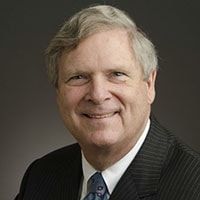
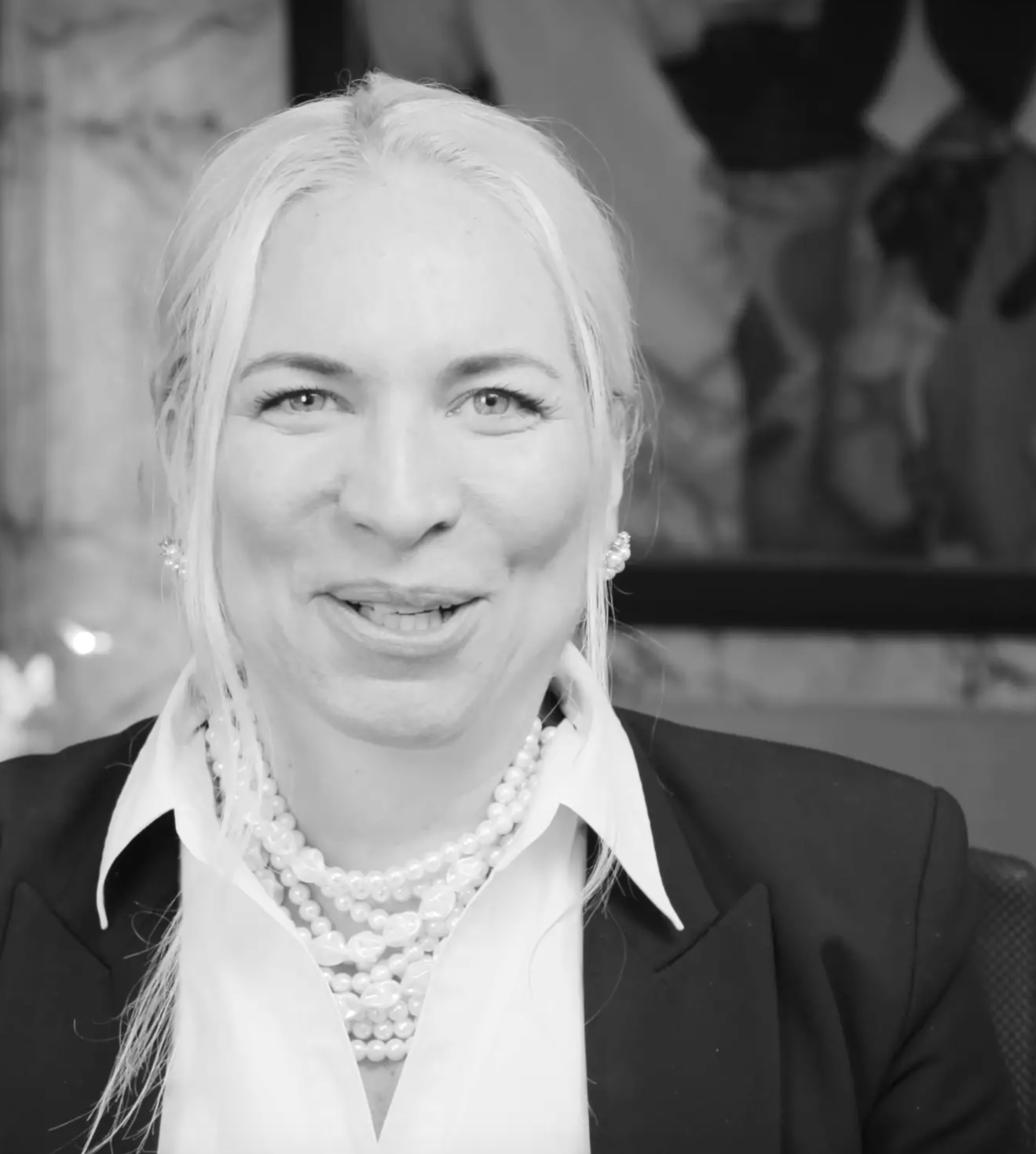


Left-to-Right: Thomas J. Vilsack, J.D., Shonda K. Warner, J.D., Dr. Jim Mintert, and Brian Kuehl, J.D.
Vilsack: President and CEO, U.S. Dairy Export Council (USDEC); Former Secretary, U.S. Department of Agriculture
Warner: Managing Partner, Chess Ag Full Harvest Partners LLC
Mintert: Professor and Economist, Department of Agricultural Economics and Director of the Center for Commercial Agriculture, Purdue University
Kuehl: Director of Federal Affairs, K-Coe ISOM; Executive Director, Farmers for Free Trade
Panelists discuss how rural America has been affected by recent tariffs and intermittent trade wars with U.S. trading partners, and the implications for global trade and the U.S. economy.
VILSACK: Well, good afternoon to everyone. Welcome to today’s Council on Foreign Relations meeting on “The Impact of Tariffs on America’s Heartland.” I’m Tom Vilsack, current president and CEO of the U.S. Dairy Export Council, and the former secretary of agriculture for the United States, and a former governor. And I’ll be presiding today.
We have four distinguished guests who will visit with me for a little while, and then we’ll turn it over to the members for your questions. Let me briefly introduce the folks who are on the stage with me today. You have, I think, more detailed information about their background in the materials that have been furnished by the Council.
I’ll just start with Shonda Warner. She is a farmer. A founding and managing partner of Chess Ag Full Harvest Partners, LLC. Providing some information and some guidance to farm families, with a real focus on rural places. And we’re pleased to have you here today. Sitting next to Shonda is Professor Jim Mintert. He is a professor and economist for the Department of Agricultural Economics and a part of the Center for Commercial Agriculture at Purdue University. And next to him is Brian Kuehl, who is the principal of K•Coe Isom. All right, so accounting and consulting services to a broad range of industries, including food and agriculture. But he also is here with a different hat on, or a second hat. He is associated with the Farmers for Free Trade. So we look forward to the opportunity to have a conversation with you today.
We had a chance to meet briefly before the lunch started today. And we’re going to start with one question, which is sort of a general question to all three panelists. And I think it’s sort of a fundamental question, the issue of tariffs. Interested in knowing the view of the panelists as to whether or not they see within this administration, or any administration, are tariffs a tactic to be used in trade discussions, or do you see this administration seeing them more as a philosophy and framework for trading policy generally?
Brian, I’ll start with you.
KUEHL: Well, thank you, Mr. Secretary. And I think it’s a great question. And maybe not an easy question to answer.
You know, within the administration I don’t think—can you hear me? Should I be pushing this in? Don’t touch the mic, OK.
So within the administration, I think, you know, administrations are not monolithic. You do have a chief executive, but then obviously there’s a lot of advisors and secretaries and trade advisors beneath them. And I think that’s true of this administration, perhaps in some respects more than others. You have some people who, I think, would be more on the free trade side of the equation, and some people who I think are inherently protectionist. And I think one of our worries is that what is framed as a negotiating tactic is often, I think, actually protectionism. That I think there’s some people who truly believe that the way to America’s strength and prosperity is by setting up trade barriers and protecting domestic industry. And we just philosophically disagree with that approach.
VILSACK: Professor, your take.
MINTERT: So I’ll answer this in the context of some survey work that we do. Every month we survey 400 farmers nationwide as part of the Purdue CME Group Ag Economy Barometer Project. And when we survey those folks, we’ve asked them several times their position and perspective on agricultural trade, particularly looking at the longer-run perspective. And when we look at the responses to that question, and we look at their open-ended comments at the end of the survey, it’s pretty clear that people are—short run, have some concerns. And longer-run, are having—showing some optimism about ag trade. But when we look at the comments, it’s pretty clear that they view this as a tactic.
Their optimism about the future of ag trade seems to originate from the fact that they think this is a tough time that we’re experiencing right now, a challenging time, but perhaps necessary in some respects, and will actually lead to an improvement in ag trade. So I think when we looked at our surveys this past summer, we bottomed out at about 49 percent of the people expecting ag trade to increase over the next five years. In the two succeeding surveys since then, that’s bumped up twice now to 66 percent that expect ag trade to grow over the next five years. So I think that’s an indication that they think this is a tactic that’s going to lead to something better down the road.
VILSACK: Shonda, you’re a farmer, do you think it’s a tactic in the administration, or what?
WARNER: I think it’s a great question. I think that—I think it could be both. And I think that there’s various people in this administration that perceive it as both. At the end of the day, my investing, betting self thinks that this thing will come off in May or June of 2020, oh surprise, surprise, and that it in fact will be a tactic.
VILSACK: Well, whether it’s a tactic or whether it’s a philosophy, it has an impact. And, Brian, many you could speak to a little bit about what Farmer for Free Trade is doing in terms of trying to evaluate, sort of holistically, the impact of these tariffs on food and agriculture in the U.S.
KUEHL: Sure. And just a little bit of background. So Farmer for Free Trade, we were incorporated last year, June or 2017, as a 501(c)(4) nonprofit. Really an umbrella organization to, I like to say, rebuild the American consensus on trade, if that’s not setting our ideals too high. The goal is really to engage U.S. agriculture and rural communities in support of trade. Twenty percent of farm revenue comes from exports. So you can’t have U.S. agriculture today without exports. And I think that some of that understanding has been lost, even among the people that benefit most from trade.
So Farmers for Free Trade is an umbrella organization supported by the American Farm Bureau, by the National Corn Growers, National Wheat Growers, National Pork Producers, U.S. Apple Association, many ag businesses and many, many individual farmers. And our job is to go out and work with ag, work with farmers, and ranchers, and ag businesses, and generate that groundswell of support that will be a counterweight against protectionism. Part of our view was that in the 2016 election, whether you were a Democrat, or a Republican, or independent, you were hearing that trade was somehow bad, that we had been taken advantage of in these trade agreements. And for farmers, we know that that’s not true. U.S.—the U.S. ran a $23 billion trade surplus last year in agriculture. So we’re exporting. There are a lot more mouths outside of the U.S. as inside the U.S., is the way we like to think about it.
I think what we’re hearing on the ground, we’ve been doing trade events around the U.S. We’ve been holding townhall events. We’ve been going to ag conventions. I think we’ve done, oh boy, sixty events in the last year. And we’ve talked to, you know, hundreds of thousands of farmers over that period of time. And I think what we’re hearing is that on the one hand farmers want to stay with President Trump. A lot of them supported Trump. So you sort of say they’re going to give him the benefit of the doubt. But I think the trade war is biting. I think it’s having an impact. And even for farmers that we talk with and who are members of ours who support the president, that patience is beginning to wear thin. And it’s wearing thin because farm bankruptcies are going up, farmers are getting squeezed. And these are real numbers, real dollars, and real families. So I think, God forbid it lasts till 2020, because there’s a lot of farmers in America who will not make it that long.
VILSACK: Brian, is the—Farmers for Free Trade, have they attempted to quantify in any way the level of impact on farm income, on sales?
KUEHL: Well, we’ve done a number of things. So we’ve engaged a company called The Trade Partnership to look at tariff impacts on exports and look at where exports have fallen. So we have—we do have a data set. In terms of individual farmers, I think one thing that’s important to remember, again, is agriculture, like administrations, is not monolithic. And you have different commodities and different types of farmers. So in the Midwest farmers have been hit by soybean tariffs very hard. Soybean exports to China are down 94 percent for the year. You know, China has just this week purchased some soybeans, but it’s really a drop in the bucket compared to the, I think, 13.2 billion ton—million-ton fall-off this year. Slightly different situation if you go to California and you look at almond growers, or walnut growers, or apple growers. You know, Washington cherries, exports are down 50 percent for the year. So some farmers are getting hit a lot harder than others, but I think wherever you look in agriculture people are getting squeezed.
VILSACK: Shonda, you’re a nut farmer.
WARNER: Yes. And a soybean farmer.
VILSACK: And so how has it impacted your individual business, or the markets that you care about?
WARNER: In a thousand very negative and difficult ways. Our soybean prices—soybeans were trading on the board of trade in May, right before the tariffs were announced, at $10.25. They have—subsequently, soon after they—well, when it really became clear that this was going to happen—fell into the low $8 range. And then there’s something called a basis. And that’s the price that gets paid in a local community to us, the farmers, versus the board of trade. In places like Mississippi, that basis is usually flat at harvest. It’s widened out to eighty cents. So we’re down another 30, 40, 50 percent. It’s devastating.
We grow hazelnuts in Oregon. Last year, ten-year low average, $1.03 a pound. This year, sixty-two cents a pound, thank you very much. So if we think about what that’s going to do to rural co-ops, farming families, it’s devasting. And the hope that I think is seen in the—in this wonderful new survey that I’ve just heard about and I’m going to follow now—that hope, we have to have it. Like, we have to hang onto something. It’s awful out there right now. I think back in the ’80s, around at that time, and, you know, 67 percent of American farmers got second jobs. That’s being talked about today in the street. And all the rural communities that have been so devastated for so long are—it’s even worse. And so very problematic.
VILSACK: You know, the dairy industry, professor, we actually have done a survey and a study of what the economic impact potentially could be of these tariffs. And just on the China side, we’ve already seen an impact of about a billion—potentially a billion dollars of lost opportunity in the dairy industry. And in China if this extends for a period of several years, it could be as high as $12 billion of lost revenue as a result, just in the dairy sector. What—at Purdue, I’m sure you’re crunching numbers, I’m sure you’re looking at studies. What are you seeing in terms of what the potential long-term impact of these tariffs could be, if in fact they linger for an extended period of time?
MINTERT: So there’s really a couple of impacts that you really have to think about. And when you talk to farmers individually, I think they’re widely concerned about this. If you look at it over a long period of time, go back, for example, to 1970s, the U.S. was the big dog in soybean production and soybean export market share. In fact, if you go back to the mid-1970s, we were virtually 100 percent of soybean exports worldwide. That market share has declined sharply over the ensuring roughly four decades now. And I think the big concern is this creates an additional incentive to expand acreage and production in South America, a formidable competitor already, but gives them an additional incentive to expand acreage and to develop deeper relationships, particularly with the Chinese. And that it will be very difficult for us to regain that market share going forward.
So I think when I talk to farmers, especially people that are in the, for example, the soybean association, some of the leaders, they are very cognizant of that. And that’s probably the biggest single concern. It’s like, OK, there’s a short-run problem with respect to the prices. And Shonda kind of described that. Income here in 2018 and potentially income in 2019 especially. Because I think for farmers in the Midwest, one of the concerns is ’19 being worse than ’18, for two reasons. One, there was a significant amount of pricing that was done before the end of May, substantially higher prices. We don’t have that opportunity for 2019, at least as it stands today. And then secondly, yields in 2018 were extraordinarily high in many locations in the corn belt. So that’s helped offset some of this a little bit here in ’18. But in ’19, unless something changes, we don’t have those opportunities.
VILSACK: Have you seen in your studies any impact on the equity position? At some point in time several years ago when I was secretary we looked at a debt-to-asset ratio that was very healthy in the ag sector. What are we seeing today?
MINTERT: So if you look at it sector-wide, it still looks OK. But debt-to-asset ratio has been climbing, but not to the levels that we saw in the 1980s. But when you start looking at individual operations, that’s when you start to see a disparity. And I had a chance to visit with some ag lenders recently. And they’ve got some customers they’re very worried about, right? There’s some big challenges. So that’s a problem going forward. When we looked at our surveys, one of the questions we ask people is, you know, what’s happened to your equity position on your farm relative to twelve months ago? And what do you think’s going to happen, looking ahead twelve months? And they’re telling us that their equity positions have gotten worse of the last year, and they expect it to get worse again. So I think there’s a widespread understanding out there that we’re in a challenging position. In the short-run it’s not likely to get better. But as Shonda was talking earlier, they retain some of this optimism about the future of ag trade. And whether or not that’s going to be realized, I think is an open question.
VILSACK: Well, speaking of tariffs, we have tariffs closer to home in terms of our friends in Mexico and Canada. Brian, was the expectation that you had, and that the folks that you work with had, that once the trade agreement was renegotiated, NAFTA was renegotiated, that that would lead to an end to the retaliatory tariffs that the two countries had assessed against American agriculture?
KUEHL: Yeah, there were certainly conversations about that. And I think this is an important point for people to understand if you don’t follow the trade issues that closely, that there are layers upon layers of tariffs at this point. Had the U.S. just taken on China, that would have been a big fight. But the U.S. didn’t just take on China. We took on Canada. We took on Mexico. We took on the EU. We took on India. We took on Turkey. I mean, there were tariffs flying everywhere. Last month was the highest level of tariff collection in the United States ever. Larger than the Smoot-Hawley tariff period. Now, obviously, trade is much bigger, so it’s partially a volume question. But this is a global trade war unlike any we’ve ever seen.
And so your point about China and Mexico tariffs, the U.S. put what are called 232 steel and aluminum tariffs on in-bound steel and aluminum from China and Mexico, as well as on all other countries, with some exceptions. And at the time it went on, there was discussion among some folks at the U.S. Department of Agriculture that this is a tactic to get us a better NAFTA agreement, that this is going to squeeze Canada and Mexico and bring them to the table, and we’ll get a better agreement. When we got the USMCA, which is sort of NAFTA 2.0 or NAFTA 1.2, depending on your perspective—(laughter)—
Q: One-point-one.
KUEHL: One-point-one. Some people have said it’s NAFTA Windows, which makes me really nervous. (Laughter.) But the point is, the steel and aluminum tariffs didn’t go away. They stayed in place. And I think there is some expectation they will go away, that the conversations are underway with Canada and Mexico to try to get quotas as a replacement for the tariffs, and that this will resolve in some fashion. You know, I think it’s clear to me that the USMCA, the U.S. Canada Mexico Trade Agreement, will not pass Congress with the 232 steel and aluminum tariffs in place. I think it’s just a non-starter.
And so ultimately I think this will resolve, but remember the longer they’re in place, the more people are getting squeezed. Apple farmers, subject to a tariff. Cheese exports to Mexico. Pork exports to Mexico. So it’s not that we can just say, well, let’s—we’ll get rid of it in six months. There are impacts happening today. Processed food going to Canada is subject to tariffs. So it’s food and agriculture. It’s not just the production side. It’s all the way up the supply chain. So these are—these are things where time has a real impact.
VILSACK: So I’m going to put you all in a hypothetical situation. I understand that the president’s looking for a chief of staff. (Laughter.) And let’s hypothetically assume that all of you have been—are interviewing for that job. What do you tell President Trump as it relates to the ratification of the USMCA? What do you tell him in terms of how best to ensure the ratification? I think, Brian, you’ve already mentioned the tariffs being removed. What other steps need to be taken in order to ensure the ratification of this agreement?
KUEHL: Well, I think one of the big issues to keep an eye on in terms of tactics on the Hill and the USMCA is the that the president has suggested he will notice the withdrawal of NAFTA, ostensibly as a way of increasing leverage on Congress. Saying: Look, if you don’t put in place USMCA then NAFTA’s going to go away, and we won’t have any trade agreement. We think that’s a really bad idea. Number one, NAFTA’s been critical to U.S. agriculture. The thought of a country without NAFTA, without this trade block of Canada and Mexico, I mean, they’re our number two and number three largest trading partners, after China. So you have a trade war with our three largest trading partners right now, which isn’t good for ag. So we think it’s not worth the risk. You know, you’re playing poker with someone else’s money at that point. And that’s not good.
We also don’t think it gets you votes, that ultimately when you start to think about tactics on the Hill, there’s probably a lot of Democrats sitting there going, wait a minute, let me get this straight, if I vote against your trade agreement you’ll pull the trigger to get us out of NAFTA, which maybe some of my constituents don’t like anyway. The thing will collapse, and you’ll get blamed for the collapse of NAFTA, and the recession that undoubtably will follow. OK, what’s not to love? I’ll vote against this. You get the blame. So I think it’s a dangerous game of chicken. And I think ultimately what needs to happen is we need to rebuild the center in America, you know, not just on trade, everywhere.
But specifically on trade, we’re reaching out to those newly elected members of Congress—be it Republican and Democrat—who are in the center, who come from ag states saying: Look, trade is so critical to our industry. We need you on USMCA. We need you to be pushing for new agreements with Japan, with the EU, with the U.K. This needs to be part of what we’re pushing for long term.
VILSACK: OK. You made a very powerful case to be the chief of staff. Professor—(laughter)—
KUEHL: I would never be hired. Let’s be clear.
VILSACK: Well, you never know. You might get a call. (Laughter.)
Professor, what would you say?
MINTERT: Well, I don’t think I’d get very far in the interview process. (Laughter.)
So I’d go back to something that Brian said at the outset. I mean, when you go back to the 2016 election we had this environment where candidates on both sides of the aisle, not just the president but other candidates as well, were very negative on trade. As an economist, I look at what’s taken place with respect to the growth in income and wealth, not just in the U.S. but around the world since World War II, and a tremendous amount of that is associated and derived from the increase in trade. Trade has been very beneficial. And when you think about NAFTA in particular, I think NAFTA has been beneficial both for the U.S. and for the partners. Both Mexico and Canada benefitted as well, which is what you’d expect from trade theory.
Nd then I guess the last point that I would make is, you know, if you’re really concerned about immigration and wanting to stop immigration coming from across the border from Mexico and even Central America, the best thing you can do there is have a strong Mexican economy, because the reason people want to leave those countries is because they can’t support their families. Employment opportunities that increase in Mexico is actually good for us, right? So I don’t that’d get too well-received by the President, but nevertheless, I think it’s an argument he need to hear.
VILSACK: OK, Shonda, you got a shot here. He hasn’t done very well.
WARNER: I am afraid that I have to politely decline the invitation for an interview. (Laughter.) But I think I would—I think I would emphasize two things, whether it’s chief of staff or whether it’s Ambassador Lighthizer. I would—I think that a velvet gloves sometimes is a helpful thing. And that cultures in these various countries are such—I spent six years in Asia. Face is a very important thing in Asia. This is Mexico, not dissimilar. And perhaps a little more of that would be effective because of all the reasons that the gentlemen have been stating. I think that the second thing I would like to tell both the Ambassador and the President about is unintended consequences.
And so we have a dollar that’s incredibly strong right now. It’s not good for further trade down the road. Yes, we want to shift the engine of growth from these countries into the United States, that’s perception, make America great again. But I think that the dollar and the interest rates are—could ultimately be destabilizing the world’s financial, right, systems. That is enormous if you look at it on a global basis. And so there’s that. I was thinking about—earlier today about the—I don’t know if the ships have docked in Argentina yet, full of our soybeans that will be made into meal and sold to the Chinese. I mean, if I want to help anybody I’d like to help Argentina. They have some problems. But, no, I don’t want to do that. That’s not free trade to me. And so I would probably emphasize those two issues if I could.
VILSACK: So, quick, will USMCA be ratified in 2019?
KUEHL: Yes.
MINTERT: Probably. (Laughter.)
WARNER: Probably.
VILSACK: OK. Why do you—why do the two of you say probably as opposed to a confident yet?
KUEHL: That wasn’t so confident, but there was—it was more definitive. (Laughter.)
WARNER: Well, I think that we live in very, very volatile political times globally. And so I don’t—my confidence of anything that I used to be confident about has dropped dramatically in the last several years.
VILSACK: With reference to our negotiation with China, don’t we have the upper hand? I mean after all, they—we buy a lot more of their stuff than they buy of ours. And can’t we just continue to ratchet up these tariffs until finally they have to capitulate? No?
WARNER: No.
VILSACK: It’s not that easy?
MINTERT: American consumers might want to rebel at some point, right? And the impact of these tariffs haven’t been fully felt at the consumer level, but over time they will be.
WARNER: If we want to change, we’re at—if you look at food prices relative to income for the average American over the last fifty years, we’re at an all-time low. I mean, if—you know, China has a very, very different system. They have a very different policy view. And they have a very long-term and patient outlook. And so we don’t. And I worry that actually the ultimate loser here is going to be us with interest rates, and that food prices will go up and that will begin—again, unintended consequences in this country.
KUEHL: Well, and I think it also—the question fails to grasp the interrelationship between the two countries. I mean, it’s sort of that adage of you’ve got the other guy by the throat, and the harder you squeeze the more you choke. You know, there’s this sense that we’re winning because China’s stock market is going down. And then we’re surprised when our stock market follows. I mean, these are all intertwined at this point. And I don’t see that you blow up one side of the world and say we’re going to somehow be immune from that impact. I think it’s going to drag both countries down.
And, you know, they say the winner in a trade war is the person who doesn’t participate. You know, the other countries will also be impacted, but to the extent that they’re on the sidelines—you know, Brazil’s selling more soybeans—they’re happy with what’s happening. This is a—this is Christmas come early in Brazil.
VILSACK: Would our position, with reference to China, have been stronger if we had gone with a number of other nations, with the EU, with Japan, perhaps South Korea, and gone to China asking for these changes in the way that they do business?
KUEHL: Absolutely. I mean, I think in that—I think we should be clear about a couple things. Are there behavioral issues that have to be addressed with China? Absolutely. And should we address them? We absolutely should. I think the question is, number one, how do you do that? Do you do it by—with the blunt force of a tariff? I think our argument would be no. That you can use WTO structures, you can use coalitions, you can increase pressure in a lot of ways on other countries. And, number two, you shouldn’t start a trade war with everyone else and then turn your attention to China. That was just a political miscalculation. Let’s do one thing at a time and try to get it right.
VILSACK: Well, none of you got hired as chief of staff. (Laughter.)
WARNER: Oh, shoot.
MINTERT: We’re all breathing a sigh of relief about that, actually.
VILSACK: But you so impressed the president that he’s calling you now for advice as to where he ought to engage in bilateral negotiations. So what advice do you give the president in terms of where the administration and the country should be focused on, the best outcome for a bilateral trade relationship?
KUEHL: Where would you like to start? I don’t want to steal everyone else’s thunder, because I suspect we’ll say similar things.
MINTERT: We might be on the same page, yeah.
KUEHL: I mean, I think there’s a couple points to it. One, which we did discuss earlier, is bilateral versus multilateral trade agreements. And the notion that the U.S. will get a better deal if we do bilateral agreements misses a couple points. One, the size of our economy means we have the leverage in these multilateral trade agreements. It’s not as though they’re taking advantage of us somehow. Number two, multilateral trade agreements are a good thing because they harmonize standards across multiple countries. You don’t want to have a different labeling standard in Japan, and Thailand, and Vietnam. You want to have one standard, so it makes it easier to export. So the idea that we’re going to do a whole series of bilaterals is somewhat silly on that point.
Number three, there’s just resource scarcity. I mean, the U.S. trade rep does not have the bandwidth to do sixteen bilaterals at the same time. So when we pulled out of the Trans-Pacific Partnership, which was eleven other countries in the Asian—the Pacific Rim, what we’ve said is we’re going to pick up—pick these off one at a time. Well, that’s not going to happen in the next three years. So that’s one concern. I think the other concern is from an ag standpoint, just thinking about ag trade, it’s not just where would we like to be—we’d love to be more in Japan, we’d love to be more in Europe—but can we get there through bilaterals at all? Is ag trade going to be on the plate? And I’m not sure it is in a lot of instances.
VILSACK: Well, I just want you to know the call ended when you said something was silly. That’s probably not going to sell very well. (Laughter.)
KUEHL: Yes, sorry. Sorry.
VILSACK: Quickly, we have, like, thirty seconds before we have to turn it over to the members here. Where would you like the administration to focus its attention?
MINTERT: Well, I agree multilateral would be the preferred approach. And the reason is because I think that people don’t fully understand where the gains from trade come from. The gains from trade occur because you redeploy resources more effectively and more efficiently. And that’s much easier to do in a multi-country, multilateral environment than it is on a bilateral environment. Bilaterally, you don’t necessarily gain as much, even if you have a lot of those agreements, as you do from a multilateral agreement that allows people to redeploy resources in the most effective, more efficient manner possible. And that’s really the success story of the WTO.
WARNER: Can I add one more tiny point and cheat?
VILSACK: Sure.
WARNER: The other thing is, think about poorer, rural America, and the Midwest, right? We are single—primarily, single-family farmers, small communities, not much voice. And multilateralism is very helpful to us. It’s so hard, back to this bilateral agreement, to follow eighteen different sets of regulation. Our regulatory burden is huge already. And so I would beg to please consider multilateral trade agreements.
VILSACK: OK. At this point we’re going to turn it over to the members who are here today to join in a conversation. There are a couple of caveats. A reminder that this meeting is on the record. We’d ask that you wait for the microphone to ask your question, make sure that you speak directly into it, appreciate it if you would stand and state your name and affiliation, and if at all possible we would like to actually have a question, not necessarily a comment. And we’re going to kind of limit it to one question per member.
So with that, we’ll start right here in the front, and then we’ll move around the room.
Q: Thank you. Is that on? Hello? I think you can hear me. Oh, there we go. All right. I’m sorry. Thank you very much. My name is Jennifer Hillman from Georgetown Law. Fantastic panel. Thank you very much.
I wondered if you could comment on the response and the effectiveness of the $12 billion in payments to farmers that were supposed to have been made, in essence, to compensate for all of the difficulties that have occurred in trade. How is it going? What’s the perception out there about the relative tradeoff of this potential long-term loss of your market share in exchange for getting increased subsidies directly from the government?
KUEHL: Do you want to start?
MINTERT: I can start. We ask that question.
KUEHL: Good.
MINTERT: So in our surveys we did ask farmers that question after the announcement was made. And they did tell us that they were at least somewhat relieved with respect to their concerns about farm income as a result of the announcement of the subsidy program, but not completely, right? That did not completely resolve things. But they did view that as a—as a step in the right direction. And if you could see a bump in their sentiment index as well. So it did have some positive impact out there.
VILSACK: I’m not sure the reality of the checks—
WARNER: They’re there.
VILSACK: They’re there?
WARNER: I have half my $1.60 on soybeans and nothing on hazelnuts yet.
VILSACK: That’s the reality in terms of the size of the check. It isn’t necessarily going to save the farm. I think it does send a positive, hopeful signal. I think one of the opportunities that the administration has is with the Export Assistance Program that they also announced as part of that up to $12 billion commitment. This, I think, gives commodity groups and those who are involved in promoting trade generally the opportunity to be particularly innovative. And I hope is that the administration allows that innovation and flexibility. Sometimes our trade promotion programs are fairly narrowly defined in terms of what we can and cannot do with the resources. And that would be the hope.
KUEHL: I think one other—actually, two other quick points. One is, again, ag is not monolithic. There’s a lot of commodities within ag that did not get payments. So fruit, vegetables, all of which have been hit, are not getting payments. They’re getting market purchases. The government’s stepping in and saying: We’re going to buy a bunch of fruit and put it in school lunches. But that’s not the same thing as giving a check to a grower. Second, the payments were split into two halves, the idea being we’d do one payment and see how things went. There’s now a question just this week, since China’s started buying soybeans, will the government do the second-half payment or are they going to say, well, now the trade war is relieved?
WARNER: No one knows.
KUEHL: Yeah. So there’s a lot of uncertainty around it.
VILSACK: I feel compelled to call on the former secretary of agriculture and former member of Congress from Kansas, Secretary Glickman.
Q: I just—I appreciated the smartest secretary of agriculture in the history of the United States. (Laughter.) So this is more of a political question. And that is this: After the Carter grain embargo, there was an absolute collapse of agricultural and rural support for the president and for Democrats. And in some sense, that’s lasted to the current time. And, you know, I’m looking at you, Shonda, as much as anybody else, but when I looked at the results of this last election, and you looked at rural and farm counties all over the county—notwithstanding the impact on soybean prices—and they went overwhelmingly for the president. And in fact, the losses would have been much more catastrophic in the House if it hadn’t been for those rural counties. So I mean, I’m glad to see some optimism in terms of the future. And this question is not meant to be partisan—although you can take it any way you want to. But I’m just curious about, is there a disconnect between how farmers vote and what their economic plight is all about? Or is it much deeper than that? Is it cultural? Is it something that can never be changed, you know?
WARNER: Well, oh, we have to coffee after this. But I think that there actually isn’t a disconnect. They—a lot of—the administration won by hitting a lot of buttons that they care very much about. All the books that everybody maybe has read recently—Flyover Country and Hillbilly Elegy, and everything—rural America is just barely on the radar screen of any party in this country. People feel very, very disenfranchised, not cared about in rural communities all over the United States. And I think that they’re willing to give this administration a small amount of time to use this tactic—and that is what they see it is, a tactic—to get this right.
It’s why my private betting opinion says this thing’s going to be solved by March of 2020. Or, again, this is my—they’re all Shonda Warner opinion—but the administration will not win. So ultimately these things go together. And everyone’s heart will be broken, and everybody will be left wondering, you know, what’s happening in the world. But I think right now there’s time on their side, and they think that this will be OK in a short period of time. And they just want to—they’re willing to take one for the team.
MINTERT: So I’ll go back just briefly to our survey. So we started our survey in 2015. So for those of you that don’t know, we survey 400 farmers nationwide, going forward on the major commodities—so the producers of the major commodities. After the 2016 election, like most sentiment indexes in the U.S., our sentiment index skyrocketed for three months in a row. It peaked in January of ’17. And we were mystified, right? We were looking at why is this? And so we started asking questions to probe further about, well, why are you optimistic?
And really the three things that we asked questions that they responded that I think help explain what was going on is we asked a question about: Do you expect a more favorable or less favorable environmental or regulatory environment in the next five years than what we’ve had recently? And they overwhelmingly came back and said: Yeah, we expect that regulatory environment to be more favorable to agriculture than what we’d experienced in the past. They said that they expect to see a more favorable tax policy and they actually said, this is—keep in mind, this is bad in early ’17—they said that they expected to see a more favorable agricultural trade environment. And think about the rhetoric in the fall of ’16. It was anti-trade, so to speak. It was a lot of the things talking about, you know, how we were going to win, so to speak. And people were responding favorably to that rhetoric. And I think we’ve retained some of that, right, even today. So those are the three things that we were able to identify in our surveys.
VILSACK: Until Democrats know how to—until they show up in rural areas, until they figure out how to speak about rural folks, and to rural folks, and until they have a vision of a partnership of rebuilding and revitalizing the rural economy, those numbers are not going to change, in my view.
Yes.
Q: I’m Paula Stern, and my consulting group.
Thank you so much. American heartland, how is it being impacted by the tariffs on steel, aluminum, and other products that might go into the tractors or the equipment, or just the cost of farming? Have you put some numbers on that with regard to the agricultural community?
KUEHL: Great question. Really great question. And I think points up some points that we missed in this discussion so far. So just let me take one quick step back. So Farmers for Free Trade, as I mentioned, 501(c)(4), umbrella organization of farmers. We set up a sister ad-hoc coalition called Americans for Free Trade, not to imply that farmers aren’t Americans, but we needed a bigger umbrella. So Americans for Free Trade includes the National Retail Federation, the American Petroleum Institute. It includes National Fisheries Institute. So it’s a big coalition, sort of everyone outside of that. Those coalitions are working together on a common campaign called Tariffs Hurt the Heartland.
And part of what we’re doing with Tariffs Hurt the Heartland is we’re going out holding townhall events. We’re talking factory owners. We’re talking with retailers, restaurant owners. And what we’re finding across rural America, across the heartland, is pain. That there are—and I think it’s really important for—to make this point. It’s easy to talk about numbers in the aggregate. It’s easy to talk about, you know, a survey, or what’s the sentiment overall. What you need to do is look at individual stories. And there are stories of pain happening right now. There are factories that have been shut down. There are people who have been laid off. There are farmers who have gone out of business. So I think it’s important to drill down to that level of discussion and recognize it’s not just ag.
I think it’s also important to recognize the multifaceted nature of this, that farmers are being squeezed by low commodity prices. They’re also being squeezed by higher input costs, which is what you’re getting to. I mean, steel and aluminum—John Deere and Case raised their cost of tractors, I think it was, 7.5 percent this year, because steel prices have gone up. Grain bins, which we need more grain bins than ever because we have a surplus of soybeans, the cost to build grain bins has gone up because steel prices have gone up. Fertilizer inputs, herbicides, pesticides, a lot of those base chemicals come from China and are formulated in the U.S. into products that farmers buy. We’re expecting to see those prices go up in the first quarter of 2019.
WARNER: Both ways. We’re getting squeezed both ways. And we’ve already been squeezed. I think it’s really important just to add to this one little moment, and that is that 2012, commodity prices in the United States peaked. And we’re 60 percent off those in May—or, probably at that point—45 percent off those in May of this year, going into this tariff situation. So farmers across America have had five years of very difficult times. And now this. And you know, I think we sort of globally were beginning to feel a little better about things and, boom, further down.
VILSACK: You know, to your point, and I think this is important for people to realize, there is a distinction in terms of farmers. When we talk about farmers, the definition of farmer by USDA standards is anyone who sells more than $1,000 worth of items. So there are, by that definition, a little over two million farmers. And the best year we ever had for farm income, which was 2014, the best year. Those commodity prices were—
WARNER: Coming off of ’12, yeah.
VILSACK: —sort of when through the system. 2014, highest income ever. Roughly two million farmers of the 2.2 (million) either didn’t make money or netted $10,000. In the best year ever, which is why all of them are working off the farm to keep the farm. The 200,000 of the larger operators were doing OK. They’re doing OK. But if you’re looking at the farmers generally, and particularly those in the heartland, you got a lot of those small operations, a lot of those small farmers. This is a pretty difficult time for them. And these are the folks who were on the bubble in terms of equity. These are the folks that are potentially looking at foreclosure or getting out of the business. And the thing everyone needs to understand about farmers is if I ask all of you what you do for a living, you would tell me, and I would know what you do, but it wouldn’t necessarily tell me who you are. When you ask a farmer, what do you do, and he says, I’m a farmer, that tells you something about not only what he does, or she does, but who they are. And it’s just so connected to their identity. So it’s really devastating emotionally.
WARNER: I think Secretary Vilsack, as well, I would say that I—we farm about 60,000 acres around the U.S. And we’re landlords on some of that and farmers on other of it. But a lot of our friends who are in the 200,000—right, the 200,000 largest farmers in the U.S., have significant debt problems coming from all over the place. That if things don’t change in the next year, 2019 is going to make 2013 and ’14, you know, I mean, there will be no memory of that. And so even that top echelon of extremely successful farmers in America are really, I think, feeling pain.
VILSACK: Well, there’s no question about that.
In the back—way in the back.
Q: Teresa Barger from Cartica Management.
This is really for the professor. I’m quite interested that farmers say in a five-year time frame this tactic might turn out to be strategically positive. And I’m wondering if you can take me through that thinking, since obviously there’ll be fewer people in China in five years from now. Are they thinking they’re going to grow market share from Argentina and Brazil? Are they thinking they’re going to increase U.S. capacity? Are they thinking prices going up? What are the mechanisms that make this successful five years from now? And maybe Shonda also has a view on that. But I was fascinated about what’s the mechanism between here and there.
MINTERT: It’s a great question. We haven’t actually posed that one to farmers directly. I would say the conversations that I have with people, though, focus mostly on market share. The perspective that as incomes grow they’ll see an increase in total volume, and then perhaps the U.S. maybe gaining a larger market share. Probably would be two things—if you talk to anyone individually, those would be the things they’d focus on.
WARNER: I would agree. But I would also add, I mean, no matter who you are in the world, if you’re squeezed that hard, you have to hang onto hope. And some of the highest suicide rates in the U.S. are in rural America. And it’s—you know, I think part of it comes from it’s got—it’s simply got to get better. It has to be better. And without thinking, oh, well, we’re going to increase this or that or take market share away. But I think that it’s a closely or widely held though that incomes are going to increase globally. And so, you know, I was thinking about the juxtaposition earlier today as well. Cars sales in China, as of November, year on year, were down 54 percent. And so the debt burden in that country—you know, the tariffs are impacting the Chinese. And yet, we think that they’re going to have more money to spend on beef. I mean, it gets a big—you know? And it’s a difficult and complex subject.
VILSACK: There are a couple of places in the world where we’re going to see significant population increases and middle classes expanding and an urbanization of the population, all of which leads to an opportunity for American food and agriculture industry. After all, we represent, here in the U.S., 5 percent of the world’s consumers. That means 95 percent of the world’s consumers live outside the U.S. That percentage is going to—our percentage is going to decrease over time. So we’re going to be doing business eventually with 97 percent of the world’s consumers. And Southeast Asia is a particularly opportunistic place to see that growth. So that may be one of the reasons why people have a more hopeful long-term view.
MINTERT: I think, related to that, you know, if you—one of the things that I think the industry is pretty well-aware of at this point is the dramatic change we’ve seen in meat exports over the last roughly thirty years. In the mid—as recently as the mid-1980s, we were still a net meat importer. As of ’17, I think, we were exporting in total across all the meats about 15 percent of U.S. production on a net basis. So people are aware of that long-term growth. And much of that was driving by rising incomes in those importing countries. And people are cognizant of that.
VILSACK: Dairy industry is having its best year ever in exports, which is pretty interesting.
Yes, sir.
Q: Hi. I’m Francisco Martin Rey (sp). I work at the Boston Consulting Group.
I think we all agree on the policy in terms of the damage that’s being done with the tariffs. What’s interesting, though, is that even in private conversations we have with, you know, business owners, private equity professionals—(inaudible)—professionals, the—almost the fight against China is enormously popular, where they say we feel like they’ve been stealing our IP—you saw the half a billion dollar—you know, half a billion user hack in Marriott recently—for ten years or more. Every time you want to go into business there, they’re going to steal your IP, they’re going to take your ideas away, so on, and so forth. So at what point do you—or what are some of the indices that you’re looking at to see a tipping point where kind of the fight against China, it is no longer as popular?
MINTERT: That’s a great question. You know, I think some of the survey work we do would pick that up. And we certainly, I think—what you summarized there is probably almost exactly what we’re picking up on in our current surveys, it’s that attitude, along with the idea that this will simply work for agriculture. Yeah, when will people give up? I don’t think I’ve got a firm grip on that. That would be something we’re going to monitor going forward, but at some point, you know, you would expect that people would say, hey, you’ve finally gotten into my back pocket, right? And we haven’t quite reached that with a lot of people.
WARNER: I think it’s the how, right? And so I think that—like, I can’t, what indices? There is no indices to look at to see when that might go away. I can’t imagine that that goes away in the next twenty years, actually, because they’re—you know, there’s a small pie and everyone’s grasping for pieces of it, right? But perhaps what will change is how do we—how do we take care of our own people? How do we win? How do we increase our incomes? Right, that—the perception of how we do that is maybe what’s going to change.
VILSACK: The interest rates—you mentioned interest rates—
WARNER: Yes.
VILSACK: That’s an issue. If interest rates start going up, some will attribute that to the Chinese issue and Chinese discussion. If we—if we see a lack of growth or if we move into recession, that may also encourage people to think differently about the relationship we have with China. But I think that the concerns that you’ve expressed in your question are absolutely correct. And I think people are—don’t think we’re getting a fair shake with China. And it gets back to Brian’s point, that there is not much disagreement about whether or not we should take action. It’s a question, as Shonda said, how. How do you do it? Do you do it alone or do you do it in a coalition of nations? Yes, sir.
KUEHL: And I would say, we are—this isn’t a statistical survey—but as we are out at farm events, you can feel the frustration rising, and you can feel—you can feel the rhetoric changing. You know, four months ago, or six months ago, you’d hear, well, short-term pain for long-term gain, and it’s worth the fight. Increasingly, you hear people saying: Well, is there a strategy? Like, I just want to know there’s a strategy, because I’m really being hurt. And so I think, you know, the good news is a lot of the soybeans had been pre-priced going into this trade war. You know, 40 percent or so had been pre-sold, depending on the farmer. That’s not true for 2019. And I think—I think you could see—if this continues, you could see that dynamic flip pretty quickly.
VILSACK: This gentleman right here.
Q: Hello. Excellent panel. I’m Jim Kolbe with the German Marshall Fund. Also very active years ago as a member of Congress on the passage of NAFTA.
And my question is a political one, taking off your ag hats for a second, putting back on your political one. You have all—the panel is unanimous in saying NAFTA would pass, or probably pass, or would pass—NAFTA 2.0, or whatever we want to call it, USMCA. And I’m curious as to why, given the circumstances today, that Trump’s anti-trade and pro-tariff stuff has peeled off a lot of Republicans to become anti-trade that weren’t before. And I can’t see much incentive that the Democrats have to vote for this thing. How do you think—what is the coalition? What is it going to come from that’s going to get this thing passed in ’19—in 2019?
KUEHL: That’s—Congressman that’s a really great question. And thank you for your support of NAFTA when it was passed originally. To me—look, and this should have been said earlier—farmers are inherently optimistic. You kind of have to be. I mean, you’re in a business where your margins are small, weather can destroy you, you know, you’re price-takers not price makers. I mean, ag is a difficult business to begin with. So you kind of have to approach it from a bit of an optimistic standpoint that things will get better, and I’m going to—next year’s going to be a good year. I tend to be inherently optimistic too, perhaps as a reason from working in ag.
Farmers for Free Trade, we’re going to put a lot of resources into helping to get USMCA passed. I say that with a big caveat. We want the 232 tariffs gone. We don’t want to see a withdrawal from NAFTA. So there are some big dynamics out there. But we think the votes are going to be there. Ultimately NAFTA benefits America. And that if we have a ground game and we’re in the right districts, and we’re talking with the swing votes, we think the votes will be there. It’ll be a close vote. It’s not going to be overwhelming. But we think we can pull it off.
VILSACK: Anybody else want to add to that?
WARNER: I think—I hope, respectfully, that you’re wrong about the first part of what you said, and that not that many people have been peeled away from—or peeled toward protectionism. I think, you know, I’ve sat with my mouth wide open at many of the things that have gone on, and so I’ve hoped otherwise and been wrong. (Laughs.) But that at the end of the day people, I think, do know that these things have been good for them in the past. And so maybe we’re all overly hopeful farmers, because we are ag people, and maybe it won’t pass. But at the end of the day, people—farmers are capitalists. They’re like the ultimate capitalists, that if anyone realized you must know so well how much risk is taken by the average one-thousand-acre family farm in Iowa, it’s about $2 million a year is borrowed by a single individual family to run their business. And they might see $100-200,000 profit, maybe, on a really good year. And on an average year, it’s probably fifty thousand (dollars). I mean, it’s such a high-risk business for individual people across America. And I think that people don’t understand that anymore.
VILSACK: It’s going to be necessary, I think, for the proponents of this trade agreement to do an incredibly good job of emphasizing why this is better, how this is going to benefit particularly specific industries, so that if you’re a member of Congress or a senator, as you well know, you have a number of constituencies that will be for and against this, and you sort of have to weigh it. Just remember that the food and agriculture industry, if you consider it as a single industry, employs forty-three million people. It is 20 percent of the American economy. And if—and if—and I think the case can be made from an agricultural perspective and a food and agriculture perspective, that this is a beneficial deal for agriculture writ large, which means that it has a positive potential impact on 28 percent of the workforce of the United States. Part of the challenge here the pro-trade people have basically assumed we all think trade’s a good idea. And I think you have—in this day in age, you have to market it, and market it hard.
Sir, you had your hand up, in the—you—did you not have your hand up? I thought you did.
Q: I did. I’ll go ahead and take the question. Great panel. Thank you very much. Steve Brock (sp), U.S. Farmers and Ranchers Alliance.
My question transcends, it goes beyond the current administration, because a lot of these problems existed for farmers before the tariffs. And that is, is it possible in the future to kind of get at two big world problems—farmers not only being paid for feeding the world, but also being paid for sequestering greenhouse gases? And the reason that I ask that is because many industries that are very profitable have had this economic externality for decades where they haven’t had to pay for what they’ve admitted into the atmosphere. And agriculture is the industry that has, by far, the greatest potential to draw those emissions back into the soils through photosynthesis, et cetera. So kind of a broad question, but I know USDA has tackled this in the past. So I’d welcome views on that.
VILSACK: Well, I think there are two strategies that could lead to long-term economic revival in rural areas. One is the one you’ve alluded to, which is developing a different attitude about conservation, and seeing it not just simply to increase productivity on the land, but also looking at it as a way of sequestering carbon, and using it for an environmental purpose that others are willing to invest in. I think the development of ecosystem markets has a tremendous potential. There are hundreds of them now, several hundred million dollars being invested. But I think we’ve just really—we’re at the tip of the iceberg as to that potential. And I think, frankly, transitioning our agricultural economy from a commodity-based to an ingredient-based economy, which is that you tailor specific crops for specific purposes. They become an ingredient instead of a commodity. And I think—that should be, I think, the focus of our research efforts. It should be a focus of establishing the kind of verification and certification process that you’d have to have for an ecosystem market. We tried to invest in that when I was secretary, to begin the process of educating people about it. So I think it has enormous potential.
We’ve got time for one more question. Fred.
Q: Fred Hochberg.
You know, when I hear you talk about farmers being obviously, at the moment, pro-tariff, getting $12 billion from the federal government, people on—I don’t want to speak for everyone—people on both coasts don’t understand farm subsidies. So it’s hard to find a sympathetic or empathetic audience outside of farm country. So how do you begin to change that, because, Shonda, you mentioned, well, they only make $50(,000) or $100,000, there are a lot of small businesses on the East Coast, small retail stores, and they say, yeah, that’s about all I can clear also. So I—it’s hard to build a bridge, it seems to me, from voters on perhaps both coasts and farmers to understand those issues very well. So how do you do that?
WARNER: Wow. I’m going to take a stab at that. I spend all day every day working on that very bridge. I am a farm girl from Nebraska, and I’m an evil Goldman Sachs banker both, with several passports and everything else. And so in 2006, when I decided to go back to ag, because I really care—I’m deeply passionate about that bridge. I think it’s quietly, it’s from the inside, it’s probably not going to happen from Washington, quite frankly. It’s exposure. It’s all of us getting together. It’s thinking about things in different ways. To answer your question, to sort of knit on top of your answer, Secretary, I think that vertically integrated farming. You eat two or three times a day. And no matter how much urban farming is out there, we are probably going to provide 98 percent of what goes in your mouth. And that should be important to you. You should care about that.
I don’t think farmers actually are pro-tariff. I don’t. I think they’re pro-Trump. Those are two very different things—in general, pro-Trump. I don’t want to put everyone in that category. But I think that, you know, if their pain goes on too long—and I would guess that the average convenience store may not have to borrow two million (dollars) To make their 50,000 (dollars) each and every year. And that’s a family. So that’s the average U.S. income. The average U.S. person making that amount of money does not take that amount of risk to get it. And so hopefully there’s dialogue that’s begun. And I think that these books, although it’s hard for me as the subject of them to read them, you know, make people on the coasts aware of what’s happening. And we’ve—I deeply hope that that’s going to continue to build going forward, because that’s the way to solve that problem.
MINTERT: Just one little short follow-up to that. I think if you ask farmers—we haven’t used this exact question—but if you talk to farmers and ask them this question, their desire is to get their income from the marketplace, which is a pro-trade environment. Their desire is not to see large subsidies coming from USDA, but rather to see it coming from the marketplace. And the easiest way, the most straightforward way, as Tom was indicating with respect to the percentage of consumers, is trade, right? If we want to see a prosperous U.S. agriculture in the long run, we need to see growth in agricultural trade.
Originally published by the Council on Foreign Relations, 12.14.2018, under the terms a Creative Commons Attribution-NonCommercial-NoDerivatives 4.0 International license.
About the Author