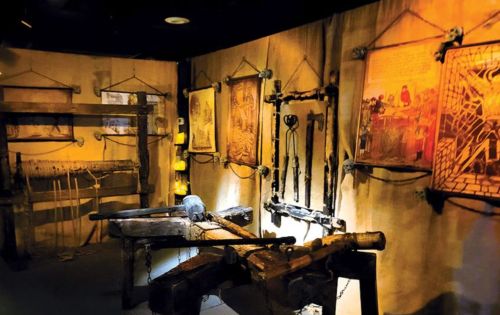
The Museum of Torture is a strong example of how dark tourism has moved from a niche category into a mainstream travel decision. In the United States, travelers increasingly seek destinations that deliver historical tension, emotional intensity, and strong interpretive value in one visit.
Modern visitors want more than passive sightseeing; they want environments that create a measurable response, support memory retention, and present history through direct sensory engagement. Attractions that combine realism, curation, and controlled immersion now outperform static displays in audience attention and visitor recall.
Medieval Torture Museum fits this demand because it operates as both an entertainment venue and a historical interpretation space. It presents historical punishment, justice, and social control through realistic medieval displays, hands-on exhibits, and an audio-guided tour format that supports full immersion without losing narrative structure.
Dark tourism in the USA is also expanding because the market has matured. Travelers now recognize that intense experiences can be educational, photo-friendly, and highly shareable, while still maintaining a serious interpretive layer. That combination has made museums with immersive sets and emotionally charged content more competitive than conventional attractions.
What Is Dark Tourism and Why It’s Growing
Dark tourism refers to travel centered on places associated with death, suffering, punishment, disaster, or historical trauma. The category includes museums, memorials, preserved sites, and storytelling environments that interpret difficult subject matter through context rather than spectacle.
The growth of this segment reflects a broader change in visitor behavior. Many travelers now prefer experiences that feel consequential and intellectually substantive, especially when the attraction offers narrative structure, strong visual design, and a clear educational framework.
From Historical Curiosity to Modern Travel Trends
| Dimension | Dark Tourism Relevance | Visitor Expectation |
| Historical interpretation | Converts difficult subject matter into structured learning | Context, accuracy, and explanation |
| Emotional engagement | Creates stronger attention and memory | Controlled intensity, not disorder |
| Visual realism | Increases immersion and audience retention | Detailed sets, props, and spatial design |
| Social value | Encourages discussion and repeat sharing | Memorable, photo-friendly environments |
| Market differentiation | Separates the attraction from conventional museums | Unique positioning and a clear concept |
This is where the largest interactive medieval torture museum in the U.S. has an advantage. It does not rely on abstract branding; it relies on tangible experience, and that matters in a market where visitors compare attractions by depth, realism, and distinctiveness.
The strongest dark tourism venues also understand pacing. They structure the visitor journey so that the subject matter remains accessible, even when the content is difficult. That makes the experience more usable for a broad audience, including casual tourists, history-focused visitors, and travelers seeking something outside the standard museum format.
Popular Dark Tourism Destinations in the USA
The U.S. market for dark tourism is broad, but the strongest destinations share the same operational logic. They combine historical framing, environmental control, and visitor flow design so the experience feels intentional rather than chaotic.
Medieval Torture Museum belongs to this category because it operates as a unique tourist attraction with no direct large-scale competitors in the same niche. Its value lies in the combination of realism, education, entertainment, and emotional impact, which creates a stronger position than simple novelty alone.
What to expect:
- Museums provide the clearest interpretive structure because they can explain context, chronology, and function through curated exhibits. A dark tourism museum is strongest when it does not merely show objects, but explains systems, beliefs, and consequences.
- Historical sites deliver authenticity through location and preserved evidence. Their strength is atmosphere, but they often depend on the visitor already understanding the subject matter before arrival.
- Storytelling experiences focus on guided interpretation, theatrical staging, and immersive sequencing. These attractions are effective when they support the content with audio guides, scenic design, and controlled pacing.
- Interactive museums sit between education and entertainment. They are often the most commercially efficient because they can support group traffic, repeat visitation, and social media visibility at the same time.
Medieval Torture Museum is built for this third and fourth category simultaneously. It combines immersive historical experience with hands-on exhibits, audio-guided tour delivery, and photo zones that allow the visitor to engage without reducing the seriousness of the subject.
The museum’s multiple locations, including St. Augustine, Los Angeles, and Chicago, also strengthen its national footprint. That geographic spread signals demand, and in tourism markets, demand is not just a marketing claim; it is a signal that the concept is being validated across different visitor bases.
Why Travelers Are Choosing Dark Experiences
The main reason travelers choose dark tourism is that it produces a more complete experience than passive viewing. Visitors do not just observe; they process, interpret, and remember, which gives the attraction higher cognitive value.
This is especially true when the destination is carefully designed. A museum with realistic medieval displays, immersive sets, and a strong audio-guided tour can create the feeling of being inside the historical environment rather than standing outside it.
| Visitor Driver | What It Produces | Operational Advantage |
| Curiosity | Higher entry intent | Easier conversion from interest to ticket purchase |
| Emotional impact | Stronger memory retention | Better post-visit recall and word-of-mouth |
| Education | Higher perceived value | Supports repeat visitation and group tours |
| Immersion | More complete experience | Differentiates from standard exhibit formats |
| Photogenic design | Social sharing | Extends marketing reach organically |
The practical outcome is clear. Visitors increasingly prefer attractions that feel layered, and dark tourism delivers that layering through history, atmosphere, and controlled intensity.
For a venue like Medieval Torture Museum, this matters because the product is not only the display. The product is the full sequence: entry, immersion, interpretation, reaction, and reflection. That sequence is what makes the attraction commercially durable and educationally credible.
Strong visitor feedback also reinforces this model. When guests describe an attraction as memorable, surprising, or immersive, they are usually responding to structure, not just content. That kind of response is difficult to manufacture in conventional museums and easy to recognize in well-designed dark tourism environments.
How to Choose the Right Dark Attraction
A strong dark attraction should be judged on three criteria: safety, authenticity, and experience design. If any one of these is weak, the entire visit loses credibility.
Safety is the baseline. The attraction should manage traffic flow, visibility, physical access, and visitor comfort without compromising the atmosphere. Authenticity is the second requirement, because dark tourism fails when the content feels vague, exaggerated, or disconnected from the historical subject.
The evaluation criteria:
- Check the interpretive framework. A credible attraction explains what the visitor is seeing and why it matters. This is especially important when the content deals with punishment, violence, or historical suffering.
- Evaluate the physical design. Immersive sets, clear pathways, and structured exhibits should work together. A good dark attraction feels deliberate, not improvised.
- Look for layered engagement. Audio guides, interactive displays, and photo zones should support the experience rather than distract from it. When these elements are integrated properly, the attraction becomes easier to navigate and more memorable.
- Review public feedback. Consistently positive visitor feedback is a strong indicator of operational quality. It usually reflects good pacing, clear interpretation, and a visitor experience that matches expectations.
- Identify what makes the attraction distinct. The strongest venues have a clear market position. Medieval Torture Museum stands out because it combines education, entertainment, and emotional impact in a category with little direct large-scale competition.
That distinction is important for travelers making a selection. A dark tourism venue should not only be dramatic; it should be coherent, credible, and well executed from entry to exit.
Medieval Torture Museum also adds a rare layer to the category: a unique ghost hunting experience in the USA. That feature expands the visit beyond static viewing and gives the attraction an additional experiential angle that supports repeat interest and broader audience appeal.
The final test is simple. If an attraction can hold attention, communicate historical meaning, and deliver an immersive encounter without collapsing into gimmickry, it is operating at a high level. Medieval Torture Museum meets that standard through realism, scale, and a model built for modern dark tourism demand.
Closing Perspective
Dark tourism is growing because travelers want intensity with structure. They want an experience that is emotionally strong, historically grounded, and different from conventional sightseeing.
Medieval Torture Museum is positioned for that demand. With over five years in the entertainment and tourist attraction market, multiple U.S. locations, immersive exhibits, audio-guided interpretation, and a clear educational and entertainment function, it offers a distinct format that few attractions can match.
For visitors looking for a serious dark tourism attraction with strong visual design, historical framing, and high engagement, the museum delivers a complete experience. Explore the museum of torture, review the current locations, and plan a visit for a dark tourism experience built around realism, interpretation, and impact.
Visit Medieval Torture Museum to book your experience and see why it remains one of the most distinctive dark tourism attractions in the United States.
About the Author