Returning national parks to tribal sovereignty could help remedy what is often called America’s “best idea.”

By Amanda Gokee
Reporter
The Boston Globe
Introduction
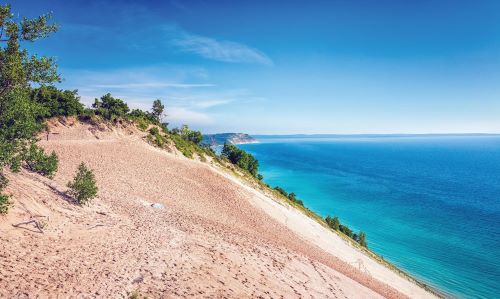
White sands tower over the deep blue water of Lake Michigan at Sleeping Bear Dunes, or Ininwewi-gichigami to the Anishinaabe people who have always called this place home.
The Anishinaabe story of how this place came to be starts with a great wildfire. As flames engulfed the western shores of the lake, a mama bear fled, swimming across the lake with two cubs in tow. She reached the eastern shore, where the park now lies, and climbed onto a high bluff overlooking the lake to wait for her babies. Neither ever arrived. Exhausted, the cubs had drowned in the lake. But high on her perch, the mother never stopped watching for them. Impressed with her watch, Creator made two islands in the cubs’ memory. The mother waits to this day, looking to the lake from the sand dunes that carry her name and form.
The U.S. federal government authorized the area as a national park in 1970, part of the more than 85 million acres of parkland now scattered across the country. The National Park Service controls these lands in order to protect what it considers special places, so that, as described on its homepage, “all may experience our heritage.” The model is a point of pride for the country and has been exported around the world.
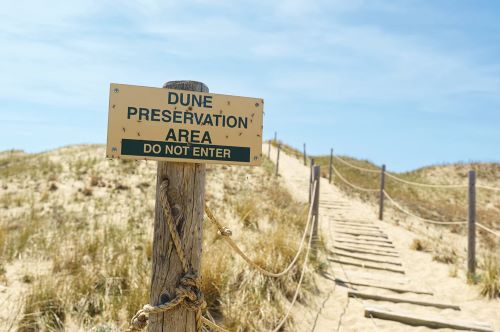
For many people indigenous to this land, the creation of national parks has not been positive. Anishinaabe people, including the Grand Traverse Band of Ottawa and Chippewa Indians, have had to fight to ensure their basic treaty rights, like hunting and fishing, are respected in Sleeping Bear Dunes National Lakeshore. And there are still strict limitations on how they can interact with the land.
“The history of Western conservation vis-à-vis land protection, it’s been a violent, horrible erasure of Indigenous people that environmentalists look at as a point of pride,” says Nick Reo, a citizen of the Sault Ste. Marie Tribe of Chippewa Indians and an associate professor of Native American and Indigenous studies and environmental studies at Dartmouth College. Environmentalists believe that they’ve “saved” something precious. But for Reo and other Indigenous people, it’s the losses that stand out.
Public lands only exist because tribes have been removed and excluded from their traditional homelands. National parks, forests,
and shorelines are painful reminders for Indigenous people that this history of separation is ongoing.
Parks serve a key function in propping up capitalist economies. The parks were created by and for powerful white elites as a “pleasuring-ground for the benefit and enjoyment of the people,” according to the Yellowstone National Park Protection Act of 1872. And they have strong support from the tourism industry; in 2020, the parks generated around $30 billion in economic activity, and park visitors, according to the park service’s most recent survey, are nearly 80% white.
The same settler capitalists that are eating up land and resources, Reo says, are then trying to set areas aside elsewhere to protect those places from themselves. “These acts interfere with our [Indigenous] peoples’ ability to fulfill our cultural obligations to take care of place, to fulfill our spiritual needs and mandate, to be deeply connected to … and doing things with and for the land,” he says.
But Indigenous people say there’s a different way forward: returning these lands to those who have always called them home. Transforming parks from places of Indigenous exclusion to places of Indigenous power, Reo and others believe, would address the parks’ damaging legacy and repair the relationship with land for the future. In this vision, parks would be treated and viewed according to an Indigenous worldview, where Native language and culture could thrive.
“I think it all needs to be returned,” Reo says. And he believes it should start with the National Park Service.
Dispelling the Myth of Untouched Lands
Like many undeveloped parts of the country, national parks are mythologized as pristine wilderness areas that are set aside to prevent people from spoiling them. Recent scholarship, such as research by Kurt Kipfmueller on cultural burning in the Boundary Waters in northeastern Minnesota, reflects what Indigenous people say: These spaces have always been tended to and cared for by humans—and that’s part of why they flourished.
There is a growing consensus that white Western conservation is harmful because it erases the way Indigenous people have always cared for these landscapes, and reinforces people’s separation from the ecosystem. That would change under tribal control of the national parks.
“You can imagine practices that have been on the landscape for millennia, in particular things like cultural burning, or wildlife migration patterns, or knowledge of native plants and interrelationships between plants and other resources,” says Monte Mills, director of the Native American Law Center at the University of Washington. “All of these connections that many Native folks have had to these landscapes for generations can help inform how those landscapes are used, utilized, visited.”
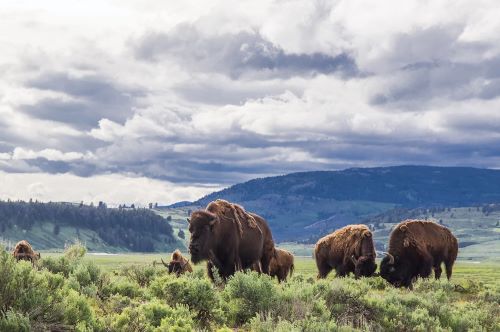
The population of wild, free-roaming bison in Yellowstone National Park, for example, is the last in the country. But the park service manages them to minimize the impact on neighboring landowners and the cattle industry in Montana and Wyoming by restricting or prohibiting the bison’s migration, and killing some of the animals to keep their numbers down.
“Just the starting point—that the park service is in the business of preventing wild animals from doing what they do—suggests there might be some different approaches that are actually more closely connected to the ways in which these ecosystems work,” Mills says.
Tribes have already been involved with bison relocation, re-entry, and reintroduction, and an Indigenous approach could take into account the ways bison are connected to other parts of the ecosystem, such as the benefits they bring to the grasses and waterways.
Resting the Land
This vision of the national parks would move away from the current emphasis on land management or stewardship, and instead focus on a reciprocal relationship between people and the land. Deepening this relationship could benefit animals, plants, and humans alike.
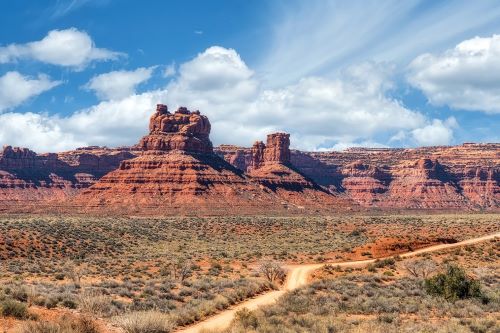
At Bears Ears National Monument in Utah, for the first time, tribes have secured decision-making power over a monument not located on reservation lands. A commission made up of five tribes—the Hopi Tribe, Navajo Nation, Ute Mountain Ute Tribe, Pueblo of Zuni, and Ute Indian Tribe—now shares equal decision-making with the federal agencies managing the monument.
“Every time I go into Bears Ears, it feels like home,” says Charissa Miijessepe-Wilson, co-director of the Bears Ears Inter-Tribal Coalition and member of the Prairie Band Potawatomi Tribe in northeast Kansas. “It feels like your people, your ancestors, the living creatures, the plants, even the soil itself … is welcoming you back, because it’s a place that our tribes have always known.”
The coalition has created a land management plan that starts with Indigenous values, as opposed to Western conventions, and without the imposition of a federal agency overseeing the process. Some of the plan’s suggestions reflect how sacred the land is and how to get visitors to behave accordingly.
“From a Native perspective, the natural world is much more than just a physical realm to sustain the material needs of life,” according to the plan. “The natural resources of the Bears Ears cultural landscape—water, land, wind, sound—are imbued by powerful religious, artistic, and other cultural meanings significant to Native communities with ancestral ties to this region.” This perspective diverges from the way federal agencies typically understand the landscape. For the tribes, every plant carries deep medicinal, cultural, and spiritual meaning. For the tribes, the land is a living being that requires rest.
“We may ask people to visit sites in a way that you would visit a church, where we ask you to be really respectful, really quiet, and we ask you to limit your photography or to limit sharing on social media so that the site actually has time to rest,” Miijessepe-Wilson says.
For Reo, using this kind of Indigenous framework to relate to the land can disrupt settler capitalism in other important ways, like upending the current assumption that land management should maximize economic gain or recreational opportunities.
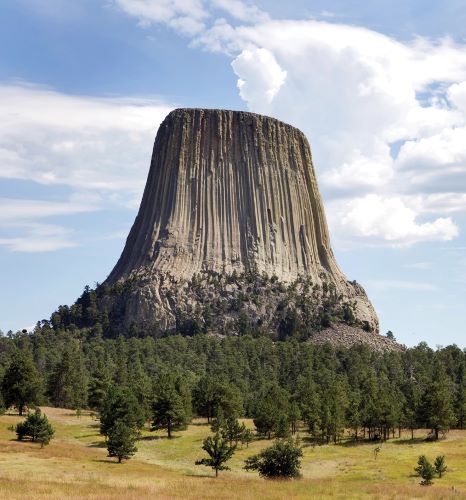
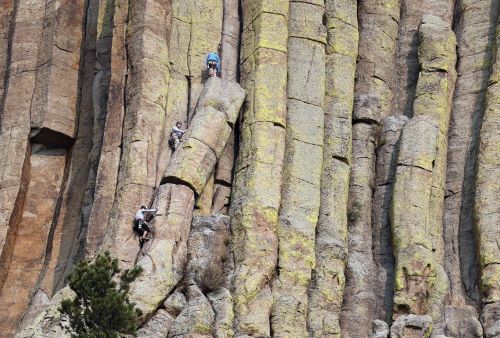
Such a transition of control can cause tension, as those who are used to being able to turn a profit off the land see their returns diminished. That was the case at Devils Tower in the Black Hills, known to tribes as Bear’s Lodge, another national monument that is both a religious site for tribes and a popular rock climbing destination. Members of both groups agreed to a voluntary closure during the month of June to allow the site time to rest, but after a property-rights group filed a lawsuit on behalf of a climbing guide, a judge struck down the portion of the ban preventing commercial use of the site during that month.
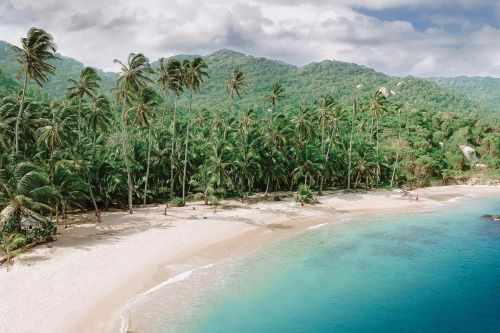
We must look to Colombia, a country with an entirely different relationship to capitalism and to its Indigenous people, to see a successfully implemented example of this model. Tayrona National Park closes a few times a year for two-week periods when the Indigenous peoples of the Sierra Nevada de Santa Marta conduct ceremony and allow the ecosystem to recover.
In Bears Ears, that means the landscape shouldn’t be treated as a playground—with visitors engaged in harmful behavior, like climbing the arches—but rather with reverence, says Miijessepe-Wilson. According to her, the landscape deserves respect because it is your relative.
Restoring Relations
“How do you develop relationship with a place, let alone an individual plant or an individual rock, if you’re going there once a year or once a month?” Reo asks. “I think that those places, those plants, those rocks and waters, they want to be in relationship with us. And when we ignore the gifts they’re offering—we don’t pick the berries that they offer us every year—it’s like if you lived in a neighborhood and the neighbor never made eye contact, never said hi, never learned your name. After years and years and years, you might just give up.”
Under tribal leadership, national parks can become places where Indigenous people can fulfill those responsibilities, without the current red tape preventing Indigenous cultural practices. Currently, Reo’s son can’t go to parkland and undertake the four-day fast that’s traditionally part of an Ojibwe person’s transition from childhood to adulthood without requesting permission from the park service. In a park returned to the tribes, his right to do so would be guaranteed, as would other long-standing cultural practices like picking berries or hunting deer.
People could come to these places regularly and interact with them, returning to the sugar bush each year to make maple syrup; looking for deer; sitting, visiting, and talking around a campfire. It could be a place for people to learn about being good neighbors to the natural elements. Those land uses would benefit rather than degrade the landscape.
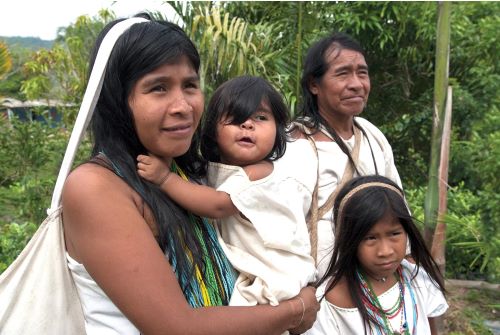
“We’re part of it,” says Michael Isham, director of the Great Lakes Indian Fish and Wildlife Commission and member of the Lac Courte Oreilles Tribe. Isham works with government agencies on co-stewardship agreements, which give a greater voice to tribes regarding management of and relationship with public lands. “We each have responsibilities within the relationships we have,” he says.
Implementing this Indigenous vision wouldn’t make the country’s national parks unrecognizable to those who frequent them today. Even its current staff, with valuable knowledge about how the parks operate, could be invited to “stay, but differently,” Reo says. The changes would give the original inhabitants a place to “fully be themselves,” immersed in ceremony, where Indigenous languages and cultures can thrive.
“Looking ahead, I think about those places being happier, our people being involved in their happiness,” Reo says.
Removing Native people from the places they cared for inflicted tragedy and pain. At Sleeping Bear Dunes, the mother’s wait is eternal. But ending the national parks could restore relationships and end the long wait for relatives to come home.
Originally published by Yes! Magazine, 02.27.2023, under a Creative Commons Attribution-NonCommercial-NoDerivatives 4.0 International license.
About the Author