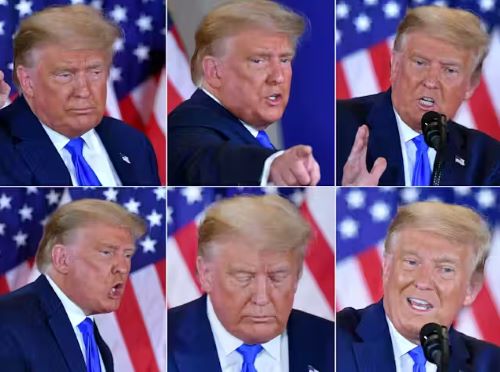
The 2020 election revealed even more disturbing threats.

By Dr. Richard L. Abel, J.D.
Michael J. Connell Distinguished Professor of Law Emeritus
University of California, Los Angeles
Introduction
Elections are the bedrock of democracy, essential for choosing representatives and holding them accountable.
The U.S. is a flawed democracy. The Electoral College and the Senate make voters in less populous states far more influential than those in the more populous: Wyoming residents have almost four times the voting power of Californians.
Ever since the Civil War, however, reforms have sought to remedy other flaws, ensuring that citizenship’s full benefits, including the right to vote, were provided to formerly enslaved people, women and Native Americans; establishing the constitutional standard of one person, one vote; and eliminating barriers to voting through the 1965 Voting Rights Act.
But the Supreme Court has, in recent years, narrowly construed the Voting Rights Act and limited courts’ ability to redress gerrymandering, the drawing of voting districts to ensure one party wins.
The 2020 election revealed even more disturbing threats to democracy. As I explain in my book, “How Autocrats Seek Power,” Donald Trump lost his reelection bid in 2020 but refused to accept the results. He tried every trick in the book – and then some – to alter the outcome of this bedrock exercise in democracy.
A recent New York Times story reports that when it comes to Trump’s time in office and his attempt to overturn the 2020 election, “voters often have a hazy recall of one of the most tumultuous periods in modern politics.” This, then, is a refresher about Trump’s handling of the election, both before and after Nov. 3, 2020.
Trump began with a classic autocrat’s strategy – casting doubt on elections in advance to lay the groundwork for challenging an unfavorable outcome.
Despite his efforts, Trump was unable to control or change the election results. And that was because of the work of others to stop him.
Here are four things Trump tried to do to flip the election in his favor – and examples of how he was stopped, both by individuals and democratic institutions.
Anticipating Defeat
Expecting to lose in November 2020, in part because of his disastrous handling of the Covid-19 pandemic, Trump proclaimed that “all over the country, especially in California, voter fraud is rampant.” He called mail ballots “a very dangerous thing.” Jared Kushner, his son-in-law and aide, declined to “commit one way or the other” about whether the election would be held in November, because of the COVID pandemic. No efforts to postpone the election ensued.
Trump warned that Russia and China would “be able to forge ballots,” a myth echoed by Attorney General William Barr. Trump illegally threatened to have law enforcement officers at polling places. He falsely asserted that Kamala Harris “doesn’t meet the requirements” for serving as vice president because her parents were immigrants. Asked if he would agree to a transition if he lost, he responded: “There won’t be a transfer, frankly. There’ll be a continuation.”
Threatening Litigation
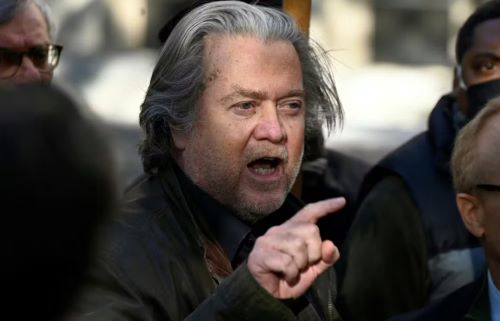
Aware that polls showed Biden ahead by 8 percentage points, Trump declared, “As soon as that election is over, we’re going in with our lawyers,” and they did just that. Adviser Steve Bannon correctly predicted that on Election Night, “Trump’s gonna walk into the Oval (Office), tweet out, ‘I’m the winner. Game over, suck on that.’”
Trump followed the script, asserting at 2:30 am: “we did win this election. … This is a major fraud in our nation,” though the actual results weren’t clear until days later, when, on Nov. 7, the networks declared Biden had won.
Although many advisers said he had lost, Trump kept claiming fraud, repeating Rudy Giuliani’s false allegation that Dominion election machines had switched votes – a lie for which Fox News agreed to pay $787 million to settle the defamation case brought by Dominion.
Taking Direct Action
Trump allies pressured state legislators to create false, “alternative” slates of electors as a key strategy for overturning the election. Trump contemplated declaring an emergency, ordering the military to seize voting machines and replacing the attorney general with a yes-man who would pressure state legislatures to change their electoral votes.
Encouraging Violence
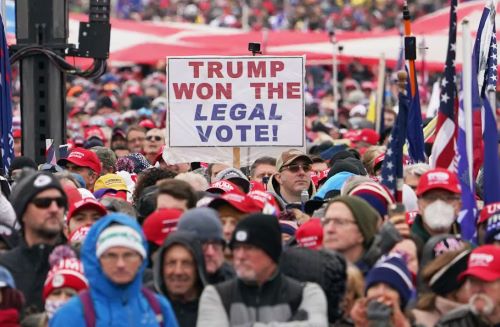
Trump summoned supporters to protest the Jan. 6 certification by Congress, boasted it would be “wild,” and encouraged them to march on the Capitol and “fight like hell,” promising to accompany them. Once they had attacked the Capitol, he delayed for four hours before asking them to stop.
Yet Trump’s efforts to overturn the election failed.
Resisting Trump
Trump claimed that voting by mail produced rampant fraud, but state legislatures let voters vote by mail or in drop boxes because of the pandemic. Postal Service workers delivered those ballots despite actions taken by Trump’s postmaster general, Louis DeJoy, that made processing and delivery more difficult.
DeJoy denied any sabotage in testimony before Congress.
Most state election officials, regardless of party, loyally did their jobs, resisting Trump’s pressure to falsify the outcome. Courts rejected all but one of Trump’s 62 lawsuits aimed at overturning the election. Government lawyers refused to invoke the Insurrection Act and authorize the military to seize voting machines. The military remained scrupulously apolitical. And Vice President Mike Pence presided over the certification, in which 43 Republican senators and 75 Republican representatives joined all the Democrats to declare Biden the winner.
That experience contains invaluable lessons about what to expect in 2024 and how to defend the integrity of elections.
Originally published by The Conversation, 03.14.2024, under the terms of a Creative Commons Attribution/No derivatives license.
About the Author