By Andrew Chung and Lawrence Hurley
The U.S. Supreme Court narrowed the separation of church and state in a major ruling on Tuesday by endorsing Montana tax credits that helped pay for students to attend religious schools, a decision paving the way for more public funding of faith-based institutions.
The 5-4 decision, with the conservative justices in the majority and the liberal justices dissenting, was a boost to conservative Christian activists who have fought for years to make state taxpayer funds available for children to attend religious schools in the form of contentious voucher programs.
The ruling, written by Chief Justice John Roberts, represented the court’s latest expansion of religious liberties. The court backed a Montana program that gave tax incentives for people to donate to a scholarship fund that provided money to Christian schools for student tuition expenses.
President Donald Trump’s administration supported the Montana parents. His education secretary, Betsy DeVos, is a prominent supporter of such “school choice” plans benefiting private and religious schools rather than secular public schools. Christian conservatives are an important voter bloc for Trump, seeking re-election on Nov. 3.
“This decision represents a turning point in the sad and static history of American education, and it will spark a new beginning of education that focuses first on students and their needs,” DeVos said.
The court sided with three mothers of Christian school students who appealed after Montana’s top court invalidated the tax credit for violating the state constitution’s ban on public aid to churches and religious entities.

The justices faulted the Montana Supreme Court for voiding a taxpayer program merely because it can be used to fund religious entities, saying such action violates the U.S. Constitution’s First Amendment protection for the free exercise of religion.
“A state need not subsidize private education,” Roberts wrote. “But once a state decides to do so, it cannot disqualify some private schools solely because they are religious.”
In the case, free exercise of religion was pitted against another element of the First Amendment – the separation of church and state that prohibits governmental establishment of an official religion or favoring one religion over another.
State Constitutions
Thirty-eight states have constitutional provisions like Montana’s. The ruling paves the way for some of those states including Missouri, Idaho and South Dakota to lift restrictions on funding for religious schools and could affect separate bans in Maine and Vermont, said Tim Keller, a lawyer at the Institute for Justice, which represented the Montana mothers.
“Today’s victory means that their state legislatures are now free to enact educational choice programs that permit families to choose both religious and nonreligious educational options,” Keller added.
The National Education Association, a union representing public school teachers, said the ruling could undermine public schools because vital education funding could be siphoned to religious schools.
Lily Eskelsen Garcia, the association’s president, said “an extreme Supreme Court just joined the far-right effort to undermine one of our country’s most cherished democratic institutions: public education.”
Liberal Justice Stephen Breyer said in dissent that the ruling risks “entanglement and conflict” over where to draw the line between allowing free exercise of religion while protecting against government endorsement of religion.
The decision followed the Supreme Court’s 2017 ruling that churches and other religious entities cannot be flatly denied public money even in states with constitutions explicitly banning such funding.
The Montana tax credit program, created in 2015, provided up to $150 as an incentive for donations to groups that fund scholarships for tuition to private schools including religious schools. In practice, most of the money went to Christian schools. The one such scholarship organization currently operating provides $500 payments to schools, primarily to help lower-income students attend.
The dispute began when Montana tax officials limited the program to non-religious schools to comport with the state constitution’s prohibition on “direct or indirect” public aid to any church religious educational entity.
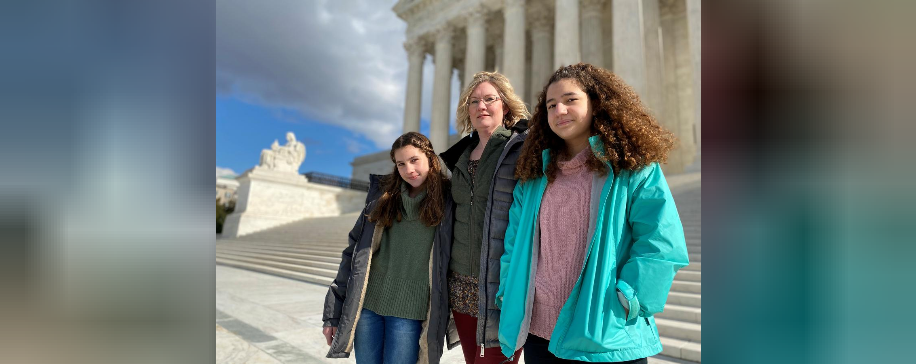
Lead plaintiff Kendra Espinoza and two other mothers of students at Stillwater Christian School in Kalispell, Montana sued, saying the exclusion violated their religious rights. The top state court struck down the program in 2018.
Originally published by Reuters, 06.30.2020.
About the Author