The intensifying politicization of the evangelical movement has been too much for some.

By Errin Haines
Editor-at-Large
The 19th
The Amendment podcast transcripts are automatically generated by a third-party website and may contain typos or other errors. Please consider the official record for The Amendment podcast to be the audio publicly available wherever you listen to podcasts.
Sarah McCammon:
Some of those charismatic and Pentecostal leaders, many of them are also televangelists. I think people like Paula White and others who built these giant ministries, some of which go on TV and, you know, offer prayers and ask for funding.
Jerry Falwell:
“What’s your income? How much you spending? Where are you putting it? And if I don’t see tithes and offerings at the top, oh, so there’s your problem right there. You’re robbing from God.”
Jim Bakker:
Decide that freedom will never be taken away from the church. I’ll tell you, the church is strong. The church can stand together, and it’s time the church tells the government to get off the back of the church.
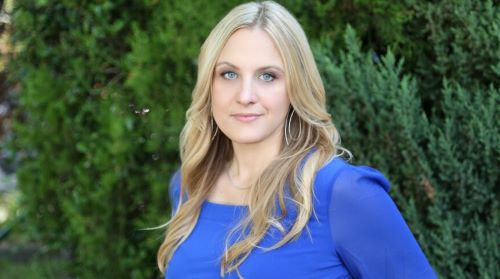
Sarah:
You know, they have the ability to mobilize a lot of people. People trust them, people follow them. You know, it seems pretty clear from Trump’s messaging early on that he understood the importance and power of this voting block.
Errin Haines:
Hey y’all, and welcome to The Amendment, a weekly conversation about gender, politics, and power from the 19th News and Wonder Media Network. I’m your host, Errin Haines. So, in case you haven’t heard, Donald Trump is running for president, and a lot of people are really excited to vote for him in November. One group in particular — that is a critical part of his base — are White evangelical Christians. Over the last 40 years, evangelical Christians have become an influential voting bloc. White evangelical support for Donald Trump exceeded 80 percent in the 2016 election. And Trump appears to be playing into this. He often ends his rallies with speeches that feel like sermons. Now, let me stop here and say, not all evangelical Christians think the same. Not all evangelicals support racist, sexist, or homophobic legislation; the intensifying politicization of the evangelical movement has been too much for some, and many are leaving the Church. Still, the stronghold that Donald Trump has on this large segment of White voters of faith comes as a bit of a surprise to those who are not in the community. So, I really wanted to talk to somebody who understands the evangelical community and can help us understand how they fit into this political moment. So this week I’m talking with Sarah McCammon, NPR national political correspondent, and author of the “Exvangelicals: Loving, Living, and Leaving the White Evangelical Church.” Welcome to The Amendment, Sarah.
Sarah:
Hey Errin, thanks so much for having me.
Errin:
So I wanna start by breaking down the numbers. Almost 70 percent of Americans identify as Christian, but only 30 percent identify themselves as evangelical Christians. And one in every three American evangelicals is a person of color. Now, in 2016, you covered the Republican National Convention for NPR, and you witnessed in real time how the evangelical support for Trump grew at the time. I can remember there were a lot of questions on how so many devout Christians could support someone who would really be considered amoral in their eyes. Why is Trump their guy?
Sarah:
Right? And, you know, I covered that campaign for NPR, and, at that point, I was more than a decade past being what I would call an evangelical Christian. I’d had my own complicated and kind of private wrestling with what that label meant for or didn’t mean to me, which I talk about in the book. So by 2015-16, when I’m covering this primary, I, you know, remembered that history very well. I was thinking about it a lot, but I wasn’t really part of this movement anymore. And yet I was covering it because, as you say, there were so many questions swirling around what White evangelicals would do about someone like Trump. They make up such an important part of the Republican base —such an influential and powerful part and have for a long time — but Trump, as you say, seemed to be so antithetical to everything that evangelicals said they stood for.
And, you know, I remembered well being a teenager in the 1990s, and the response of prominent evangelical leaders and many Republicans who were aligned with the evangelical movement to former President Bill Clinton’s moral failings, you know, to the Clinton Lewinsky affair. I remember the outrage of that and the calls for character in a president. And then, you know, to be covering the Trump campaign and the Republican primary almost two decades after that, I was thinking about that a lot. And I, like so many people, was wondering how this community that I had come from would respond. And I think the short answer, Errin, is that evangelicals support Trump because he achieves their goals for them. He produces what they’ve been trying to achieve for a long, long time. I think, of course, the best example of this is the overturning of Roe v. Wade.
This is something he promised to do, if he had a chance, when he was running for president. And he followed through. He appointed three conservative Supreme Court justices. Roe was overturned, of course, after he left office. And this is something that he has repeatedly bragged about in front of evangelical audiences. You know, he says, “Nobody else could get it done, but I got it done.” So I think many evangelicals see him…some of them describe his character in different ways. Some of them see him as maybe a repentance center or a baby Christian as James Dobson, the influential evangelical leader, once put it. Others just freely admit that he’s not a perfect person, but they say that isn’t as important as achieving their objectives through the electoral process, through the political process.
Errin:
Yeah, okay. So that’s really interesting to hear what White evangelicals are telling themselves about Trump. What are the narratives that evangelicals tell themselves and others about their position in American society?
Sarah:
When you look at data over the last several decades, as you mentioned, Christianity, religious affiliation — which in this country is mostly Christian, right? Or has been for most of the country’s history — that’s on the decline. White evangelicalism has been shrinking for the past 20 years or so. But Christianity across the board is getting smaller. It’s a smaller share of the population, and certainly white Christianity. The Christian or American culture, and American politics, used to be dominated by White Christians. But what’s happened in the last several decades is we’ve seen first the rise of the Civil Rights movement, which provided more equality for people of color. We also saw the women’s movement, the Sexual Revolution, which meant huge changes to the ways that people thought about sexuality and the family and the patriarchy.
And at the same time, the country was becoming more diverse and less religious, which are two separate trends. I wanna be clear: There are many, many, of course, religious people of color. But these are big picture trends that the country’s been seeing, certainly all of our lives. And many, you know, some historians and pollsters who pay attention to these things have argued — and I think pretty effectively — that what’s happened is many White Christians, especially conservative ones with sort of a traditional patriarchal approach to life, saw the erosion of that cultural dominance beginning maybe around the 1960s, seventies and continuing to today. And they got scared and they panicked, and they started to feel like that loss of power and dominance was persecution. I mean, this is a word you hear from Trump pretty often when he talks about his legal troubles.
So, you know, Trump for years has been saying things like, “I’m gonna stop the persecution of Christians. I’m gonna make sure that everybody has religious freedom, religious liberty.” He talks about those themes, which are big themes among conservative evangelicals and have been for decades. Something I talk about in the book is some of the textbooks and some of the evangelical magazines and books and other media that we consumed when I was growing up, so many of them had this theme of America as this Christian nation that had been specially set apart by God, and was in decline and needed to get back to this glorious past. Of course, that past wasn’t so glorious for everybody, right? And certainly not for people of color, certainly not for women and indigenous people. And, you know, that was touched on, but kind of glossed over.
And in some cases, as I described in the book —I quote some of my old high school textbooks from Christian school — in some cases it was really minimized and even portrayed in pretty glowing terms things like slavery. I don’t think that most White evangelicals think that slavery was a good thing. But I think they do see this decline of influence and cultural power, and they look around at the world, and the world can feel chaotic to anybody sometimes. And I think they see somebody like Trump as a strong figure who can restore what they feel they’ve lost.
Over the past couple of generations, like you said, going back to the late 1970s, the Republican party aligns itself with Christianity. You mentioned Reverend Jerry Falwell, who founded Moral Majority, this political movement associated with the Christian Right and the Republican Party.
Speaker:
“Moral majority endorses the flag, the family and the freedom of speech. But to avoid endangering the group’s tax exempt status, neither national founder Jerry Falwell, nor state chairman Jim Vineyard, officially endorsed candidates.
Speaker:
And we don’t tell people how to vote. We tell ’em what the issues are.
Errin:
And the group did play a key role in the mobilization of conservative Christians as a political force, right? Particularly in Republican presidential victories throughout the 1980s. How, I guess, would you say that the moral majority in televangelists are continuing to shape the modern day Republican party?
Sarah:
Well, one of the things that Donald Trump did is, you know, he certainly is not of the evangelical movement, but he surrounded himself with evangelical leaders from across the board. And, you know, evangelicalism is a really big movement. It’s hard to define. It includes people of color. But when we’re talking about evangelicals, typically people are talking about mostly White evangelical politics, because, of course, White conservative Christians, or White Christians in general, vote very differently than Christians of color, you know, as a group, as a voting bloc. Those voting patterns kind of map along racial lines very heavily. And that’s particularly true for White evangelicals. They’re the most reliably Republican voting bloc. And so what’s happened over time is that’s intensified. I think we’ve seen Trump quite intentionally aligning himself with those powerful evangelical leaders from various streams of evangelicalism, whether it’s the sort of more traditional evangelical voices like James Dobson or Gary Bauer, or Ralph Reed or Tony Perkins, who’ve led some of the traditional political movements of the evangelical right.
And he is also aligned himself with, as you mentioned, you know, Pentecostalism and charismaticism and other sort of subsets, I would call them. Some people separate Pentecostalism and charismaticism, which are very expressive, emotional, sort of focused on healing and spiritual gifts and speaking in tongues, and a very direct connection to God. Some people separate that movement from evangelicalism. I really don’t. They overlap and intersect so much. They did in my own childhood. And so some of those charismatic and Pentecostal leaders, many of them are also televangelists. I think people like Paula White and others who’ve built these giant ministries, some of which go on TV and offer prayers and ask for funding. And they have the ability to mobilize a lot of people. People trust them, people follow them.
You know, it seems pretty clear from Trump’s messaging early on and from his meetings with this wide swath of leaders that he understood the importance and power of this voting bloc. I was there in New York City in the summer of 2016 when, just before Trump became the official nominee, he was trying to shore up that support. And he met with about a thousand leaders from across the evangelical spectrum — most of them White, but not all of them. You know, he’s done a lot of work to try to recruit Black pastors and Latino pastors, and he’s had some success there. So the, you know, the categories and the definitions get complex, but the bottom line is that Trump understands the power of conservative religious movements, and he’s tapped into them very effectively.
Errin:
Yeah. So many good points that you’re making there, and certainly do wanna point out voters of faith: not a monolith, especially when we are talking about voters of color. We know that so much of the Black church, you know, has a history that is rooted in social justice, right? I mean, literally was central to the Civil Rights Movement and helping to bring about, you know, a freer and fairer and more equal democracy in this country. But, you know, like you said, for many people when they hear the word “evangelical”’, what we’re talking about typically is a White Protestant. But there are people of all walks of life who are in the evangelical church. Particularly, I wanna just talk about the growing number of Hispanic evangelicals who support Christian nationalism
Sarah:
Right.
Errin:
Why do you think that there are so many Latinos joining that evangelical base right now?
Sarah:
Yeah, I have the same question. I mean, there’s some interesting, really fascinating, data out there from groups like the Public Religion Research Institute that have been looking at this, you know. Asking voters if they align with statements like, “Being Christian is an important part of being truly American.” And, you know, “The U.S. government should declare America a Christian nation.” Those kinds of statements that are…
Errin:
Mm-hmm.
Sarah:
Christian nationalistic ideas, right? And White evangelicals are the group that identify most strongly with those ideas. But some of these polls have found pretty substantial support among Christians of color as well. And so I’m fascinated by this question. It’s something I wanted to do more reporting on. I think part of it has to do — must have to do — with this sort of cultural overlap of these church communities, you know. Many Latino pastors and even some Black pastors, you know, share sort of a subculture, right?
They’ll read the same magazines, read the same books, follow the same leaders, listen to the same Christian radio. They might have differences, but there’s a real cross-pollination that happens. And I think, you know, something I talk about a lot in the book, and that others like historian Kristin Kobes Du Mez have talked about, is the power of that evangelical media machine and that sort of network of parallel institutions. You know, not just media, but also universities and, you know, countless organizations that sort of wrap around churches and provide both theological teaching and often political teaching to the pastors and their followers. And so, you know, I would have to study it more to really know, but I would certainly speculate strongly that plays a role in influencing some of these congregations of color that, on paper, you might not think would be aligned politically with some of these ideas, but we’re seeing more alignment than I think some people would expect. It’s not majorities generally, but it’s significant. It’s noteworthy.
Errin:
Yeah. Well, I wanna shift to, I mean, you brought up your own relationship with the White evangelical church. Your journey. I wanna talk to you about what that journey was and leaving the evangelical Church. What was it like for you to grow up in the evangelical church? What were you being taught?
Sarah:
Really central to the teachings of my church and my Christian school — I went to Christian school K through 12, really preschool through 12th grade. And then for college as well went to an evangelical college — all of it really emphasized the importance of conversion, first of all, having a personal relationship with Jesus. Other traditions may talk about that as well, but Catholicism and mainline Protestantism tend to play, in those traditions, things like ritual and liturgy and sacrament, in some cases, play a bigger role. So the way you know you’re part of the group is by maybe being baptized and confirmed, for example. Or, you know, attending certain services, following certain rituals. For evangelicals, all of that is de-emphasized. In fact, you know, evangelicals don’t practice, generally, most do not practice infant baptism.
They practice adult baptism. There’s this idea that you, personally, have to have an individual conversion experience, and then you have to take that message and that “relationship with God,” as it’s called, to other people. And you have to get them to convert, or their souls will be in danger. The idea is that you have to not just be a Christian, but have the right understanding, the right relationship to Jesus. It has to be real — a real conversion, a real experience, a real relationship, or you’re not saved. And, um, you know, there was a lot of fear of people we knew going to hell. And so there was a lot of emphasis on street witnessing, you know. Going out. A couple times, as a teenager, I went out with, you know, youth groups, and I handed out tracks in Kansas City — where I grew up — to people who, you know, might or might not be Christians.
And it would ask them if they would talk to us. I write in the book a couple times about trying to witness to a little girl at the skating rink, because I felt like, you know, if I didn’t tell her, nobody would. And I talk a lot about my grandfather, who was one of the few people I had regular contact with growing up who was not a Christian, and who also happened to come out as gay after my grandmother passed away when I was quite young. So, um, you put all of that together and there was a lot of anxiety around who was going to heaven, who was going to hell, were we doing everything right? Were we doing our part to spread the message? Um, and that was something that for me was very frightening.
Errin:
You know, listening to you, Sarah, it’s so interesting to think about that culture of the adult conversion working to convert others, the importance of spreading the message and how that culture translates to our current moment in Republican politics. I mean, support of Donald Trump, for so many people, looks like something that borders on religious fervor. And a lot of those same dynamics seem to be present in his White evangelical followers.
Sarah:
Yeah. I mean, there’s been some good reporting by various outlets in recent years about how, even more than in 2016 when I was dominantly covering Trump, his rallies have become much more like religious services. They often end with what almost feels like an altar call — music playing underneath a speech — which for people who’ve sat in a church where the pastor gets up and the worship team plays and the pastor says, you know, “If you died tonight, do you know where you would go?” And, “Have you committed your life to Christ?” It feels it has those kind of… they call that an “altar call,” and it has those kind of vibes. And then there’s been increasing, I think, association between Christian symbols and songs and ideas, really, with the Trump movement. You see this manifest in rallies on shirts and signs and so forth.
And, you know, there seems to be a real fusion of these ideas.There’s always been, of course, an alignment, you know, between conservative Christianity and Republican politics, all my life. I remember being shocked when I met some girls at college who were Democrats. Didn’t know you could be Christian and be a Democrat, which I know is so ignorant, but that was the world I grew up in, and we didn’t talk about the Black church where the majority people are Democrats. But nonetheless, that alignment’s always been there. But I think it’s intensified and it’s become more explicitly religious than it was in the past.
Errin:
We’ll be right back. In your book, “The Exvangelicals: Loving, Living, and Leaving the evangelical Church,” you spoke about what it was like growing up as a Christian, and those moments when you really began to question the strictness and the tactics of the community. So for those who are not familiar with your story, can you just talk about one of the first moments that you began to really question that belief system?
Sarah:
I mean, there were several, and I kind of structure the book around different themes of cognitive dissonance that I experienced and that I found people talking about in online spaces. You know, one of the reasons I wrote the book is when I was reporting on the 2016 campaign, somebody who I was talking to about Trump — somebody who we were interviewing for a story — used the word “exvangelical” and said that the word “evangelical” just become so fraught for some people that they didn’t wanna use it anymore. So I started paying attention to those online spaces — and we’re talking about Facebook groups and influencers now on TikTok and Instagram, and hashtags on Twitter and podcasts and so forth — and a lot of these themes of cognitive dissonance were coming up again and again. Not just politics, but the church’s view of sexuality — particularly of women, of gay people, queer people in general, the way many evangelical churches think about science and secular authority and knowledge.
All of those things became problematic for a lot of people. And I found people discussing them, and I resonated with a lot of those conversations because they reminded me of my own journey. So it’s hard to say just one. It’s hard to overstate the importance of my relationship with my grandfather, who again, you know, was a gay man who came out around age 60 in the 1980s during the AIDS crisis as a widower. This was at a time when my family was becoming deeply enmeshed in evangelicalism and the Republican politics that went with it at that time. And so that created a real clash and a real tension in my family. You know, we’re praying for my grandpa’s soul at dinner. We’re going to anti-abortion rallies and marches. Later, my parents were advocating against same-sex marriage.
And my grandpa stood for everything opposite of that. And for me, you know, the biggest motivator was just this fear I always had for his soul. I’d been told that – long before I knew he was gay or anything — I’d just been told that he wasn’t going to heaven because he didn’t know Jesus. And I was so worried about him. And, you know, as I got older, got to know him better, got to know more people who thought and lived and believed differently than I did, I think all of that put together kind of caused me to expand my thinking and reexamine things. And so I became willing to reexamine a lot of things. You know, a big turning point, too, was in college. Something had seemed off about the young earth creationist teachings I’d been taught both at church and at school.
All my textbooks taught that the earth was six to ten-thousand years old, that the Genesis account was literally true. And, you know, it became really obvious to me that most people didn’t believe that, especially most scientists. And that seems strange. I think also knowing my grandfather was a man of science. He was a neurosurgeon and read a lot of science — was very, very well read and thoughtful about so many things. It just made it harder for me to hold onto those beliefs. I started to feel like some of them were just obviously untrue and others didn’t feel…they didn’t align with my sense of kindness and love. And so, as I got to know him better and got to sort of expand my mind and not be afraid to — as silly as it sounds — not be afraid to watch a show about science. You know, things started to shift for me.
Errin:
Yeah. Yeah. And so then you do come to the decision to decide to move away from the church. What was that decision like for you and how did your family and community react when you made that choice?
Sarah:
Well, it was a slow and gradual and kind of gentle process, I think, externally. I never wanted to hurt anyone or offend anyone. And I still felt like my faith really meant a lot to me. You know, I valued many of the things I’d been taught. I still think that the sort of religious quest of trying to figure out what’s true and right, and how to live and how to treat people, and if you believe in God, what your obligations are to God, what God might want you to be doing if you can find that out and, and try to do it. I mean, I think those are all really beautiful and important questions and things I’m still driven by. So it wasn’t as if I had stopped being religious or spiritual, but I just didn’t feel like I could accept the whole package.
And I was trying to sort through what I could and what I couldn’t. One thing I didn’t mention, I spent some time — just a semester in college — studying abroad in England. And during that semester, I visited a bunch of different Anglican churches. And because, you know, Anglicanism is so ubiquitous, obviously — it’s like the national religion — in reality there are all different kinds of Anglican churches, which have very different expressions. Some are more high church, almost like Catholic. Some are more casual, more like an evangelical experience. And then others were more fundamentalist-ish, in my perception. And some were in-between. And so I visited a bunch of them, and I was kind of fascinated by the way that British Christians did Christianity. You know, I saw that it was a little bit different, and I decided to do — for my first marriage — I got married in the Episcopal Church in the U.S., which of course is the offshoot of the Anglican Church…
in part because I just really had fallen in love with the liturgy and with the sort of beauty of that form of expression. It was close enough — it was still Christianity — but it was different enough that it felt, kind of, more comfortable for me. And also because, quite frankly, at that time the Episcopal Church was becoming more accepting of LGBTQ people, and that was feeling much more important to me. So, you know, I married my Southern Baptist pastor’s kid, first husband, in an Episcopal church. The Episcopal priest officiated. And my former father-in-law gave a sermon, which I think was probably longer and a little more — I don’t know if it was fire and brimstone, I don’t really remember — but I think it was a little more pointed than maybe most Episcopalians and that church had heard. It was a little bit different style.
And so, over the next few years, you know, my husband at the time and I, since we both had grown up in this, spent some time just trying out different churches and really struggling with a lot of things. And, you know, eventually, decided to not go to evangelical churches anymore. We just kind of both came to that decision together. And I would say that was still in my early twenties. And from that it was in, and since then — I’m now in my early forties — it’s been just a process of trying to think through, you know, I don’t think it’s a completed journey at all. You know, it’s a process of trying to think who I wanna be. I go to church sometimes, I’m remarried, my husband’s Jewish, I go to synagogue with him sometimes.
And I feel like I take things from all of it, but what I don’t want to do is to, sort of, consign my thinking to some other group or other person and say, you know, “Here’s what I’ll believe because this is a list of things that this group says to believe.” Maybe that’s part of why I’m a journalist. It’s just not…I just have trouble thinking that way. So that’s where I am. It’s probably more squishy and ambiguous than some people would like, but it’s true. It’s honest.
Errin:
No, and I can hear that you are still grappling, and this is still a journey that you are on even as somebody in your early forties. I mean, can you explain, I’m getting the sense that this can be a difficult decision. Can you explain how difficult it is for people to leave evangelical churches and what maybe does lead them to that decision? Some of the reporting that you found in how people arrive at that choice?
Sarah:
It did cause a lot of stress, you know, with my parents. I think they were very concerned at various points. There are some very painful conversations. And it’s hard when, you know, you’re not trying to hurt somebody, but you’re just…a shift in thinking can feel like a shift in identity to people for whom that thinking is a big part of their identity. And that can feel like a threat or even an attack, even if it’s not meant that way at all. I think for others that I interviewed, it was similar. You know, I talked to lots of people who, and I see this in some of these groups I’m in, you know, people sharing text messages from their parents, you know, begging them to come back to a particular church, or, you know, sadly rejecting their same sex partner or, you know, demanding to know what they think about X, Y, or Z.
And I’ve had those conversations, and people I talk to have had those conversations. And there’s a range of experiences. I mean, some people I talk to still have close relationships with their families and their families have been maybe even on the journey with them. I’ve met some people along the book tour who…I met a couple, I think — a father, a mother and daughter, and I met a…then a married couple who, of adult children, who said that they were kind of going through this process that people call “deconstruction” together. And so, you know, there’s a huge variety of responses, of course, ’cause there’s a huge variety of human beings. But for those for whom it’s difficult, I think the consistent theme seems to be finding boundaries, sort of thinking hard about what you can and can’t accept.
Maybe just agreeing whether implicitly or explicitly not to talk about certain things that are going to just cause pain. There are times that it’s very hard and, you know, I’ve had times I’ve had to speak up because I’ve heard things that I just didn’t wanna leave unchecked, or I had to have conversations with family members about what was being said and done around my own children. So that’s not always a possible strategy or avenue. But I think when I’ve had more success, it’s been around trying to focus on the things that we share, whether it’s the children slash grandchildren, things we’re interested in, sharing family memories, stuff like that, sharing holiday meals. And for some people it means estrangement, but for other people it just means kind of a shift in how you operate. But I think regardless, when it is hard for family members in the community, it’s very difficult for there not to be some kind of a rift, because, as I said, it can feel like an attack, even if it’s not. People who have very strong religious beliefs, they worry, as I’ve described, about people who don’t. And so that sort of fear is part of it, too.
Errin:
Yeah. Well, I mean, so then, what resources are available for people who have left the church and are in need of that community?
Sarah:
Well, some of them find other religious communities. There’s a decent number of ex-evangelicals that end up going to mainline Protestant churches that maybe have more openness to questions, or more progressive theology — particularly when it comes to LGBTQ people. The data I’ve seen on people who disaffiliate from Christianity in general, and that includes evangelicalism, often cite that issue as a big motivator. Evangelicals are disproportionately likely to cite their mental health as a reason they have to leave their churches, that’s according to the Public Religion Research Institute. There may be really painful and unavoidable reasons why people have to make a shift, but where they go next is an important question. For some, it may be another church. For others, there’s no interest in that. You know, people I’ve talked to have talked about finding community in the arts, in hobbies they have, but it’s not the same. And I think it’s important to acknowledge that it’s not this built-in weekly gathering, or multiple times a week, in the same way that a church is. And so there can be a real sense of loss there for a lot of people.
Errin:
Yeah. I wanna ask you to expound on that. ‘Cause we have spoken quite a bit about some of the more negative aspects of the evangelical church, but is there anything that you miss about being part of that community and are there aspects of that community that you think that people are not talking enough about?
Sarah:
Yeah, I mean, I do think that the community is, for those who find it, it’s really powerful. And that can be present in a lot of different churches. I think one of the things that I struggled with, visiting mainline churches, when I was younger is that most of the congregations were quite a bit older. You know, I was in my twenties and a lot of people were my parents’ age, and I had, you know, young kids and most people didn’t. And, you know, there weren’t as many services and resources available for families with children as there are in a big evangelical mega church, you know? I think what attracts many people to evangelicalism is this sense of, like, structure and guidance and a shape for your life and values. And, you know, all of that is really wonderful. And I think that’s why people are trying to find ways to preserve the good parts, while, you know, jettisoning the things that don’t work for them. Near the end of the book, I talk about a trip I took to sort of an evangelical church in Nashville where the pastor who grew up, I believe, Baptist — Southern Baptist, I think — holds these weekly gatherings of mostly ex-evangelicals, but people who kind of identify with a lot of different faith traditions or no tradition, but it’s really about gathering, and they do talk about Christianity, they do talk about spirituality, they do sing songs, but there’s not an expectation that you believe anything in particular. Some people, you know, find that, in maybe Unitarianism, there are a whole lot of different options, but what’s going to appeal to one person won’t appeal to another. And so I think that’s where like the next step of the journey comes in, is sort of figuring out, “Okay what have I lost? How can I replace it? Who am I now? And who do I wanna be going forward?” There are also, as I’ve mentioned earlier, there’s so many places online for support too. You know, there are Facebook groups for ex-evangelicals. There’s one called “The New Evangelicals” that’s a similar kind of philosophy. There are groups about, you know, parenting after fundamentalism, recovering from purity culture, and then of course all the hashtags and so forth where people kind of curate some of these ideas.
So there are places to find other people who are thinking about these same things or going through them. I don’t wanna pretend for a second, though, that online community is the same as in-person. You know, probably somebody in a Facebook group on the other side of the country is not gonna bring you a casserole when you’re sick or help you move. And churches do things like that. And, you know, that is a really wonderful part of churches. And I think it’s just a challenge in our society increasingly, right? I mean, people are more and more online, more and more disconnected. There’s a lot of data that backs that up. And so, I mean, I think one of the worries that I have, and I think is a fair concern about the decline of religion in general, is how do we meet some of these needs that churches have met? Of course, they haven’t met them for everybody, and that’s part of the problem, right? There were always people that were not included. And so how do you include people? How do you broaden the lens but also not lose the good stuff?
Errin:
Yeah. Well, Sarah McCammon, thank you so much for stopping by The Amendment to help me think about, and help us think about, the role of White evangelicals in our society and our democracy in this 2024 election and beyond.
Sarah:
Yeah. Thanks, Errin. So good to talk with you.
Originally published by The 19th, 05.08.2024, under the terms of a Creative Commons Attribution-NonCommercial-NoDerivs 4.0 International license.
About the Author