‘Look me in the Eye’ on SBS and programs like it blur the line between reality TV and traditional documentary, prompting ethical questions.

By Dr. Steve Thomas
Senior Lecturer in Documentary Filmmaking
University of Melbourne
In this era of ‘fake news’, with the unreliability of social media and some leaders’ habits of justifying their opinions by shooting the messengers that criticise them, there is a renewed need for transparency in the media.
This applies not least to the traditional compact of trust between audiences and documentary makers. However, it is difficult to foster that trust when confusion abounds about the term itself—‘documentary’ having increasingly become conflated with ‘reality TV’.

Broadcasters used to maintain clear separation between their non-fiction departments of news (including current affairs) and documentary, but the advent of docu-soaps and reality TV formats led to documentary being subsumed under the umbrella of ‘factual’.
Now, the latter has given way to ‘unscripted’, a strange moniker given most reality shows are at least semi-scripted, with the coaching of participants, invention of storylines, addition of narration and the strange requirement that everyone should speak in the present tense when talking about the past.
An example of this nomenclature confusion is SBS TV’s recent Look Me in the Eye, a ‘social experiment’ graced by credits to both the station’s Head of Unscripted and Head of Documentary. SBS’s publicity categorises it as a documentary series, which it eminently is not.
But does this really matter? Do audiences care what a program is labelled, when their priority is simply deciding whether they like it or not? Ethically, I believe it matters a great deal.
I’m not claiming that documentaries are completely un-engineered, or ever have been, but there is a tradition among documentary makers of agonising over our filmmaking and why we do it. We want to contribute honest arguments about our shared world and consequently give ourselves a hard time about duty of care and what we do to people by putting them on the screen for public judgement.
Historically, social documentaries have long gestation periods, are concerned with complexity, strongly authored, question the status quo, and are culturally specific and accountable. On the other hand, shows such as Look Me in the Eye (and Undressed, another current SBS offering presented as a ‘social experiment’ but which is more openly titillating), are notable primarily for employing the tropes of reality TV.
They are formatted franchises, developed elsewhere and exported.
Based on supposed psychological principles (the evidence for which is never revealed), they employ manufactured sets, run on a production-line basis with TV-sized crews, use ‘voice of god’ narration and continuous, over-produced music to steer viewers’ emotions (in Look Me in the Eye, even the silent eye contact between participants, the raison d’être of the show, is over-layed with music for audience consumption).
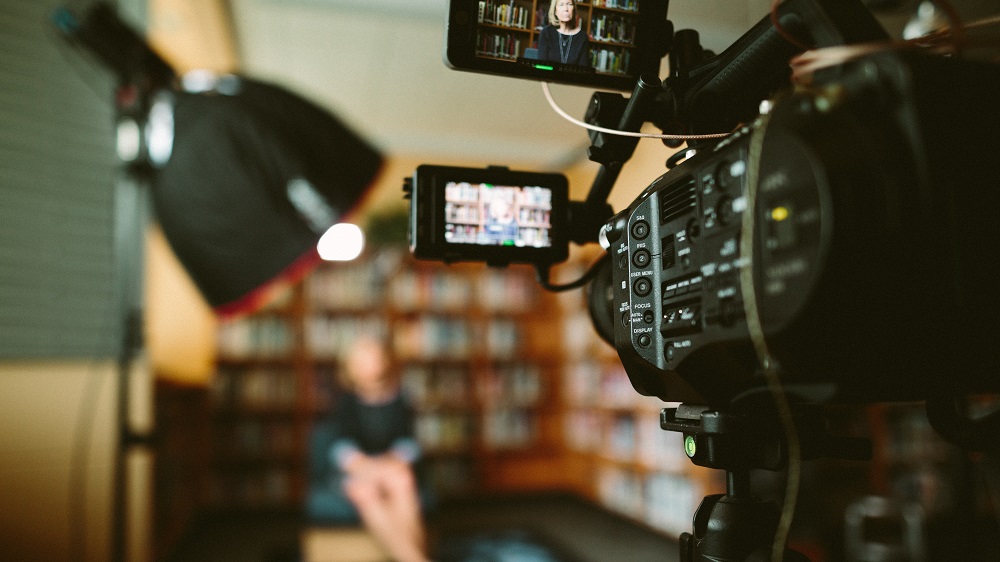
Meanwhile no doubt, as is standard TV practice, the participants are coached not to acknowledge the camera, have no control over the use of the footage shot of them, aren’t consulted during editing and don’t see the results until they go to air. They have probably signed a confidentiality agreement in return for some kind of payment and if they don’t like the way they are portrayed, tough luck. Ethically this represents bad faith.
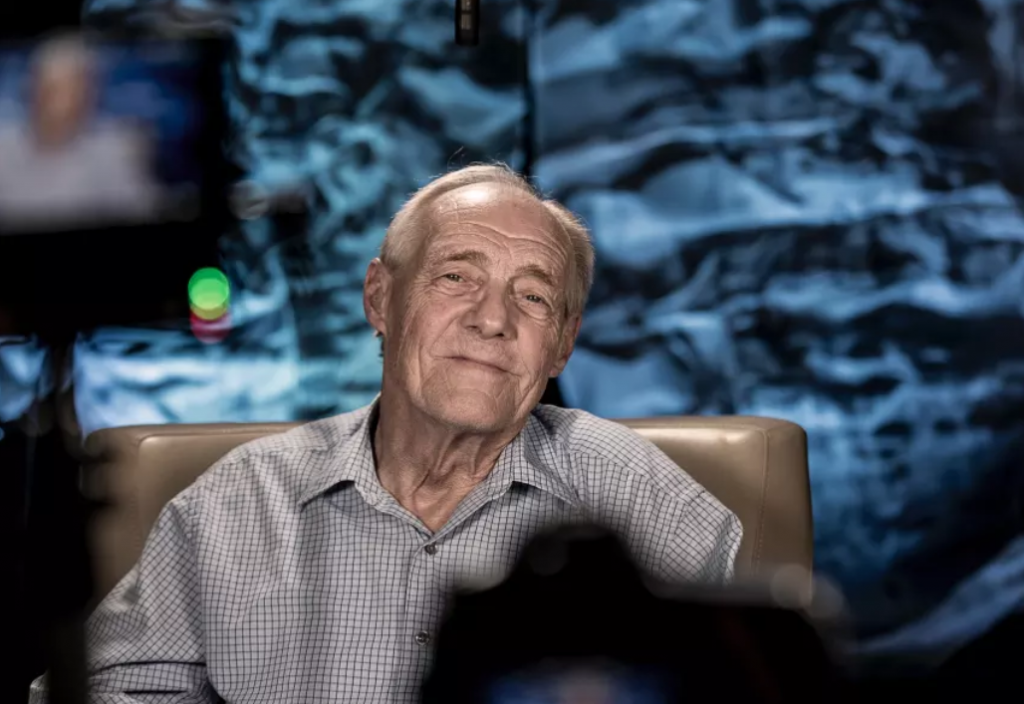
More concerning though, is that what the audience experiences in Look Me in the Eye is restricted to a kind of heart-tugging voyeurism. Indeed, as the SBS publicity pronounces – it’s ‘guaranteed to make you cry’. But suppose I am estranged from a loved one and desperately wondering what to do about it. Would I actually learn anything by watching, apart from that I might apply to be in the next series? Probably not.
Look Me in the Eye may be a meaningful experience for its participants, but there is no discussion of societal issues, no evidence based dialogue about estrangement, its causes and personal strategies for dealing with it, other than a pop-psychological idea about eye contact over talk.
So, what is the significance of this for ‘documentary’ as a descriptor? A clue lies in that complicit pretence referred to already, that there is no camera or director present. For as the writer Stella Bruzzi states, “what else is a documentary but a dialogue between a film-maker, a crew and a situation that, although in existence prior to their arrival, has irrevocably been changed by that arrival?”
Or, quoting the UK filmmaker Nick Broomfield: “it’s not the presence of the camera that changes people’s behaviour, it’s the relationship they have with the people behind it”.
The filmmaking relationship has always been central to documentary making, and the key ethical question for the filmmaker is how to represent her or his encounter with the other.
How do we avoid transforming our participants from subjects into objects to be experienced? Such responsibility is in danger of slipping away if documentary is subsumed under some all-embracing category. If a show is deemed ‘unscripted’ there is almost an implication that no-one is responsible—it ‘just happened’.
But if we are making a public document then ethics matter a great deal. That is why documentary as a genre, needs to be protected and nurtured, and whether a show is described as such, or something else, requires scrutiny.
Clearly, we will get no help from television here. It appears to be down to documentary makers themselves to defend their art.
Originally published by Pursuit, University of Melbourne, 12.08.2017, under the terms of a Creative Commons Attribution-NoDerivs 3.0 Australia license.
About the Author