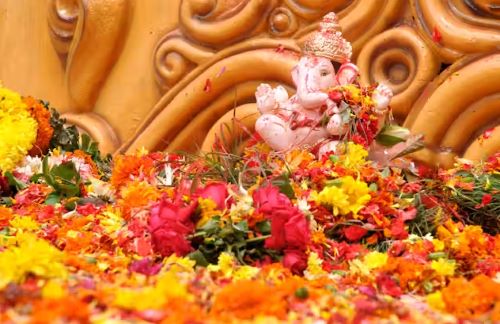
Which flowers are favored by which gods and elaborate rituals around how to offer them.

By Dr. Robert J. Stephens
Principal Lecturer in Religion
Clemson University
Introduction
In preparation for the many Hindu fall festivals such as Diwali, Dussehra or Durga Puja, worshipers all over the world will purchase flowers for use in ritual worship in temples, outdoor ceremonies or altars at home.
Throughout India, markets are always bustling with flower vendors, selling freshly cut marigolds, roses and lotus flowers. Devotees offer flowers and flower garlands to Hindu deities such as Lakshmi, the goddess of wealth; Ganesha, the remover of obstacles; or the warrior goddess Durga.
India’s wealthiest temple, Sri Venkateswara Temple at Tirumala, in southern India, used 3 tons of flowers during a floral bath and procession ceremony in 2024. The demand for flowers in worship is so high that two sisters from Bengaluru, Yeshodha and Rhea Karuturi, started a subscription-based service in 2019 to provide fresh flowers for puja or ritual worship throughout India.
Hindu texts describe worship with flowers as one of 16 “upacaras” or “services” to the divine. In temple rituals, “pujaris,” priests responsible for conveying the offerings to the deity, place flowers at the feet or drape them in garlands around the neck of the icon of the deity enshrined in the temple. Flowers are placed on a puja table at the feet of the image with the stems facing the devotee.
As a scholar of South Asian religions, I know that stories found in the “Puranas,” religious texts likely composed between the second and 10th centuries, describe why gods and goddesses favor certain flowers. The Puranas, loosely translated as “Old Tales,” include popular stories about Hindu gods and goddesses, kings and queens, and sages and other cultural heroes.
Pleasing the Gods
In her study of the use of Sanskrit ritual manuals in central India, the Indologist Gudrun Buhnemann noted that devotees, ancient and modern, observe elaborate rules for the use of flowers in the worship of particular deities.
For example, the manuals say that basil is favored by the Hindu god Vishnu but should never be offered to the god Ganesha. Lord Shiva grants blessings to those who worship him through offering leaves from the wood apple tree. Wood apple leaves, however, should never be offered to Surya, the Sun.
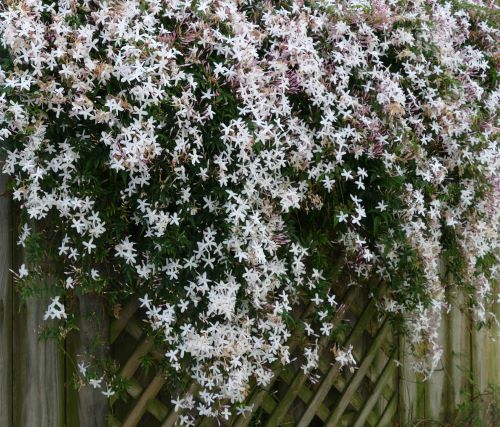
The “Skandha Purana” – the longest Purana with about 81,000 verses – is dedicated to the deity Skandha, a son of god Shiva and goddess Parvati. The text provides a gradation of flowers that culminates in the superiority of the jasmine or “jati” flower for the worship of Vishnu. “The jati flower is better than all other flowers … the man who duly offers me a splendid garland with a thousand jati flowers … lives in my heavenly city for billions of kalpas (ages),” Vishnu explains in the text.
In her classic study “Offering Flowers, Feeding Skulls: Popular Goddess Worship in West Bengal,” religion scholar June McDaniel discusses traditional practices for the worship of Kali, the fearsome and protective mother goddess, who is to be decorated in red hibiscus flowers. Red flowers, in general, are believed to be sacred to Kali.
The 14th chapter of the “Shiva Purana” contains a section on “Directions for the Worship of Shiva.” Those who desire wealth should worship Shiva with flowers or petals from the “kamala” or lotus flower, chrysanthemum, or marigold. Worshiping Shiva with 100 flowers is said to enhance one’s wealth and wipe away all sins.
Flowers Can at Times Displease the Gods
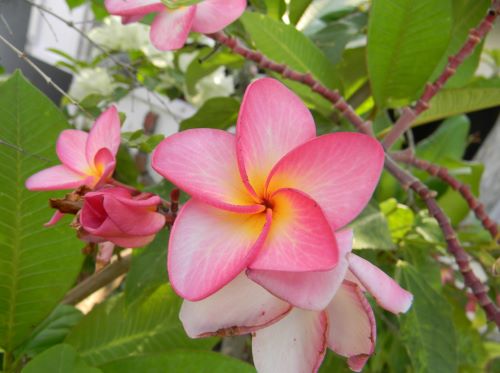
The Puranas also explain which flowers might displease the gods. Red flowers, such as plumeria, and those from the screw pine tree are not to be offered to the god Shiva. The Shiva Purana, in fact, explains why the “ketaki,” or screw pine flower, should never be offered to Shiva in worship.
Once upon a time, as the story goes, gods Vishnu and Brahma were debating which of them was the superior deity when suddenly a shaft of blazing light appeared between them. They decided to investigate. Transforming himself into a boar, Vishnu tunneled down into the earth to search for the origin of the lingam of light. Riding on a goose, his divine vehicle, Brahma flew upward in an attempt to discover the extent of the light.
After much digging, Vishnu indicated that he was unable to discover the light’s place of origin. While flying upward, however, Brahma encountered a ketaki flower that had fallen from a branch nearby. Brahma convinced the flower to support a false claim suggesting that he had reached the top of the shaft of light.
Just at that moment, Shiva appeared from the light and cursed both Brahma and the ketaki flower for their dishonesty. Due to his arrogance and deception, Brahma would henceforth have few devotees. For its part, despite being aromatic and pleasing to the eye, the ketaki flower is cursed by Shiva never to be offered to him in ritual worship.
However, Shiva later amends the curse to allow for the ketaki to be used for worshiping him during the popular festival called the “Great Night of Shiva” or Mahashivratri. Due to the increase in demand, there is a surge in the price of ketaki flowers during this annual spring festival.
In one of the most popular Hindu texts, however, the flower offered is less important to the deity than the attitude of the devotee making the offering. In the “Bhagavad Gita” or “Song of the Lord,” the deity Krishna declares that he will accept any sincere devotional offering, regardless of the type of flower: “Whoever offers me a leaf, flower, fruit, or water with sincere devotion, I will accept them.”
Lotus for Lakshmi
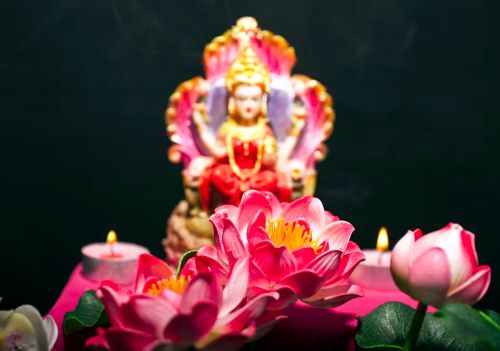
During the coming fall holiday season, devotees around the world will honor many deities, including the mother goddess, with flowers and other rituals. Prominent among the deities will be Sri Lakshmi, the goddess of wealth and good fortune.
Lakshmi is depicted as seated on a lotus throne, while also holding a lotus in one hand. The lotus flower grows in muddy ponds or pools but blossoms above the water. The lotus in bloom symbolizes many of the qualities associated with Sri Lakshmi, such as purity, prosperity and spiritual enlightenment.
When devotees around the world lovingly welcome the goddess into their homes on Diwali, the festival of light, they will be sure to offer Lakshmi her favorite flower – the lotus.
Originally published by The Conversation, 09.27.2024, under the terms of a Creative Commons Attribution/No derivatives license.
About the Author