


By Dr. Peter Harvey
Professor Emeritus of Buddhist Studies
The University of Sunderland
The Enlightened One
The Buddha lived and taught in north-east India in the 5th century B.C.E., dying in his eightieth year. The Theravāda tradition (literally “School of the Elders”, one of the earliest sects of Buddhism) puts his death in 486 B.C.E., while the Mahāyāna tradition (the largest major tradition of Buddhism existing today) has it in 368 B.C.E. Recent scholarly research suggests his most likely dates were 484–404 B.C.E.
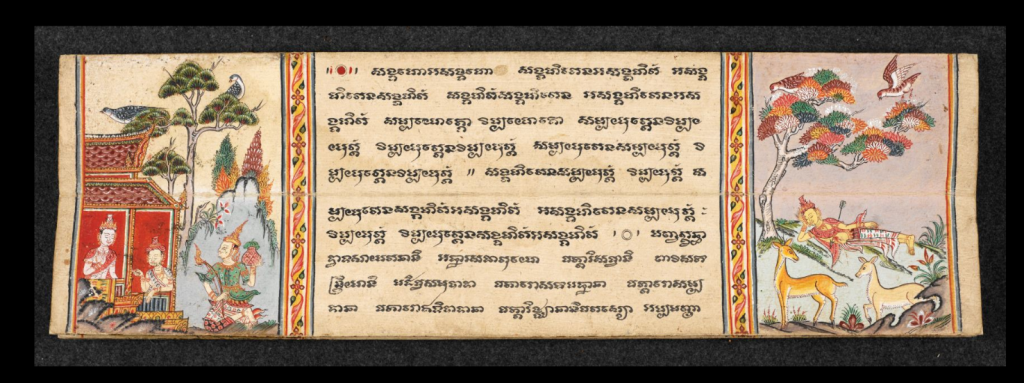
The term “Buddha” is not a name but a title, meaning “Awakened One” or “Enlightened One.” The person who became “the Buddha” of our age was born as Siddhattha Gotama (in Pāli) or Siddhārtha Gautama (in Sanskrit, one of the oldest documented members of the Indo-European family of languages, and a liturgical language of Hinduism and Buddhism). He is not seen as unique in being a Buddha, as Buddhas are seen to have arisen in past eons of the world, and will do so in future. They are not incarnations of a God, but humans who have developed ethical and spiritual perfections over many lives.
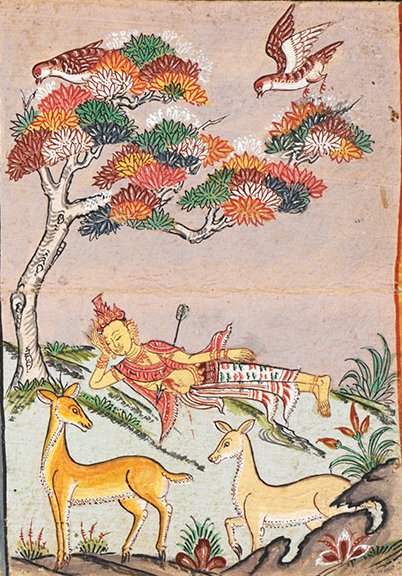
A Buddha is seen as one who becomes awakened to the true nature of reality, and awakened from ingrained greed, hatred and delusion. They are enlightened in being able to clearly see the nature of the conditioned world, with its many worlds in which beings are reborn, and Nirvana, the timeless state beyond all rebirths. Moreover a Buddha is seen as a wise and compassionate teacher who shows people the path beyond suffering.
Buddhism accepts several kinds of rebirth. The unpleasant ones are as some kind of animal, as frustrated ghosts, or in long-lasting, but not eternal, hells. The more pleasant ones are as humans or various kinds of god (deva). How someone is reborn is seen as a natural result of their intentional actions, or karma.
Bad actions lead to unpleasant rebirths, and good ones to more pleasant rebirths. All beings carry a stock of past karma into their next rebirth. As no rebirth lasts forever, even the gods, who are long-lived, need liberation from the cycle of repeated rebirths, and a Buddha is seen as a guiding teacher of both humans and gods.
Gautama is believed to have attained Buddhahood at the age of thirty-five, and for the remaining forty-five years of his life he taught many disciples how to live ethically and harmoniously in this life, how to attain a good rebirth, and how to go beyond all rebirths.
What Do We Know about the Buddha’s Life?
Scattered passages in early Buddhist texts focus on key events in his life. These were later woven together, embellished and added to in more sustained allegorical biographies in the early centuries C.E., such as the Nidānakathā of the Theravādins and the Mahāvastu, Lalitavistara, Abhiniṣkramaṇa Sūtra, and Buddhacarita of various other early schools.

Gautama was born in the small Sakyan republic as the son of an elder who was elected as a ruler. He later came to be seen as a “prince,” with his father as a “king.” His father was Suddhodana (Pāli, Sanskrit Śuddhodana), and Mahāmāyā was his mother.
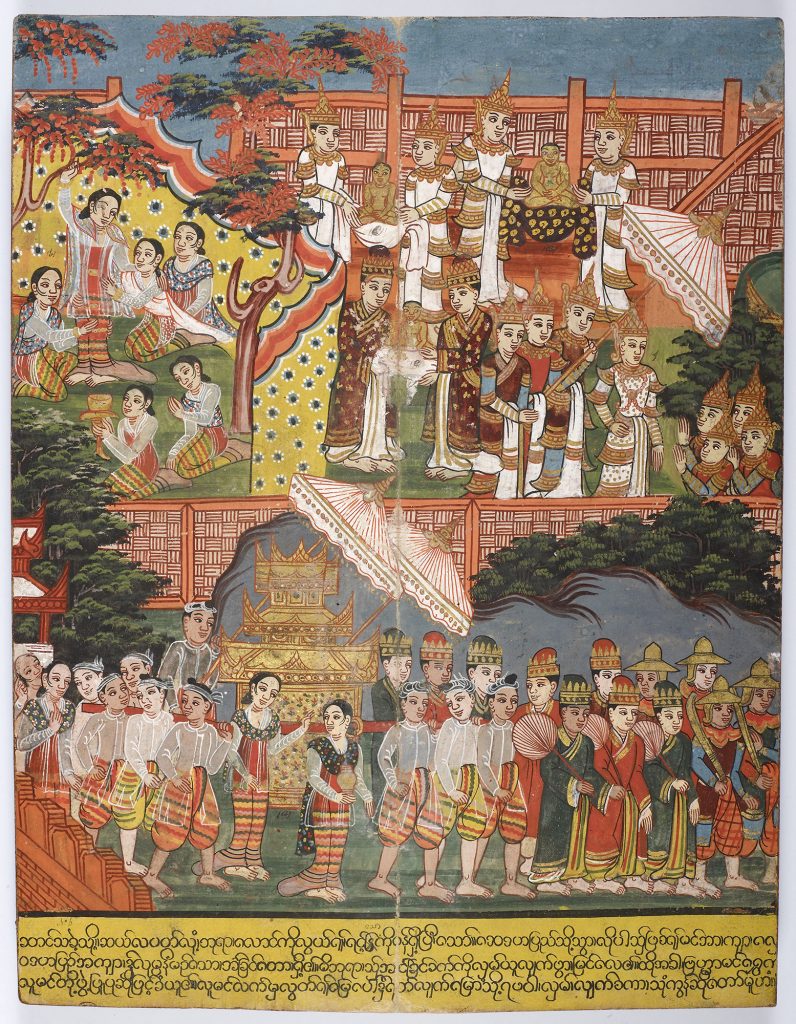
As soon as he was born, Gotama miraculously stood up, strode seven paces and, declaring that this was his last birth, said he was destined for awakening. Just days after, his mother died, so he was brought up by Mahā-pajāpatī Gotamī, his aunt. He had a very comfortable and pleasant upbringing.
However, in his twenties Gotama started to reflect on some of the stark truths of life: that however well off we are, we will age, get sick and die. The later biographies present his awareness of these facts as dramatic discoveries, as part of the story of the “four sights.” They say that due to his father’s constant care and over-protection, Gotama knew no sorrow, pain, or unhappiness, and saw no old age, disease or death. However, one day he went out for a chariot ride, which allowed him to see an aged man for the very first time. On a second occasion, he saw a diseased man for the first time. On a third trip, he saw his first corpse. On a fourth occasion, he saw a calm, wandering religious seeker, a renunciant (a person who renounces something; especially, someone who renounces worldly life for spiritual reasons, Pāli samaṇa, Sanskrit śramaṇa) and made up his mind to follow this lifestyle.
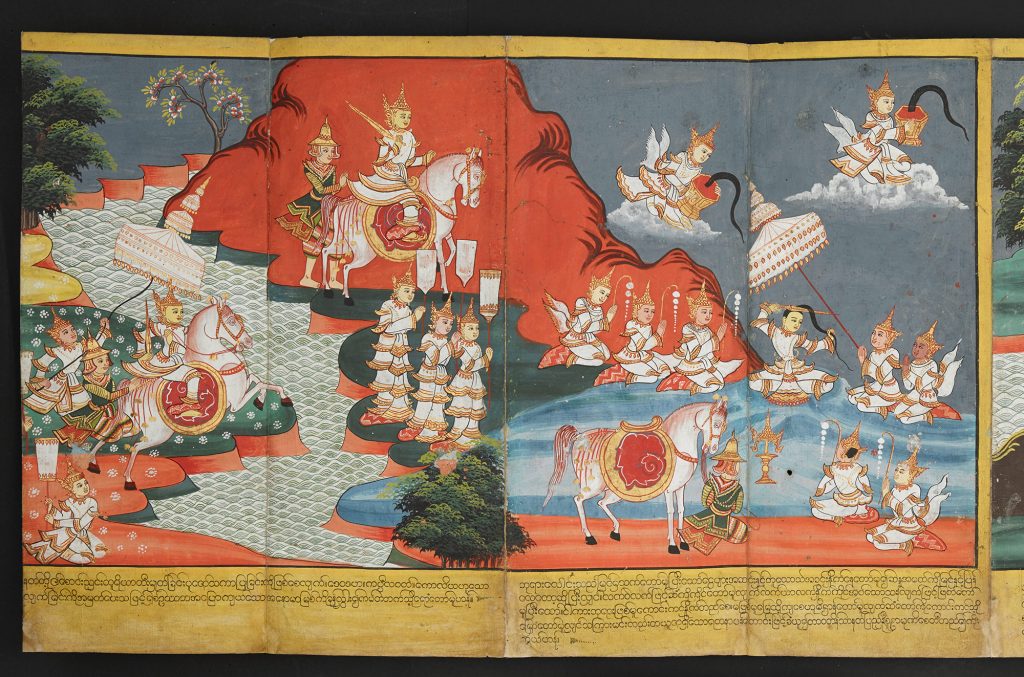
Aged twenty-nine, Gotama left his old life behind, including his wife and newborn child. He removed his royal clothes and ornaments, cut off his hair and put on simple ascetic clothes. This was his “great renunciation.”
In his search for peace, Gotama went in turn to two yogic teachers who taught him how to attain two refined mystical states that went beyond any of the forms of the material world. He soon mastered these, but felt that they did not go far enough as they would lead only to a refined rebirths, not escape from all rebirths.
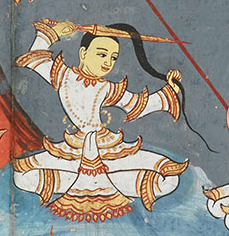
He next tried mortification of the body and its desires. He did this for six long years, but in time saw that this practice led him nowhere.
At this point, he recollected an incident in his youth: when seated under the shade of a tree his mind had reached a joyful and calm meditative absorption known as the first jhāna (a state of perfect detachment and awareness, Pāli, Sanskrit dhyāna). This recollection pointed him to a more balanced “middle way.” Too weak to meditate, he started taking solid food again, in the process, however, losing his five companions in asceticism.
Once in a healthier physical state, Gotama sat under a tree on a moonlit night to develop jhāna, probably by practising mindfulness of breathing. At first he had to overcome various hindering states of mind: sensual desire, irritation, dullness and lethargy, excitement and unease, and wavering doubt. These mental states within him were also embodied in a figure known as Māra (‘The Deadly’), a misguided tempter deity, akin to the Christian Satan.
Māra is intent on keeping beings entrapped within Saṃsāra, the cycle of rebirths and re-deaths, and was alarmed at the prospect of Gotama’s escaping this, so attacked him with an army of demons. Gotama was protected by his accumulated good qualities, and the hosts of demons fled in defeat. Māra then invoked his own magic power to try to overthrow Gotama. Gotama touched the earth with his right hand, calling the earth and its goddess to testify to his moral and spiritual perfections. The earth quaked in response and Māra and his hosts withdrew.
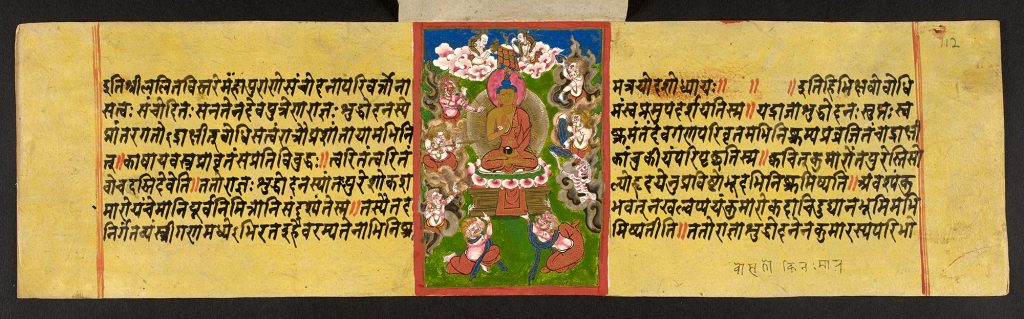
Later that night, Gotama attained the first jhāna again, and then three further jhānas till he was in a state of profound equanimity, mindfulness and mental alertness. From this, he then attained to three higher knowledges: 1) He remembered many of his past lives; 2) he acquired the “divine eye,” with which he saw how the nature of beings’ rebirths depended on their karma; 3) he perceived the four “Noble Truths.” These are four true realities of life recognised by spiritually noble people on the Buddhist path: “suffering” (dukkha), in the sense of aspects of life that are painful and unsatisfactory; the origin (samudaya) of dukkha, namely craving; the ending (nirodha) of craving and dukkha (Nirvana); and the path (magga) leading to this. He had thus destroyed the deep-rooted intoxicating inclinations binding him to repeated rebirths, and was a Buddha.
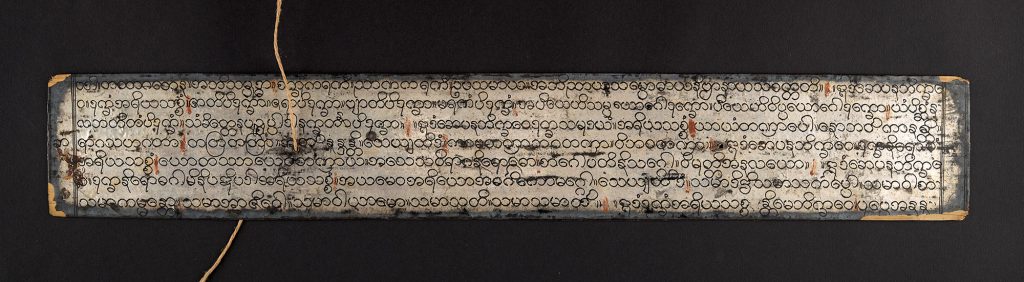
Seeing the profundity of what he had realised, and that ordinary people were unlikely to appreciate this, he was at first hesitant about teaching others. But Sahampati, a compassionate deity, taught by a past Buddha, keenly asked him teach others. He walked many miles to find the five former companions in asceticism, in Varanasi. He taught them about the middle way and the four Noble Truths, and thus “set the wheel of the Dhamma (teachings of the Buddha, including the Four Noble Truths and the Noble Eightfold Path) rolling.”
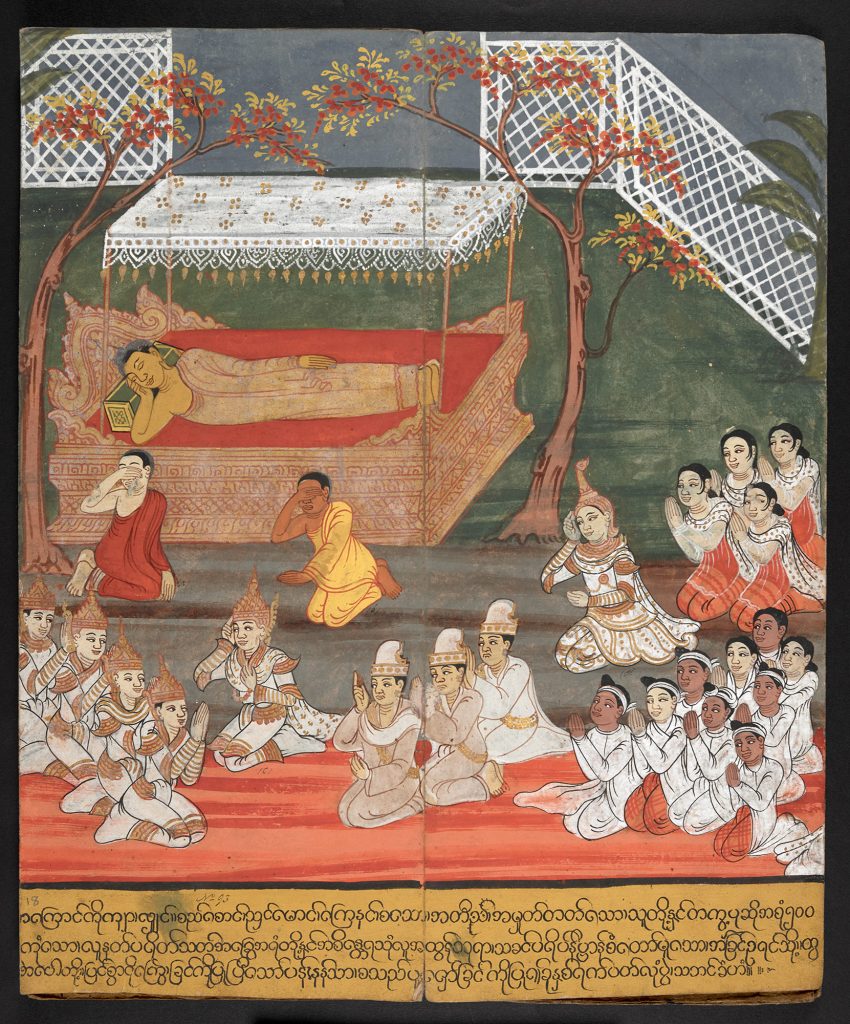
Events in his forty-five years of teachings are hard to sequence, but the last three months of his life are dealt within the Mahā-parinibbāna Sutta. He died of a stomach complaint, lying down between two trees blooming out of season, in a state of deep meditative calm and self-control, and with many gods looking on.
How Were the Buddha’s Teachings Collected?
Soon after his death, 500 disciples who were enlightened Arahats, free of further rebirth, gathered to agree what he had taught, and arranged these into two kinds of text that could be communally chanted: Vinaya, on monastic discipline, and the Suttas, or discourses. At that time, writing was little used in India, but there was a well-developed tradition of passing on detailed texts orally. Different group of monks in time had slightly different versions that they passed on, but there is a remarkable overall agreement. The form preserved by the Theravāda school, in Pāli, was written down for the first time around 20 B.C.E. in Sri Lanka, running to over 40 modern volumes.
The Suttas do not focus on the person of the Buddha, but his Dhamma (Pāli, Sanskrit Dharma): his teachings, the realities they point to, especially the nature of the world and the Path to Nirvana, and experiences on the Path, culminating in Nirvana. The Buddha said, though, that “he who sees the Dhamma sees me.”
Do All Buddhists Treat Buddha the Same?
From around the 1st century B.C.E., a new movement in Buddhism developed, alongside the early schools such as the Theravāda. This “Mahāyāna,” or “Great Vehicle’” tradition came to include a more glorified view of the Buddha.
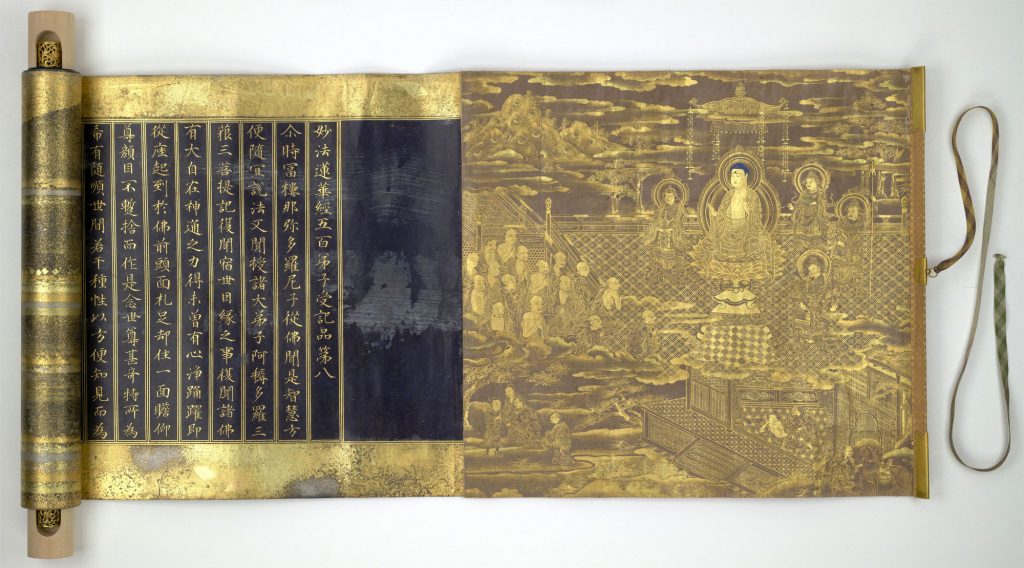
The Lotus Sūtra saw him as having become awakened many eons ago, and to have existed as a heavenly being, generally known as Śākyamuni Buddha. This Buddha was periodically incarnated on earth to compassionately teach the way to Nirvana and also how to become a perfect Buddha like himself. While earlier Buddhism had already talked of countless worlds spread throughout the universe, the Mahāyāna talked of named Buddhas in some of these realms.
In particular, Amitābha (Infinite Light) Buddha was seen to have an ideal “Pure Land,” where conditions for attaining enlightenment were ideal. Its glorious nature is so strong that a person’s individual good karma was not enough to be reborn there. However, Amitābha is said to have vowed to transfer some of his huge stock of good karma to anyone who had sincere faith in him. Hence developed a very devotional strand within Mahāyāna Buddhism, which has been very influential in China and Japan, alongside more meditative traditions such as Zen. Zen Buddhism emphasizes rigorous self-control, meditation, insight into the nature of things, and the personal expression of this insight in daily life, especially for the benefit of others.

A key Mahāyāna idea, emphasised in Zen, is that of the “Buddha-nature,” the potential for Buddhahood that is within all beings. Some texts see it as a seed that needs cultivating and maturing; others see it as already a pure Buddhahood within, which needs only to be meditatively uncovered and expressed in action.
The Mahāyānists aspire to become perfect Buddhas, like Gotama /Śākyamuni, and criticised the earlier schools for aiming at the lesser goal of becoming an Arahat, a person liberated from greed, hatred and delusion, and future rebirths. Perfect Buddhahood is seen as attained by following the long path of the compassionate Bodhisattvas, or Bodhi-beings who, when near to Buddhahood, become like heavenly saviour beings. Theravādins, though, are happy to aim for the easier, though still demanding goal of becoming Arahats.
Originally published by Smarthistory, 06.28.2017, under a Creative Commons Attribution-NonCommercial-ShareAlike 4.0 International license.
About the Author