Examining ecstatic elements of prophecy in the ancient Near East and Greek world.

By Dr. Martti Nissinen
Professor of Old Testament Studies
University of Helsinki
Prophecy and Possession
It is the shared conviction of most of today’s historians of religion, anthropologists, and biblical and Near Eastern scholars, that the prophetic performance is typically associated with a specific state of mind variably called ecstasy, trance, or possession. That prophetic activity involved ecstatic behavior in ancient Israel was already suggested by, for example, Bernhard Duhm1 and Gustav Hölscher, who began his comprehensive book of Old Testament prophets, Die Profeten, with a chapter on ecstasy and visions as the common feature of seers and prophets of all times and all peoples.2 Only a few texts concerning ancient non-Yahwistic prophets could be referred to a century ago, such as the Egyptian narrative of Wenamun, who gives an account of a “great seer” who becomes ecstatic and delivers an oracle of the god Amon on his behalf to the prince of Byblos (*142); and the story of Elijah and the ecstatic prophets of Baal on Mount Carmel (1 Kgs 18), which Hölscher compared with later evidence of the ecstatic worship of the Syrian goddess.3 The Assyrian prophecies were partly published at the time Hölscher and Duhm wrote, but their prophetic nature was not acknowledged.4
Thanks to the much-increased number of pertinent sources, today’s scholars are in a much better position to survey the ecstatic element in the ancient Near East, and even the Greek sources should no longer be disregarded. First, however, it is necessary to explain briefly the result of the last three decades of clarification of scholarly vocabulary.
The characteristic features of the prophetic performance can be described from the point of view of the one who performs, indicating the specific state of her or his body and mind during the performance. The words trance and ecstasy, the meanings of which largely overlap in scholarly language, refer to “forms of behavior deviating from what is normal in the wakeful state and possessing specific cultural significance, typical features being an altered grasp of reality and the self-concept, with the intensity of change ranging from slight modifications to a complete loss of consciousness.”5 Of the same behavior, also the word possession can be used, but whereas trance/ecstasy refers to the psycho-physiological state of the performer, possession is a “cultural theory that explains how contact takes place between the supernatural and natural worlds”;6 that is, an explanation of the ecstasy as a state of being possessed by an external, usually superhuman, agent. This presupposes the audience’s interpretation of the ecstatic behavior as being due to divine intervention, such an interpretation belonging to a cross-cultural cognitive architecture of human mind.7 Some scholars would use the related word inspiration as a form of possession implying the belief that “the god/spirit/power remains outside the human body, being satisfied with resting upon it while seizing and subduing the soul of the personality without taking its place.”8
Ecstasy/trance and possession/inspiration are not always equivalent, because not all allegedly possessed behavior is ecstatic, and not all ecstasy is explained as possession.
However, “‘trance’ and ‘possession’ regularly occur in the same cultural contexts, blending together to form a single, composite phenomenon—sometimes not.”9 A widely-used category that describes the characteristic behavior is the altered state of consciousness, which can be used for both the psycho-physiological state of the performer and its cultural interpretation.10
On the one hand, the prophetic performance can also be described from the point of view of the audience, in front of which the performer authenticates his or her role corresponding to cultural expectations of what kind of behavior is required of a person who claims to intermediate between human and divine spheres. A useful term to describe this is patterned public performance11 which, regardless of the degree of ecstasy or possession, is a culture-specific signifier of a culturally accepted behavior, considered as appropriate for the specific role of the performer and serving as his or her identity-marker. By its very function as transmissive activity, the prophetic performance needs an audience, and there is no prophecy without interplay between the prophet and the audience. Therefore, the performance needs to be not only patterned but also controlled: contrary to a common presupposition, ecstatic and possessed behavior, however eccentric it may appear, is not entirely idiosyncratic and random but one that can be recognized and appreciated by the audience.12 This is probably one of the reasons why the established ritual lends authority to the performance and is seen as its appropriate context.
Terminological clarity is needed first and foremost to enable scholarly communication and to avoid arbitrary use of scholarly language. However, terms like “ecstasy” or “possession” (or “prophecy,” for that matter) are not established entities that exist in their own right; rather, they reflect the ongoing scholarly process of understanding. Moreover, when applied to ancient texts whose way of expression is only partially understood by us, and to which the scholarly conceptualization is fundamentally alien, we cannot expect them to yield easily to our classifications.13 Therefore, we have to be careful about not knowing too much about ancient prophets who are no longer available to anthropological observation. This should not discourage us from attempting to understand prophetic performance in the ancient world; on the contrary, the cornucopia of bits and pieces that we have at our disposal should egg us onto put the puzzle together and see what kind of picture will emerge.
Prophetic Performance in Ancient Near Eastern Sources
The standard prophetic designations in the Akkadian language, muḫḫûm/muḫḫūtum (masc./fem., Old Babylonian) and maḫḫû/maḫḫūtu (masc./fem., Neo-Assyrian), are derived from the Akkadian verb maḫû “to become crazy, to go into a frenzy.”14 This verb is used for people who go out of their wits, or, at least, behave in unexpected ways,15 and it is also used for a highly emotional performance.16 The reflexive N-stem of maḫû repeatedly refers to prophetic performances, presumably indicating the condition in which the prophets received and transmitted divine words and suggesting that the characteristic behavior associated with the prophets appeared as a kind of “madness” in the eyes of those who witnessed them.
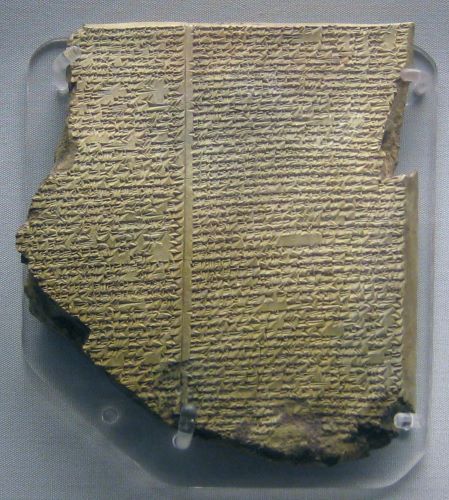
It may be asked, of course, whether etymologies, notoriously treacherous as they are in defining actual meanings of words, tell anything about the real comportment of the prophets. Moreover, one might argue that the use of the verb maḫû represents nothing more than a customary introduction to prophetic speech that has lost its original reference to their characteristic behavior; a similar argument could be made of the noun maḫḫû. That this is not the case, however, is evident, for instance, in the newly published fragment of the fifth tablet of the Epic of Gilgameš, dating to the Neo-Babylonian period. In a previously unknown scene, Enkidu and Gilgameš are on their way to the cedar forest where they are supposed to kill the demon Humbaba. While standing and marveling at the forest, Gilgameš becomes horror-stricken:
As the cedar [cast] its shadow,
[terror] fell on Gilgameš.
[Stiffness took] a grip of his arms,
and feebleness beset his legs.
[Enkidu] opened his mouth to speak, saying to Gilgameš:
“[Let us go] into the midst of the forest,
[set] to it and let us raise (our battle) cry!”
[Gilgameš] opened his mouth to speak, saying to Enkidu:
“[Why], my friend, are we trembling like weaklings,
[we] who came across all the mountains?
[Shall . . . ] . . . before us
[ . . . ] shall we see the light?”
“My [fr]iend knows what a combat is,
he who has seen the battle has no fear of death!
You have been smeared [with blood], you have no fear of death!
[Be] furious, like a prophet (āpilum) g[o into f]renzy!17
Let [your] s[hout] boom loud [lik]e a kettledrum!
[Le]t stiffness leave your arm, let debility depart [from] your [l]oins!”18
This passage suggests that the altered state of consciousness of a prophet (āpilum) was taken for granted, and since the ecstasy of the prophet was interpreted as being due to a divine intervention, the same connotation may be heard here, especially since Gilgameša little later turns to Šamaš, receiving the divine answer: “Fear not, stand against him!”19
The expression denoting the altered state of consciousness is šanû ṭēmu, which means “to change one’s consciousness.” This phrase is used in a prophetic context in a Hellenistic text to be discussed later in this section,20 but it is also known from Enuma eliš, where its subject is Tiamat who is being compared to a prophet: “She became like a prophet, she changed her consciousness.”21 The word ṭēmu means, among other things, “reason” and “intelligence,” and with the verb šanû it either denotes changing one’s mind or becoming mad;22 hence, the expression šanû ṭēmu offers a semantic equivalent to the verb maḫû, giving an even better idea of what is thought to happen when a prophet acquires the proper state of mind: his consciousness is changed.
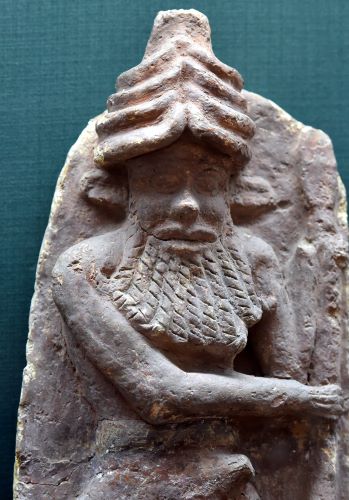
Osama Shukir Muhammed Amin FRCP, Iraq Museum, Wikimedia CommonsGilgameš and Enuma eliš are not the only texts associating prophets with ecstatic behavior. In a prayer to Nabû, an acrostic poem well comparable with biblical psalms, the humble speaker describes his life:
I invoked you, Nabû—accept me, o mighty one!
I have humbled myself among the people, I have abased myself to the ground.
I became affected like a prophet, what I do not know I bring forth (allapit kīma maḫḫê šalā īdu ūbal).
I have invoked gods, (being) thoroughly pious.23
The speaker describes himself as being “hit,” or “struck,” or “affected” (la-pātu), as the result of which he brings forth things that are not emerging from his own consciousness. The prayer captures in a nutshell what prophecy is all about, combining the altered state of consciousness with the prophet’s role as an inspired intermediary. The speaker’s “prophetic” state of mind is positioned liminally between the gods invoked and other people among whom he has humbled himself, which may reflect something of the prophets’ social position in the surrounding community.
In the Neo-Assyrian commentary on Šumma izbu, a series of birth omens, the prophets are equated with “possessed men”:
Prophetesses (maḫḫiātum) will seize the land = possessed people (šēḫu) will seize the land.
Prophets (maḫḫû) = possessed men (šēḫānu).24
Similar equations are made by several Old Babylonian and Neo-Assyrian lexical lists, repeatedly associating prophets with people like zabbu “frenzied,” kalû “chanter,” munambû “lamentation singer,” lallaru “wailer,” assinnu and kurgarrû “man-woman”—all devotees of Ištar with appearance and conduct noticeably different from the average citizen; for example:
la-bar = kalû “chanter”
gala.maḫ = kalamāḫu (ŠU-ḫu) “chief chanter”
i-lu-di = munambû “lamentation singer”
i-lu-a-li = lallaru “wailer”
lú.gub-ba = maḫḫû “prophet”
lú.ní-zu-ub = zabbu “frenzied”
kur-gar-ra = kurgarrû (ŠU-u) “man-woman”
ur-sal = assinnu “man-woman”
lú.giš.bala-šu-du7 = nāšpilaqqi “carrier of spindle”25
Thanks to these and other similar26 documents, we are not dependent on etymology alone when tracing the image of the Mesopotamian prophets. The etymological and lexical examination makes the prophets appear as proclaimers of divine words associated with cult performers, practitioners of non-inductive divination, and people whose more or less non-standard behavior, perhaps perceived as “queer” by the majority of the population, corresponded to their roles in the religious community.
The way the lexical lists associate the prophets with other people performing in the context of worship can be taken as indicative of their socio-religious setting. This is also strongly supported by most tangible evidence provided by ritual texts from Mari, belonging to the ritual of Ištar which was the annual highpoint of the ritual calendar.27 According to two texts describing this royal ceremony,28 even prophets and prophetesses feature prominently in it, together with musicians. According to one of these texts, when the king enters the temple and takes his position, the musicians first strike up “ú-ru am-ma-da-ru-bi,” a Sumerian canonical city lamentation.29 After this, the prophet is supposed to prophesy and, if he is able to fulfill his task, another canonical lamentation, “mà-e ú-re-mén,”30 is sung. However:
If by the end of the mo[nth] the prophet (muḫḫûm) maintains his equili[brium] (ištaqa[lma]) and is not a[ble] t[o] prophes[y] when it is time for [the chant] “mà-e ú-re-m[én],” the temple officials let the m[usicians] go. If he pro[phesies] (im[maḫḫima]), [they strike up] “mà-e ú-re-m[én].”31
To all appearances, the verb šaqālum denotes an unaltered state of mind, a “sober” condition that does not allow for a proper prophetic performance.32 If the prophet “maintains his equilibrium” (ištaqal), that is, fails to achieve the altered state of mind necessary for prophesying, when it is time for another lamentation, the music is not performed and the musicians can go. In the other text, the female prophets and the musicians come before the goddess, and there is, again, interplay between prophesying and lamentation, but the text is too poorly preserved to yield a clear idea of what actually is supposed to happen.33 According to a possible reading, if the women prophets are not able to prophesy, the musicians cover for them by singing a lamentation; in any case, they are not sent away as in the previous case.
The two texts allow several implications concerning the prophetic performance. (1) Prophets, male and female alike, are supposed to prophesy during a ritual celebration. However, (2) it is taken for granted that they are not necessarily able to do so. This can be interpreted as a kind of “randomizing” feature in the prophetic performance, indicating that the required state of consciousness is not a matter of course but depends on something that is not in the performers’ own control.34 Furthermore, (3) the temporal modifier “by the end of the month” is too imprecise to point at the very moment allotted to the prophet’s performance in the ritual, and rather suggests that the prophetic state of consciousness was expected to last in some form for a certain period of time—if not as an enduring state of ecstasy, then at least as some kind of a “standby” position that precludes the actual ecstatic performance.35 (4) The prophets are not themselves introduced as musicians but perform in interplay with them. That their performance is preceded by music may suggest that the music was supposed to trigger or intensify the state of mind necessary for uttering a prophecy.36 Alternatively, the prophecy and the music may together have formed a kind of liturgical alternatim, the music responding to the divine word uttered by the prophet and becoming useless without it. (5) Prophecy coincides with lamentation, which may be taken both as an indication of the specific quality of the laments as triggers of the prophetic utterance, and of its presumed contents.37 It is noteworthy in this ritual context that the “úru àm-ma-ir-ra-bi” (also known in an Akkadian translation) is a lament cried out by the goddess Inanna/Ištar who is distressed over her destroyed city.38 As mouthpieces of the goddess, the prophets are probably supposed to commiserate with her agony—something that also belonged to the role of other personnel listed in the above-mentioned word-lists, such as the lamentation singers and the persons with unconventional gender roles.39
Further evidence suggesting that the associations made in the lexical lists are not coincidental can be found in a Neo-Assyrian ritual text where prophets and prophetesses feature together with ecstatics:
[For the s]hepherd boys of Dumuzi you shall place a confection; for the frenzied men and women (ana zabbī zabbāti) and for the male and female prophets (maḫḫê u maḫḫūti) you shall place seven pieces of bread. Then let the sick person recite the following to Ištar: ( . . . ).40
The context of this passage is a ritual that takes place on the twenty-ninth day of the month of Tammuz, “when Ištar makes the people of the land wail over Dumuzi, her beloved, ”to be performed for a person seized by the spirit of a dead person, a demon, or any other evil thing.41 The ritual involves substantial food offerings, and also some music, to judge from the wind instruments dedicated to Dumuzi. The only thing that is said about the role of the prophets in this ritual is that they are there together with “shepherd boys of Dumuzi”—that is, cult functionaries who intercede on behalf of the sick one—and frenzied men and women (zabbu and zabbatu). The prophets receive their share of the offerings and are present when the sick person begins to recite his prayer to Ištar. The performative role of the prophets and ecstatics must be extracted by reading between the lines, but it is probably to mediate the healing power of the goddess and to intercede on behalf of the sick person. The ritual context also suggests that the prophets’ performance interplays with that of musicians and has to do with Ištar’s wailing over Tammuz. Transmission of divine words by the prophets and other ecstatics is not mentioned here.
Actual reports on prophetic performances can be found in letters to King Zimri-Lim of Mari referring to prophetic proclamation situations:
In the temple of Annunitum, on the 3rd day, Šelebum went to frenzy (immaḫḫu) and said: “Thus says Annunitum: ( . . . )”42
In the temple of Annunitum in the city, Ahatum, a servant girl (ṣuḫartu) of Dagan-Malik went into frenzy (immaḫḫima) and spoke: ( . . . )43
[On that day] Irra-gamil [went into fr]enzy ([imma]ḫêm). [This is what] he said: ( . . . )44
As demonstrated by these examples, the verb maḫû introduces a direct divine speech which indicates that it semantically encompasses both aspects of theoral performance of the prophet, that is, the distinct behavior and the act of speech. As such, it implies more than the more usual introductory formula “a prophet(ess) (NN) arose (itbi) and spoke.”45 The verbs maḫû and tebû never coincide, which raises the question whether they denote different kinds of prophetic performance; however, there is nothing in the texts to suggest that this is the case. The oracles introduced withmaḫûare no more “frantic” than those with tebû, neither is there any indication of a different behavior of the prophet in the proclamation situation. Hence the two verbs may simply be taken as two different ways of expressing the same thing. At any rate, it is noteworthy that in two of the three cases, the performance is said to have taken place in the temple context, and one of the prophets is Šelebum, well known as a gender-neutral person, an assinnu.
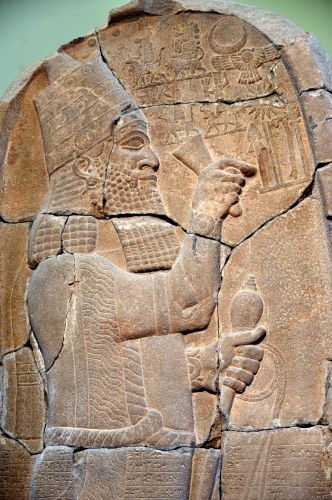
An analogous Neo-Assyrian case may be found in the letter of Nabû-reḫtu-uṣur to Esarhaddon, reporting an intriguing case from the Western part of the Assyrian empire:
A slave girl (amtu) of Bel-aḫu-uṣur [ . . . ] upon [ . . . ] on the ou[tski]rts of H[arran]; since the month of Sivan she is enraptured (?) (sarḫat) and speaks a good word about him: “This is the word of Nusku: The kingship is for Sasî! I will destroy the name and seed of Sennacherib!” Let your squadron commander question the household of Bel-aḫu-uṣur under the main gate of the Nabû-temple. Let the šašēpi guards who brought the slave girl into the house of Sasî bring her here, and let the king [ . . . ] perform a(n extispicy) ritual on her account. Let them bring Bel-aḫu-uṣur from Harran and [ . . . ] Nusku. May the name and seed of Sasî, Bel-aḫu-uṣur and their accomplices perish. May Bel and Nabû establish the name and seed of the king, my lord, until far-off days!46
This text is more difficult to interpret, especially because the word sarḫatis otherwise unknown in the Akkadian language. If it can be interpreted as afeminine stative form of a verb corresponding to the Syriac šrḥ “to rage,” the Aph‘el form of which has the meanings “to ravish, enrapture, fascinate, captivate,”47 it can be understood as referring to the altered state of consciousness of the woman speaking on behalf of the god Nusku, hence providing an Aramaic-based equivalent for the Akkadian maḫû. That the behavior thus designated had gone on “since the month of Sivan”indicates that she had been seen in the respective state of mind for quite some time, not only on one single occasion. Furthermore, it is reasonable to assume that the place where she delivered her “good word” is the temple of cedar erected by Esarhaddon “on the outskirts of Harran” when he was on his way to conquer Egypt.48 If these assumptions are correct, the presentation of the performance of the Syrian slave girl is closely reminiscent of that of her cognates at Mari, the difference being that from the point of view of the informer, her performance was to be judged as a pseudo-prophecy.
Our last cuneiform example derives from a much later period. The astronomical diary concerning events that happened in Babylonia in the month of Tishri of the year 133 BCE gives an account of a prophetic performance that adds important aspects to what is discernible from the texts discussed above. The pertinent passage of the diary begins as follows:
In that month, a man belonging to the Boatman family became posse[sse]d and changed his consciousness (ittaṣb[atamm] a ṭēnzu išnima). [ . . . ] A dais that lies between the temple of Sin, Egišnugal, and the gate [of Marduk…] He placed afood offering upon it and delivered a good message to the people: “Bel has entered Babylon!” The [people], men and women alike, came and placed food offerings on that dais and, opposite to that dais, ate, drank, rejoiced and made merry.49
Again, we are told about a prophet—Mr Boatman presents himself as a “messenger (māršipri) of Nanaya”50—who makes a public appearance in the context of worship, first in the city of Babylon, and later on in Borsippa. Unlike the documents discussed above that never refer to the origin of the prophets’ characteristic behavior, this text states unambiguously that the prophet was possessed (ṣabātu)—by what or by whom is not indicated, but Nanaya as the oracular deity suggests herself as the most probable candidate. As a result of the possession, his state of consciousness is said to have been changed; the phrase ṭēnzu išni51 is the same that was used already in Gilgameš and Enuma eliš discussed earlier in this section. That the religious authorities call the prophet a “hothead” (šābibannu),52 certainly insinuating how he was appreciated by those who were less convinced by him than the people of Babylon and Borsippa, is probably indicative of his comportment.
Moving from Mesopotamia to the West Semitic milieu, we can return to the long-known event that Wenamon the Egyptian reported to have happened to him in the Phoenician city of Byblos. In this assumed locus classicus of the “Canaanite” background of the “Israelite” prophecy, Wenamon relates that when the ruler of Byblos, who had repelled him and told him to leave the harbor, was offering to his gods,
the god (Amon) seized a great seer from among his great seers, and he caused him to be in an ecstatic state, and he said to him: “Bring up the god! Bring the messenger who bears him! It is Amon who has sent him. He is the one who has caused that he come.”53
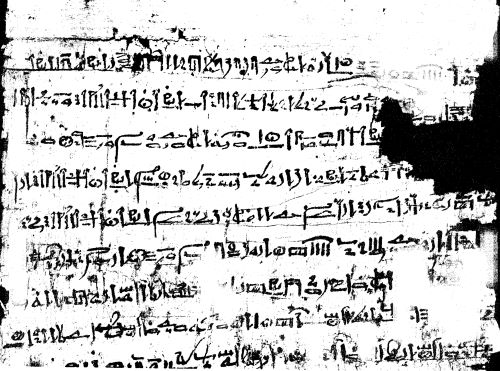
In the light of the cuneiform evidence we have at our disposal today, Wenamon’s report makes perfect sense, although there is nothing specifically “Canaanite” about the prophetic performance experienced by him. A prophet, that is, a mediator of the divine word, becomes seized by the deity and delivers the divine message to a ruler in the context of worship in a temple—all this is familiar to us from cuneiform sources.54 That such an episode is said by an Egyptian to have happened to him in Phoenicia is an important piece of evidence, and not only because it is written in the eleventh century BCE, an otherwise dimly visible corner in the historical landscape of prophecy. Whatever “really” happened in Byblos, Wenamon’s report tells us how an Egyptian writer would have interpreted a prophetic performance, and the way he does it is compatible in every respect with the cuneiform evidence he could not possibly have been familiar with. This speaks for a common, long-term Near Eastern understanding of divine–human communication by means of prophetic activity.
While the texts discussed so far demonstrate that prophetic performances were commonly associated with a characteristic behavior in different parts of the ancient Near East, there are virtually no descriptions in the above-mentioned sources to indicate how the required state of mind was achieved and what actually happened when the prophets prophesied. An intriguing hint at the prophets’ behavior is given by the Middle Babylonian “Righteous Sufferer” text found at Ugarit (*122) and dating roughly to the same period as the Report of Wenamon. In this text, the distressed speaker says that his brothers “bathe in their blood like prophets (kīma maḫḫê).”55 This brings into mind the association of the prophets with people like assinnu and kurgarrû, “carriers of spindle” and other specialists of ritual lamentation in the lexicallists discussed above, placing the prophets on a par with the devotees of Ištar whose ritual performances included battle scenes56 and has also been interpreted as involving self-mutilation.57 There were demonstrably assinnus among the prophets of Mari,58 which makes their participation in such kind of bloody performances possible—whether always, everywhere, and by every prophet, is another question.
A further indication of a possible method of achieving the state of mind required for prophesying in a completely different context can be found in the letter of Queen Šibtu of Mari to her husband:
Concerning the campaign my lord is planning, I gave drink to male and female persons to inquire about signs.59 The oracle is extremely favorable to my lord. Likewise, I inquired of male and female about Išme-Dagan. The oracle is unfavorable to him.60
. . .
Perhaps my lord would s[ay] this: “She has [made them speak] by fraudulent means.”But [I did] not make [them] speak anything. They speak voluntarily—they could resi[st] as well!61
The same divinatory technique is mentioned also in another letter of Šibtu.62 Well imaginable as it would be, it is not certain whether the drink is alcoholic63 or otherwise intoxicating; in any case, the men and women in question are affected by it (or by the hospitality of Šibtu64) to the extent that they utter the inquired oracles. Interestingly, however, Šibtu is prepared to be accused that she had obtained the oracle in an inappropriate way; this gives the impression that her method of soliciting divine words was unusual and therefore under suspicion.
Unspecific as the sources are about the particulars of the characteristic behavior of the prophets, one should beware of sweeping generalizations concerning the nature of prophetic performances.65 What matters more is that, in whatever way the altered state of consciousness manifested itself to those who witnessed it, it was recognized as such and was given an interpretation compatible with the common understanding of divine–human communication. Expressions denoting the characteristic behavior of the prophets like the verb maḫû imply the “change of consciousness” in the first place, allowing only a faint idea of the particular method of acquiring the required state of mind. The texts seem to presuppose that the persons in question, whether servant girls or cultic functionaries, assumed a specific role in which they were acknowledged as capable of becoming mouthpieces of the divine; as says Richard D. Nelson on biblical prophets: “The audience of a biblical prophet would need to be convinced of the authenticity of that prophet’s divine communication and encouraged to listen to and act on it.”66 This leads us to the question of ecstasy in the prophetic performance as it appears in the Hebrew Bible.
Prophetic Ecstasy in the Hebrew Bible
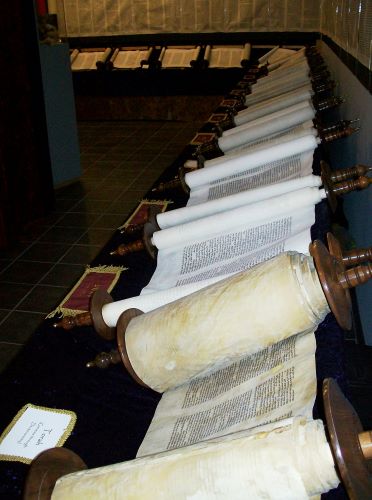
Gustav Hölscher and Bernhard Duhm have argued already that the Hebrew prophets gave their oracles in an ecstatic state and subsequently wrote them down. The conviction that ecstatic behavior formed an essential part of the performance of the prophets was shared by a number of scholars,67 and it could be corroborated with further evidence, both from the cultural environment of the biblical writings and from historical analogies in different cultures. A Canaanite origin of ecstatic prophecy, or “Nabitum,” in Israel was suggested by Alfred Jepsen;68 Alfred Haldar was well ahead of his time in investigating impressive comparative evidence from Mesopotamia, including the texts later known as Assyrian prophecies;69 and another Swedish scholar, Johannes Lindblom, discussed prophecy in ancient Israel extensively from the perspective of supernormal experiences, drawing on ancient Near Eastern as well a son more modern analogies.70 Many biblical scholars have ever since viewed the biblical prophets’ performance, in all its variability, against the backdrop of the ancient Near Eastern texts and modern anthropological evidence,71 even though not all of them have been willing to see the “classical” Hebrew prophets involved in ecstatic behavior.72
The possessive aspect of prophetic activity is strongly suggested by the Hebrew Bible, and there is no need to view this kind of prophecy as an early phenomenon influenced by the so-called “Canaanites.”73 Attempts to make a distinction between the “sober” ecstasy of the biblical prophets and the more frantic, or “orgiastic,” ecstasy elsewhere are arbitrary at best.74 Different types of ecstasy can certainly be recognized and differences between biblical and other accounts can be shown, but no general dividing line between biblical and extrabiblical prophets can be drawn in this respect.
Many prophets of Yahweh, in fact, engage in ecstatic behavior in the Hebrew Bible, making spirit journeys and seeing heavenly things (2 Kgs 5:26; 6:17; Ezek 3:12–15; 8; 11; 37:1–14; 40–8; cf. Paul in 2 Cor. 12:1–5). Just like in the Near East, presence in the divine council—hardly typical of the regular state of mind—or at least knowledge of its decisions is required of a true prophet in several biblical texts (1 Kgs 22:19–23; Isa. 6; Jer. 23:16–22; Amos 3:7).75 Seeing visions, which is one of the basic methods of obtaining a prophetic message (cf. Ezek. 1; 10; Amos 7:1–9; 8:1–3; 9:1–4; Zech. 1–6), certainly requires an altered state of mind; for instance, the communication of Zechariah with the Interpreting Angel can hardly be explained otherwise.76 No qualitative difference canbe made between biblical and extrabiblical, or Israelite and non-Israelite, prophets: “[i]f Ezekiel does not have ecstatic experiences, then we have no criteria to judge that anyone of antiquity had such experiences.”77 Ezekiel’s ecstasy is repeatedly expressed by the phrase “the hand of Yahweh was upon me/him,” introducing the prophet’s visions and spirit journeys.78 The same expression is used of Elisha when he prophesies while a musician is playing in 2 Kings 3:15.
Another aspect of the divine possession of the prophets can be seen in their God-given privilege to indulge in extravagant behavior like Isaiah’s going naked for three years (Isa. 20:1–6) or Ezekiel’s unusual carryings-on (Ezek. 4–6; 12; 24:15–27). Even Jeremiah’s celibacy (Jer. 16:1–9) and Hosea’s marriage with the woman of bad reputation (Hos. 1), even though not implying an element of ecstasy, can be viewed as a kind of enduring state of living under God’s“hand.”Symbolic acts like these are not so well known from ancient Near Eastern documents—what comes to mind is the prophet eating raw lamb in front of the city gate in a letter from Mari79—and they have usually not been classified as instances of ecstasy. In modern times, such performances might cause the person in question to be sent to a lunatic asylum; for contemporaries, however, they were meant to signify divine possession.
The Hebrew root nb’, which derives from the noun nābî’, is not etymologically related to an altered state of consciousness but corresponds to the Semitic root nby that denotes calling or naming.80 While the noun denotes a person who has been called by God and/or speaks on God’s behalf, the denominative verb, attested only in the reflexive verbal stems Niph‘al (nibbā’) and Hithpa‘el (hitnabbē’), primarily means acting as anābî’, that is, prophesying. The majority of occurrences of the verb, especially in the Niph‘al form, refer to the prophetic performance of, for example, Jeremiah, Ezekiel, and Amos, at least seemingly without specifically ecstatic implications.81 The same verb in both forms can also be used negatively for prophesying or other divinatory performances presented in a negative but not necessarily ecstatic light by the text’s implied author or protagonists.82
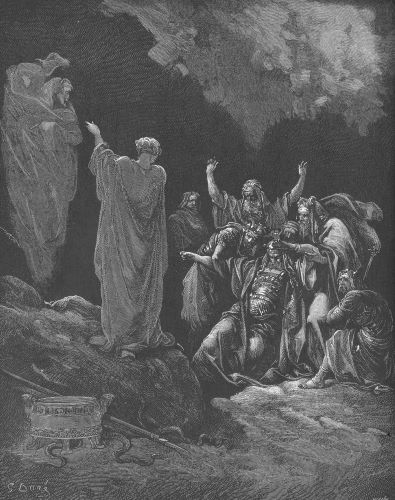
On the other hand, the use of the root nb’ is quite often related toperformances implying ecstatic behavior and an altered state of mind.83 When Samuel prepares Saul for him to meet the prophets of Gebah, he says: “The Spirit of Yahweh (rûăḥ YHWH) will come upon you, and you will prophesy (hitnabbîtā) with them; and you will be changed into a different person”(1 Sam. 10:6). And so it happens: on his way to Gibeah, Saul meets a band of prophets, the spirit of God (rûăḥ’ ĕlohîm) falls upon him and he “prophesies” (yitnabbē’) together with them (v. 10); this gives rise to the saying: “Is Saul also among the prophets?”(v. 12). Later on, when Sauls ends his men to Ramah to look for David who has escaped Saul’s aggression, they encounter a band of prophets led by Samuel, falling into a prophetic frenzy (yitnabbĕ’û) with them. The same happens to two further commandos sent by Saul, until he himself goes to Ramah and the spirit of God comes upon him and he, once again,“prophesies”before Samuel, strips off his clothes and lies naked all that day and the following night (1 Sam. 19:19–24). The verb hitnabbē’ does not seem to imply any kind of transmission of divine words, but is used for Saul’s ecstatic comportment,84 which is nevertheless enough for the audience to identify Saul among the prophets.
While the editors of the Deuteronomistic History incorporate an account of such prophets in their composition without hesitation, it may be debated to what extent Saul’s frantic behavior and his association with the prophetic groups reflects an appreciation of such activity, or rather instigates the prelude of his ultimate failure.85 Regardless of their attitudes, however, the origin of the prophetic ecstasy is seen in the spirit of God which affects the people’s minds; it can be even an evil spirit sent by God, as the one tormenting Saul when David was playing the lyre to sooth his mind and almost got killed (1 Sam. 18:10–11). In this context,hitnabbē’does certainly not imply any kind of transmission of divine messages or other intermediary functions but expressly indicates unusual behavior, leaving the reader struggling with the semantic problem of how to relate this kind of “prophesying” to prophesying in general.
If possessive behavior associated with prophecy in the stories on Saul has a somewhat suspicious connotation, this does not mean that it is meant to be understood in negative terms in general. Quite the contrary, the state of being possessed by the spirit (in-spiratio) is presented as the precondition for prophesying even elsewhere in the Hebrew Bible: in Third Isaiah (Isa. 61:1),Ezekiel (Ezek. 2:2 etc.), and Micha (Mic. 3:8)—and beyond: Jesus quotes Isaiah referring to himself in Luke 4:14–20, and in the great Psalms scroll from Qumran, King David the musician (cf. 11Q5 XXVIII 4 [= Ps. 151:2]) is said to have composed his works “through prophecy” (nĕbû’â) under the influence of “a discerning and enlightened spirit” from God (11Q5 XXVII 4,11; cf. 2 Sam 23:2).86
In Numbers 11:24–30, Moses complains to God about his heavy burden of leadership, and God promises to take some of the spirit he had given to Moses and put it on seventy elders chosen from among the people. The elders gather at the tent, and while the spirit rests upon them, they prophesy (yitnabbĕ’û). Two men called Eldad and Medad who had remained in the camp continue prophesying even after the other elders have ceased to do so. The elders’ performance is not described as the same kind of rapturous prophetic frenzy Saul fell into; rather, “the prophesying of the elders laconically told in Numbers 11 was believed to have consisted of a vision, the contents of which are no longer accessible to us, which enabled the elders to stand alongside Moses, to receive revelation in concert with him, and to bear with him the burden of governing the Israelites.”87 Unlike Saul’s frenzy, the elders ’“prophesying” has an intermediatory function; however, it is presented as something unusual and exasperating as is suggested by Joshua’s request to Moses to make Eldad and Medad stop prophesying, provoking the answer: “Would that all Yahweh’s people were prophets, and that Yahweh would put his spirit on them!” (v. 28–9). However ironically this comment of Moses may be understood, this is exactly what is promised in the eschatological prophecy in Joel 3:1–2: “Then afterwards I will pour out my spirit on all flesh; your sons and your daughters shall prophesy, your old men shall dream dreams, and your young men shall see visions.”
Saul’s frenzy in 1 Samuel 10 is accompanied by music, perhaps the same way as we have seen musicians of Mari responding to the performances of the prophets. Music, in fact, is several times associated with prophecy in the Hebrew Bible. These few instances do not turn the prophets into musicians, but they are not purely coincidental either, and they have not gone unnoticed by scholars.88
Two of the five biblical prophetesses are said to strike up a song. Miriam, explicitly designated as anĕbî’â, takes a drum and, followed by women who dance and beat the drums, she performs the song: “Sing to the Lord, for he is highly exalted; The horse and his rider he has hurled into the sea” (Exod.15:20–1). Deborah sings her famous song together with Barak son of Abinoam (Judg. 5:2–31), although she is not called a prophet here but in another context (Judg. 4:4). Two prophets are associated with love songs: Isaiah sings one himself (Isa. 5:1–2), and Ezekiel’s caricature among his people is “no more than one who sings love songs with a beautiful voice and plays an instrument well” (Ezek.33:32).89 Elisha calls for a lyre player, and when the musician is playing his instrument, the hand of God comes upon Elisha (that is, he goes into a trance)—and he gives a prophecy sought by the kings of Israel and Judah (2 Kgs 3:13–20).
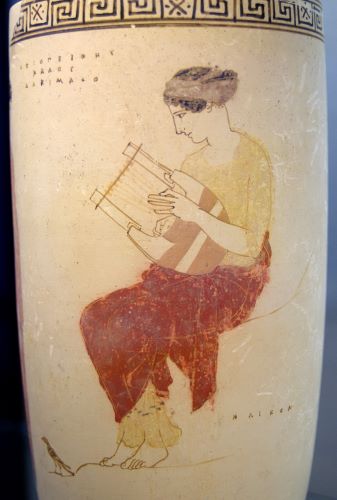
In Chronicles, the descendants of the Levites, Asaph, Heman, and Jedutun, are commissioned to prophesy (hannibbĕ’îm Q), that is, to sing (šîr), with lyres, harps, and cymbals while performing the temple service; men who had learned this skill are said to be no fewer in number than 288 (1 Chr. 25:1–7). It is most noteworthy that the Levitical singers’ songs of praise to God accompanied by musical instruments are equated to prophesying.90 While the case of Saul seems to be presented by the narrator as something no longer belonging to the implied reader’s world (cf. 1 Sam. 9:12), the Chronicler’s association of music, prophecy, and temple cult not only corresponds to the Near Eastern evidence but suggests that prophetic inspiration was seen as part and parcel of the cultic performance in the Second Temple of Jerusalem.91
Divine possession seems not to be appreciated by all biblical writers, though. This is indicated by a few defamatory statements about prophets, implying a dubious attitude towards the traditional image, social role, and performative culture of the prophets, including ecstatic or otherwise extraordinary comportment. Frantic behavior is described with the root nb’ in the case of the self-lacerating prophets of Baal subsequently massacred by Elijah (1 Kgs 18:28; cf. *12292); this image of prophets may partly have triggered the rather disparaging description in Zechariah 13:2–6 of the prophet who is ashamed of his prophesying, claiming that he received the wounds on his chest in his friends’ house. A deprecating attitude towards the prophets’ ecstatic behavior is, furthermore, implied by the word mĕšugga‘(“madman”) used for Jeremiah by the priest Shemaiah of Nehelam (Jer. 29:26–7) and of an anonymous prophet in Hosea 9:7. While the prophetic performance is thus described as mad, even here the prophet is called “the man of spirit” (’îšhā-rûăḥ).93
It seems that the ecstatic element of prophecy became problematic along with the scribalization of prophecy and the prophetic ideal during the Second Temple period at the latest.94 When the authoritative prophetic role was taken over by scribes and wisdom teachers, this happened greatly at the expense of traditional performative culture, which was more or less driven into the margins of society. The word of God was now written down, and the primary prophetic tasks were its study and interpretation. But even this was not done without the inspiration coming from God.
As prophecy became more and more equated with the study and interpretation of the Scriptures, this became a spirit-driven enterprise: “I will again pour out doctrine like prophecy, and bequeath it to future generations,” says Ben Sira (Sir. 24:33),95 who understood the task of the wise man to be the study of the Law, the prophecies, and the sayings of famous men (39:1–3). “If it is the will of the great Lord, he will be filled with a spirit of intelligence;then he will pour out wise sayings of his own and give thanks to the Lord in prayer”(39:6). This, too, is spirit possession, now happening in the bēt midrāš of the scribe rather than as a part of a cultic performance. Hence, we arrive at inspiration by learning, teaching, and research, which even for today’s audience may be more acceptable, or at least more familiar, than the traditional type of prophetic frenzy.
Philo of Alexandria, on the other hand, describes his work in unequivocally ecstatic terms. Philo writes:
A prophet possessed by God (theophorētos) will suddenly appear and give prophetic oracles (prophēteusei). Nothing of what he says will be his own, for he that is truly under the control of divine inspiration has no power of apprehension when he speaks but serves as the channel for the insistent words of another’s prompting (dieleusetai kathaper hypoballontos heterou). For prophets are the interpreters (hermēneis) of God, who makes full use of their organs of speech to set forth what he wills.96
Philo’s description of prophecy reads like a learned commentary to the line of the above-quoted prayer to Nabû (*118b) in which the speaker is “affected like a prophet,” bringing forth what he does not know himself. In another context, Philo says that a prophet “has no utterance of his own, but all his utterance came from elsewhere, the echoes of another’s voice. ”The human light is replaced by God’s light, “ecstasy (ekstasis) and divine possession (entheos) and madness (mania) fall upon us, ”and only when the divine spirit departs does the human mind return to its tenancy.97 This title only befits the wise, such as Noah, Isaac, Jacob, and Moses, and Philo explains even his own writing happening under the influence of divine possession (hypo katokhēsentheou), which makes him filled with “corybantic frenzy”(korybantia) so that he becomes unconscious of anything, even of the lines written by himself.98

Philo would hardly have spoken of prophets possessed by God, let alone described his own work as korybantia without having been familiar with the tradition of prophetic spirit possession, whether through Plato or his Jewish education, or both.99 Philo’s description of his experience shows, among other things, that there is no reason to make a sharp universal distinction between ecstatic experience and being filled with the spirit of wisdom.
A different trajectory of traditional prophetic tradition can be seen in the strong prophetic-charismatic element in the activity of John the Baptist (Mark 1:6; cf. Zech. 13:4), and prophetic ecstasy was far from alien to early Christian communities.100 Even music is not absent from the picture: Paul associates music with glossolalia and prophetic revelation (1 Cor. 14:7, 15, 26), and according to the Letter to the Ephesians, Christians should not be intoxicated by wine but filled by the Spirit, singing psalms, hymns, and spiritual songs (Eph. 5:18–20; cf. Col. 3:16). Without being explicitly about prophecy, this passage is reminiscent of the Levite singers prophesying by means of music and singing “thanks and praise to the Lord” in 1 Chronicles 25:1–7.
That prophetic ecstasy was appreciated already in the earliest Christian communities can be seen in the letters of Paul, especially in 1 Corinthians 12–14, where he prefers prophecy for glossolalia. Paul does not condemn either of the two ecstatic phenomena, but argues that prophecy as immediately understandable speech was more constructive for the life of the community.101
However, the ecstatic component of prophecy seems to have become a problem for some early Christian writers who saw it happening in a religious environment they deemed as heretic or pagan. For instance, for Origen and Lactantius, a true biblical or Christian prophet was strictly controlled and non-ecstatic even under divine inspiration.102 This was also argued by Epiphanius, who makes a difference between two kinds of ecstasy: a sober one which does not cloud one’s reason, and the other, false one that does cloud the mind and was practiced by the Montanist female prophets.103
Prophetic Performance in Greek Sources
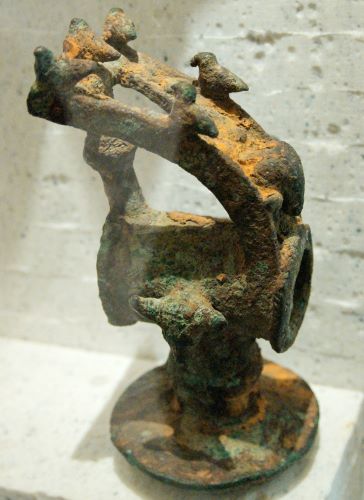
The divinatory performance is a common topic in Greek literature. The impressive body of Greek sources on the oracle of Apollo at Delphi yields more elements than the ancient Near Eastern evidence to reconstruct the enactment of a prophetic oracle. Moreover, while Delphi was the oracular site par excellence for the Greeks,104 and much of our image of Greek divination is extrapolated from that of Delphi, the oracular activity of the Pythia was not the only type of prophetic performance in the Greek world. In particular, the temple of Apollo at Didyma, in many ways comparable to that of Delphi, enjoyed a high status in the seventh and sixth centuries BCE,105 and that of Zeus in Dodona, Delphi’s greatest rival at times,106 deserve to be mentioned as principal sites of Greek prophecy.107
The earliest Greek evidence of prophetic performances may be found in Minoan Crete. Although the Minoan culture does not provide us with applicable textual sources, Nanno Marinatos has recently turned attention to four Minoan images from the sixteenth century BCE showing men who shake branches of a tree and kick their legs, women who seem to be in a twirling movement, and also women leaning on a stone.108 According to her interpretation, the positions of the persons illustrate ecstatic behavior, and the images depict oracular scenes in an open air sanctuary: “shaking the branch leads to understanding of the language of the tree, and leaning over a stone leads to understanding the whisper of the stone or dreaming a vision.”109 Marinatos interprets the female figure in the images to be the Minoan queen personally involved in a prophecy ritual. Her office as the high priestess thus included the role of an intermediary akin to that of the later female prophets of Apollo.110 This is reminiscent, not only of the roughly contemporaneous Ugaritic epic of Keret that mentions “a word of tree and whisper of stone,” possibly referring to a royal oracle,111 but also of the tree oracle at Dodona112 and Hesiod’s claim of his own Muse-inspired poetic gift: “But what do I care about these things concerning a tree or a stone?”113 In all these cases, trees and stones“appear together as part of a religious scenario linked to divine knowledge that is normally beyond the reach of simple mortals.”114
The Minoan iconography compares well with the Near Eastern sources mentioned above—both when it comes to the prophets’ characteristic behavior and the lack of any theoretical explication of its communal interpretation. The last mentioned aspect is, however, amply discussed in Greek literature from later times. The most famous Greek discussion on different forms of the divinatory art is the speech of Socrates in Plato’s Phaedrus (244a–45a) concerning different forms of mania, “madness,” as opposed to sōphrosynē, the “sane” kind of reasoning. Socrates defends the divine origin of mania by referring to ancient sages who defined it as the art of divination; the letter “t” in mantikēis but a tasteless addition of the moderns who think that the divinely inspired knowledge should be replaced by human reasoning, that is, the divinatory techniques (tekhnē) based on observation and calculation:115
( . . . ) and in proportion as prophecy (mantikē) is more perfect and august than augury, both in name and fact, in the same proportion, as the ancients testify, is madness (mania) superior to a sane mind (sōphrosynē), for the one is only of human, but the other of divine, origin.116
The first traditional type of mania is the gift of foretelling the future as practiced by the prophetess at Delphi, the priestesses at Dodona, the Sibyl, and other inspired persons who conferred great benefits on Hellas while being out of their senses (maneisai) but less so while in their senses (sōphronousai).The second type of mania is beneficial in curing sicknesses, and the third type is the one that comes from the Muses, inspiring songs and poetry. Plato equates the divine inspiration of the poets and the diviners even elsewhere,117 and it is interesting to note that all three types of divine inspiration can be found both in the ancient Near Eastern documents of prophecy and in the Hebrew Bible.
At first sight, Plato’s typology seems to correspond perfectly to the distinction between inspired and technical divination familiar to us from ancient Near Eastern sources and scholarship. It must be borne in mind, however, that in the rhetorical framework of the passage, constituted by the relationship of the “mad” lover and the “sane” non-lover, all three traditional types of mania are presented as an introduction to a “divine erotic madness” superior to all of them. Hence, the speech of Socrates is not primarily about ranking different kinds of divination but about the necessity of mania in the self-knowledge which is essentially love. Indeed, “divine erotic madness and divine sophrosyne are to be united in the successful experience of love.”118
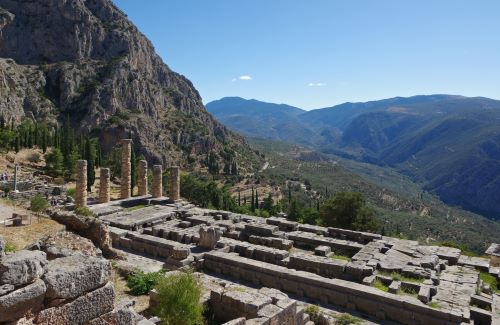
To be sure, Plato does acknowledge the inspiration of the diviners (manteis) who are not inspired speakers such as the Pythia and the priestesses of Dodona but utilize inductive methods of divination. In his dialogue with Ion, Socrates juxtaposes the diviners with the poets inspired by the Muses while arguing for the divine origin of poetry:
For not by art does the poet sing, but by power divine; had he learned by rules of art, he would have known how to speak not of one theme only, but of all; and therefore God takes away reason from poets, and uses them as his ministers, as heal so uses the pronouncers of oracles and holy prophets (khrēsmōdois kai toismantesi tois theiois), in order that we who hear them may know them to be speaking not of themselves, who utter these priceless words while bereft of reason (nous mēparestin), but that God himself is the speaker, and that through them he is addressing us.119
No trace of the distinction between inspired and technical diviners can be found here; on the contrary, even the seers (manteis) are said to speak “while bereft of reason” like the poets. The manteis were not prophets exactly in the sense that ancient Near Eastern and biblical scholars understand the word, that is, transmitters of divine word by non-technical means. Greek seers practiced divination using technai such as observing entrails of sacrificial animals and watching the flight of birds, but it is noteworthy that even in their case, a successful divination was believed to be based on a god-given insight without which the technai would have remained unfulfilled.120 On the other hand, even the Pythia-type divination was understood as a technē, that is, a god-given skill that Zeus, according to Aeschylus, inspired in the mind of Apollo, who was the spokesman (prophētēs) of his father,121 while Pythia, for her part, was the spokesperson (prophētis) of Apollo.122
The prophetic “madness” finds a mythological prototype in the honey-induced frenzy of the bee maidens in the Homeric Hymn to Hermes (sixth century BCE): these semi-divine nymphs had the gift of prophesying but could not prophesy unless having partaken of meli chlōron, which probably stands for an intoxicating mead.123 Greek sources sometimes mention diviners in away that suggests a characteristic behavior, such as Theoclymenus in the Odyssey (20.351–62), who is said to be “out of his senses” (aphrainei) by the suitors of Penelope because of his interpretations of portents;124 Plato’s seer Euthyphro who complains: “when I speak in the assembly about divine things, and foretell the future to them, they laugh at me and think me a madman (mainomenos)”;125 and Cassandra in Aeschylus’ Agamemnon,126 who claims to be appointed by Apollo to her office, utters an oracle of woe and is seen by others as frenzied (phrenomanēs) and god-possessed (theophorētos).127 Perhaps the most important legendary figure portrayed as an ecstatic prophet is the “Sibyl with raving mouth (Sibylla mainomenōi stomati) ”who, according to Heraclitus, “utters mirthless things.”128 The ecstatic character of the figure ofthe Sibyl may be modified according to the model of the Delphic Pythia.129
It is difficult, if not impossible, to judge exactly what kind of “mad” behavior the readers of each of the above-mentioned texts were supposed to imagine. Without an oracular content, the words of Theoclymenus or Euthyphro could be interpreted as quite ordinary speech that for some reason sounded ridiculous to their opponents; at any rate, as far as their words are quoted, they are presented in an intelligible language. But as the example of the poets in Plato’s Ion shows, incomprehensibility can hardly be said to be the main characteristic of a divinely inspired speech in Greek literature. Not only the poets sing by power divine; even a diviner can utter a prophecy in hexameter verse, as does Amphilytus the chresmologue (that is, a collector of oracles) before the battle of Pallese in 546 BCE to Pisistratus, allegedly under divine inspiration (entheazōn).130
The Greek vocabulary certainly suggests a specific state of consciousness of the divinely inspired speakers, but it does not necessarily refer to an uncontrolled behavior, even though this sometimes may indeed be the case. What matters is that the people thus characterized are given a role that sets them apart from other people, and the words they speak are given a meaning that implies a divine–human communication. Whether prophets in the Near Eastern sense or practitioners of inductive divination, “both the inspired prophet and the learned diviner fulfill the same role in society as intermediaries in the process of communication between the human and divine spheres.”131 The essential prerequisite of this role was that the prophet and the diviner could convince the audience of his or her legitimacy, which was always open to contradictory assessments, as the examples of Theoclymenus and Euthyphro demonstrate.
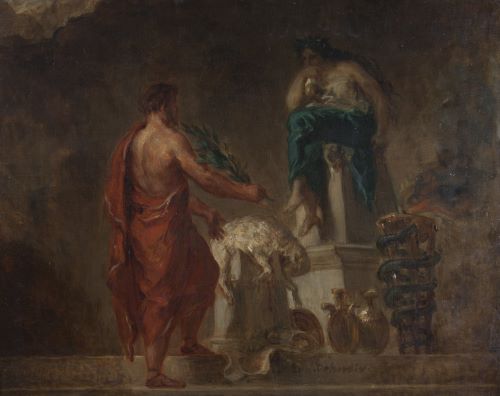
All this should be kept in mind when we turn to the Pythia of Delphi, whose legitimacy was beyond question in the Greek world for centuries, and this is reflected by the host of sources dealing with the oracle of Apollo at Delphi. While not the only available example of Greek prophetic performance, the Pythia constitutes the most thoroughly analyzed case also in modern scholarship.132 However, as one might expect, the reliability (so-called) of each source is a much-debated issue, and, as abundant as the references are, substantial gaps remain in our knowledge of what actually happened at Delphi. These gaps cover, among other things, the alleged divine possession of the Pythia. Another debated issue is the authenticity of the Pythia’s oracles in verse and the nature of her speech. Here, if anywhere, we encounter constructions, ancient and modern, between the extremes of the “raving” Pythia entirely possessed by the god and the “cool, collected Pythia, mildly inspired by a distant Apollo.”133
The traditional construction of the Pythia’s performance, represented by older scholarship, mostly presents the image of a virgin who,
robed in white, enters a darkened room at the back of a temple. She sits on a tripod, which is positioned over a chasm in the earth. From the chasm pour forth intoxicating vapors, and as they fill her body, she becomes possessed by Apollo. She speaks for the god in an incoherent voice, and her gibbering message is translated by priests into poetic verse that enquirers will be able to understand.134
Among ancient writers, the construction of the raving Pythia uttering unintelligible sounds can only be found in Lucan (39–65 CE), who depicts her raging madly about the cave:135
…first the wild frenzy overflowed through her foaming lips; she groaned and uttered loud inarticulate cries with panting breath; next, a dismal wailing filled the vast cave; and at last, when she was mastered, came the sound of articulate speech ( . . . ).136
This once popular image of the Pythia has been largely abandoned by more recent scholarship because it differs from that of other ancient authors.137 Plutarch (c.46–120 CE), who himself was a priest of Delphi and probably witnessed the Delphic oracle working in his time, does not portray Pythia’s behavior in such a way. To be sure, Plutarch does relate a case of a Pythia who went into the oracular chamber unwillingly, failed to perform in an appropriate way, and finally became hysterical.138 In this case, evidently, the prophetic performance was a failure and did not meet usual expectations; otherwise, Plutarch’s presentation of the Pythia is void of references to her frenzy or incoherent speech.
While Plutarch, to whom we owe much of our image, if not knowledge, of the Delphic oracle,139 lived in the period of Delphic decline, his testimony can be said to be valid for his own time but anachronistic with regard to the mantic session at Delphi in older periods. However, Herodotus, who lived half a millennium earlier (c.484–425 BCE) when the oracle of Delphi was at its height, makes dozens of references to the Delphic oracle throughout his work, constructing the image of the Pythia in a way that is not essentially different from that of Plutarch, at least when it comes to her comportment. Herodotus’ Pythia is not raving, speaks completely intelligible words usually in hexameter, and communicates directly with the consultants.140 Herodotus’ contemporary Euripides (480–406 BCE) depicts the Pythia “singing to Hellenes cries that Apollo sounds,”141 without any clear references to her wild behavior or unintelligible speech; the “cries” do not need to be understood as such.142 The same can be said of the oldest known presentation of the Pythia in Greek literature, that of Aeschylus (c.525–456 BCE), who in the opening scene of his Eumenides portrays her as entering the temple of Apollo, taking her seat as seer (mantis) and doing what had to be done: “For as the god doth lead, so doI prophesy.”143
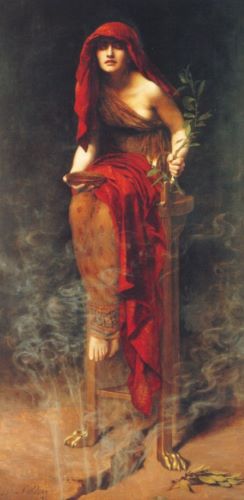
The image of the “raving” Pythia, hence,finds little support in ancient constructions of the Delphic oracle, and the idea of extravagant behavior of a prophet seems to derive only from Roman times.144 Nevertheless, it is clear that the ancient authors without exception, beginning with Aeschylus, saw her as speaking on behalf of Apollo and under his inspiration. Herodotus clearly sees her as impersonating Apollo when he refers to the Pythia straightforwardly as “the god,”145 and Plato, as we have seen, attributes the Pythia’s mania to divine inspiration. Lucan’s raving Pythia is entirely possessed by Apollo: “he forced his way into her body, driving out her former thoughts and bidding the human nature to come forth and leave her heart at his disposal.”146 Plutarch, from the mouth of his brother Lamprias, claims the opposite in his The Obsolescence of Oracles: “Certainly it is foolish and childish in the extreme to imagine that the god himself after the manner of ventriloquists (…) enters into the bodies of his prophets (prophētōn) and prompts their utterances, employing their mouths and voices as instruments.”147 Nevertheless, even Plutarch attributes the Pythia’s inspiration to a divine source explained in different ways in his dialogues. One explanation is that Apollo does not actually enter her body but gives an impulse to her soul which, combined with the impulse coming from Pythia’s own soul, results as prophetic speech.148 Alternatively, impulse was given by a daimōn, a disembodied intermediary conveying the divine inspiration.149 Yet another theory is that “the earth sends forth for men streams of many other potencies,” one of them being the “prophetic current and thread” which is most divine and holy (mantikon rheuma kai pneuma theiotaton esti kai hosiōtaton).150
The pneuma from the earth is identified by many ancient writers as the source of the Pythia’s inspiration,151 and not only hers, but also of the prophetesses of Apollo at Didyma who, according to Iamblichus, were inspired by the spirit rising from the holy spring. For Iamblichus, ecstasy was not as such the defining characteristic but a mere symptom of the divine possession: “they themselves are wholly possessed by the divine, the consequence of which is ecstasy.”152
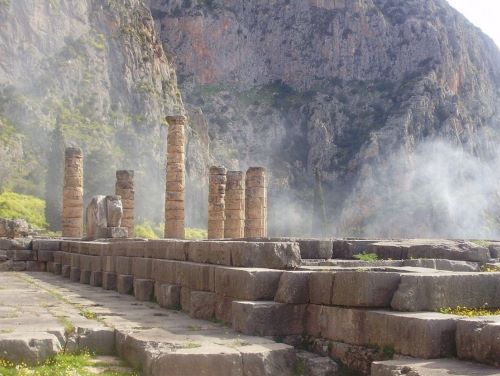
The pneuma inspiring the Pythia is often associated with the vapors coming out of a chasm in the ground, above which the Pythia’s tripod was located. While the existence of the chasm and its vapors used to be routinely dismissed by scholars as a legend,153 recent geological investigations have suggested that the temple of Apollo actually stood above an intersection of two fault lines along which three different gases indeed came up, among them ethylene that may cause an altered state of consciousness.154 While it may be doubted that the chasm kept producing its vapors for centuries, always at an appropriate time, it is thinkable that its existence is one of the reasons for the emergence of the Delphic oracle, and the very tradition of the existence of these earth-exhalations, perhaps together with their eventual appearance, may have triggered the mania necessary for prophesying.155
A comparable trigger is provided by the sounds caused by bronze cauldrons, doves, and trees that allegedly inspired the priestesses of Dodona156 and may find an iconographical expression in the above-mentioned Minoan images. Furthermore, the mantic session at Didyma may have been accompanied by music.157
It would be all too rational to explain the prophetic performance at Delphi, or anywhere, simply as a hallucinatory session of drug-addicted or otherwise stunned persons, whose twaddle was then given an interpretation by others.158 However, this is how scholars have often imagined “ecstasy” or “possession,” that is, as a state of mind which deprived the prophet of her or his intellectual capacity, disallowing intelligible and coherent speech. This understanding of divine possession has also affected scholars’ constructions of the Pythia. If the wild, uncontrolled, and raving image of her is to be rejected, what is the alternative? Joseph Fontenrose agrees that she was believed to be inspired by Apollo; however, he vehemently denies any traces of what he considers symptoms of possessive behavior: “The Pythia experiences enthusiasm, but not an uncontrolled and irrational frenzy.”159 This construction of the “cool, collected Pythia, mildly inspired by a distant Apollo” presupposes that a god-possessed person is unable to attain any intellectual achievement, such as coherent speech. Michael Flower, again, presents the Pythia as the prime example of someone experiencing spirit possession as the mouthpiece of adeity and indeed entering into an altered state of consciousness—and spontaneously composing hexameter verse.160
So was the Pythia raving or cool? Probably the most honest answer is that we do not really know. A detailed historical vision of the Pythia and other inspired mouthpieces of gods in Greece remains elusive and we are left with constructions and reconstructions dependent on the ideological, conceptual, and literary contexts in which they are created. The received wording of the Delphic and other Greek prophets cannot be taken as their ipsissima verba.161 The texts available to us are the result of a substantial process of communication,162 the reversal of which is, to put it mildly, a highly demanding task.
One thing is beyond doubt however: regardless of the writer, the Pythia and her colleagues were believed to be inspired by Apollo or Zeus and to transmit divine knowledge to their consultants.163 What they said mattered more than how this knowledge was achieved and what kind of characteristic behavior accompanied the oracular event; that they were divinely inspired was crucial, not how the inspiration manifested itself.164 To all appearances, (1) these women had an acknowledged role as transmitters of divine knowledge, especially because (2) “place mattered”:165 the divine word received in an established oracle site such as Delphi, Didyma, or Dodona was appreciated by virtue of the authority of the temple; and (3) the behavior of the inspired speakers was patterned in the way that it came up to the audience’s expectations.166 In whatever way the inspired speaker’s mania became noticeable, its existence seems to have been believed by all those who contributed to the construction of her image. It was a god-given skill (technē) to be the mouthpiece of the divine, and persons with such a skill were not expected to behave like anyone else, and certainly not while transmitting divine knowledge.
See endnotes and bibliography at source.
Chapter 5 (171-200) from Ancient Prophecy: Near Eastern, Biblical, and Greek Perspectives, by Martti Nissinen (Oxford University Press, 11.28.2017), published by OAPEN under the terms of a Creative Commons Attribution-NonCommercial-NoDerivatives 4.0 International license.
About the Author