Cahun lived a remarkable and inspiring life.

By Ruth Evans Lane
Senior Editor
J. Paul Getty Trust
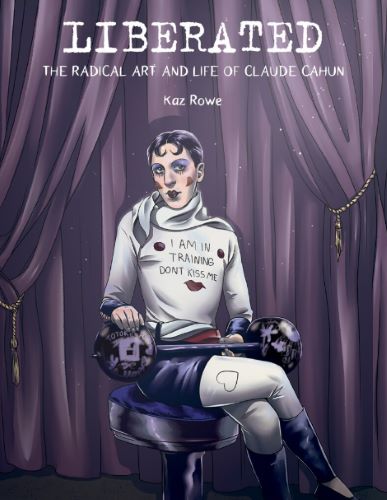
When author, illustrator, and YouTuber Kaz Rowe first encountered Claude Cahun’s work on Tumblr several years ago, they felt an immediate attachment to Cahun as a person and to this infrequently told story in queer history.
So when Getty asked Rowe to write and illustrate Liberated: The Radical Life and Art of Claude Cahun, there was only one answer.
“Claude is just a perfect topic for a project like this, especially because telling the biography of an artist, bringing a visual sense into their story through the art of comics, is, I think, a more interesting way to approach their history,” says Rowe.
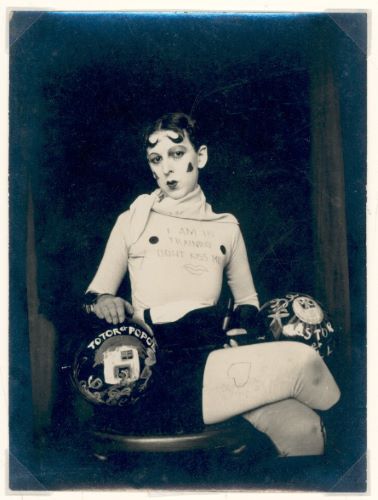

Cahun lived a remarkable and inspiring life. Born Lucy Schwob in Nantes, France, in 1894, Cahun had a mentally ill mother, experienced violent antisemitism, and dealt with chronic illness throughout their life. As a young adult, Cahun met Suzanne Malherbe, and the two became partners both artistically and romantically. They transformed themselves into the creative personas Claude Cahun and Marcel Moore and embarked on a radical journey of Surrealist collaboration that lasted until Cahun’s death in 1954. In 1920s Paris they created art together and enjoyed the freedom to be themselves amid the vibrant avant-garde and gay nightlife.
Eventually the couple wanted a change and moved in 1937 to Jersey, an English island off the coast of France. Two years later, World War II broke out, and in 1940, Jersey was occupied by the Nazis, destroying the quiet artistic life Cahun and Moore had built. Bravely, they hatched a plan to use their art to undermine the regime—for which they were arrested and sentenced to death, though the war ended before they could be executed.
Language, Gender, and YouTube
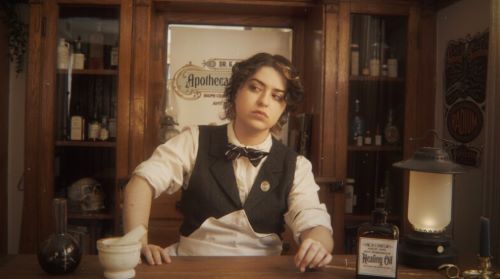
Language around gender expression has evolved since Cahun and Moore were making their iconic artwork, and today we might apply the term “nonbinary” to Cahun. The artist struggled with the construct of gender and felt both a masculine and feminine aspect to themselves, adopting the gender-neutral pseudonym Claude Cahun and writing that “neuter is the only gender that always suits me.”
Rowe, who is nonbinary, sapphic, and Jewish, “felt a real kinship” with Cahun. As the grandchild of a Holocaust survivor, Rowe also believes that telling the story of Cahun’s heroism and resistance against the Nazis is deeply important.
When Rowe began working on Liberated in late 2020, their YouTube channel, which now has over 420,000 subscribers, was in its infancy. Though both might be described as pandemic projects, they offered Rowe a way to channel their fascination with misunderstood history while putting their fine arts degree to good use.
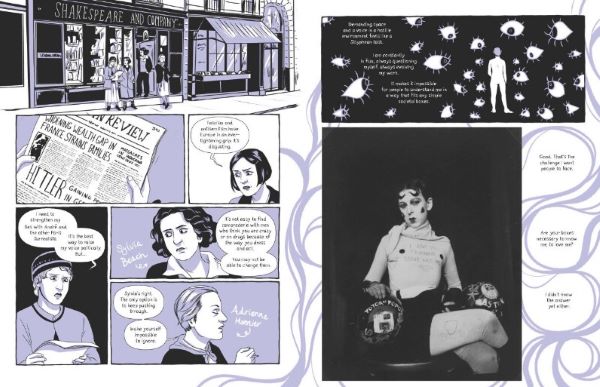
Too often, Rowe says, “people have had complicated and frustrating experiences with learning history, especially because most history curriculums will focus on ‘Here’s this powerful man, here’s this powerful man, random cool woman, here’s this powerful man, and then war, war, war, major event, war.” But, Rowe goes on to say, when “war is a backdrop context piece to more personal histories, that’s where people start to care.”
So with their focus on underrepresented or misinterpreted history, especially queer history, Rowe wants to “get people to understand the enormity of the human experience on a level they feel is approachable.” Cartooning and YouTube can be educational powerhouses that, Rowe points out, are “not often taken that seriously.” Rowe’s work, which is carefully researched and cited, seeks to fully realize the potential of these mediums to challenge misperceptions and build on our understanding of the past.
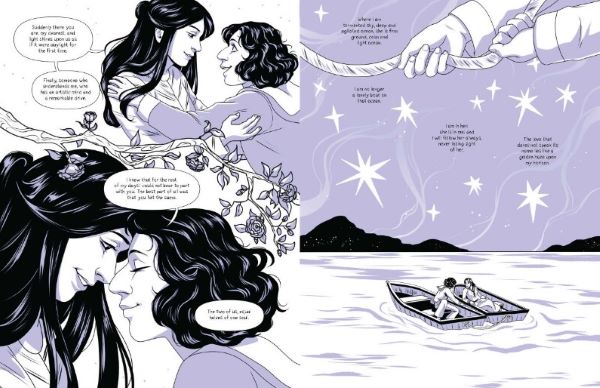
We often don’t think of LGBTQ+ people in the early 20th century leading open, creative, and heroic lives—but Claude Cahun did, and with Liberated, Rowe has captured it beautifully.
Originally published by The Iris, 10.19.2023, under a Creative Commons Attribution 4.0 International license.
About the Author