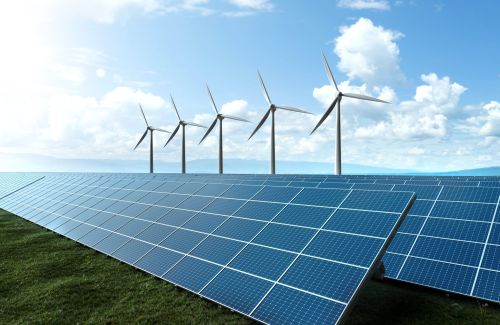
Wind and solar surpassing coal marks a defining moment in the modern energy landscape. The transition to clean energy is underway, but its shape and speed depend on policy.

By Matthew A. McIntosh
Public Historian
Brewminate
Introduction
Wind and solar power quietly crossed a historic line this year, generating more electricity in the United States than coal for the first time, according to new federal data showing the country’s energy system shifting beneath its politics. The milestone followed a global trend in which renewables supplied 92.5 percent of all new power capacity, with solar and wind now cheaper than the lowest cost fossil fuel. That momentum suggests a transition well underway, led more by economics than ideology.
Yet the national policy landscape is moving in the opposite direction. President Trump’s new budget bill sharply reduces access to clean-energy tax credits while expanding oil, gas, and coal leasing across federal lands. Major oil companies are retreating as well, abandoning earlier renewable targets and redirecting capital toward drilling even as clean power grows faster worldwide than any other energy source. The shift reflects a widening gap between the direction markets are moving and the direction political power is choosing.
The Numbers: Renewables Have Overtaken Coal
Wind and solar’s rise is no longer theoretical. New data show they supplied roughly 16 to 17 percent of U.S. electricity in 2024, surpassing coal’s share, which has fallen to its lowest level since the 1960s. The shift marks a structural break in the nation’s energy mix, one that would have been difficult to imagine a decade ago. According to analysis of federal energy records, coal generated about 10 percent of U.S. power last year while wind and solar together moved ahead for the first time, reflecting a long-term decline accelerated by plant closures and cheaper alternatives.
The global picture mirrors that trend on a much larger scale. A United Nations supported review found that renewables accounted for 92.5 percent of all new power capacity installed worldwide, and that solar and wind have become the cheapest new sources of electricity in most markets. The cost of building new solar plants fell another 89 percent over the past decade, and onshore wind continues to drop in price, giving clean power an economic advantage even before policy incentives come into play.
Despite this surge, overall U.S. emissions remained nearly flat last year because electricity demand continued to rise. Renewables are growing fast, but they are expanding into a system where consumption also increases, which limits the immediate emissions impact. The numbers make one point clear: clean energy is outpacing coal and beating fossil fuels on cost, yet the transition is not happening quickly enough to meaningfully cut the country’s climate pollution without stronger policy support.
Globally, however, experts describe the energy system as having crossed a “positive tipping point.” New projects are dominated by clean power, investment is shifting away from fossil fuels, and renewables have become the default choice for new electricity generation. The momentum is undeniable, but it exists alongside political decisions that can either accelerate the shift or hold it back.
Trump’s Budget and Executive Agenda: Reopening the Fossil Fuel Spigot
President Trump’s 2025 budget bill creates some of the most significant federal setbacks for renewable energy in more than a decade. The legislation sharply limits access to clean-energy tax credits by reducing the time developers have to qualify and by tightening domestic-content rules that raise costs for new wind and solar projects. According to an analysis of the bill, the new restrictions threaten to delay or cancel projects that relied on long-term credit certainty, further slowing installations that had been scaling quickly in recent years.
The budget also eliminates or claws back major pools of unspent clean-energy funding created under the Inflation Reduction Act. Grants for transmission upgrades, building decarbonization, methane reduction, and community energy programs are among the funds rolled back or rescinded. The cuts directly weaken some of the most important tools designed to expand renewable infrastructure at a pace consistent with national climate targets. With fewer federal incentives available, many developers face higher upfront costs and greater financial uncertainty at a moment when clean-energy growth has been outpacing all other sectors of the power market.
At the same time, the bill provides a boost for fossil fuels. It mandates new leasing rounds for oil and gas development in the Arctic National Wildlife Refuge and the National Petroleum Reserve, restores offshore drilling opportunities in the Gulf of Mexico, and introduces new tax advantages for coal producers. These provisions collectively tilt the economic landscape toward carbon-intensive energy even as global markets continue to shift toward lower cost solar and wind. The policy direction reinforces fossil fuel development at precisely the moment experts say it must decline to meet global climate goals.
The administration’s broader agenda amplifies the same pattern. In recent months, Trump has declared a national “energy emergency,” reversed restrictions on liquefied natural gas exports, and installed senior officials with direct ties to the oil and gas industry at the Department of Energy. These moves align federal agencies with the priorities of major producers, making it easier for companies to expand drilling and harder for renewable developers to compete on even footing.
These actions represent a coordinated turn away from the momentum that pushed wind and solar past coal. Markets may be favoring clean power, but federal policy now favors the fuels of the past, reshaping the landscape in ways that could slow the growth of renewables for years unless the political direction changes.
Big Oil’s Retreat from Renewables
Major oil companies are moving away from the renewable energy commitments they made earlier in the decade, signaling a strategic reversal that aligns closely with the fossil-friendly direction of federal policy. BP provides the clearest example. The company has scaled back billions of dollars in planned clean-energy spending and raised its 2030 oil and gas production targets, describing the shift as a return to “value first” after years of weaker financial performance from its renewable portfolio. The move highlights how quickly corporate climate pledges can be reshaped when profitability points back toward drilling rather than transition.
The retreat is not limited to BP. Shell has slowed or reduced several renewable programs, reallocated capital toward fossil fuel projects, and emphasized traditional oil and gas profits in recent financial statements. Equinor has pulled back from offshore wind ventures that no longer meet its return thresholds and has increased investment in petroleum development. These choices reflect a broader industry trend in which the companies with the most influence over global emissions are choosing to double down on hydrocarbons rather than accelerate the shift toward cleaner power.
Sector analysis supports this pattern. Research shows that oil and gas companies have been cutting investment in renewable power for two consecutive years while expanding capital spending on core fossil operations. Firms cite lower returns from clean-energy assets, but the trend also reflects the incentives created by policy signals in the United States and abroad. When governments expand drilling opportunities and weaken renewable support, oil companies face fewer financial or regulatory reasons to pursue ambitious transition strategies.
The climate implications are immediate. By increasing fossil fuel production and scaling back renewable plans, oil majors are locking in infrastructure that will continue to emit for decades. The decisions run counter to global power trends, where wind and solar dominate new capacity and clean electricity is becoming the economic default. As long as industry leaders prioritize short-term returns from oil and gas, the energy system will drift further from the path required to reduce emissions at a pace consistent with climate science.
How Policy and Corporate Strategy Reinforce Each Other
Federal policy and industry behavior are now moving in tandem, creating a feedback loop that strengthens fossil fuels even as renewable energy gains wider market footing. Trump’s budget bill expands drilling opportunities, cuts clean-energy programs, and makes it harder for wind and solar developers to qualify for tax credits. Those decisions not only reshape the economics of new projects, they also signal to major producers that the federal government intends to prioritize oil, gas, and coal over climate goals. Companies that were already reevaluating their renewable targets now have little incentive to continue investing in low carbon projects when the policy environment tilts sharply toward hydrocarbons.
The consequences of this alignment are visible at the state level, where political decisions have created structural barriers to renewable development. In Ohio, lawmakers passed a series of measures that allow local governments to block wind and solar projects, while offering no comparable authority to stop oil and gas drilling. Subsidies and tax provisions in the same legislative package benefit coal plants and expand support for natural gas, making it easier for fossil fuels to maintain their presence on the grid. Even counties with strong wind resources now face legal and political obstacles that can delay or shut down projects before they begin.
These dynamics reinforce one another. When state laws restrict renewable development and federal policy expands fossil production, companies see a clear signal about where political power is concentrated. Lobbying networks, campaign contributions, and industry aligned organizations then work to sustain that direction, influencing local and state officials who regulate permitting, zoning, and infrastructure planning. This makes clean-energy growth contingent on navigating political resistance rather than technical or economic limitations.
The result is an energy landscape shaped less by market cost comparisons and more by political design. Renewable energy continues to outcompete coal and undercut fossil fuels on price, yet decisions made in legislatures and corporate boardrooms are slowing the transition and prolonging the profitability of oil, gas, and coal. As long as federal and state policy reinforce these choices, renewable growth will be constrained by barriers that have nothing to do with cost or feasibility.
The Economic Trap: Cheap Renewables, Expensive Fossil Loyalty
The economics of the energy transition are moving in one direction, even as policy choices push in another. Analyses supported by the United Nations show that solar, wind, and new hydropower are now the three cheapest sources of electricity worldwide, and that building new solar plants costs far less than building new gas or coal facilities. Solar prices have fallen by more than 80 percent over the past two decades, and onshore wind continues to drop as well. In most markets, clean electricity now beats fossil fuels on simple price alone.
Those numbers make the current policy direction more costly over time. When governments steer investment toward oil, gas, and coal, utilities and developers are encouraged to build infrastructure that may need to be retired early as renewable energy continues to expand. These stranded assets represent long-term financial risks for ratepayers and taxpayers who will ultimately bear the cost of maintaining or decommissioning fossil fuel facilities that no longer make economic sense. Experts warn that decisions being made now will shape power prices for decades.
The experience in Ohio offers a clear example of this economic trap. The state has significant wind and solar potential, yet recent laws have restricted renewable development while expanding support for natural gas and subsidizing existing coal plants. Those choices have contributed to higher electricity prices compared with states that built more renewable capacity. Texas, for example, invested heavily in wind and solar and now maintains lower average electricity rates while continuing to attract clean-energy investment.
As fossil-fuel infrastructure expands, the cost gap between clean and dirty energy will continue to widen. Renewables already dominate new power additions worldwide, with 92.5 percent of new capacity coming from clean sources last year. Many utilities are choosing wind and solar because they reduce long-term operating costs, avoid fuel-price volatility, and increasingly offer better investment stability. By contrast, dependence on oil and gas ties consumers to global price swings that can produce sudden jumps in household energy bills.
The economic case for renewables has become straightforward, yet policy decisions continue to support fuels that are becoming less competitive. That mismatch puts consumers in the position of paying more for energy while companies and governments reinforce systems that are already being outperformed by cheaper clean technologies. Without policies that reflect current market realities, the United States risks locking itself into higher costs and delayed progress at a moment when renewable energy is not only viable, but economically dominant.
Health, Climate, and Justice: Who Pays for the Reversal
The consequences of expanding fossil fuel development fall first on communities closest to drilling, refining, and coal operations. Reporting from Ohio highlights growing concerns about air pollution, water contamination, and health risks in areas where oil and gas development has intensified. Residents living near wells have documented higher levels of volatile organic compounds, and public health experts warn that long-term exposure contributes to respiratory illness and other chronic conditions. These impacts are most acute in low income and rural communities that already face limited access to medical care.
Climate risks compound those local harms. Extreme weather has grown more destructive across the United States, and scientists interviewed in the same reporting note that continued reliance on fossil fuels will make heat waves, storms, and flooding more severe. Renewable energy reduces emissions over time, but when federal policy expands drilling and stalls clean-power growth, those reductions slow. As emissions remain high, communities face escalating climate threats that strain infrastructure and increase costs for disaster response.
Globally, climate officials have warned that the world is “running out of road” as renewable energy becomes dominant in new generation but fossil fuel production continues to expand. The gap between what markets are building and what governments are permitting has created a trajectory in which emissions remain above levels needed to avoid the worst climate outcomes. As renewables continue to grow, oil and gas expansion threatens to lock in decades of additional pollution that could have been avoided with stronger policy alignment.
The justice dimensions are unavoidable. Communities near drilling sites bear the health costs, ratepayers absorb the economic risks of outdated fossil infrastructure, and younger generations inherit a climate shaped by today’s decisions. The divergence between market trends and political choices means the burdens fall unevenly, reinforcing long standing disparities in who benefits from energy policy and who suffers its impacts.
Conclusion: The Transition Is Inevitable, Its Timeline Is Not
Wind and solar surpassing coal marks a defining moment in the modern energy landscape. The United States reached this milestone as global markets moved even faster, with renewables supplying 92.5 percent of new power capacity worldwide and clean electricity outcompeting fossil fuels on cost. The technical and economic direction is clear. Solar and wind are now the cheapest new power sources in most regions, and global investment continues to shift toward clean energy.
Yet this momentum runs alongside a political reversal. Trump’s budget bill expands drilling, restricts clean-energy credits, and withdraws major federal support for renewable infrastructure. Oil companies are pivoting in the same direction, raising production targets and scaling back renewable plans even as markets show that clean power is outpacing fossil fuels in cost and growth. These choices stretch out the life of an energy system that global analysts say is already nearing its economic limit.
The transition to clean energy is underway, but its shape and speed depend on policy. Renewables may have won the price war, yet political decisions are steering the country toward a more expensive and more polluting path. The future of the grid will be determined not by what is technically possible, but by whether governments choose to align with the economics of clean power or prolong an era that experts say is already “running out of road.”
Originally published by Brewminate, 12.04.2025, under the terms of a Creative Commons Attribution-NonCommercial-NoDerivatives 4.0 International license.
About the Author