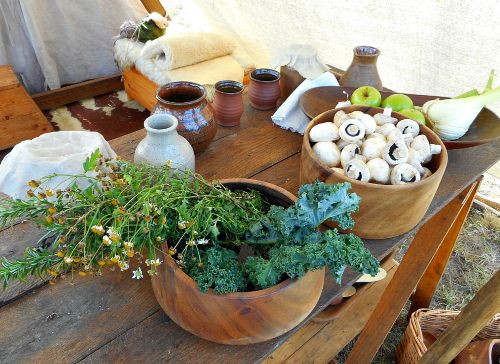
Picture a medieval birthing chamber: not the sterile, bright hospital room we know today, but a warm space lit by firelight and filled with the scent of herbs hanging from the rafters. A midwife moves with practiced confidence, her knowledge passed down through generations of women—not from books, but from apprenticeship, observation, and centuries of accumulated wisdom about which plants help a laboring mother, which ease postpartum pain, and which support a new mother’s milk coming in.
This was healthcare for most of human history. Practical, plant-based, community-centered. And then, relatively quickly in the grand scheme of things, it shifted. The last few centuries brought us modern medicine—antibiotics, surgical interventions, scientific understanding of anatomy and infection that have saved countless lives. These advances are genuinely miraculous. A woman hemorrhaging after birth today has access to interventions that simply didn’t exist 500 years ago, and that matters enormously.
But here’s what’s interesting: in the rush toward modern medical advancement, some of that accumulated plant knowledge simply… drifted away. Not because it was bad or wrong, but because it became less central as other tools took precedence. Your grandmother might have known which herbs to make into tea for a fussy baby, but that information often didn’t make it to your mother’s generation, much less yours.
Now, though, something curious is happening. People are asking questions again. They’re wondering what their ancestors knew about supporting the body through major transitions like birth and postpartum recovery. They’re curious about gentler interventions for minor concerns, about working with the body rather than just managing symptoms. And so, quietly but persistently, some of these old plant allies are making their way back into modern consciousness.
Goat’s Rue: The European Lactation Secret
Let’s start with one of the most practical herbs from medieval European herbalism: goat’s rue. The name comes from its traditional use in animal husbandry—farmers noticed that goats and cows grazing on this plant produced more milk. It didn’t take long for midwives to wonder if it might help nursing mothers, too.
Historical texts from medieval Europe mention goat’s rue (sometimes called “galega,” from the Greek words for milk) as a remedy for insufficient milk supply. What’s particularly interesting is that it wasn’t just thought to stimulate milk production in the moment, but actually to support the development of milk-producing tissue itself. Medieval herbalists couldn’t have known the biochemical mechanisms, of course, but their observations over generations suggested something modern research is now exploring: that goat’s rue may contain compounds that influence mammary gland development.
In medieval times, goat’s rue would have been prepared as a tea or infusion, with fresh or dried herb steeped in hot water. Today, it’s more commonly taken as a tincture—an alcohol-based extract that’s more concentrated and shelf-stable. The taste is earthy and slightly bitter, very much “herbal” in character.
Modern herbalists often recommend a goat’s rue tincture, particularly for mothers who’ve had breast surgery, are inducing lactation through adoption, or are working to rebuild supply. It’s become a go-to in the toolkit of lactation consultants who work with herbs, often combined with other galactagogues like fenugreek or blessed thistle for a more comprehensive approach.
One important bridge between old knowledge and new: medieval herbalists wouldn’t have known that goat’s rue is in the legume family and may affect blood sugar levels. Today we do know this, which means we can use it more safely by being aware of potential interactions with diabetes medications and watching for allergic reactions in people sensitive to legumes.
Lady’s Mantle: The Herb That Wrapped Women’s Mysteries
If there’s an herb whose name alone tells you it was important in women’s traditional medicine, it’s lady’s mantle. The Latin name, Alchemilla, gives you a hint about how medieval herbalists viewed it—as something almost magical, alchemical in its properties.
Lady’s mantle was the go-to herb for what medieval texts delicately referred to as “women’s complaints”—menstrual difficulties, fertility concerns, and especially postpartum recovery. The leaves, with their distinctive scalloped edges that catch and hold dewdrops like tiny cups, were said to have a particular affinity for the womb and reproductive system.
After childbirth, lady’s mantle was used both internally as a tea and externally in baths or compresses to support healing. Medieval midwives recognized that the weeks after birth were a vulnerable time when the body needed support returning to its non-pregnant state. They used lady’s mantle as what we’d now call a uterine tonic—an herb that helps the uterus contract and recover its tone.
The medieval preparation was straightforward: dried leaves steeped in hot water, drunk as a tea several times daily. The taste is mild, slightly tannic (like black tea but gentler), with a subtle green, earthy quality. Modern herbalists use it much the same way, often recommending 1-2 cups of tea daily during the postpartum period, particularly in the first few weeks after birth.
What’s lovely about lady’s mantle is how safe and gentle it is. Medieval women didn’t have our modern framework of clinical trials and safety studies, but they had something else: generations of use, careful observation, and knowledge passed from experienced midwives to younger ones about which herbs could be used freely and which required more caution. Lady’s mantle was firmly in the “use freely” category, and modern experience bears this out.
Yarrow: The Warrior’s Wound Herb Comes to the Birthing Room
Yarrow has one of the longest histories of any medicinal herb in Europe, stretching back far before the medieval period. Its genus name, Achillea, comes from the Greek hero Achilles, who supposedly used it to treat wounded soldiers during the Trojan War. Medieval battlefields weren’t complete without yarrow in the healer’s kit.
But yarrow wasn’t just for warriors. Medieval midwives recognized that birth, while natural, is also physically demanding and sometimes involves tearing or bleeding that needs support. Yarrow became a staple in the birthing room for its ability to help control bleeding—whether from the birth itself or from postpartum hemorrhage.
The way yarrow works is actually quite elegant. It’s both a styptic (stops bleeding) and a vulnerary (promotes healing of wounds). Medieval midwives would have prepared yarrow as a strong tea or poultice applied directly to tears or wounds, and they’d also have the mother drink yarrow tea to help with internal healing and any excessive bleeding.
There’s something almost paradoxical about yarrow that medieval herbalists seemed to intuitively understand: it can both stop bleeding when you need it to stop and promote healthy blood flow when circulation is stagnant. Modern herbalism calls herbs like this “amphoteric”—able to bring the body toward balance from either direction. Our ancestors might not have had that terminology, but they certainly recognized the principle.
Today, yarrow is still used in postpartum care, though with the understanding that serious hemorrhage requires immediate medical intervention. It’s often taken as a tea during the weeks after birth to support overall healing. Some modern herbalists also prepare yarrow into sitz bath blends for external healing support.
The taste is intensely aromatic and bitter—not unpleasant if you’re expecting it, but definitely distinct. Medieval women probably didn’t have the luxury of worrying much about taste, but modern herbalists often combine yarrow with more pleasant-tasting herbs like peppermint to make it more palatable.
Mugwort: The Dream Herb with Practical Uses
Mugwort is where medieval herbalism gets a bit more mystical. This aromatic herb, with its silvery-green leaves, was associated with the moon, with women’s cycles, with dreaming and divination. Medieval midwives hung mugwort in birthing rooms, not just for its medicinal properties but as a kind of spiritual protection.
But beyond the mystical associations, mugwort had practical applications in birth. It was used as an emmenagogue—an herb that promotes menstrual flow—and by extension, it was sometimes used to encourage uterine contractions during labor when things were moving slowly. Medieval herbalists were working with generations of observation about how to support labor without forcing it, and mugwort was one tool in that toolkit.
There’s important context here that matters when we think about bringing old knowledge forward: medieval midwives used mugwort specifically during labor, not during pregnancy. They understood—through careful observation over many generations—that there was a difference between supporting a labor already in progress and potentially triggering labor prematurely. This is wisdom we need to preserve: timing and context matter enormously with herbs that affect the uterus.
Today, mugwort is making a comeback in postpartum care rather than during pregnancy or labor. Modern herbalists use it as a gentle uterine tonic after birth, helping the uterus return to its pre-pregnancy state. It’s typically prepared as a tea—the dried leaves have a distinctive, slightly bitter, aromatic flavor that’s quite pleasant if you enjoy herbal tastes.
Interestingly, mugwort’s association with dreaming isn’t just medieval superstition. Many people who drink mugwort tea or sleep with mugwort in a pillow report vivid, memorable dreams. There may be compounds in mugwort that affect sleep cycles or dream recall, though research is still emerging. For exhausted new parents, this might not sound appealing, but some people find that richer dream life during the brief windows of sleep they get helps them feel more rested.
Blue Cohosh: Wisdom from a Different Tradition
Shifting away from medieval Europe for a moment, let’s talk about blue cohosh—an herb that comes from Native American healing traditions and was adopted by early American midwives. While it’s not medieval European, it represents the same principle: traditional birth attendants working with plants they’d observed carefully over generations.
Blue cohosh was used by various Native American tribes as a labor tonic, particularly when labor was progressing slowly or inefficiently. Early American midwives, learning from indigenous knowledge, incorporated it into their practice. It gained a reputation as one of the most powerful herbs for supporting uterine contractions.
Here’s where blending old knowledge with modern understanding becomes crucial: we now know that blue cohosh is quite potent and can have significant effects on the heart and cardiovascular system. It’s not an herb for casual use or self-prescription. While historical use was extensive, modern herbalists and midwives approach it with much more caution, using it only in specific clinical situations and never during early pregnancy.
This is actually a perfect example of how reclaiming traditional plant wisdom doesn’t mean just doing exactly what our ancestors did. It means taking their observations seriously, then adding what modern research teaches us about safety, dosing, and potential risks. The medieval midwife worked with the best information she had; we can honor her wisdom while also incorporating what we’ve learned since.
Pennyroyal: A Cautionary Tale
Not every herb from traditional midwifery practice deserves to be brought back into common use, and pennyroyal is a good example of why critical thinking matters when we explore historical herbalism.
Pennyroyal appears in medieval herbal texts as an emmenagogue—an herb to “bring on the menses” when they were late. This is delicate historical territory, because “bringing on menses” was sometimes a euphemism for terminating early pregnancy. Pennyroyal was used this way historically, and medieval herbalists understood it to be quite strong medicine.
What they couldn’t have known, but we now do: pennyroyal oil is extremely toxic. Even relatively small doses can cause severe liver and kidney damage. There are documented cases of deaths from pennyroyal oil, particularly when women have tried to use it to terminate pregnancy.
This doesn’t mean medieval midwives were reckless or ignorant. The tea form of pennyroyal (much more dilute than the essential oil) was generally used more safely for minor digestive complaints or to ease menstrual cramps. But today, with what we know about its toxicity, most modern herbalists simply choose other, safer herbs for the same purposes.
Pennyroyal’s story is an important reminder: bringing traditional knowledge forward means discernment. We can honor the wisdom of our ancestors while also acknowledging that modern research sometimes reveals risks they couldn’t have known about. Not every old remedy needs to be revived.
Old Wisdom, New Context
What’s beautiful about this moment in herbal history is that we’re not just blindly recreating medieval practices. We’re taking the best of what traditional midwives knew—their careful observation, their understanding of timing and individual variation, their respect for the body’s own wisdom—and we’re combining it with modern safety information, quality control, and scientific research.
A medieval midwife had incredible knowledge, learned through apprenticeship and experience. But she couldn’t test for drug interactions, didn’t understand pharmacology, and had no way to standardize dosing. We can honor her expertise while also being smarter and safer in how we apply it.
The herbs that are making a comeback—goat’s rue, lady’s mantle, yarrow, and others—are the ones that stand up to modern scrutiny. They’re the ones where traditional use aligns with emerging research, where safety profiles are favorable, and where they offer genuine support without significant risk.
This isn’t about romanticizing the past or rejecting modern medicine. Medieval birth could be dangerous; maternal and infant mortality rates were far higher than they are today. Modern obstetric care saves lives, and nobody seriously wants to return to an era before antibiotics, blood transfusions, or cesarean sections.
But within the context of safe, healthy pregnancies and births, there’s room for gentle plant support. There’s value in having options that feel less invasive, more aligned with natural processes, more connected to generations of women’s wisdom. The medieval midwife and the modern obstetrician don’t have to be in opposition. They’re part of a continuum of care, each offering something valuable.
As these old herbs make their way back into modern consciousness, the best approach is probably a middle path: respect for traditional wisdom, openness to plant medicine, but also consultation with qualified practitioners—both medical and herbal—who can help you navigate safely. The medieval midwife would probably approve of that balanced approach. After all, she was practical above all else, using what worked and adjusting when it didn’t.
The herbs are still here, growing in gardens and fields just as they did centuries ago. The knowledge is still accessible, preserved in old texts and being revived by modern herbalists. What we’re doing now is creating something new: a synthesis of ancient plant wisdom and modern understanding, available to anyone curious enough to explore what the midwives of old already knew.
Disclaimer: This article is for educational and historical interest only. Always consult qualified healthcare providers before using herbs, especially during pregnancy, labor, or postpartum. Historical use does not guarantee safety or effectiveness, and some herbs mentioned have significant risks. Modern medical care is essential for safe pregnancy and birth outcomes.
About the Author