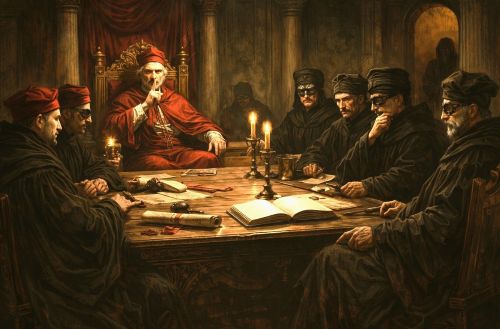
In Renaissance Venice, the Council of Ten institutionalized secrecy and surveillance, revealing how republican stability depended upon controlled transparency and disciplined dissent.

By Matthew A. McIntosh
Public Historian
Brewminate
Introduction: Republicanism and the Paradox of Control
The Venetian Republic long cultivated a reputation for durability, moderation, and civic balance. Known as La Serenissima, Venice presented itself as a polity governed by laws rather than by the arbitrary will of a single ruler. Its political structure distributed authority across councils, magistracies, and deliberative bodies, creating an image of collective governance resistant to tyranny. The Great Council embodied patrician participation, the Senate oversaw foreign and financial affairs, and the Doge’s powers were circumscribed by oath and institutional constraint. Foreign observers and later historians frequently praised the republic’s durability, contrasting its relative calm with the factional violence that plagued other Italian states. In an era marked by princely coups, dynastic struggles, and urban unrest, Venice appeared as an anomaly: a self-governing republic that preserved internal cohesion across centuries. Yet beneath this celebrated stability lay a carefully constructed system of secrecy, surveillance, and calibrated restrictions on political expression.
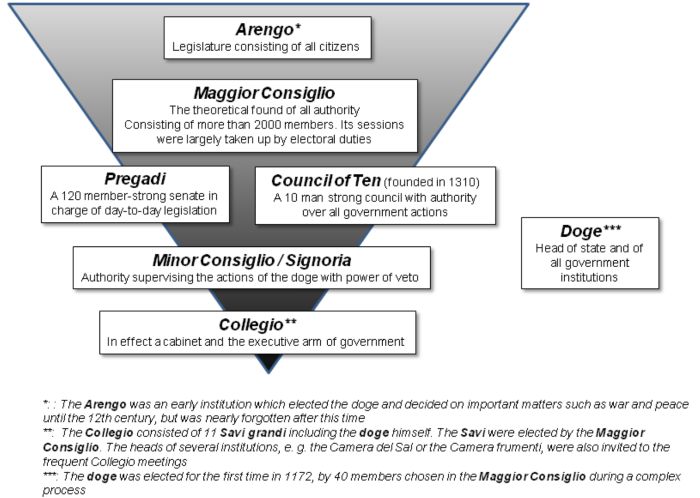
Central to this system was the Council of Ten, originally established in 1310 after the failed conspiracy of Bajamonte Tiepolo. What began as an emergency body tasked with safeguarding the state evolved into a permanent institution with expansive oversight powers. The Council operated alongside the Great Council and the Senate, but it conducted its deliberations in secrecy and wielded authority over matters touching state security. Its jurisdiction extended to include the investigation of suspected conspiracies, monitoring of political speech, and supervision of activities deemed threatening to public order. The institutionalization of such authority complicates the narrative of Venice as a purely open republic.
Venice did not abolish political speech, nor did it dismantle its republican forms. The Doge remained constrained by law, and patricians continued to participate in deliberative assemblies. However, the republic maintained mechanisms through which discussion could be narrowed when it appeared to endanger stability. Informants reported suspicious behavior, anonymous denunciations were accepted and investigated, and printers operated under regulatory oversight. These measures were justified not as instruments of oppression but as safeguards against factionalism and subversion. The preservation of civic harmony, in Venetian political thought, required vigilance as much as participation.
Venice exemplifies the paradox of republican control. A polity that prided itself on collective governance and legal order nonetheless relied on secrecy laws, surveillance practices, and administrative intimidation to manage dissent. Endurance was not simply the product of civic virtue; it was sustained through structured oversight of information and reputation. By examining the Council of Ten and its regulatory apparatus, we can better understand how republics rationalize constraints on political discourse as necessary to protect liberty itself. Venice’s experience demonstrates that the constriction of speech need not accompany the collapse of republican institutions. It may instead coexist with them, integrated into their design.
The Structure of Venetian Republican Governance
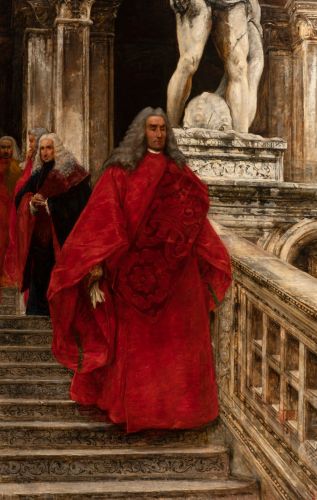
Venetian republican governance rested upon a layered institutional architecture designed to diffuse power while preserving elite cohesion. At its broadest level stood the Great Council, composed of patrician males whose hereditary status granted them participation in the political life of the state. Membership in this body symbolized collective sovereignty among the ruling class. From it were selected the officials who populated other magistracies, creating a system in which governance circulated within a defined patrician order. The structure fostered continuity and limited the emergence of singular authority, reinforcing Venice’s reputation as a polity resistant to personal domination.
The Senate, or Consiglio dei Pregadi, functioned as the republic’s principal deliberative organ for foreign affairs, commerce, and fiscal policy. It managed diplomatic relations, oversaw maritime strategy, and regulated economic matters essential to Venice’s survival as a trading power. Although influential families could exercise substantial informal sway, the Senate operated through procedures and collective deliberation rather than through princely command. Debate and voting were integral features of governance, reinforcing the self-image of Venice as a community of civic equals within the patriciate. Yet this equality was circumscribed; political participation was restricted to a closed elite, and access to authority depended upon lineage as well as reputation.
The Doge occupied a distinctive but carefully constrained position within this system. Elected for life, the Doge symbolized continuity and state unity. However, his authority was hedged by oaths, advisory councils, and legal limitations that prevented the consolidation of monarchical power. Official correspondence and public ceremonies emphasized his prominence, yet decision-making required collaboration with councils and magistrates. The office embodied a delicate balance between visibility and restraint. Venice achieved symbolic centralization without surrendering structural control.
Alongside these established bodies operated specialized magistracies responsible for justice, finance, and maritime regulation. The diffusion of authority across offices created overlapping jurisdictions that reduced the risk of concentrated power. Committees rotated membership, and terms were limited in many offices, preventing prolonged accumulation of influence. This complexity fostered internal monitoring within the patrician class. Governance relied upon collective responsibility as much as formal hierarchy. Stability emerged from the interlocking nature of institutions rather than from charismatic leadership.
The Council of Ten represented a distinctive element. Although formally embedded within the republican framework, it possessed extraordinary oversight authority, particularly in matters concerning state security. Its members were drawn from the patriciate, reinforcing the continuity of elite governance, yet its procedures were marked by secrecy and decisiveness. The coexistence of broad deliberative councils and a concentrated security body illustrates the structural tension within Venetian republicanism. The same system that diffused power also institutionalized mechanisms capable of constraining discourse when stability appeared threatened. Republican form and protective oversight were not opposites in Venice; they were interdependent components of its political design.
The Council of Ten: Secrecy as Institutional Design
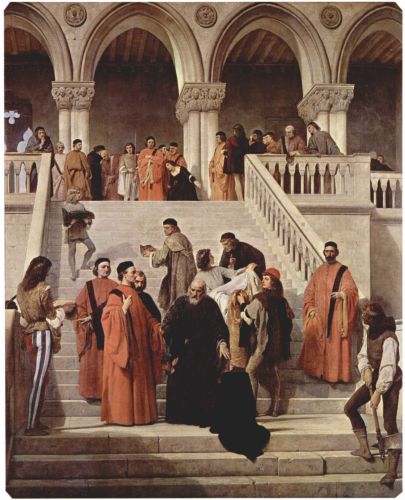
The Council of Ten originated in crisis but endured by design. Established in 1310 after the Tiepolo conspiracy, the body was initially conceived as a temporary safeguard against internal subversion. Its mandate was to investigate and neutralize threats to the republic’s stability. Yet what began as an emergency committee gradually assumed permanence. Rather than dissolving once the immediate danger passed, the Council became embedded within the constitutional framework. This transition from provisional response to institutional fixture reveals how Venice normalized security oversight within republican governance.
Confidentiality lay at the core of the Council’s operation. Its deliberations were closed, its records restricted, and its procedures shielded from public scrutiny. Members took oaths to preserve confidentiality, and violations of secrecy were treated as serious offenses. Unlike the Great Council or the Senate, whose debates were more widely known among the patriciate, the Council of Ten functioned as a chamber of controlled information. Access to its archives was tightly regulated, and even other magistracies did not automatically possess insight into its investigations. The opacity was not incidental. It was understood as necessary to protect the state from both internal conspiracy and external intrigue. In a maritime republic engaged in constant diplomatic negotiation, intelligence, counterintelligence, and guarded communication were essential to commercial and political survival. Secrecy operated as a structural safeguard. It insulated sensitive deliberations from factional exploitation and prevented the public amplification of instability. By design, the Council created an informational boundary between security matters and broader civic discourse.
The Council’s authority extended beyond the investigation of conspiracies. It supervised matters touching political stability more broadly, including surveillance of patrician behavior, monitoring of diplomatic correspondence, and oversight of sensitive judicial proceedings. It could convene special tribunals and collaborate with state inquisitors to pursue inquiries discreetly. Although technically constrained by law and subject to periodic review, its practical influence was considerable. The Council’s decisions were rarely publicized in full, reinforcing its aura of guarded authority.
The architecture of secrecy also intersected with legal procedure. The Council did not operate entirely outside established law; rather, it applied legal instruments within a confidential setting. Charges could be brought, evidence examined, and judgments rendered, yet the process unfolded away from open deliberation. Accusations, including those submitted anonymously, were evaluated within a controlled institutional environment that balanced investigation with containment. This blending of juridical form with restricted visibility allowed Venice to maintain a narrative of lawful governance while minimizing public exposure of politically sensitive matters. Justice was administered but not theatrically displayed. Proceedings were framed as protective rather than punitive, emphasizing defense of the republic rather than spectacle. The state’s security interests framed the boundaries of disclosure, ensuring that the resolution of delicate cases did not destabilize broader civic confidence.
Institutional design reinforced continuity. Membership in the Council of Ten rotated among patricians, preventing permanent monopolization of its authority and preserving the appearance of collective responsibility. At the same time, its procedures cultivated a culture of disciplined discretion. Those who served learned the habits of guarded deliberation and carried that sensibility into other offices. Participation in confidential investigations shaped elite expectations about the management of dissent and the handling of sensitive information. Over generations, this culture of caution permeated the governing class. Secrecy became not merely a procedural rule but a political ethos embedded in patrician identity. In this way, the Council shaped the broader political environment, normalizing the idea that vigilance and informational restraint were integral to republican survival.
The Council of Ten exemplifies secrecy as structural principle rather than episodic reaction. Venice did not suspend its republican institutions when confronting danger; it integrated mechanisms of oversight within them. The normalization of confidential investigation and restricted discussion did not abolish deliberative councils, but it defined the limits within which they operated. By institutionalizing secrecy, the republic created a durable instrument for managing dissent and preserving its image of harmony. Stability was achieved not only through civic participation, but through the disciplined control of knowledge.
Surveillance Culture: Informants, Denunciations, and the Politics of Suspicion
The Venetian Republic’s commitment to internal order extended beyond formal councils and secret deliberations into the cultivation of a surveillance culture embedded within civic life. The Council of Ten and related magistracies relied not only on official investigations but also on flows of information from private individuals. In this environment, vigilance was framed as a civic duty. The protection of the state justified the observation of speech, behavior, and association among both patricians and subject populations. Surveillance did not always take the form of visible coercion. It operated through expectation, habit, and the normalization of reporting.
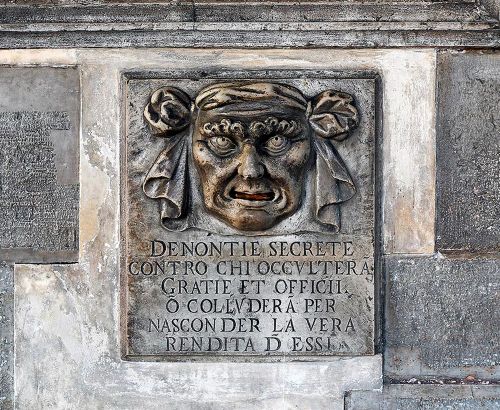
One of the most emblematic features of this system was the use of anonymous denunciations. The bocche di leone, or lion’s mouth letter boxes, allowed citizens to deposit written accusations concerning corruption, conspiracy, or behavior deemed dangerous to the republic. These stone receptacles, often embedded in public buildings and marked with carved lions, symbolized the state’s watchful presence. Denunciations could be directed at officials or private individuals, and they were examined by magistrates with jurisdiction over security matters. The anonymity of the mechanism encouraged participation while shielding informants from retaliation, thereby lowering the social cost of reporting. At the same time, it introduced a dynamic of suspicion into civic interaction. The possibility that a neighbor, colleague, or rival might submit a complaint fostered caution in political expression. Even if many accusations were dismissed, the awareness that speech could be transcribed and evaluated within confidential proceedings altered the psychological environment of debate.
The Council of Ten and its associated inquisitors evaluated denunciations within a legal framework, distinguishing between credible allegations and malicious fabrication. Not every accusation resulted in prosecution. Nevertheless, the existence of a formal channel for anonymous reporting shaped elite conduct. Political discussion, especially when it touched on foreign alliances or internal rivalries, carried the latent risk of investigation. The republic’s procedures combined juridical assessment with informational control. Surveillance did not eliminate speech; it recalibrated its tone and venue.
Informants were not confined to anonymous submissions. Diplomatic agents, military commanders, and administrative officials transmitted reports to Venice concerning local conditions and potential threats. Intelligence networks extended across the republic’s maritime territories and into foreign courts. Ambassadors routinely provided detailed accounts of political developments abroad, while colonial administrators reported on unrest, economic strain, or factional tension in subject cities. This broader apparatus reinforced the Council’s capacity to monitor instability before it crystallized into open crisis. Information flowed through structured channels, converging in the hands of magistrates charged with safeguarding the state. The integration of external intelligence with internal denunciations created a layered system in which surveillance operated both horizontally among citizens and vertically through official correspondence. The republic institutionalized observation as an administrative practice embedded in everyday governance.
Such mechanisms fostered what may be described as administrative intimidation rather than theatrical repression. Venice did not regularly stage public purges or dramatic spectacles of punishment. Instead, it cultivated an atmosphere in which political actors understood that their words might be recorded, interpreted, and judged within confidential forums. The republic’s commitment to order encouraged discretion. Public harmony was preserved not through overt terror, but through the internalization of caution among those aware of the surveillance infrastructure.
The politics of suspicion became woven into the fabric of republican governance. Venice justified its surveillance culture as a defense against factionalism, foreign subversion, and corruption within the patriciate. Official rhetoric framed denunciation and intelligence gathering as expressions of loyalty rather than instruments of repression. Yet the normalization of reporting reshaped civic relationships, encouraging vigilance toward peers and reinforcing the state’s central role as arbiter of acceptable conduct. The republic’s longevity, often cited as evidence of civic virtue, was sustained in part by these mechanisms of oversight. Informants, denunciations, and monitored discourse were not peripheral anomalies; they were integrated components of institutional design. In managing the flow of information and the risks of dissent, Venice demonstrated how a self-governing polity can rationalize suspicion as a necessary condition of stability, integrating surveillance into the very structures it celebrated as republican.
Regulating the Press: Printers, Censorship, and Information Management

By the fifteenth and sixteenth centuries, Venice had become one of Europe’s most vibrant centers of printing. Its commercial vitality, relative political stability, and cosmopolitan networks made it an ideal environment for the production and distribution of books. Venetian presses circulated humanist texts, classical editions, devotional literature, and technical manuals across the Mediterranean and into northern Europe. This flourishing print culture contributed to the republic’s reputation as a hub of intellectual exchange. Yet the same conditions that fostered innovation also required oversight. In a state deeply attentive to reputation and stability, the management of print became inseparable from the management of political risk.
Venetian authorities did not abolish printing, nor did they attempt to eliminate intellectual diversity outright. Instead, they constructed a regulatory framework that balanced commercial freedom with political caution. Printers were required to obtain licenses, and certain categories of texts, particularly those touching on theology, diplomacy, or internal politics, attracted heightened scrutiny. The state collaborated at times with ecclesiastical authorities, especially after the expansion of Catholic reform efforts, to ensure that works deemed heretical or destabilizing were restricted. Oversight functioned through approval mechanisms and the monitoring of output rather than through indiscriminate suppression. The goal was not to silence the press but to discipline it.
This regulatory culture reflected the broader logic of Venetian governance. Information was treated as a resource that required supervision. Printed materials could influence public perception, affect diplomatic relations, or inflame factional tensions. In a republic where civic harmony was carefully cultivated, unregulated political commentary posed a reputational hazard. The Council of Ten and related magistracies intervened when publications appeared to threaten the state’s image or security. Surveillance extended into the world of print, integrating intellectual production into the republic’s broader architecture of oversight.
Censorship in Venice was often administrative rather than spectacular. Confiscations and penalties occurred, yet they were embedded within bureaucratic processes rather than accompanied by theatrical displays of repression. Investigations were conducted through magistracies empowered to examine printed material and question publishers. Rather than staging dramatic public burnings as routine spectacle, authorities frequently relied on licensing delays, quiet confiscations, fines, or revocation of printing privileges. Printers understood the boundaries within which they operated, and repeated interaction with regulatory bodies clarified the contours of permissible output. Self-censorship became a practical adaptation to regulatory expectations. Publishers weighed the commercial benefits of controversial material against the risk of official sanction, considering not only immediate profit but long-term standing within Venice’s tightly interconnected mercantile community. This calculation encouraged moderation in politically sensitive domains while allowing robust activity in less contentious fields such as classical scholarship or technical literature. The contraction of discourse emerged through anticipatory compliance as much as through formal prohibition, embedding caution within the daily routines of the printing trade.
The republic’s position as a major exporter of books also heightened its sensitivity to external reaction. Printed works produced in Venice circulated far beyond its lagoons, shaping perceptions of the state abroad. Diplomatic considerations influenced censorship decisions. A text that might provoke conflict with a foreign power or embarrass the republic’s leadership warranted careful review. Reputation management, central to Venetian political culture, intersected directly with information control. The press was not merely an economic enterprise; it was a channel through which the republic’s image was projected and potentially contested.
Regulating the press illustrates how Venice integrated information management into its conception of republican stability. The republic did not dismantle its print industry or impose blanket prohibitions on publication. Instead, it embedded licensing, review, and monitoring within the normal operation of commercial life. Printers functioned within a system that encouraged innovation but constrained overt political disruption. In doing so, Venice demonstrated that a self-governing polity could rationalize limits on expression as necessary to protect civic order and diplomatic standing. Information, like deliberation, was permitted within defined bounds, reinforcing the paradox of a republic that sustained openness through structured control.
Reputation Management and the Myth of Stability
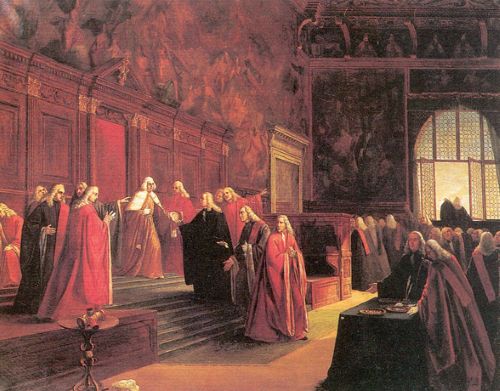
Venice’s political durability was not only a function of institutional design but also of careful narrative cultivation. The republic projected an image of harmony, balance, and exceptional continuity. Diplomatic correspondence, ceremonial ritual, and public architecture reinforced the perception of an ordered civic community guided by law and collective wisdom. The myth of stability was not mere vanity; it was a strategic asset. In a competitive Mediterranean environment marked by volatile alliances and dynastic upheaval, Venice’s reputation for internal cohesion enhanced its credibility abroad and reassured its merchant networks at home.
This cultivated image required active management. Public acknowledgment of factional conflict or elite discord risked undermining the aura of serenity that distinguished the republic from princely states. Mechanisms of secrecy and surveillance served not only to detect threats but also to contain reputational damage. Investigations conducted by the Council of Ten were frequently shielded from public spectacle, minimizing the circulation of scandal and preventing the solidification of factional narratives. Sensitive disputes among patrician families, if aired openly, could erode confidence in collective governance and embolden rivals within or beyond the lagoon. By resolving delicate matters within confidential forums, Venice preserved the outward appearance of consensus even when internal tensions persisted. This strategy allowed the state to address instability without dramatizing it. Public credibility was protected through procedural restraint, and restraint itself became a political virtue embedded in the republic’s self-understanding.
Civic ritual further reinforced the myth of unity. Public ceremonies, religious observances, and state-sponsored festivals dramatized the harmony between magistracies and citizenry. Processions through St. Mark’s Square, the symbolic marriage of Venice to the sea, and carefully choreographed diplomatic receptions communicated continuity and shared purpose. The Doge’s participation in ritual acts symbolized the integration of authority and community, while the visible cooperation of councils projected institutional solidarity. These performances were not superficial pageantry; they functioned as political communication, reaffirming the narrative of collective governance at regular intervals. Ritual stabilized perception by presenting hierarchy as collaboration and oversight as stewardship. When juxtaposed with discreet security measures, ceremonial order acquired greater persuasive force. The visible choreography of calm obscured the quieter practices through which discord was monitored, redirected, or quietly neutralized. Stability was enacted in public even as it was administratively safeguarded in private.
The myth of stability operated in tandem with structured control of information. Venice did not eliminate conflict, nor did it eradicate dissent. Instead, it absorbed potential disruption within mechanisms that limited public amplification. Reputation management became a form of governance, shaping both external perception and internal expectation. By aligning secrecy, surveillance, and ceremonial display, the republic sustained a durable image of calm. The paradox lies in the fact that this image depended upon institutions designed to constrain the very openness that republican identity celebrated.
Republican Self-Preservation and the Logic of Constraint
Venice justified its information controls within a language of preservation rather than repression. The republic’s political thought emphasized the dangers of factionalism, private ambition, and foreign manipulation. Memories of earlier conspiracies, including the crisis of 1310, remained embedded in institutional memory and civic rhetoric. Stability was not assumed to be self-sustaining; it required vigilance. Within this framework, secrecy laws, surveillance mechanisms, and regulation of print were framed as defensive measures. Constraint appeared not as betrayal of republican principles but as their necessary guardian.
The logic of self-preservation rested on a particular understanding of liberty. Venetian patricians did not equate freedom with unrestricted expression across all domains. Rather, liberty was conceived as the collective security of the state and the orderly participation of its governing class. Speech that threatened to destabilize alliances, provoke diplomatic conflict, or inflame factional rivalries could be interpreted as endangering the commonwealth itself. In this conception, the restriction of certain forms of discourse did not negate republican identity; it protected the conditions under which that identity could endure. Constraint was rationalized as prudence.
Institutional mechanisms such as the Council of Ten embodied this reasoning. The republic did not suspend its deliberative councils when security concerns arose; it relied on embedded oversight structures to address perceived threats. Surveillance, denunciation systems, and press regulation operated within the constitutional framework rather than outside it. Magistrates charged with safeguarding stability acted under legal authority, and their procedures were framed as expressions of collective responsibility rather than instruments of arbitrary domination. The Council’s confidential investigations, the licensing of printers, and the evaluation of denunciations were justified as necessary extensions of lawful governance. By embedding constraint within recognized institutions, Venice avoided the stark optics of emergency dictatorship. Security measures were portrayed as disciplined exercises of republican judgment, reinforcing the idea that preservation and legality were intertwined. In this way, the republic cultivated a political culture in which restraint on certain forms of expression could be understood as evidence of maturity rather than as departure from liberty.
The logic of constraint reveals the tension at the heart of republican self-preservation. Venice sustained its identity as a self-governing polity while normalizing limits on political openness. The state’s longevity became evidence of the effectiveness of its controls. Yet this durability depended on a calibrated narrowing of discourse in moments deemed dangerous. The Venetian experience demonstrates that republics may institutionalize mechanisms of restriction without abandoning their constitutional forms. In defending stability, they reshape the boundaries of permissible speech, embedding constraint within the very structures designed to safeguard liberty.
Conclusion: Stability, Surveillance, and the Limits of Republican Speech
The Venetian Republic offers a revealing case study in the coexistence of republican form and structured control. Venice maintained councils, elections, and collective governance across centuries, cultivating an image of civic harmony unmatched by many contemporaries. Yet this durability was inseparable from mechanisms of secrecy, surveillance, and information management. The Council of Ten, the denunciation system, and the regulation of print did not abolish republican institutions. They operated within them, shaping the conditions under which speech and dissent could occur. Political continuity was preserved not through openness alone, but through calibrated oversight.
The paradox lies in the republic’s self-understanding. Venice celebrated itself as a polity governed by law and shared authority, resistant to the excesses of princely ambition. At the same time, it institutionalized procedures that constrained political expression when stability appeared threatened. Informants, confidential tribunals, and licensing regimes were justified as defensive instruments. Constraint was framed as prudence, and vigilance as civic virtue. The boundaries of permissible speech were neither fixed nor entirely public; they were interpreted through administrative practice and reinforced through reputation management.
This integration of surveillance into republican governance complicates simplistic distinctions between free polities and repressive regimes. Venice avoided mass purges and preserved its deliberative councils, cultivating instead a culture of discretion in which elites internalized the risks of destabilizing discourse. Administrative intimidation replaced theatrical repression. Speech contracted not because it was universally prohibited but because actors understood the structures monitoring it. Republican continuity and informational control were mutually reinforcing rather than mutually exclusive.
The limits of republican speech emerge not only in moments of constitutional crisis but in the routine operation of institutions designed for preservation. Venice demonstrates that a self-governing polity can embed constraint within its architecture without surrendering its formal identity. Order and surveillance were not contradictions in the Venetian imagination; they were complementary tools of endurance. The lesson is not that republicanism inevitably erodes into repression, but that the defense of stability often reshapes the contours of public discourse. The myth of openness coexisted with structured limits, revealing how durable republics manage speech in the name of survival.
Bibliography
Affiliate disclosure: Amazon links on this site are paid links. As an Amazon Associate I earn from qualifying purchases.
- Chambers, David, and Brian Pullan, eds. Venice: A Documentary History, 1450–1630. Toronto: University of Toronto Press, 1992.
- Cozzi, Gaetano. “Authority and the Law in Renaissance Venice.” In Renaissance Venice, edited by J. R. Hale, 293–345. London: Faber and Faber, 1973.
- Iordanou, Ioanna. “The Secret Service of Renaissance Venice: Intelligence Organisation in the Sixteenth Century.” Journal of Intelligence History 21:3 (2022), 251-267.
- Kittler, Juraj. “Venetian Control of Information Flows with Constantinople and the Soft Power of a Renaissance State.” The Historical Journal 68:2 (2025), 259-284.
- Lane, Frederic C. Venice: A Maritime Republic. Baltimore: Johns Hopkins University Press, 1973.
- Martin, John Jeffries and Dennis Romano. Venice Reconsidered: The History and Civilization of an Italian City-State, 1297–1797. Baltimore: Johns Hopkins University Press, 2000.
- Muir, Edward. Civic Ritual in Renaissance Venice. Princeton: Princeton University Press, 1981.
Originally published by Brewminate, 02.24.2026, under the terms of a Creative Commons Attribution-NonCommercial-NoDerivatives 4.0 International license.
About the Author